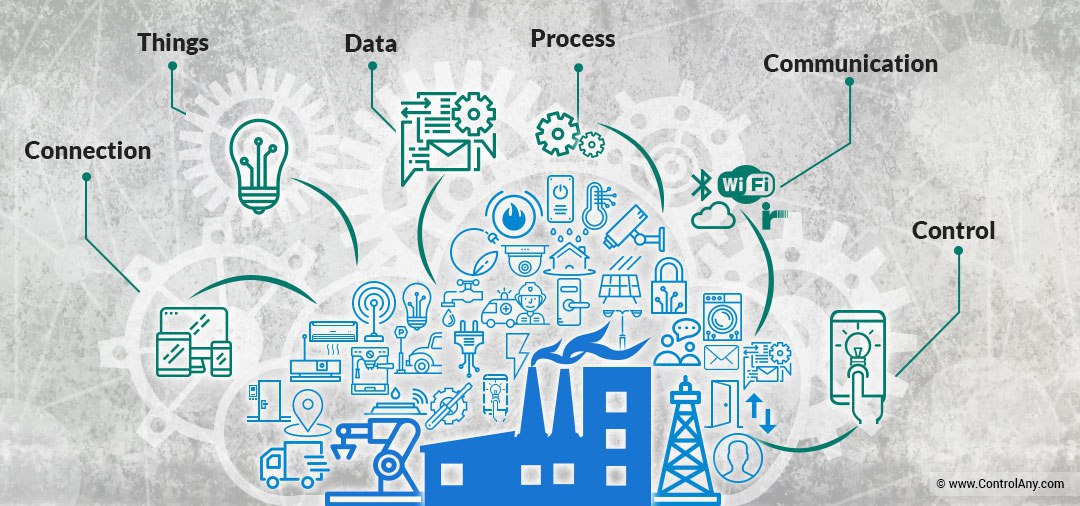
Zerynth, an AWS Standard Technology Partner, provides a software development suite that enables Python programming on 32-bit microcontrollers and allows easy connectivity to AWS IoT services. As of this post, Zerynth supports more than 30 different hardware boards, making it a complete ecosystem for IoT development.
First steps to built your own factory within IoT technology
https://www.youtube.com/watch?v=coSKAvh49Fk
https://www.youtube.com/watch?v=coSKAvh49Fk
If you want to know MQTT more deeply, there is a book PDF from IBM
https://www.redbooks.ibm.com/redbooks/pdfs/sg248054.pdf
https://www.redbooks.ibm.com/redbooks/pdfs/sg248054.pdf
IoT adoption perceived as risky, as failures plague 64% of users worldwide
A new study from Dynatrace suggests that IoT adoption could be severely impacted by concerns over the consequences of IoT device failures.
New research suggests that the IoT market risks being undermined by device failures. According to Dynatrace, if device manufacturers, service providers, and platform creators don’t take steps to minimise the risk of IoT, they will harm their business.
Around 52% of consumers worldwide are now using IoT devices, yet 64% of those have already encountered performance issues – according to an independent global survey of 10,000 consumers.
On average, consumers experience 1.5 digital performance problems every day while 62% of people fear the number of issues they encounter, and the frequency will increase due to the rise of IoT.
For CTOs and IT leaders with products or services on the market that utilise IoT, this research is worth noting.
According to Dave Anderson, CMO of Dynatrace: “The delivery chain behind every connected device is extremely complex. Businesses are already struggling with cloud complexity, but IoT magnifies this a thousand times with sensors, masses of new data and dynamic containerised workloads.”
“Consumers are already reporting problems with everything from medical applications, smart meters, car door locks and virtual personal assistants, to smart thermostats and fridges. Their patience is at an all-time low, and they simply won’t tolerate a poor experience. Yet, we haven’t even seen the era of IoT take off to its full potential – it’s just getting started. The imperative is on companies to find ways to process, analyse and manage the IoT delivery chain holistically, and with deep insight, so they know exactly what’s happening and where issues are arising in real time. This is not an easy task.”
Key Findings
According to the report, 85% of respondents said they are concerned that self-driving cars will malfunction – leading to high-speed collisions.
When it comes to healthcare, 62% of consumers stated they would not trust IoT devices to administer medication; this sentiment is strongest in the 55+ age range, with 74% expressing distrust.
“The reality is IoT glitches could be fatal. Consumers are understandably concerned, and that’s why it will be important for the industry to demonstrate it’s taking a new, more robust approach to ensure software doesn’t compromise our safety,” added Anderson.
As well as the automotive and healthcare industry, the home is also set to be transformed by the IoT. However, the research revealed 83% of consumers are concerned about losing control of their smart home due to digital performance problems.
Managing IoT
According to Anderson: “The old ways of managing IT and software simply don’t work against this extremely convoluted IT environment. IoT creates many blind spots and an additional layer of complexity.”
A separate report from Veeam shows that downtime costs enterprise-sized organisations an average of $16 million annually.
According to Anderson: “The old ways of managing IT and software simply don’t work against this extremely convoluted IT environment. IoT creates many blind spots and an additional layer of complexity. That’s why the early, successful IoT adopters take the view that AI is the answer; to make sense of the complexity, map the IT environment end-to-end, pick up problems immediately and with precision, and offer up answers for fast resolution. That’s the only way to master the IoT era, which is already upon us. Consumers want perfect IoT experiences. Become masters of this new IT universe, or you’ll miss out on the opportunity IoT presents.”
A new study from Dynatrace suggests that IoT adoption could be severely impacted by concerns over the consequences of IoT device failures.
New research suggests that the IoT market risks being undermined by device failures. According to Dynatrace, if device manufacturers, service providers, and platform creators don’t take steps to minimise the risk of IoT, they will harm their business.
Around 52% of consumers worldwide are now using IoT devices, yet 64% of those have already encountered performance issues – according to an independent global survey of 10,000 consumers.
On average, consumers experience 1.5 digital performance problems every day while 62% of people fear the number of issues they encounter, and the frequency will increase due to the rise of IoT.
For CTOs and IT leaders with products or services on the market that utilise IoT, this research is worth noting.
According to Dave Anderson, CMO of Dynatrace: “The delivery chain behind every connected device is extremely complex. Businesses are already struggling with cloud complexity, but IoT magnifies this a thousand times with sensors, masses of new data and dynamic containerised workloads.”
“Consumers are already reporting problems with everything from medical applications, smart meters, car door locks and virtual personal assistants, to smart thermostats and fridges. Their patience is at an all-time low, and they simply won’t tolerate a poor experience. Yet, we haven’t even seen the era of IoT take off to its full potential – it’s just getting started. The imperative is on companies to find ways to process, analyse and manage the IoT delivery chain holistically, and with deep insight, so they know exactly what’s happening and where issues are arising in real time. This is not an easy task.”
Key Findings
According to the report, 85% of respondents said they are concerned that self-driving cars will malfunction – leading to high-speed collisions.
When it comes to healthcare, 62% of consumers stated they would not trust IoT devices to administer medication; this sentiment is strongest in the 55+ age range, with 74% expressing distrust.
“The reality is IoT glitches could be fatal. Consumers are understandably concerned, and that’s why it will be important for the industry to demonstrate it’s taking a new, more robust approach to ensure software doesn’t compromise our safety,” added Anderson.
As well as the automotive and healthcare industry, the home is also set to be transformed by the IoT. However, the research revealed 83% of consumers are concerned about losing control of their smart home due to digital performance problems.
Managing IoT
According to Anderson: “The old ways of managing IT and software simply don’t work against this extremely convoluted IT environment. IoT creates many blind spots and an additional layer of complexity.”
A separate report from Veeam shows that downtime costs enterprise-sized organisations an average of $16 million annually.
According to Anderson: “The old ways of managing IT and software simply don’t work against this extremely convoluted IT environment. IoT creates many blind spots and an additional layer of complexity. That’s why the early, successful IoT adopters take the view that AI is the answer; to make sense of the complexity, map the IT environment end-to-end, pick up problems immediately and with precision, and offer up answers for fast resolution. That’s the only way to master the IoT era, which is already upon us. Consumers want perfect IoT experiences. Become masters of this new IT universe, or you’ll miss out on the opportunity IoT presents.”

Forwarded from Deleted Account
Can any one know how to use GSM module and arduino together to transfer data like Bluetooth module? Is it possible? If yes please send any reference document.
Five IoT Predictions For 2019
(Part 1)
I don’t need to tell you that the IoT is growing at an exponential rate. Vehicles, wearable gadgets, RFID sensors and software are advancing past basic function and the network is growing to include even more advancements each day. I have more connected gadgets in my home this year than I did last and I'm sure I'm not alone. I'd also bet that these advancements will be even more commonplace in our homes, businesses and on the road in 2019. Let’s take a look at five IoT predictions for the coming year and how we can anticipate their impact.
IoT Prediction 1: Overall Growth Across the Board
When you look up IoT market and connectivity statistics you get a range of numbers all mostly in the billions. According to IT Pro, this year alone, around 3.6 billion devices that are connected to the Internet are used for daily tasks. Meaning total number of connected devices is bigger than that.
This means more data and more traffic on an already congested connected internet. In 2019, there will likely be a bigger push for 5G connectivity —adding a lane the congested web highway to handle the increase in devices. I also believe there will be a bigger push for edge computing. Data from IoT devices will be stored closer to the source—stealing business from data centers. To combat this, data centers and edge computing will need to work in harmony. More connected devices means change. Are you ready?
IoT Prediction 2: Deeper Penetration in the Manufacturing and Healthcare Industries
The IoT is a key driver of digital transformation in several industries, specifically manufacturing. Sensors, RFID tags, and smart beacons have already started the next industrial revolution. Market analysts predict the number of connected devices in the manufacturing industry will double between 2017 and 2020.
These devices are a total game changer for the industry disrupting every part of the production process from development to supply chain management. Manufacturers will be able to prevent delays, improve production performance, reduce equipment downtime and manage inventory. But it is not the only industry that will see a deeper penetration.
It’s been said by 2019 that 87% of healthcare organizations will have adopted IoT technology. The possibilities are endless for healthcare organizations and the IoT—smart pills, smart home care, personal healthcare management, electronic health records, managing sensitive data, and an overall higher degree of patient care.
(Part 1)
I don’t need to tell you that the IoT is growing at an exponential rate. Vehicles, wearable gadgets, RFID sensors and software are advancing past basic function and the network is growing to include even more advancements each day. I have more connected gadgets in my home this year than I did last and I'm sure I'm not alone. I'd also bet that these advancements will be even more commonplace in our homes, businesses and on the road in 2019. Let’s take a look at five IoT predictions for the coming year and how we can anticipate their impact.
IoT Prediction 1: Overall Growth Across the Board
When you look up IoT market and connectivity statistics you get a range of numbers all mostly in the billions. According to IT Pro, this year alone, around 3.6 billion devices that are connected to the Internet are used for daily tasks. Meaning total number of connected devices is bigger than that.
This means more data and more traffic on an already congested connected internet. In 2019, there will likely be a bigger push for 5G connectivity —adding a lane the congested web highway to handle the increase in devices. I also believe there will be a bigger push for edge computing. Data from IoT devices will be stored closer to the source—stealing business from data centers. To combat this, data centers and edge computing will need to work in harmony. More connected devices means change. Are you ready?
IoT Prediction 2: Deeper Penetration in the Manufacturing and Healthcare Industries
The IoT is a key driver of digital transformation in several industries, specifically manufacturing. Sensors, RFID tags, and smart beacons have already started the next industrial revolution. Market analysts predict the number of connected devices in the manufacturing industry will double between 2017 and 2020.
These devices are a total game changer for the industry disrupting every part of the production process from development to supply chain management. Manufacturers will be able to prevent delays, improve production performance, reduce equipment downtime and manage inventory. But it is not the only industry that will see a deeper penetration.
It’s been said by 2019 that 87% of healthcare organizations will have adopted IoT technology. The possibilities are endless for healthcare organizations and the IoT—smart pills, smart home care, personal healthcare management, electronic health records, managing sensitive data, and an overall higher degree of patient care.

Five IoT Predictions For 2019(Part2)
IoT Prediction 3: Increased Security at End Points
I’ll keep it simple: IoT devices leave you vulnerable to hacks and security issues. Think about it, how many IoT devices do you have? Do you know how they’re all secured? By 2019, I think we will increased security at all endpoints.
Hardware manufacturers like Cisco, HPE, Dell and more are building specific infrastructure for the edge deigned to be more physically rugged and secure, and security vendors will start to offer endpoint security solutions to their existing services to prevent data loss, give insights into network health and threat protection, include privileged user control and application whitelisting and control.
IoT Prediction 4: Smart Common Areas in Cities Around the World
Smart cities have been in a bit of a holding pattern recently. Sure we’ve mastered smart buildings and smart homes, but fully smart cities haven’t been come to fruition just yet. I think in 2019 we will start to see smart areas or neighborhoods within cities.
Sidewalk Labs, an Alphabet endeavor, is building a smart neighborhood in Toronto from the ground up. Smart sensors around the neighborhood will record everything from walking routes, shared car use, building occupancy, sewage flow, and temperature choice 24/7 with the goal of creating a place that’s comfortable, convenient, safe, and clean for those who live there. Once the model is perfected, it could be the model for other smart neighborhoods and eventually smart cities.
IoT Prediction 5: Increased Market Penetration of Connected Smart Cars
Even as a tech industry analyst, when I recently went car shopping, I was blown away by all of the IoT upgrades and how this has found its way into vehicles at every price point. While self-driving cars might be a normal occurrence in the next few years, I think that there are more possibilities with IoT inside the car for 2019.
Now tons of vehicles have a connected app that shows up to date diagnostic information about the car. This is done with IoT technology, which is the heart oft he connected vehicle. The ability to check tire pressure, oil level, fuel consumption and so many other things about a car and get the info sent to the palm of your hand. Also how it alerts the vehicle owner (or whomever you choose) when something is wrong with the engine. I can’t believe we ever lived without something like this.
Diagnostic information is not the only IoT advancement that we will see in the next year or so. Connected apps, voice search, and current traffic information are a few other things that will change the way we drive. Is it time to buy a new car? I think so. At the very least it is safe to say that IoT is changing the way we experience our automobiles.
These are only a few IoT predictions for 2019 and the years to come. There will likely be more advancements that we have only dreamt about until now. I personally can’t wait to see how the IoT continues to shake things up in industries everywhere.
IoT Prediction 3: Increased Security at End Points
I’ll keep it simple: IoT devices leave you vulnerable to hacks and security issues. Think about it, how many IoT devices do you have? Do you know how they’re all secured? By 2019, I think we will increased security at all endpoints.
Hardware manufacturers like Cisco, HPE, Dell and more are building specific infrastructure for the edge deigned to be more physically rugged and secure, and security vendors will start to offer endpoint security solutions to their existing services to prevent data loss, give insights into network health and threat protection, include privileged user control and application whitelisting and control.
IoT Prediction 4: Smart Common Areas in Cities Around the World
Smart cities have been in a bit of a holding pattern recently. Sure we’ve mastered smart buildings and smart homes, but fully smart cities haven’t been come to fruition just yet. I think in 2019 we will start to see smart areas or neighborhoods within cities.
Sidewalk Labs, an Alphabet endeavor, is building a smart neighborhood in Toronto from the ground up. Smart sensors around the neighborhood will record everything from walking routes, shared car use, building occupancy, sewage flow, and temperature choice 24/7 with the goal of creating a place that’s comfortable, convenient, safe, and clean for those who live there. Once the model is perfected, it could be the model for other smart neighborhoods and eventually smart cities.
IoT Prediction 5: Increased Market Penetration of Connected Smart Cars
Even as a tech industry analyst, when I recently went car shopping, I was blown away by all of the IoT upgrades and how this has found its way into vehicles at every price point. While self-driving cars might be a normal occurrence in the next few years, I think that there are more possibilities with IoT inside the car for 2019.
Now tons of vehicles have a connected app that shows up to date diagnostic information about the car. This is done with IoT technology, which is the heart oft he connected vehicle. The ability to check tire pressure, oil level, fuel consumption and so many other things about a car and get the info sent to the palm of your hand. Also how it alerts the vehicle owner (or whomever you choose) when something is wrong with the engine. I can’t believe we ever lived without something like this.
Diagnostic information is not the only IoT advancement that we will see in the next year or so. Connected apps, voice search, and current traffic information are a few other things that will change the way we drive. Is it time to buy a new car? I think so. At the very least it is safe to say that IoT is changing the way we experience our automobiles.
These are only a few IoT predictions for 2019 and the years to come. There will likely be more advancements that we have only dreamt about until now. I personally can’t wait to see how the IoT continues to shake things up in industries everywhere.
Hi, guys! Who want a FREE Casual SmartWatch? Only Today! Pay only for shipping! https://bit.ly/2PzbPfE
How Cryptojacking Can Corrupt the Internet of Things
Cyber criminals shut down parts of the Web in October 2016 by attacking the computers that serve as the internet’s switchboard. Their weapon of choice? Poorly secured Web cameras and other internet-connected gadgets that have collectively come to be known as the Internet of Things (IoT). The attack created a minor panic among people trying to visit Sony PlayStation Network, Twitter, GitHub and Spotify’s Web sites, but it had little long-term effect on internet use or the hijacked devices. Less than two years later, however, security experts are sounding the alarm over a new and possibly more nefarious type of IoT attack that “cryptojacks” smart devices, surreptitiously stealing their computing power to help cyber criminals make digital money.
Cryptocurrencies—so called because they use cryptography to secure transactions and mint new virtual coins—are generated when computers loaded with “cryptomining” software perform complex mathematical calculations. The calculations themselves serve no practical purpose, but the faster the computers complete them the more electronic money they make. Cryptojacking (a mashup of the words “cryptocurrency” and “hijacking”) occurs anytime someone uses another person’s internet-connected device without permission to “mine” Ethereum, Monero or some other virtual cash. (Bitcoins are a lot more valuable, but this well-known cryptocurrency is more likely to be created using warehouses of servers rather than someone’s stolen processing power).
Cyber criminals steal that power by sneaking malicious software containing cryptomining code onto PCs, smartphones and other internet-connected devices that, once infected, divert some of their processors’ capacity into solving the aforementioned calculations. Another type of cryptojacking attack occurs when internet users are tricked into visiting Web sites containing code that grabs part of their device’s processing power for as long as they visit the site. To entice people to stay, those sites tend to offer free pornography or pirated content. Victims usually have no idea their device has been coopted—although they might wonder why their batteries drain so quickly.
“When mining for gold, the person who works hardest with their pickaxe makes the most money,” says Richard Enbody, an associate computer science and engineering professor at Michigan State University. “In cryptomining, the pickaxe is an algorithm. The more complex the calculations it performs, the more processing power and energy it uses and the more money it earns.”
The latest trend is for criminals to infect appliances and other internet-connected devices with unwanted cryptomining software, Sherri Davidoff, CEO of cyber security firm LMG Security, said during a recent IoT cryptojacking webinar. “Many of these devices are unmonitored and highly vulnerable to simple attacks that exploit weak passwords and unpatched vulnerabilities,” Davidoff said. Nearly every case LMG is currently investigating has turned up cryptomining software, in addition to whatever other malware criminals installed on their victims’ computers, she added.
To test IoT devices’ susceptibility to having their processors hijacked to make cryptocurrency, Davidoff and her colleagues hacked into a Web camera in their lab and installed cryptomining software. After a day of calculating the camera managed to produce about three-quarters of a penny’s worth of Monero. Not exactly the motherlode, but those almost-pennies add up over time—especially if an attacker takes over thousands of Web cameras and leaves the software in place for a while, Davidoff said. Security cameras are a prime target because they connect to mostly unsecured public networks and are fairly generic—the same malware can be used to infect many different brands. In some cases these devices do not allow users to change their default security passwords.
Cyber criminals shut down parts of the Web in October 2016 by attacking the computers that serve as the internet’s switchboard. Their weapon of choice? Poorly secured Web cameras and other internet-connected gadgets that have collectively come to be known as the Internet of Things (IoT). The attack created a minor panic among people trying to visit Sony PlayStation Network, Twitter, GitHub and Spotify’s Web sites, but it had little long-term effect on internet use or the hijacked devices. Less than two years later, however, security experts are sounding the alarm over a new and possibly more nefarious type of IoT attack that “cryptojacks” smart devices, surreptitiously stealing their computing power to help cyber criminals make digital money.
Cryptocurrencies—so called because they use cryptography to secure transactions and mint new virtual coins—are generated when computers loaded with “cryptomining” software perform complex mathematical calculations. The calculations themselves serve no practical purpose, but the faster the computers complete them the more electronic money they make. Cryptojacking (a mashup of the words “cryptocurrency” and “hijacking”) occurs anytime someone uses another person’s internet-connected device without permission to “mine” Ethereum, Monero or some other virtual cash. (Bitcoins are a lot more valuable, but this well-known cryptocurrency is more likely to be created using warehouses of servers rather than someone’s stolen processing power).
Cyber criminals steal that power by sneaking malicious software containing cryptomining code onto PCs, smartphones and other internet-connected devices that, once infected, divert some of their processors’ capacity into solving the aforementioned calculations. Another type of cryptojacking attack occurs when internet users are tricked into visiting Web sites containing code that grabs part of their device’s processing power for as long as they visit the site. To entice people to stay, those sites tend to offer free pornography or pirated content. Victims usually have no idea their device has been coopted—although they might wonder why their batteries drain so quickly.
“When mining for gold, the person who works hardest with their pickaxe makes the most money,” says Richard Enbody, an associate computer science and engineering professor at Michigan State University. “In cryptomining, the pickaxe is an algorithm. The more complex the calculations it performs, the more processing power and energy it uses and the more money it earns.”
The latest trend is for criminals to infect appliances and other internet-connected devices with unwanted cryptomining software, Sherri Davidoff, CEO of cyber security firm LMG Security, said during a recent IoT cryptojacking webinar. “Many of these devices are unmonitored and highly vulnerable to simple attacks that exploit weak passwords and unpatched vulnerabilities,” Davidoff said. Nearly every case LMG is currently investigating has turned up cryptomining software, in addition to whatever other malware criminals installed on their victims’ computers, she added.
To test IoT devices’ susceptibility to having their processors hijacked to make cryptocurrency, Davidoff and her colleagues hacked into a Web camera in their lab and installed cryptomining software. After a day of calculating the camera managed to produce about three-quarters of a penny’s worth of Monero. Not exactly the motherlode, but those almost-pennies add up over time—especially if an attacker takes over thousands of Web cameras and leaves the software in place for a while, Davidoff said. Security cameras are a prime target because they connect to mostly unsecured public networks and are fairly generic—the same malware can be used to infect many different brands. In some cases these devices do not allow users to change their default security passwords.
“For financially-motivated cybercriminals, cryptojacking a large number of inadequately protected IoT devices could be highly lucrative,” says Pranshu Bajpai, a PhD candidate in Michigan State University’s Department of Computer Science and Engineering. “It can be argued that gaining an initial foothold into IoT devices is relatively easier than a computer or a phone, which normally have better protections.” Given that many IoT devices lack updated antivirus software or an intrusion detection system, the malware is more likely to remain undetected longer.
In addition to degrading battery life, cryptojacking can strain or possibly burn out a device’s processor. In an extreme case LMG investigated, one of the client’s employees requested an extremely powerful computer—ostensibly for work—only to inform the client within a couple of months that the computer had caught fire. A few weeks later the client discovered that the employee had been using his new work computer for cryptomining. Most cryptominers and hackers avoid overtaxing their machines, or the machines they hijack, for fear of killing a (digital) cash cow. Still, even if cryptojacking does not destroy a device it will slow it down considerably.
Not all remote cryptomining is done on the sly or for malicious purposes. In February lifestyle magazine Salon employed the practice to help make up for the advertising revenue they lose when readers use ad-blocking software. Salon began asking online readers to help support the publication financially, either by shutting off ad blockers or allowing Salon to borrow users’ devices for Monero mining while they read. UNICEF Australia encourages people to donate their computers’ processing power to the charity for digital fundraising. Cryptojacking, however, is increasingly being recognized as a crime. A Japanese court earlier this month sentenced a man to a year in prison for illegally cryptomining $45 in Monero on victims’ computers.
People can protect their devices primarily by keeping their operating systems and software up to date, Bajpai says. They can also install programs called “extensions,” which block mining software, in their Web browsers. Consumers typically must rely on the companies that make internet routers, Web cameras and other connected devices to keep that technology secure and up to date. If those companies do not ship their products with secure software and update it frequently to fight malware, the IoT could be in for a bumpy ride—and it is expected to grow from about 23 billion devices this year to more than 75 billion by 2025.
In addition to degrading battery life, cryptojacking can strain or possibly burn out a device’s processor. In an extreme case LMG investigated, one of the client’s employees requested an extremely powerful computer—ostensibly for work—only to inform the client within a couple of months that the computer had caught fire. A few weeks later the client discovered that the employee had been using his new work computer for cryptomining. Most cryptominers and hackers avoid overtaxing their machines, or the machines they hijack, for fear of killing a (digital) cash cow. Still, even if cryptojacking does not destroy a device it will slow it down considerably.
Not all remote cryptomining is done on the sly or for malicious purposes. In February lifestyle magazine Salon employed the practice to help make up for the advertising revenue they lose when readers use ad-blocking software. Salon began asking online readers to help support the publication financially, either by shutting off ad blockers or allowing Salon to borrow users’ devices for Monero mining while they read. UNICEF Australia encourages people to donate their computers’ processing power to the charity for digital fundraising. Cryptojacking, however, is increasingly being recognized as a crime. A Japanese court earlier this month sentenced a man to a year in prison for illegally cryptomining $45 in Monero on victims’ computers.
People can protect their devices primarily by keeping their operating systems and software up to date, Bajpai says. They can also install programs called “extensions,” which block mining software, in their Web browsers. Consumers typically must rely on the companies that make internet routers, Web cameras and other connected devices to keep that technology secure and up to date. If those companies do not ship their products with secure software and update it frequently to fight malware, the IoT could be in for a bumpy ride—and it is expected to grow from about 23 billion devices this year to more than 75 billion by 2025.

The Industrial Internet of Things to Transform Supply Chains by 2023
The Industrial Internet of Things (IIoT) is set to make a sizeable contribution to the global economy by 2023. This is according to a new study released by Inmarsat, the world mobile satellite communications company based in London.
According to researchers, supply chain managers expect IIoT to be increasing their annual revenues by 10 per cent within 5 years.
The report – “IIoT on Land and at Sea” – was compiled by the market research firm, Vanson Bourne, which surveyed 750 businesses with a combined turnover of $1.16 trillion annually. Respondents were drawn from a wide range of industries, including the agriculture, energy, maritime, mining and transport sectors.
Access to reliable and resilient connectivity, particularly in remote regions or at sea, where terrestrial networks are not available but satellite communications are available, will be essential to the success of many IIoT deployments.
“IIoT is emerging as a major force in the modern enterprise and it’s clear that businesses are prioritizing satellite technology to transform their operations and achieve competitive advantage,” said Paul Gudonis, President, Inmarsat Enterprise.
He added that Data generated by IIoT infrastructure is expected particularly to bring greater transparency to the global supply chain, allowing businesses to automate processes, reduce operational waste and speed up rate of production, leading to higher revenues and lower costs.”
“However, many businesses are struggling with security, skills and connectivity challenges in large scale IIoT deployments,” Gudonis cautioned.
Director of Transport at Inmarsat Enterprise, told SCMR in an interview that some supply chains might also become vulnerable if proper procedures are not introduced.
“With hackers, activists and hostile state actors ever more intent on disrupting elements of the global supply chain, such as energy supplies or transport networks, IIoT devices and sensors may present a backdoor for destructive cyber-attacks on crucial operations,” he said. “As the global supply chain becomes ever-more connected, this could lead to subsequent elements of the supply chain being at risk of further cyber-attack with potentially damaging consequences.”
But Holdsworth stressed that it is here that satellite connectivity can play a critical role.
Mike Holdsworth, “By offering highly secure networks and integration with communications technology such LoRaWAN, it can ensure secure end-to-end data transmission,” he said. “In addition, to mitigate the risk of a loss of connectivity, satellite connectivity can offer logistics businesses a global communications network, guaranteeing constant secure and reliable data transmission wherever their IIoT infrastructure is located.”
The Industrial Internet of Things (IIoT) is set to make a sizeable contribution to the global economy by 2023. This is according to a new study released by Inmarsat, the world mobile satellite communications company based in London.
According to researchers, supply chain managers expect IIoT to be increasing their annual revenues by 10 per cent within 5 years.
The report – “IIoT on Land and at Sea” – was compiled by the market research firm, Vanson Bourne, which surveyed 750 businesses with a combined turnover of $1.16 trillion annually. Respondents were drawn from a wide range of industries, including the agriculture, energy, maritime, mining and transport sectors.
Access to reliable and resilient connectivity, particularly in remote regions or at sea, where terrestrial networks are not available but satellite communications are available, will be essential to the success of many IIoT deployments.
“IIoT is emerging as a major force in the modern enterprise and it’s clear that businesses are prioritizing satellite technology to transform their operations and achieve competitive advantage,” said Paul Gudonis, President, Inmarsat Enterprise.
He added that Data generated by IIoT infrastructure is expected particularly to bring greater transparency to the global supply chain, allowing businesses to automate processes, reduce operational waste and speed up rate of production, leading to higher revenues and lower costs.”
“However, many businesses are struggling with security, skills and connectivity challenges in large scale IIoT deployments,” Gudonis cautioned.
Director of Transport at Inmarsat Enterprise, told SCMR in an interview that some supply chains might also become vulnerable if proper procedures are not introduced.
“With hackers, activists and hostile state actors ever more intent on disrupting elements of the global supply chain, such as energy supplies or transport networks, IIoT devices and sensors may present a backdoor for destructive cyber-attacks on crucial operations,” he said. “As the global supply chain becomes ever-more connected, this could lead to subsequent elements of the supply chain being at risk of further cyber-attack with potentially damaging consequences.”
But Holdsworth stressed that it is here that satellite connectivity can play a critical role.
Mike Holdsworth, “By offering highly secure networks and integration with communications technology such LoRaWAN, it can ensure secure end-to-end data transmission,” he said. “In addition, to mitigate the risk of a loss of connectivity, satellite connectivity can offer logistics businesses a global communications network, guaranteeing constant secure and reliable data transmission wherever their IIoT infrastructure is located.”