
6 strategies to reduce customer frustration with IoT devices
1. Sell or produce universally compatible tech products
Whether you manufacture or just sell your own IoT products, you should require that these devices conform to industry interoperability and compatibility standards. This eases the installation of the devices in homes, where consumers can be counted on to have a plurality of devices from many different manufacturers.
2.Hire infrastructure-savvy technicians and tech support personnel
You might have to pay experienced infrastructure persons more than entry-level junior techs, but the investment is well worth it if you can assemble a corps of techs who really understand your products and the home tech environments that your products operate in. These techs, with their home tech infrastructure knowledge, will be more likely to resolve tech issues on the first visit.
3. Use videos to help more junior techs
Junior techs aren't going to have a broad base of experience when they first make home service calls. At the same time, they might be hesitant to call someone for help while they are on presumes with the customer watching them. "One option is to give them a library of YouTube-style videos on different troubleshooting accounts and procedure they can use in problem solving," said Braswell. "This brings the expert into the home, and the junior tech can more easily address the issue."
4. Map out the entire customer journey
"Once the customer purchases your product, think about how that customer is going to interact with the technology," said Braswell. "What type of value does the customer expect from the technology? What types of problems are they likely to experience when they first install the product? How can your service manuals, online help and onsite visits be positioned to solve these issues quickly?"
5. Think about your customer's infrastructure at the point of sale—not when they need servicing
"You can be proactive and eliminate needless service calls by having the salesperson ask the customer if (they have) the necessary equipment at home that your product will need to interact with," said Braswell. "If the customer confirms that he or she already has all of the necessary equipment, many problems resulting from failed installations can be precluded."
6. Consolidate omnichannel services for a 360 degree view of the customer
Customers get frustrated when they are asked repeatedly to give their names, account numbers, trouble tickets, and problem statements to the service reps they are passed to via chat, phones, in person, etc. This frustration is well-founded. It is fair for consumers to expect companies to be as aware and as interested in their problems as they are. Many companies fail at this—even though they offer omnichannel sales. There is no reason for this to happen anymore. For years, CRM (customer relationship management) systems have provided for integration of omnichannel sales channels into a single view of a customer that gives everyone a single view of the customer experience—from sales to service.
1. Sell or produce universally compatible tech products
Whether you manufacture or just sell your own IoT products, you should require that these devices conform to industry interoperability and compatibility standards. This eases the installation of the devices in homes, where consumers can be counted on to have a plurality of devices from many different manufacturers.
2.Hire infrastructure-savvy technicians and tech support personnel
You might have to pay experienced infrastructure persons more than entry-level junior techs, but the investment is well worth it if you can assemble a corps of techs who really understand your products and the home tech environments that your products operate in. These techs, with their home tech infrastructure knowledge, will be more likely to resolve tech issues on the first visit.
3. Use videos to help more junior techs
Junior techs aren't going to have a broad base of experience when they first make home service calls. At the same time, they might be hesitant to call someone for help while they are on presumes with the customer watching them. "One option is to give them a library of YouTube-style videos on different troubleshooting accounts and procedure they can use in problem solving," said Braswell. "This brings the expert into the home, and the junior tech can more easily address the issue."
4. Map out the entire customer journey
"Once the customer purchases your product, think about how that customer is going to interact with the technology," said Braswell. "What type of value does the customer expect from the technology? What types of problems are they likely to experience when they first install the product? How can your service manuals, online help and onsite visits be positioned to solve these issues quickly?"
5. Think about your customer's infrastructure at the point of sale—not when they need servicing
"You can be proactive and eliminate needless service calls by having the salesperson ask the customer if (they have) the necessary equipment at home that your product will need to interact with," said Braswell. "If the customer confirms that he or she already has all of the necessary equipment, many problems resulting from failed installations can be precluded."
6. Consolidate omnichannel services for a 360 degree view of the customer
Customers get frustrated when they are asked repeatedly to give their names, account numbers, trouble tickets, and problem statements to the service reps they are passed to via chat, phones, in person, etc. This frustration is well-founded. It is fair for consumers to expect companies to be as aware and as interested in their problems as they are. Many companies fail at this—even though they offer omnichannel sales. There is no reason for this to happen anymore. For years, CRM (customer relationship management) systems have provided for integration of omnichannel sales channels into a single view of a customer that gives everyone a single view of the customer experience—from sales to service.
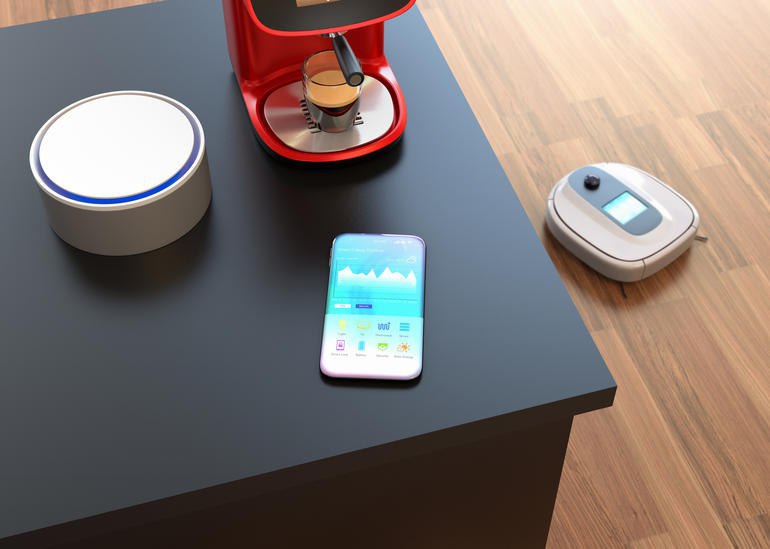
How IoT supports connected health and process optimization
Why do healthcare organizations need to think about the Internet of Things? Do they need a strategy?
Organizations do not need to think about the Internet of Things ― they need to think about how they want to transform their business and which transformational path will reap the largest benefit. Path No. 1 is optimization of existing business processes. Path 2 is a complete change in business process. Each path will require efforts in re-engineering the people, processes and technologies that are applied to deliver care.
There is an old saying, “When you don’t know where you are going, any road will get you there.” At CDW, we have a methodology for the development of a long-term strategy for digital transformation that creates a roadmap based on the individual needs of the organization.
1. Start by bringing all stakeholders to the table ― clinical, administrative and IT ― to identify business challenges (such as HCAPHS scores, 30-day readmission, operating costs or reducing clinician stress), and assign dollar values to each of these challenges.
2. Take these challenges and determine what a solution would look like in general terms (for example, a 30-day readmission solution, or the ability to recognize a negative trend in patients’ health and intervene before he or she shows up at the emergency department), and what measurements will be used for success.
3. Evaluate existing capabilities and infrastructure as well as determine what additional technologies are needed. Create a process map of dataflows and workflows that will support the desired outcome.
4. Roll out a pilot program. Measure and adjust until it delivers consistent results, and then move to production.
5. Repeat this process for all identified challenges and updated challenges.
What are some of the most promising technologies emerging in the healthcare IoT space, and how will they improve connected health?
CDW has seen tremendous growth in technologies in the areas of wearables, mHealth/telemedicine and smart rooms ― all engineered to address the need to provide care outside the institutional walls and to improve the care and safety of patients and seniors.
Wearables will soon have a broad range of form factors (e.g., on your wrist, shoe or clothing) that will have the ability to measure and send to the cloud important physiological data points for evaluation by a decision support technology, which, depending on the trend, may or may not forward to a clinician for review, at which point a telehealth session can be initiated if needed.
mHealth is moving from being a passive collector of data via patient data entry to an active aggregator of data from multiple sources for real-time evaluation. Additionally, a lot of eff ort is being put into utilizing mHealth to engage patients in the management of their disease.
Smart rooms in homes, senior living and hospitals are being developed
1. to optimize the time an individual can safely and comfortably live at home, relieving the financial pressure on families;
2. to act as a force multiplier for senior-living operators staff to ensure the comfort and safety of residents; and
3. to improve the patient experience in hospital stays, driving up HCAPHS scores and improving safety.
These advances, as well as the rapid development of more forward-leaning technologies in artificial intelligence and natural language processing, will have an immense impact on the quality and delivery of care.
Why do healthcare organizations need to think about the Internet of Things? Do they need a strategy?
Organizations do not need to think about the Internet of Things ― they need to think about how they want to transform their business and which transformational path will reap the largest benefit. Path No. 1 is optimization of existing business processes. Path 2 is a complete change in business process. Each path will require efforts in re-engineering the people, processes and technologies that are applied to deliver care.
There is an old saying, “When you don’t know where you are going, any road will get you there.” At CDW, we have a methodology for the development of a long-term strategy for digital transformation that creates a roadmap based on the individual needs of the organization.
1. Start by bringing all stakeholders to the table ― clinical, administrative and IT ― to identify business challenges (such as HCAPHS scores, 30-day readmission, operating costs or reducing clinician stress), and assign dollar values to each of these challenges.
2. Take these challenges and determine what a solution would look like in general terms (for example, a 30-day readmission solution, or the ability to recognize a negative trend in patients’ health and intervene before he or she shows up at the emergency department), and what measurements will be used for success.
3. Evaluate existing capabilities and infrastructure as well as determine what additional technologies are needed. Create a process map of dataflows and workflows that will support the desired outcome.
4. Roll out a pilot program. Measure and adjust until it delivers consistent results, and then move to production.
5. Repeat this process for all identified challenges and updated challenges.
What are some of the most promising technologies emerging in the healthcare IoT space, and how will they improve connected health?
CDW has seen tremendous growth in technologies in the areas of wearables, mHealth/telemedicine and smart rooms ― all engineered to address the need to provide care outside the institutional walls and to improve the care and safety of patients and seniors.
Wearables will soon have a broad range of form factors (e.g., on your wrist, shoe or clothing) that will have the ability to measure and send to the cloud important physiological data points for evaluation by a decision support technology, which, depending on the trend, may or may not forward to a clinician for review, at which point a telehealth session can be initiated if needed.
mHealth is moving from being a passive collector of data via patient data entry to an active aggregator of data from multiple sources for real-time evaluation. Additionally, a lot of eff ort is being put into utilizing mHealth to engage patients in the management of their disease.
Smart rooms in homes, senior living and hospitals are being developed
1. to optimize the time an individual can safely and comfortably live at home, relieving the financial pressure on families;
2. to act as a force multiplier for senior-living operators staff to ensure the comfort and safety of residents; and
3. to improve the patient experience in hospital stays, driving up HCAPHS scores and improving safety.
These advances, as well as the rapid development of more forward-leaning technologies in artificial intelligence and natural language processing, will have an immense impact on the quality and delivery of care.

A new ARM solution will integrate SIM cards into IoT chips
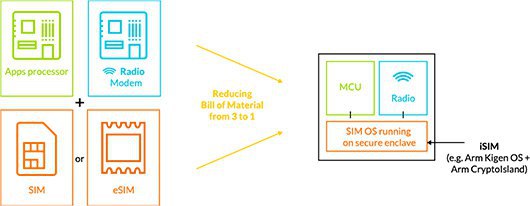
ARM announced new technologies for the introduction of SIM-cards in IoT solutions, which can scale up to billions of devices. The Arm Kigen family supports the iSIM standard and is designed to integrate SIM cards directly into the SoC for IoT applications.
In combination with built-in hardware protection (for example, ARM CryptoIsland), the new solution will integrate the MCU, cellular modem and SIM card into a single IoT-chip, which will significantly reduce the cost of devices.
The presented platform includes ARM Kigen OS, a hardware-independent software stack that allows to fully integrate the functionality of the SIM card into IoT SoC.
Server solutions for remote management of ARM Kigen will also be available, which offer flexibility, modular design and easy integration with the IoT platform providers.
As noted in ARM, the platform has already received support from key players of the ecosystem, including BT, SoftBank and Sprint.
ARM announced new technologies for the introduction of SIM-cards in IoT solutions, which can scale up to billions of devices. The Arm Kigen family supports the iSIM standard and is designed to integrate SIM cards directly into the SoC for IoT applications.
In combination with built-in hardware protection (for example, ARM CryptoIsland), the new solution will integrate the MCU, cellular modem and SIM card into a single IoT-chip, which will significantly reduce the cost of devices.
The presented platform includes ARM Kigen OS, a hardware-independent software stack that allows to fully integrate the functionality of the SIM card into IoT SoC.
Server solutions for remote management of ARM Kigen will also be available, which offer flexibility, modular design and easy integration with the IoT platform providers.
As noted in ARM, the platform has already received support from key players of the ecosystem, including BT, SoftBank and Sprint.
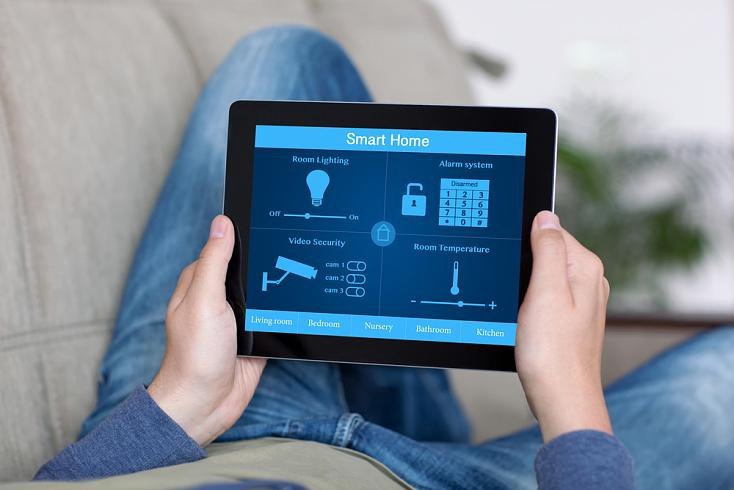
How smart furniture extends the boundaries of small apartments
Scientists from the Massachusetts Institute of Technology (MIT) apparently resolved the problems of one-room apartments. Researchers have developed a solution that allows using a mobile application to remotely control a bed, cabinets, desk and other furniture. You just need to say a command or press a button on your smartphone...
Scientists from the Massachusetts Institute of Technology (MIT) apparently resolved the problems of one-room apartments. Researchers have developed a solution that allows using a mobile application to remotely control a bed, cabinets, desk and other furniture. You just need to say a command or press a button on your smartphone...
IoT reigniting the Oil & Gas Industry
Among the technologies that are in vanguard as a consequence of ongoing fourth industry revolution and is poised for a huge leap forward is called “Internet of Things”...
Among the technologies that are in vanguard as a consequence of ongoing fourth industry revolution and is poised for a huge leap forward is called “Internet of Things”...
IoT Use Case - Battery Powered Device
https://www.iot-architect.de/iot-use-case-battery-powered-device
https://www.iot-architect.de/iot-use-case-battery-powered-device
Avast introduced the Smart Life solution for the safety of IoT devices
Avast as part of MWC 2018 introduced the Smart Life platform, a solution for protecting digital information based on IoT. Smart Life uses Artificial Intelligence technology to identify and eliminate threats. Avast offers customers and suppliers a Smart Life solution as a software-as-a-Service. The offer makes it easy for users and small businesses to protect IoT devices, networks and sensitive data at home, in the office and out of it.
According to forecasts, the number of IoT-devices by 2025 will triple: experts expect more than 75 billion connected to the Internet devices. Manufacturers are rushing to launch smart devices on the market at an affordable price, but some neglect the protection and security systems of manufactured devices. The Smart Life platform is designed to protect these IoT devices from cyberattacks.
"We actively use the Internet devices of things at home and at work, but their safety is still not ideal. This means that users are still at risk today, "said Gagan Singh, senior vice president and general manager of mobile development at Avast. - The expectations of users are increasing: we want to get comfort and pleasure from using smart gadgets. Therefore, manufacturers face the issue of securing smart devices ".
Avast receives data from 400 million active users from around the world about the operation of IoT-devices. Thanks to this, the machine learning mechanism constantly accumulates experience, which allows you to promptly identify and counteract various violations, botnets and other threats to the Internet devices of things. When developing the Smart Life platform, one of the priorities was the creation of security, which is easy to use to ensure the security of IoT networks and devices.
Many smart devices can be hacked by intruders, including heating control systems, smart speakers, webcams and other gadgets, so ordinary users and small businesses are very vulnerable. One of the most common types of attacks - cybercriminals are attacking thousands of smart devices of unsuspecting victims to create a botnet to attack others. And in the future, the number of such cybercrime will grow along with theft of personal data and threats to physical security.
If the IoT device exhibits suspicious activity and transmits large amounts of data to an unknown address, Smart Life immediately stops sending traffic and notifies the host about detected strange activity. As the service is deployed, additional features will be available, such as the ability to pause Internet access, limit the monitor's running time, and add strict content filtering.
The Smart Life solution for protection of IoT-networks and devices in Russia will be available in 2018.
Avast as part of MWC 2018 introduced the Smart Life platform, a solution for protecting digital information based on IoT. Smart Life uses Artificial Intelligence technology to identify and eliminate threats. Avast offers customers and suppliers a Smart Life solution as a software-as-a-Service. The offer makes it easy for users and small businesses to protect IoT devices, networks and sensitive data at home, in the office and out of it.
According to forecasts, the number of IoT-devices by 2025 will triple: experts expect more than 75 billion connected to the Internet devices. Manufacturers are rushing to launch smart devices on the market at an affordable price, but some neglect the protection and security systems of manufactured devices. The Smart Life platform is designed to protect these IoT devices from cyberattacks.
"We actively use the Internet devices of things at home and at work, but their safety is still not ideal. This means that users are still at risk today, "said Gagan Singh, senior vice president and general manager of mobile development at Avast. - The expectations of users are increasing: we want to get comfort and pleasure from using smart gadgets. Therefore, manufacturers face the issue of securing smart devices ".
Avast receives data from 400 million active users from around the world about the operation of IoT-devices. Thanks to this, the machine learning mechanism constantly accumulates experience, which allows you to promptly identify and counteract various violations, botnets and other threats to the Internet devices of things. When developing the Smart Life platform, one of the priorities was the creation of security, which is easy to use to ensure the security of IoT networks and devices.
Many smart devices can be hacked by intruders, including heating control systems, smart speakers, webcams and other gadgets, so ordinary users and small businesses are very vulnerable. One of the most common types of attacks - cybercriminals are attacking thousands of smart devices of unsuspecting victims to create a botnet to attack others. And in the future, the number of such cybercrime will grow along with theft of personal data and threats to physical security.
If the IoT device exhibits suspicious activity and transmits large amounts of data to an unknown address, Smart Life immediately stops sending traffic and notifies the host about detected strange activity. As the service is deployed, additional features will be available, such as the ability to pause Internet access, limit the monitor's running time, and add strict content filtering.
The Smart Life solution for protection of IoT-networks and devices in Russia will be available in 2018.

7 transportation IoT predictions from Cisco
Cisco is one of the biggest proponents — and potential beneficiaries — of the Internet of Things (IoT). The networking giant is pushing IoT solutions in a number of areas, not least of which is the transporation sector.
To learn more about how the company sees the future of IoT playing out in the world of connected transporation, I spoke (via email) with Kyle Connor, Cisco’s transportation industry principal...
https://www.networkworld.com/article/3257769/internet-of-things/7-transportation-iot-predictions-from-cisco.html
Cisco is one of the biggest proponents — and potential beneficiaries — of the Internet of Things (IoT). The networking giant is pushing IoT solutions in a number of areas, not least of which is the transporation sector.
To learn more about how the company sees the future of IoT playing out in the world of connected transporation, I spoke (via email) with Kyle Connor, Cisco’s transportation industry principal...
https://www.networkworld.com/article/3257769/internet-of-things/7-transportation-iot-predictions-from-cisco.html
Interpol Tests Global Cops with IoT Simulation
Interpol last week held a simulated training exercise for global investigators designed to help overcome Internet of Things (IoT) skills shortages.
The international police organization’s annual Digital Security Challenge saw 43 cybercrime investigators and digital forensics experts from 23 countries face a simulated cyber-attack on a bank launched through an IoT device.
During the course of the simulation, investigators found that the malware was sent in an email attachment via a hacked webcam, and not direct from a computer.
Interpol claimed this is an increasingly popular tactic designed to obfuscate the source of attacks, but warned that police may not have the skills to forensically examine IoT devices.
“The ever-changing world of cybercrime is constantly presenting new challenges for law enforcement, but we cannot successfully counter them by working in isolation,” said Noboru, Nakatani, executive director of the Interpol Global Complex for Innovation.
“A multi-stakeholder approach which engages the expertise of the private sector is essential for anticipating new threats and ensuring police have access to the technology and knowledge necessary to detect and investigate cyber-attacks.”
The first two Digital Security Challenge exercises in 2016 and 2017 simulated cyber-blackmail involving Bitcoin and a ransomware attack, so the new focus on IoT is reflective of the changing nature of threats.
Last week, Trend Micro claimed in its 2017 roundup report that IoT devices are increasingly being “zombified” to mine crypto-currency and launch cyber-attacks like DDoS.
Hackers can target exposed IoT endpoints to infiltrate corporate networks, conscript into botnets or even interfere with critical infrastructure.
However, nearly half (49%) of all IoT “events” observed by the security vendor last year — amounting to a total of 45.6 million — involved crypto-currency mining.
Adam Brown, security solutions manager at Synopsys, argued that IoT attacks will continue until firmware flaws are addressed.
“Good practices by vendors around configuration and authentication need to be initiated or matured to prevent this in future,” he added.
"I would love to see certification for IoT devices become commonplace so that consumers can know that the devices are cyber-safe, much in the same way that if you buy a toy with a CE mark you know it has been through a process of assessment and it won’t, for example, poison anyone because it has lead in its paint.”
Interpol last week held a simulated training exercise for global investigators designed to help overcome Internet of Things (IoT) skills shortages.
The international police organization’s annual Digital Security Challenge saw 43 cybercrime investigators and digital forensics experts from 23 countries face a simulated cyber-attack on a bank launched through an IoT device.
During the course of the simulation, investigators found that the malware was sent in an email attachment via a hacked webcam, and not direct from a computer.
Interpol claimed this is an increasingly popular tactic designed to obfuscate the source of attacks, but warned that police may not have the skills to forensically examine IoT devices.
“The ever-changing world of cybercrime is constantly presenting new challenges for law enforcement, but we cannot successfully counter them by working in isolation,” said Noboru, Nakatani, executive director of the Interpol Global Complex for Innovation.
“A multi-stakeholder approach which engages the expertise of the private sector is essential for anticipating new threats and ensuring police have access to the technology and knowledge necessary to detect and investigate cyber-attacks.”
The first two Digital Security Challenge exercises in 2016 and 2017 simulated cyber-blackmail involving Bitcoin and a ransomware attack, so the new focus on IoT is reflective of the changing nature of threats.
Last week, Trend Micro claimed in its 2017 roundup report that IoT devices are increasingly being “zombified” to mine crypto-currency and launch cyber-attacks like DDoS.
Hackers can target exposed IoT endpoints to infiltrate corporate networks, conscript into botnets or even interfere with critical infrastructure.
However, nearly half (49%) of all IoT “events” observed by the security vendor last year — amounting to a total of 45.6 million — involved crypto-currency mining.
Adam Brown, security solutions manager at Synopsys, argued that IoT attacks will continue until firmware flaws are addressed.
“Good practices by vendors around configuration and authentication need to be initiated or matured to prevent this in future,” he added.
"I would love to see certification for IoT devices become commonplace so that consumers can know that the devices are cyber-safe, much in the same way that if you buy a toy with a CE mark you know it has been through a process of assessment and it won’t, for example, poison anyone because it has lead in its paint.”

Zerynth, an AWS Standard Technology Partner, provides a software development suite that enables Python programming on 32-bit microcontrollers and allows easy connectivity to AWS IoT services. As of this post, Zerynth supports more than 30 different hardware boards, making it a complete ecosystem for IoT development.
First steps to built your own factory within IoT technology
https://www.youtube.com/watch?v=coSKAvh49Fk
https://www.youtube.com/watch?v=coSKAvh49Fk
If you want to know MQTT more deeply, there is a book PDF from IBM
https://www.redbooks.ibm.com/redbooks/pdfs/sg248054.pdf
https://www.redbooks.ibm.com/redbooks/pdfs/sg248054.pdf
IoT adoption perceived as risky, as failures plague 64% of users worldwide
A new study from Dynatrace suggests that IoT adoption could be severely impacted by concerns over the consequences of IoT device failures.
New research suggests that the IoT market risks being undermined by device failures. According to Dynatrace, if device manufacturers, service providers, and platform creators don’t take steps to minimise the risk of IoT, they will harm their business.
Around 52% of consumers worldwide are now using IoT devices, yet 64% of those have already encountered performance issues – according to an independent global survey of 10,000 consumers.
On average, consumers experience 1.5 digital performance problems every day while 62% of people fear the number of issues they encounter, and the frequency will increase due to the rise of IoT.
For CTOs and IT leaders with products or services on the market that utilise IoT, this research is worth noting.
According to Dave Anderson, CMO of Dynatrace: “The delivery chain behind every connected device is extremely complex. Businesses are already struggling with cloud complexity, but IoT magnifies this a thousand times with sensors, masses of new data and dynamic containerised workloads.”
“Consumers are already reporting problems with everything from medical applications, smart meters, car door locks and virtual personal assistants, to smart thermostats and fridges. Their patience is at an all-time low, and they simply won’t tolerate a poor experience. Yet, we haven’t even seen the era of IoT take off to its full potential – it’s just getting started. The imperative is on companies to find ways to process, analyse and manage the IoT delivery chain holistically, and with deep insight, so they know exactly what’s happening and where issues are arising in real time. This is not an easy task.”
Key Findings
According to the report, 85% of respondents said they are concerned that self-driving cars will malfunction – leading to high-speed collisions.
When it comes to healthcare, 62% of consumers stated they would not trust IoT devices to administer medication; this sentiment is strongest in the 55+ age range, with 74% expressing distrust.
“The reality is IoT glitches could be fatal. Consumers are understandably concerned, and that’s why it will be important for the industry to demonstrate it’s taking a new, more robust approach to ensure software doesn’t compromise our safety,” added Anderson.
As well as the automotive and healthcare industry, the home is also set to be transformed by the IoT. However, the research revealed 83% of consumers are concerned about losing control of their smart home due to digital performance problems.
Managing IoT
According to Anderson: “The old ways of managing IT and software simply don’t work against this extremely convoluted IT environment. IoT creates many blind spots and an additional layer of complexity.”
A separate report from Veeam shows that downtime costs enterprise-sized organisations an average of $16 million annually.
According to Anderson: “The old ways of managing IT and software simply don’t work against this extremely convoluted IT environment. IoT creates many blind spots and an additional layer of complexity. That’s why the early, successful IoT adopters take the view that AI is the answer; to make sense of the complexity, map the IT environment end-to-end, pick up problems immediately and with precision, and offer up answers for fast resolution. That’s the only way to master the IoT era, which is already upon us. Consumers want perfect IoT experiences. Become masters of this new IT universe, or you’ll miss out on the opportunity IoT presents.”
A new study from Dynatrace suggests that IoT adoption could be severely impacted by concerns over the consequences of IoT device failures.
New research suggests that the IoT market risks being undermined by device failures. According to Dynatrace, if device manufacturers, service providers, and platform creators don’t take steps to minimise the risk of IoT, they will harm their business.
Around 52% of consumers worldwide are now using IoT devices, yet 64% of those have already encountered performance issues – according to an independent global survey of 10,000 consumers.
On average, consumers experience 1.5 digital performance problems every day while 62% of people fear the number of issues they encounter, and the frequency will increase due to the rise of IoT.
For CTOs and IT leaders with products or services on the market that utilise IoT, this research is worth noting.
According to Dave Anderson, CMO of Dynatrace: “The delivery chain behind every connected device is extremely complex. Businesses are already struggling with cloud complexity, but IoT magnifies this a thousand times with sensors, masses of new data and dynamic containerised workloads.”
“Consumers are already reporting problems with everything from medical applications, smart meters, car door locks and virtual personal assistants, to smart thermostats and fridges. Their patience is at an all-time low, and they simply won’t tolerate a poor experience. Yet, we haven’t even seen the era of IoT take off to its full potential – it’s just getting started. The imperative is on companies to find ways to process, analyse and manage the IoT delivery chain holistically, and with deep insight, so they know exactly what’s happening and where issues are arising in real time. This is not an easy task.”
Key Findings
According to the report, 85% of respondents said they are concerned that self-driving cars will malfunction – leading to high-speed collisions.
When it comes to healthcare, 62% of consumers stated they would not trust IoT devices to administer medication; this sentiment is strongest in the 55+ age range, with 74% expressing distrust.
“The reality is IoT glitches could be fatal. Consumers are understandably concerned, and that’s why it will be important for the industry to demonstrate it’s taking a new, more robust approach to ensure software doesn’t compromise our safety,” added Anderson.
As well as the automotive and healthcare industry, the home is also set to be transformed by the IoT. However, the research revealed 83% of consumers are concerned about losing control of their smart home due to digital performance problems.
Managing IoT
According to Anderson: “The old ways of managing IT and software simply don’t work against this extremely convoluted IT environment. IoT creates many blind spots and an additional layer of complexity.”
A separate report from Veeam shows that downtime costs enterprise-sized organisations an average of $16 million annually.
According to Anderson: “The old ways of managing IT and software simply don’t work against this extremely convoluted IT environment. IoT creates many blind spots and an additional layer of complexity. That’s why the early, successful IoT adopters take the view that AI is the answer; to make sense of the complexity, map the IT environment end-to-end, pick up problems immediately and with precision, and offer up answers for fast resolution. That’s the only way to master the IoT era, which is already upon us. Consumers want perfect IoT experiences. Become masters of this new IT universe, or you’ll miss out on the opportunity IoT presents.”