IoT for Good: How the Internet of Things is Transforming Our World for the Better
Increasingly, the transformative power of the Internet of Things is making our world a better place. From reducing city pollution to creating smarter crop management practices and more sustainable energy, IoT is helping to advance economic and social benefits.
Increasingly, the transformative power of the Internet of Things is making our world a better place. From reducing city pollution to creating smarter crop management practices and more sustainable energy, IoT is helping to advance economic and social benefits.
How could machine learning algorithms be applied to IoT smart data?
The purpose of Internet of Things, (IoT) is to develop a smarter environment, and a simplified life-style by saving time, energy, and money. Through this technology, the expenses in different industries can be reduced. The enormous investments and many studies running on IoT has made IoT a growing trend in recent years. IoT is a set of connected devices that can transfer data among one another in order to optimize their performance; these actions occur automatically and without human awareness or input. IoT includes four main components:
1) sensors,
2)processing networks,
3) analyzing data, and
4) monitoring the system.
The most recent advances made in IoT began when radio frequency identification (RFID) tags were put into use more frequently, lower cost sensors became more available, web technology developed, and communication protocols changed.
Smart cities' devices generate data on a continuous manner, indicating that the data gathered from traffic, health, and energy management applications would provide sizable volume. In addition, since the data generation rate varies for different devices, processing data with different generation rates is a challenge. For example, frequency of GPS sensors updating is measured in seconds while, the frequency of updates for temperature sensors may be measured hourly. Whether the data generation rate is high or low, there always exists the danger of important information loss.
Machine learning is a sub field of computer science, a type of Artificial Intelligence, (AI), that provides machines with the ability to learn without explicit programming. Machine learning evolved from pattern recognition and Computational Learning Theory. There, some essential concepts of machine learning are discussed as well as, the frequently applied machine learning algorithms for smart data analysis.
The purpose of Internet of Things, (IoT) is to develop a smarter environment, and a simplified life-style by saving time, energy, and money. Through this technology, the expenses in different industries can be reduced. The enormous investments and many studies running on IoT has made IoT a growing trend in recent years. IoT is a set of connected devices that can transfer data among one another in order to optimize their performance; these actions occur automatically and without human awareness or input. IoT includes four main components:
1) sensors,
2)processing networks,
3) analyzing data, and
4) monitoring the system.
The most recent advances made in IoT began when radio frequency identification (RFID) tags were put into use more frequently, lower cost sensors became more available, web technology developed, and communication protocols changed.
Smart cities' devices generate data on a continuous manner, indicating that the data gathered from traffic, health, and energy management applications would provide sizable volume. In addition, since the data generation rate varies for different devices, processing data with different generation rates is a challenge. For example, frequency of GPS sensors updating is measured in seconds while, the frequency of updates for temperature sensors may be measured hourly. Whether the data generation rate is high or low, there always exists the danger of important information loss.
Machine learning is a sub field of computer science, a type of Artificial Intelligence, (AI), that provides machines with the ability to learn without explicit programming. Machine learning evolved from pattern recognition and Computational Learning Theory. There, some essential concepts of machine learning are discussed as well as, the frequently applied machine learning algorithms for smart data analysis.
Wayne Water Systems Integrates IoT Tech in Connected Basement Systems
According to a recent announcement, ConnectSense, a smart home connectivity provider, has partnered with Wayne Water Systems, creators of residential water management solutions, on the company’s first premium digitally connected basement protection sump system.
The Basement Guardian solution is powered by ConnectSense’s IoT 80/20 platform. It is a wirelessly connected basement protection system featuring two full size cast iron pumps. The new efficient backup pump reportedly can drain 11,000 gallons of water on a single charge. When a home loses power, the Local Link technology allows the homeowner to monitor their basement on their iOS or Android app from wherever they are.
“Our team works great with companies like Wayne, who are passionate for their work and the customers they serve. The ConnectSense team is able to get their product connected and to market quickly and affordably, while staying competitive in their marketplace,” said Adam Justice, CEO, ConnectSense. “This allows them to focus on what they do best, building reliable, industry-leading pumps that help keep homes dry.”
The team at ConnectSense has more than five years of Internet of Things (IoT) experience, leveraged their IoT 80/20 cloud platform built on industry-leading technology for scalability, reliability, and cost efficiency. ConnectSense has collaborated with several large home brands to make traditional household items smart, including Moen and Schlage.
“We didn’t want to bring the Basement Guardian to market without leveraging a partnership with ConnectSense,” said Donald Williams, VP, Engineering, Wayne Water Systems. “They have an impressive reputation for producing seamless customer experiences and monitoring capabilities that are essential for the at-home sump pump system. We are confident they are the best partner to offer the IoT development our team needed.”
According to a recent announcement, ConnectSense, a smart home connectivity provider, has partnered with Wayne Water Systems, creators of residential water management solutions, on the company’s first premium digitally connected basement protection sump system.
The Basement Guardian solution is powered by ConnectSense’s IoT 80/20 platform. It is a wirelessly connected basement protection system featuring two full size cast iron pumps. The new efficient backup pump reportedly can drain 11,000 gallons of water on a single charge. When a home loses power, the Local Link technology allows the homeowner to monitor their basement on their iOS or Android app from wherever they are.
“Our team works great with companies like Wayne, who are passionate for their work and the customers they serve. The ConnectSense team is able to get their product connected and to market quickly and affordably, while staying competitive in their marketplace,” said Adam Justice, CEO, ConnectSense. “This allows them to focus on what they do best, building reliable, industry-leading pumps that help keep homes dry.”
The team at ConnectSense has more than five years of Internet of Things (IoT) experience, leveraged their IoT 80/20 cloud platform built on industry-leading technology for scalability, reliability, and cost efficiency. ConnectSense has collaborated with several large home brands to make traditional household items smart, including Moen and Schlage.
“We didn’t want to bring the Basement Guardian to market without leveraging a partnership with ConnectSense,” said Donald Williams, VP, Engineering, Wayne Water Systems. “They have an impressive reputation for producing seamless customer experiences and monitoring capabilities that are essential for the at-home sump pump system. We are confident they are the best partner to offer the IoT development our team needed.”

💪The IoT Changes Everything, Even Application Monitoring
he world is becoming a smarter place — and that’s not about IQ, though those are also generally going up. Rather, things that previously didn’t have a brain are gaining the ability to communicate and learn. Your toaster knows that you like a lighter brown than your partner; your car knows which route you prefer to go to work. The Internet of Things (IoT) is growing larger and faster, and it’s changing the world.
While most folks focus on how the IoT is modifying their daily routines, business and IT leaders are more interested in how the IoT is affecting security and efficiency. Despite the initial burst of vulnerabilities associated with IoT devices, most experts agree that the IoT is doing great things, especially for application monitoring.
Before the IoT, business leaders hardly bothered to notice the efficiency of their tools and app offerings. However, now that IoT devices connect to their networks, they are intrigued (and suspicious) enough to implement monitoring solutions. Here’s how this widespread adoption of application monitoring thanks to the IoT is affecting those tools and practices:
Endpoint Management
In offices everywhere, IoT devices are taking over. Smart thermostats, printers, security cameras, and more are beginning to outnumber traditional office equipment, and for the sake of network privacy, you must ensure these devices become and remain secure. Unfortunately, unlike traditional endpoints — such as desktop and laptop computers — many IoT devices have only rudimentary firmware and insubstantial operating systems. Thus, rather than installing antimalware, firewalls, and other protections directly onto the IoT device, you must find other security solutions to reduce vulnerabilities and keep your business safe.
The diversity of endpoints inside and outside your office means you can’t pick and choose security solutions dependent on the device. The IoT requires more unified endpoint security, which is a shift from traditional application monitoring practices. Focusing on a holistic solution to endpoint security requires building an endpoint management policy that recognizes all devices and strives to keep them secure. The only other option is refusing to accept IoT devices on your network — and it seems unlikely that you’ll be able to hold them out for long.
Performance Management
Operating a business at less than peak efficiency is like throwing dollars down the drain. For large businesses, unplanned application downtime can cost over $1.25 billion every year due to lost income and costs to return regular service. Just one hour of less than peak performance can cost a business any size between $300,000 and $1 million. It is vital that every device and application used by your business remains in prime condition — but the addition of IoT devices complicates that process.
Because the IoT increases the number and variation of endpoints in a network, application monitoring services need to be more agile to see and analyze new and diverse devices. To keep your network safe, you need end-to-end application monitoring, which provides a window into every device connected to your network. Then, it won’t matter whether you are monitoring a smartphone or a refrigerator; everything on your network will be visible. Even better, because you can see every device, you can better predict when hardware and software need maintenance or updates, so you can reduce the frequency of dangerous downtime.
Data, Data, Data..
The IoT is driving application monitoring to collect greater and greater amounts of data. Because monitoring tools are working to ensure efficiency, they are acquiring and analyzing all sorts of information from nearly every device on the network.
he world is becoming a smarter place — and that’s not about IQ, though those are also generally going up. Rather, things that previously didn’t have a brain are gaining the ability to communicate and learn. Your toaster knows that you like a lighter brown than your partner; your car knows which route you prefer to go to work. The Internet of Things (IoT) is growing larger and faster, and it’s changing the world.
While most folks focus on how the IoT is modifying their daily routines, business and IT leaders are more interested in how the IoT is affecting security and efficiency. Despite the initial burst of vulnerabilities associated with IoT devices, most experts agree that the IoT is doing great things, especially for application monitoring.
Before the IoT, business leaders hardly bothered to notice the efficiency of their tools and app offerings. However, now that IoT devices connect to their networks, they are intrigued (and suspicious) enough to implement monitoring solutions. Here’s how this widespread adoption of application monitoring thanks to the IoT is affecting those tools and practices:
Endpoint Management
In offices everywhere, IoT devices are taking over. Smart thermostats, printers, security cameras, and more are beginning to outnumber traditional office equipment, and for the sake of network privacy, you must ensure these devices become and remain secure. Unfortunately, unlike traditional endpoints — such as desktop and laptop computers — many IoT devices have only rudimentary firmware and insubstantial operating systems. Thus, rather than installing antimalware, firewalls, and other protections directly onto the IoT device, you must find other security solutions to reduce vulnerabilities and keep your business safe.
The diversity of endpoints inside and outside your office means you can’t pick and choose security solutions dependent on the device. The IoT requires more unified endpoint security, which is a shift from traditional application monitoring practices. Focusing on a holistic solution to endpoint security requires building an endpoint management policy that recognizes all devices and strives to keep them secure. The only other option is refusing to accept IoT devices on your network — and it seems unlikely that you’ll be able to hold them out for long.
Performance Management
Operating a business at less than peak efficiency is like throwing dollars down the drain. For large businesses, unplanned application downtime can cost over $1.25 billion every year due to lost income and costs to return regular service. Just one hour of less than peak performance can cost a business any size between $300,000 and $1 million. It is vital that every device and application used by your business remains in prime condition — but the addition of IoT devices complicates that process.
Because the IoT increases the number and variation of endpoints in a network, application monitoring services need to be more agile to see and analyze new and diverse devices. To keep your network safe, you need end-to-end application monitoring, which provides a window into every device connected to your network. Then, it won’t matter whether you are monitoring a smartphone or a refrigerator; everything on your network will be visible. Even better, because you can see every device, you can better predict when hardware and software need maintenance or updates, so you can reduce the frequency of dangerous downtime.
Data, Data, Data..
The IoT is driving application monitoring to collect greater and greater amounts of data. Because monitoring tools are working to ensure efficiency, they are acquiring and analyzing all sorts of information from nearly every device on the network.

🔋Battery-less power source coming for IoT devices?
US research centre Bridg has teamed up with a private company, Face International, to produce a battery-less source of power for IoT sensors – although its description sounds similar to a perpetual motion machine, which has been deemed to be impossible.
The device, called Evercell, “employs a unique design and advanced materials to harvest thermal energy in any environment where the ambient temperature is above absolute zero – reliably generating the microwatts of electrical power needed to run wireless IoT sensors without the need for batteries,” according to a Bridg press release.
The research firm says it expects its first generation of the postage stamp sized Evercells to come in three versions, each generating 1.2V and, respectively, 4.32 microwatts, 400 nanowatts and 800 nanowatts of continuous power.
These are tiny amounts of power, but the output could be increased by using multiple devices. According to Bridg, an Evercell demonstration device has been operating continuously for 16 months with undiminished performance, producing enough electrical output to power a typical wireless sensor.
The firm says that it and Evercell intend to cooperatively undertake technology validation for product integration development and prototype manufacturing of Evercell power cells at Bridg’s NeoCity campus in central Florida, with the goal to achieve mass production by 2019, based on customer-driven demand.
Bridg’s director of strategic partnerships, Dan Holladay, said that Evercell had the potential to be to batteries what the light bulb was to candles and oil lamps.
“The cost, inconvenience, and inaccessibility associated with battery replacement make them impractical as a power source for many of the IoT sensor applications,” he said.
“The promise of the Evercell technology could address an unmet annual demand for tens of billions of IoT devices relying on batteries that otherwise could not be deployed.”
US research centre Bridg has teamed up with a private company, Face International, to produce a battery-less source of power for IoT sensors – although its description sounds similar to a perpetual motion machine, which has been deemed to be impossible.
The device, called Evercell, “employs a unique design and advanced materials to harvest thermal energy in any environment where the ambient temperature is above absolute zero – reliably generating the microwatts of electrical power needed to run wireless IoT sensors without the need for batteries,” according to a Bridg press release.
The research firm says it expects its first generation of the postage stamp sized Evercells to come in three versions, each generating 1.2V and, respectively, 4.32 microwatts, 400 nanowatts and 800 nanowatts of continuous power.
These are tiny amounts of power, but the output could be increased by using multiple devices. According to Bridg, an Evercell demonstration device has been operating continuously for 16 months with undiminished performance, producing enough electrical output to power a typical wireless sensor.
The firm says that it and Evercell intend to cooperatively undertake technology validation for product integration development and prototype manufacturing of Evercell power cells at Bridg’s NeoCity campus in central Florida, with the goal to achieve mass production by 2019, based on customer-driven demand.
Bridg’s director of strategic partnerships, Dan Holladay, said that Evercell had the potential to be to batteries what the light bulb was to candles and oil lamps.
“The cost, inconvenience, and inaccessibility associated with battery replacement make them impractical as a power source for many of the IoT sensor applications,” he said.
“The promise of the Evercell technology could address an unmet annual demand for tens of billions of IoT devices relying on batteries that otherwise could not be deployed.”

IoT by name or nature? Delivering experience over appearance
The last few years have seen a whole raft of IoT vanity projects, where connectivity for connectivity’s sake was the order of the day.....
The last few years have seen a whole raft of IoT vanity projects, where connectivity for connectivity’s sake was the order of the day.....

Wonder chip reduces IoT encryption power consumption by 99.75pc
This week in IoT, a new chip not only makes encrypting 500 times faster, but it can do so with 99.75pc less energy.
There was a lot going on this week in the internet of things (IoT) realm, particularly on the hardware side of things as prestigious academic institution MIT revealed a number of new technological breakthroughs.
Among them was a new chip that can take the power of neural networks, capable of crunching huge amounts of data, and put them natively on your smartphone.
The special-purpose chip can not only speed up the rate of computation in neural networks by a factor of seven, it also manages to reduce its power consumption by up to 95pc.
MIT also recently revealed a device that sounds too good to be true, known as the thermal resonator, which can generate energy just by the simple passing of day into night.
By availing of the shift in temperature between the two times of day, the device could enable a continuous, years-long operation of remote sensing systems, making it ideal for IoT technologies.
New wonder chip makes IoT encryption a doddle
Just to make it a hat-trick this week, MIT also revealed a special-purpose chip hardwired to perform encryption, consuming 99.75pc less power than software execution using the same protocols would.
It also uses about one-tenth as much memory and executes 500 times faster, all through public-key cryptography that lets computers share information securely without first agreeing on a secret encryption key.
Like most modern public-key encryption systems, the researchers’ chip uses a technique called elliptic-curve encryption. As its name suggests, elliptic-curve encryption relies on a type of mathematical function called an elliptic curve.
“There is a lot of debate regarding which curve is secure and which curve to use, and there are multiple governments with different standards coming up that talk about different curves,” said Utsav Banerjee, first author of the research.
“With this chip, we can support all of them and, hopefully, when new curves come along in the future, we can support them as well.”
Advent of 5G leaves Sigfox struggling to meet growth
French start-up Sigfox has achieved enormous success with its low-power, wide-area IoT networks established in dozens of countries, including Ireland.
However, according to Reuters, the firm has admitted that it is now struggling to meet its growth targets as companies wait to see how 5G networks are progressing.
Sigfox said that it missed its revenue targets for last year, but CEO Ludovic Le Moan believes his company’s technology is still showing promise and will at least break even by the end of 2018.
“There’s a lot of noise around 5G these days,” Le Moan said. “But these technologies 5G that are being put in place are much more costly. For telecom players, this is all about generating new revenue.”
He argued that while the roll-out of 5G networks towards the end of the decade will cost billions of euro per national market, Sigfox’s IoT networks would cost millions.
5G hits the slopes in Pyeongchang
Speaking of 5G, one of the first places in the world to avail of the super-high speeds is Pyeongchang, currently the site of the 2018 Winter Olympics.
According to Bloomberg, the technology is being used by the South Koreans to create an animal control system that uses sensors to see when porcines wander into tracks.
When it senses them, the system will not only shoot rays and emit tiger roars to keep them away, but will also throw in some foul-smelling gases just to make sure the creatures don’t go where they’re not supposed to.
Some other technologies on display include a fleet of autonomous shuttles to bring people around, as well as 360-degree images in real time showing competing figure skaters as they glide around the ice.
This week in IoT, a new chip not only makes encrypting 500 times faster, but it can do so with 99.75pc less energy.
There was a lot going on this week in the internet of things (IoT) realm, particularly on the hardware side of things as prestigious academic institution MIT revealed a number of new technological breakthroughs.
Among them was a new chip that can take the power of neural networks, capable of crunching huge amounts of data, and put them natively on your smartphone.
The special-purpose chip can not only speed up the rate of computation in neural networks by a factor of seven, it also manages to reduce its power consumption by up to 95pc.
MIT also recently revealed a device that sounds too good to be true, known as the thermal resonator, which can generate energy just by the simple passing of day into night.
By availing of the shift in temperature between the two times of day, the device could enable a continuous, years-long operation of remote sensing systems, making it ideal for IoT technologies.
New wonder chip makes IoT encryption a doddle
Just to make it a hat-trick this week, MIT also revealed a special-purpose chip hardwired to perform encryption, consuming 99.75pc less power than software execution using the same protocols would.
It also uses about one-tenth as much memory and executes 500 times faster, all through public-key cryptography that lets computers share information securely without first agreeing on a secret encryption key.
Like most modern public-key encryption systems, the researchers’ chip uses a technique called elliptic-curve encryption. As its name suggests, elliptic-curve encryption relies on a type of mathematical function called an elliptic curve.
“There is a lot of debate regarding which curve is secure and which curve to use, and there are multiple governments with different standards coming up that talk about different curves,” said Utsav Banerjee, first author of the research.
“With this chip, we can support all of them and, hopefully, when new curves come along in the future, we can support them as well.”
Advent of 5G leaves Sigfox struggling to meet growth
French start-up Sigfox has achieved enormous success with its low-power, wide-area IoT networks established in dozens of countries, including Ireland.
However, according to Reuters, the firm has admitted that it is now struggling to meet its growth targets as companies wait to see how 5G networks are progressing.
Sigfox said that it missed its revenue targets for last year, but CEO Ludovic Le Moan believes his company’s technology is still showing promise and will at least break even by the end of 2018.
“There’s a lot of noise around 5G these days,” Le Moan said. “But these technologies 5G that are being put in place are much more costly. For telecom players, this is all about generating new revenue.”
He argued that while the roll-out of 5G networks towards the end of the decade will cost billions of euro per national market, Sigfox’s IoT networks would cost millions.
5G hits the slopes in Pyeongchang
Speaking of 5G, one of the first places in the world to avail of the super-high speeds is Pyeongchang, currently the site of the 2018 Winter Olympics.
According to Bloomberg, the technology is being used by the South Koreans to create an animal control system that uses sensors to see when porcines wander into tracks.
When it senses them, the system will not only shoot rays and emit tiger roars to keep them away, but will also throw in some foul-smelling gases just to make sure the creatures don’t go where they’re not supposed to.
Some other technologies on display include a fleet of autonomous shuttles to bring people around, as well as 360-degree images in real time showing competing figure skaters as they glide around the ice.

🤖Robot Investments Weekly: Drone and IoT Matches Get Made
- Drone and IoT partnerships;
- Acquisition to promote STEM training;
- Mirae marries Global X as ETFs grow fast;
- Industrial automation gets funding;
- Service robotics startups get support.
- Drone and IoT partnerships;
- Acquisition to promote STEM training;
- Mirae marries Global X as ETFs grow fast;
- Industrial automation gets funding;
- Service robotics startups get support.

Google to acquire Xively IoT platform from LogMeIn for $50M
Google announced today that it intends to buy Xively from LogMeIn for $50 million, giving Google Cloud an established IoT platform to add to their product portfolio...
Google announced today that it intends to buy Xively from LogMeIn for $50 million, giving Google Cloud an established IoT platform to add to their product portfolio...
IoT Network Tracks the Weather
The co-founder of a weather network and analytics company describes a proprietary IoT sensor network it is deploying to give it an edge.
Understory was built by two University of Wisconsin–Madison graduate students in 2012, Alex Kubicek and I. Our idea was to create a sensor that would measure and record weather in real-time to optimize business operations, improve safety and help people anticipate and prepare for weather events.
So far, the Understory network is deployed in five metro areas including Dallas-Ft. Worth, Houston, Denver, St. Louis and Kansas City, covering six million homeowners. We have plans to expand to 75 metro areas, installing more than 5,000 sensors by 2020.
The road from a great idea to a new product passed through several challenges. Understory had a goal to build an innovative solution for the market that could withstand extreme weather and bypass common IoT pitfalls.
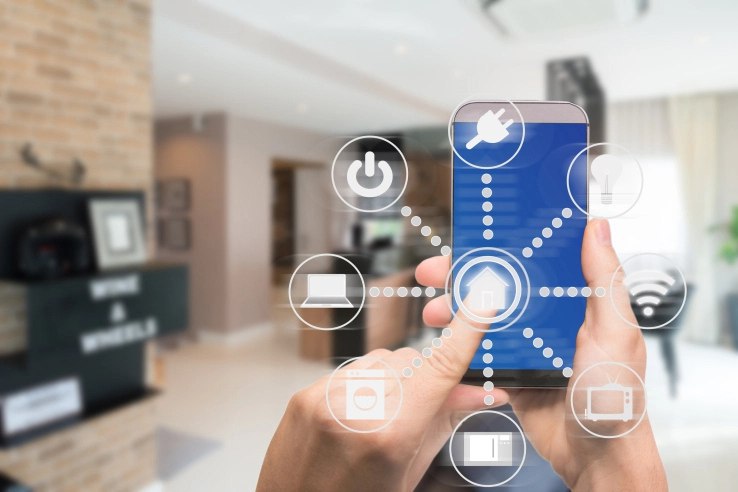
The heart of Understory’s analytics platform is what we call RTi, which stands for real-time and is also refers to Artie, a scientist diligently taking measurements in the field. RTi is a solid-state weather sensing device that detects hail impacts, rainfall and other real-time measurements and transmits them wirelessly to our cloud.
With no moving parts, RTi is well-suited for permanent installation in remote, harsh conditions. The proprietary hardware consists of a metallic sphere that simultaneously senses impacts of hail, wind speed, direction and rain, combining three sensors into one. Our team built RTi with off-the-shelf hardware that enabled us to cost effectively deploy a robust sensor network quickly.
Pressure, humidity and temperature measurements are performed by commodity components. RTi also uses cellular networks, giving us adequate bandwidth to provide real-time weather data. Our hardware is cellular carrier agnostic and adapts to the best carrier for the region. Due to its low maintenance and cost-effective construction, a network of devices can be deployed to capture hyperlocal weather phenomena in new ways.
Since Understory installs, maintains and upgrades the networks, making it easy for a potential site host to agree to the installation is a top priority. The networks were designed from the ground up to allow us to deploy an entire city of 50 or more sensors in less than three months
Iterating on the hardware was paramount as we encountered new challenges in the field. No one has deployed industrial weather networks in this manner before, so the learnings were critical to our success.
Our top design priorities included using sensors that can stay connected to our cloud 24/7 using only solar power. For security, we wanted a consistentcloud connection that enabled fast debugging, failure assessment and the ability to push out updates to counter cyber-attacks.
On-board digital signal processing and storage means only essential data is transmitted. If connectivity is lost, data is saved to be transmitted upon reconnection.
An RTi only needs servicing once every five years as opposed to the semiannual care traditional weather stations need. Installation requires a single wrench and takes less than an hour. The RTi self-calibrates and transmits data to the cloud moments after activation, enabling deployment of a metro network within a few weeks.
Combining these priorities allows us to scale our networks quickly and enables Understory to create an entirely new sensing infrastructure that provides accurate and timely measurements to our customers.
The co-founder of a weather network and analytics company describes a proprietary IoT sensor network it is deploying to give it an edge.
Understory was built by two University of Wisconsin–Madison graduate students in 2012, Alex Kubicek and I. Our idea was to create a sensor that would measure and record weather in real-time to optimize business operations, improve safety and help people anticipate and prepare for weather events.
So far, the Understory network is deployed in five metro areas including Dallas-Ft. Worth, Houston, Denver, St. Louis and Kansas City, covering six million homeowners. We have plans to expand to 75 metro areas, installing more than 5,000 sensors by 2020.
The road from a great idea to a new product passed through several challenges. Understory had a goal to build an innovative solution for the market that could withstand extreme weather and bypass common IoT pitfalls.
The heart of Understory’s analytics platform is what we call RTi, which stands for real-time and is also refers to Artie, a scientist diligently taking measurements in the field. RTi is a solid-state weather sensing device that detects hail impacts, rainfall and other real-time measurements and transmits them wirelessly to our cloud.
With no moving parts, RTi is well-suited for permanent installation in remote, harsh conditions. The proprietary hardware consists of a metallic sphere that simultaneously senses impacts of hail, wind speed, direction and rain, combining three sensors into one. Our team built RTi with off-the-shelf hardware that enabled us to cost effectively deploy a robust sensor network quickly.
Pressure, humidity and temperature measurements are performed by commodity components. RTi also uses cellular networks, giving us adequate bandwidth to provide real-time weather data. Our hardware is cellular carrier agnostic and adapts to the best carrier for the region. Due to its low maintenance and cost-effective construction, a network of devices can be deployed to capture hyperlocal weather phenomena in new ways.
Since Understory installs, maintains and upgrades the networks, making it easy for a potential site host to agree to the installation is a top priority. The networks were designed from the ground up to allow us to deploy an entire city of 50 or more sensors in less than three months
Iterating on the hardware was paramount as we encountered new challenges in the field. No one has deployed industrial weather networks in this manner before, so the learnings were critical to our success.
Our top design priorities included using sensors that can stay connected to our cloud 24/7 using only solar power. For security, we wanted a consistentcloud connection that enabled fast debugging, failure assessment and the ability to push out updates to counter cyber-attacks.
On-board digital signal processing and storage means only essential data is transmitted. If connectivity is lost, data is saved to be transmitted upon reconnection.
An RTi only needs servicing once every five years as opposed to the semiannual care traditional weather stations need. Installation requires a single wrench and takes less than an hour. The RTi self-calibrates and transmits data to the cloud moments after activation, enabling deployment of a metro network within a few weeks.
Combining these priorities allows us to scale our networks quickly and enables Understory to create an entirely new sensing infrastructure that provides accurate and timely measurements to our customers.
⛑A "leather" display showing the state of human health
At Tokyo University, a gadget has been created in the form of an electronic skin, which is attached to the human body and reads the most important data on the health of the wearer.
As Engadget tells, the development facilitates the provision of the first medical aid due to the constant display of vital indicators. Sensors that measure the pulse and remove the cardiogram are installed in the skin-coated "skin". Data from the sensors can be wirelessly synchronized with the smartphone or immediately sent to the "cloud".
As for the LEDs, which 384 pieces in 16 rows, they form a display on which the information about health is displayed. Such a screen, capable of stretching by 45%, is enough for deducing even dynamic data, including cardiograms. Along with the elasticity of the electronic skin, another important property is that it passes air, which does not cause the wearer any discomfort.
At Tokyo University, a gadget has been created in the form of an electronic skin, which is attached to the human body and reads the most important data on the health of the wearer.
As Engadget tells, the development facilitates the provision of the first medical aid due to the constant display of vital indicators. Sensors that measure the pulse and remove the cardiogram are installed in the skin-coated "skin". Data from the sensors can be wirelessly synchronized with the smartphone or immediately sent to the "cloud".
As for the LEDs, which 384 pieces in 16 rows, they form a display on which the information about health is displayed. Such a screen, capable of stretching by 45%, is enough for deducing even dynamic data, including cardiograms. Along with the elasticity of the electronic skin, another important property is that it passes air, which does not cause the wearer any discomfort.

Kaspersky Lab, ITU-T partner to strengthen IoT security
New Delhi India, Feb 20 (ANI): Amid rising prevalence of cyber threats and elaboration on crucial industry standards, Kaspersky Lab ICS CERT experts teamed up with ITU's Telecommunication Standardisation Sector (ITU-T) to develop Recommendation ITU-T Y.4806 "Security capabilities supporting safety of the Internet of Things."
In January, a new international standard on "Security capabilities supporting safety of the Internet of Things" (Recommendation ITU-T Y.4806) officially came into play. Recommendation ITU-T Y.4806 was developed by Study Group 20 "Internet of things (IoT) and smart cities and communities" of ITU-T, classifying security issues for IoT, examining possible threats for security systems, and clearing out the safe execution of IoT cyber-physical systems supported by security capabilities.
Kaspersky Lab researchers have shown that non-computing connected devices incidents are among the top three incidents with the most severe financial impact, for both SMB and enterprise organisations, and are going to increase.
In the wake of the recent TRITON attack targeting industrial control systems, it became obvious that attacks on cyber-physical systems can affect not only the information aspects, but also functional safety. Therefore, the study group collaborated to determine which security capabilities specified in Recommendation ITU-T Y.4401/Y.2068 "Functional framework and capabilities of the Internet of things" support safe execution of IoT.
The experts provided up-to-date specific recommendations for IoT framework security. Recommendation ITU-T Y.4806 is mostly applicable to safety-critical Internet of things (IoT) systems, such as industrial automation, automotive systems, transportation, smart cities, and wearable and standalone medical devices. Additionally, Recommendation ITU-T Y.4806 considers how the joint analysis of threats and security capabilities mentioned herein may be used to establish security requirements for the different applications of the Internet of things.
"In the wake of the recent TRITON attack targeting industrial safety systems, it became obvious that attacks on cyberphysical systems can affect not only the information aspects, but also the functional safety. Our aim was not only to plant the flag on the idea of high probability of security breach attacks, but also to determine the methodology for developing specific requirements. We believe that our contribution to ITU-T's IoT security standard (Recommendation ITU-T Y. 4806) will help organisations develop more efficient cybersecurity strategies to fully face up to modern cyber threats," said Andrey Doukhvalov, Head of Future Techs, Kaspersky Lab.
To counter the above vulnerabilities and other less frequent IoT security challenges, recommendations developed by Kaspersky Lab ICS CERT experts described how to proceed from consideration of the types of impact on the cyber-physical system to the analysis and modeling of threats to functional safety, and then to the development of recommendations on security measures, illustrating the described method with concrete examples.
To avoid attacks such as TRITON, and as per Recommendation ITU-T Y.4806 which summarises the data necessary to establish the requirements for industrial control systems to resist security threats that could affect safety, Kaspersky Lab experts urged the implementation of reliable communication infrastructure and monitoring mechanisms, as well as mutual authentication and authorisation for management and control.
Furthermore, experts also suggested better audit of management and control procedures and attack detection mechanisms, and installation of measures to monitor the load on equipment and communication channels, including the detection of both unintentional overload and denial of service attacks. (ANI)
New Delhi India, Feb 20 (ANI): Amid rising prevalence of cyber threats and elaboration on crucial industry standards, Kaspersky Lab ICS CERT experts teamed up with ITU's Telecommunication Standardisation Sector (ITU-T) to develop Recommendation ITU-T Y.4806 "Security capabilities supporting safety of the Internet of Things."
In January, a new international standard on "Security capabilities supporting safety of the Internet of Things" (Recommendation ITU-T Y.4806) officially came into play. Recommendation ITU-T Y.4806 was developed by Study Group 20 "Internet of things (IoT) and smart cities and communities" of ITU-T, classifying security issues for IoT, examining possible threats for security systems, and clearing out the safe execution of IoT cyber-physical systems supported by security capabilities.
Kaspersky Lab researchers have shown that non-computing connected devices incidents are among the top three incidents with the most severe financial impact, for both SMB and enterprise organisations, and are going to increase.
In the wake of the recent TRITON attack targeting industrial control systems, it became obvious that attacks on cyber-physical systems can affect not only the information aspects, but also functional safety. Therefore, the study group collaborated to determine which security capabilities specified in Recommendation ITU-T Y.4401/Y.2068 "Functional framework and capabilities of the Internet of things" support safe execution of IoT.
The experts provided up-to-date specific recommendations for IoT framework security. Recommendation ITU-T Y.4806 is mostly applicable to safety-critical Internet of things (IoT) systems, such as industrial automation, automotive systems, transportation, smart cities, and wearable and standalone medical devices. Additionally, Recommendation ITU-T Y.4806 considers how the joint analysis of threats and security capabilities mentioned herein may be used to establish security requirements for the different applications of the Internet of things.
"In the wake of the recent TRITON attack targeting industrial safety systems, it became obvious that attacks on cyberphysical systems can affect not only the information aspects, but also the functional safety. Our aim was not only to plant the flag on the idea of high probability of security breach attacks, but also to determine the methodology for developing specific requirements. We believe that our contribution to ITU-T's IoT security standard (Recommendation ITU-T Y. 4806) will help organisations develop more efficient cybersecurity strategies to fully face up to modern cyber threats," said Andrey Doukhvalov, Head of Future Techs, Kaspersky Lab.
To counter the above vulnerabilities and other less frequent IoT security challenges, recommendations developed by Kaspersky Lab ICS CERT experts described how to proceed from consideration of the types of impact on the cyber-physical system to the analysis and modeling of threats to functional safety, and then to the development of recommendations on security measures, illustrating the described method with concrete examples.
To avoid attacks such as TRITON, and as per Recommendation ITU-T Y.4806 which summarises the data necessary to establish the requirements for industrial control systems to resist security threats that could affect safety, Kaspersky Lab experts urged the implementation of reliable communication infrastructure and monitoring mechanisms, as well as mutual authentication and authorisation for management and control.
Furthermore, experts also suggested better audit of management and control procedures and attack detection mechanisms, and installation of measures to monitor the load on equipment and communication channels, including the detection of both unintentional overload and denial of service attacks. (ANI)

Consumer IoT Applications Segment to Reflect the Highest CAGR in the Global IoT Sensor Market
The global market for IoT sensor is anticipated to account for an estimation of about $9,900 million through the end of the calculated period in 2026, up from an estimated value of about $3,350 million through 2017.
Organizations and industries have been utilizing different sensors for a while, however, the invent of the internet of things has participated as sensors along with developments of sensors to an entirely unusual level. By blending an arrangement of sensors along with a communication network, the devices can share data with each other and are enhancing their functionality and effectiveness. There are a variety of types of IoT sensors in the market such as temperature, pressure, magnetometer, humidity, gyroscope, accelerometer, image and inertial.
In the automotive segment, most sensors on a car record their view of the surroundings and transfer that data into databases. The information is then processed and all the vital new snippets of data are sent to every other vehicle. This is a progressing procedure, through which the vehicles are getting to be consistently smarter.
In the manufacturing segment, IoT sensors are utilized to diminish the cost of making along with the cost of upkeep and decrease the utilization of wastage of materials and energy.
The global market for IoT sensor is anticipated to account for an estimation of about $9,900 million through the end of the calculated period in 2026, up from an estimated value of about $3,350 million through 2017 end, reflecting a 12.7 percent CAGR all through the forecast time frame of 2017-2026.
The key aspects fuelling the expansion of the IoT sensors market comprise increasing demand for smart devices, supportive government initiatives of the various developing nations, advancements in sensors themselves, requirement for real-time computing of applications, strong requirement in the automation industry, expansion of smaller, smarter and cheaper sensors, expansion in the automotive industry as well as purpose of sensor fusion perception in IoT sensors market.
The global market for IoT sensor is anticipated to account for an estimation of about $9,900 million through the end of the calculated period in 2026, up from an estimated value of about $3,350 million through 2017.
Organizations and industries have been utilizing different sensors for a while, however, the invent of the internet of things has participated as sensors along with developments of sensors to an entirely unusual level. By blending an arrangement of sensors along with a communication network, the devices can share data with each other and are enhancing their functionality and effectiveness. There are a variety of types of IoT sensors in the market such as temperature, pressure, magnetometer, humidity, gyroscope, accelerometer, image and inertial.
In the automotive segment, most sensors on a car record their view of the surroundings and transfer that data into databases. The information is then processed and all the vital new snippets of data are sent to every other vehicle. This is a progressing procedure, through which the vehicles are getting to be consistently smarter.
In the manufacturing segment, IoT sensors are utilized to diminish the cost of making along with the cost of upkeep and decrease the utilization of wastage of materials and energy.
The global market for IoT sensor is anticipated to account for an estimation of about $9,900 million through the end of the calculated period in 2026, up from an estimated value of about $3,350 million through 2017 end, reflecting a 12.7 percent CAGR all through the forecast time frame of 2017-2026.
The key aspects fuelling the expansion of the IoT sensors market comprise increasing demand for smart devices, supportive government initiatives of the various developing nations, advancements in sensors themselves, requirement for real-time computing of applications, strong requirement in the automation industry, expansion of smaller, smarter and cheaper sensors, expansion in the automotive industry as well as purpose of sensor fusion perception in IoT sensors market.

👨🏻⚖️Businesses could be overwhelmed by useless IoT data, says vendor CTO
Without an understanding of what data resides where, the Internet of Things (IoT) could become a dangerous place with too much data that’s of too little business value, says software provider Yotta. Adrian Bridgwater spoke to CTO Manish Jethwa.
Businesses risk being overwhelmed by IoT data that has little use to the enterprise, claims software provider, Yotta.
This is why Internet of Things (IoT) apps need to be engineered and architected for the data landscape in which they will run, according to Manish Jethwa, CTO of the infrastructure asset management software firm.
“The application itself needs to provide an interface that is capable of applying a structure around the data it comes into contact with, such as its hierarchy, so that it can establish which information to classify as useful for business insight.
“More, the use of data queues – with high uptime specifications – can help resolve resiliency issues by providing a temporary store for data, which the application can process when it has the capacity,” he explained.
The madness of data crowds
Jethwa believes that developers should push applications towards a better appreciation of data structure and queuing principles, especially on the journey towards smart cities or heavyweight Industrial Internet of Things (IIoT) applications. In these areas, cloud-based metadata analytics will be essential to stop organisations being overwhelmed by the sheer volume of data being gathered by sensors.
“For sensors and probes that operate with low power limitation, the cloud provides the first opportunity to analyse data, and identify important trends or patterns using elastic resources,” he said. “In this way, the analysis process to extract metadata can act as a filter, only passing on key information that requires action.”
Microservice modular boundaries
Jethwa believes that microservices will be critical in driving data to the right place on the IoT data map. But there are hurdles to clear in installing and managing them, he said. “The challenges of maintaining microservices are the same as with any distributed system, in that managing multiple services on a regular basis demands efficient operations management skills.
“Microservices provide strong modular boundaries, but maintaining consistency with other components poses a challenge. Realistically, problems like these can only be solved through the use of ‘distribution automation’, using tools to connect directly to cloud services platforms, such as AWS and Azure.”
From a technical viewpoint, what are the key elements to consider when developing a set of software layers that are intended to operate as an IoT network?
“With a typical IoT network, the business requirements for the data being collected, and for the network engineering, are most likely being developed by separate organisations. So it is quite possible that the data provided by IoT sensors may not be what the business requires.
“Again, microservices can serve as a translation mechanism in the data stream to make the data more useful. But it is vital that the business case for the data is assessed beforehand, to ensure that the commercial need to use the data exists.”
Internet of business says
Wise words. Simply powering up IoT applications and turning on the data pipe will be of little use to organisations if they then drown in a torrent of useless data. Jethwa’s commentary provides welcome granular detail, as well as stressing the need for strategic business use cases.
What happens next will perhaps come down to the new breed of data-developers, who will engineer this complexity into real-world IoT systems. Programming the IoT requires a developer who has an appreciation for data architecture and topography, and an understanding of just how fast the data pipe filling up the business.
Without an understanding of what data resides where, the Internet of Things (IoT) could become a dangerous place with too much data that’s of too little business value, says software provider Yotta. Adrian Bridgwater spoke to CTO Manish Jethwa.
Businesses risk being overwhelmed by IoT data that has little use to the enterprise, claims software provider, Yotta.
This is why Internet of Things (IoT) apps need to be engineered and architected for the data landscape in which they will run, according to Manish Jethwa, CTO of the infrastructure asset management software firm.
“The application itself needs to provide an interface that is capable of applying a structure around the data it comes into contact with, such as its hierarchy, so that it can establish which information to classify as useful for business insight.
“More, the use of data queues – with high uptime specifications – can help resolve resiliency issues by providing a temporary store for data, which the application can process when it has the capacity,” he explained.
The madness of data crowds
Jethwa believes that developers should push applications towards a better appreciation of data structure and queuing principles, especially on the journey towards smart cities or heavyweight Industrial Internet of Things (IIoT) applications. In these areas, cloud-based metadata analytics will be essential to stop organisations being overwhelmed by the sheer volume of data being gathered by sensors.
“For sensors and probes that operate with low power limitation, the cloud provides the first opportunity to analyse data, and identify important trends or patterns using elastic resources,” he said. “In this way, the analysis process to extract metadata can act as a filter, only passing on key information that requires action.”
Microservice modular boundaries
Jethwa believes that microservices will be critical in driving data to the right place on the IoT data map. But there are hurdles to clear in installing and managing them, he said. “The challenges of maintaining microservices are the same as with any distributed system, in that managing multiple services on a regular basis demands efficient operations management skills.
“Microservices provide strong modular boundaries, but maintaining consistency with other components poses a challenge. Realistically, problems like these can only be solved through the use of ‘distribution automation’, using tools to connect directly to cloud services platforms, such as AWS and Azure.”
From a technical viewpoint, what are the key elements to consider when developing a set of software layers that are intended to operate as an IoT network?
“With a typical IoT network, the business requirements for the data being collected, and for the network engineering, are most likely being developed by separate organisations. So it is quite possible that the data provided by IoT sensors may not be what the business requires.
“Again, microservices can serve as a translation mechanism in the data stream to make the data more useful. But it is vital that the business case for the data is assessed beforehand, to ensure that the commercial need to use the data exists.”
Internet of business says
Wise words. Simply powering up IoT applications and turning on the data pipe will be of little use to organisations if they then drown in a torrent of useless data. Jethwa’s commentary provides welcome granular detail, as well as stressing the need for strategic business use cases.
What happens next will perhaps come down to the new breed of data-developers, who will engineer this complexity into real-world IoT systems. Programming the IoT requires a developer who has an appreciation for data architecture and topography, and an understanding of just how fast the data pipe filling up the business.
NIST develops security standards for IoT
The National Institute of Standards and Technology (NIST) published a draft document entitled "The Status of International Cybersecurity Standardization for IOT". The document should help in the development of security standards for IoT.
NIST proposes to divide the IoT into five functional areas: connected devices; IoT consumer class; medical equipment and devices used in health care; "Smart" buildings; "Smart" production (including ACS TP). For each area, their standards must be developed in accordance with their characteristics.
There are differences between the standards of cybersecurity for each of the above areas and generally accepted standards. If, traditionally, confidentiality, integrity and accessibility are considered to be priorities in ensuring cybersecurity (in the descending order), the main priority in ensuring IoT security is availability. The exception is the consumer class IoT area, where the main priority is still the protection of privacy and privacy.
Protecting the privacy of patients is also one of the main tasks in ensuring the safety of medical equipment. However, it is also important to ensure the integrity and inviolability of the work of both medical devices and the medical institutions themselves. Cyber attacks can stop the work of hospitals, thereby exposing the health and life of patients to a great threat.
The main difference between traditional cyber security and IoT cybersecurity lies in the fact that the latter is closer to operational technologies (OT) than to information technologies (IT).
The National Institute of Standards and Technology (NIST) published a draft document entitled "The Status of International Cybersecurity Standardization for IOT". The document should help in the development of security standards for IoT.
NIST proposes to divide the IoT into five functional areas: connected devices; IoT consumer class; medical equipment and devices used in health care; "Smart" buildings; "Smart" production (including ACS TP). For each area, their standards must be developed in accordance with their characteristics.
There are differences between the standards of cybersecurity for each of the above areas and generally accepted standards. If, traditionally, confidentiality, integrity and accessibility are considered to be priorities in ensuring cybersecurity (in the descending order), the main priority in ensuring IoT security is availability. The exception is the consumer class IoT area, where the main priority is still the protection of privacy and privacy.
Protecting the privacy of patients is also one of the main tasks in ensuring the safety of medical equipment. However, it is also important to ensure the integrity and inviolability of the work of both medical devices and the medical institutions themselves. Cyber attacks can stop the work of hospitals, thereby exposing the health and life of patients to a great threat.
The main difference between traditional cyber security and IoT cybersecurity lies in the fact that the latter is closer to operational technologies (OT) than to information technologies (IT).
Forwarded from Интернет-журнал Allowwonder
Why we forget everything: books, films and people's names
Among us there are lucky ones who perfectly remember movies that had been watched a long time ago, books that had been read at school, the names of random acquaintances and phone numbers of friends. But most people complain about forgetfulness, writes Julie Beck in a column published in The...
https://allowwonder.com/why-we-forget-everything/
Among us there are lucky ones who perfectly remember movies that had been watched a long time ago, books that had been read at school, the names of random acquaintances and phone numbers of friends. But most people complain about forgetfulness, writes Julie Beck in a column published in The...
https://allowwonder.com/why-we-forget-everything/
Google’s Cloud IoT Core is now generally available
Cloud IoT Core, Google’s fully managed service for connecting, managing and ingesting data from IoT devices, is now out of beta and generally available. Google envisions the service, which launched in public beta last September, as the first entry point for IoT data into its cloud. Once the data has been ingested, users can use Cloud IoT Core to push data to Google’s cloud databases, analytics tools, serverless platform and machine learning services.
One feature the company stresses is that Cloud IoT Core is able to support data “from millions of globally dispersed devices.” Like similar services, Cloud IoT Core supports the standard MQTT and HTTP protocols for talking to devices.
Unsurprisingly, the service supports Google’s own Android Things platform out of the box, but Google has also partnered with the likes of ARM, Cisco, Intel, NXP, Sierra Wireless and other hardware partners to make their products work with its service.
Current users include the likes of Schlumberger, which uses it as part of its IoT integration strategy, Smart Parking in New Zealand, bike-sharing service Blaze and Mexican bus operator Grupo ADO.
To use Cloud IoT Core, users pay per megabyte of ingested data. The first 250 megabytes per month are free and after that, Google charges $0.0045 per megabyte for the first 250 GB of data (with significant discounts for users with higher data volumes).
Cloud IoT Core, Google’s fully managed service for connecting, managing and ingesting data from IoT devices, is now out of beta and generally available. Google envisions the service, which launched in public beta last September, as the first entry point for IoT data into its cloud. Once the data has been ingested, users can use Cloud IoT Core to push data to Google’s cloud databases, analytics tools, serverless platform and machine learning services.
One feature the company stresses is that Cloud IoT Core is able to support data “from millions of globally dispersed devices.” Like similar services, Cloud IoT Core supports the standard MQTT and HTTP protocols for talking to devices.
Unsurprisingly, the service supports Google’s own Android Things platform out of the box, but Google has also partnered with the likes of ARM, Cisco, Intel, NXP, Sierra Wireless and other hardware partners to make their products work with its service.
Current users include the likes of Schlumberger, which uses it as part of its IoT integration strategy, Smart Parking in New Zealand, bike-sharing service Blaze and Mexican bus operator Grupo ADO.
To use Cloud IoT Core, users pay per megabyte of ingested data. The first 250 megabytes per month are free and after that, Google charges $0.0045 per megabyte for the first 250 GB of data (with significant discounts for users with higher data volumes).
📲4G IoT network may ease aviation sector fears over drone safety
Vodafone is testing mobile and internet of things network technology to protect commercial aircraft from badly flown drones
Mobile network operator (MNO) Vodafone has commenced trials of what it claims is the world’s first air traffic control drone tracking and safety service, using a 4G mobile network and internet of things (IoT) technology to protect air passengers.
Since unregulated, commercially available drones are too small to be tracked by conventional radar, the risk to life should a drone collide with an airliner is a source of serious concern for civil aviation authorities.
Indeed, over the past few years there has been a steady stream of high-profile incidents in which irresponsible drone hobbyists flew their toys too close to airliners taking off and landing.
According to the Single European Sky Air Traffic Management Research (Sesar) project, drones will log more than 250 million flying hours a year above Europe – over seven times the cumulative annual flying hours of conventional aircraft in the same space.
In response to the problem, Vodafone has developed a radio positioning system (RPS) using a 4G modem and SIM embedded within each drone to enable real-time tracking – with up to 50m accuracy – by operators and air traffic controllers, and over-the-horizon/beyond-line-of-sight control for users.
The system also incorporates protective geofencing, with drones pre-programmed to land automatically or fly back to their operators if they stray too close to exclusion zones, emergency remote control intervention to enable authorities to override a user’s commands, and SIM-based identification and registration.
It has also incorporated artificial intelligence (AI) algorithms to allow large numbers of drones to be tracked and controlled remotely.
“This groundbreaking innovation by Vodafone will help to ensure the skies stay safe as drones become ubiquitous, everywhere,” said Vodafone group CTO Johan Wibergh.
Matthew Baldwin, European Commission (EC) deputy director general, added: “The Commission supports all trials aimed at realising our vision for safe commercial drone operations in the EU – there is a growing network of demonstrations and projects across the EU. We look forward to hearing the results of Vodafone’s work.”
A preliminary trial in the autumn of 2017 saw a 2kg X-UAV drone with a 1.2m wingspan tracked along a 32km course in southern Spain, during which the drone was able to transmit a constant real-time high-definition (HD) video feed and flight data, including its speed, RPS location and GPS coordinates.
Further tests of the technology will take place in Germany and Spain this year, with the intention of making it available commercially in 2019. Vodafone has additionally placed its RPS research and intellectual property in the public domain to enable other innovators to work with the technology.
The operator said it saw a number of other applications for the technology besides protecting air traffic. These include preventing inadvertent or malicious drone incursions at sensitive locations, such as hospitals or prisons, or addressing the so-far hypothetical worst-case scenario in which a terrorist organisation might use a drone to deliver explosive or biological payloads to targeted locations.
RPS technology could also boost functionality for other IoT devices, even replacing GPS in some scenarios, such as indoor location tracking, where GPS may not be viable.
Vodafone is testing mobile and internet of things network technology to protect commercial aircraft from badly flown drones
Mobile network operator (MNO) Vodafone has commenced trials of what it claims is the world’s first air traffic control drone tracking and safety service, using a 4G mobile network and internet of things (IoT) technology to protect air passengers.
Since unregulated, commercially available drones are too small to be tracked by conventional radar, the risk to life should a drone collide with an airliner is a source of serious concern for civil aviation authorities.
Indeed, over the past few years there has been a steady stream of high-profile incidents in which irresponsible drone hobbyists flew their toys too close to airliners taking off and landing.
According to the Single European Sky Air Traffic Management Research (Sesar) project, drones will log more than 250 million flying hours a year above Europe – over seven times the cumulative annual flying hours of conventional aircraft in the same space.
In response to the problem, Vodafone has developed a radio positioning system (RPS) using a 4G modem and SIM embedded within each drone to enable real-time tracking – with up to 50m accuracy – by operators and air traffic controllers, and over-the-horizon/beyond-line-of-sight control for users.
The system also incorporates protective geofencing, with drones pre-programmed to land automatically or fly back to their operators if they stray too close to exclusion zones, emergency remote control intervention to enable authorities to override a user’s commands, and SIM-based identification and registration.
It has also incorporated artificial intelligence (AI) algorithms to allow large numbers of drones to be tracked and controlled remotely.
“This groundbreaking innovation by Vodafone will help to ensure the skies stay safe as drones become ubiquitous, everywhere,” said Vodafone group CTO Johan Wibergh.
Matthew Baldwin, European Commission (EC) deputy director general, added: “The Commission supports all trials aimed at realising our vision for safe commercial drone operations in the EU – there is a growing network of demonstrations and projects across the EU. We look forward to hearing the results of Vodafone’s work.”
A preliminary trial in the autumn of 2017 saw a 2kg X-UAV drone with a 1.2m wingspan tracked along a 32km course in southern Spain, during which the drone was able to transmit a constant real-time high-definition (HD) video feed and flight data, including its speed, RPS location and GPS coordinates.
Further tests of the technology will take place in Germany and Spain this year, with the intention of making it available commercially in 2019. Vodafone has additionally placed its RPS research and intellectual property in the public domain to enable other innovators to work with the technology.
The operator said it saw a number of other applications for the technology besides protecting air traffic. These include preventing inadvertent or malicious drone incursions at sensitive locations, such as hospitals or prisons, or addressing the so-far hypothetical worst-case scenario in which a terrorist organisation might use a drone to deliver explosive or biological payloads to targeted locations.
RPS technology could also boost functionality for other IoT devices, even replacing GPS in some scenarios, such as indoor location tracking, where GPS may not be viable.
6 strategies to reduce customer frustration with IoT devices
1. Sell or produce universally compatible tech products
Whether you manufacture or just sell your own IoT products, you should require that these devices conform to industry interoperability and compatibility standards. This eases the installation of the devices in homes, where consumers can be counted on to have a plurality of devices from many different manufacturers.
2.Hire infrastructure-savvy technicians and tech support personnel
You might have to pay experienced infrastructure persons more than entry-level junior techs, but the investment is well worth it if you can assemble a corps of techs who really understand your products and the home tech environments that your products operate in. These techs, with their home tech infrastructure knowledge, will be more likely to resolve tech issues on the first visit.
3. Use videos to help more junior techs
Junior techs aren't going to have a broad base of experience when they first make home service calls. At the same time, they might be hesitant to call someone for help while they are on presumes with the customer watching them. "One option is to give them a library of YouTube-style videos on different troubleshooting accounts and procedure they can use in problem solving," said Braswell. "This brings the expert into the home, and the junior tech can more easily address the issue."
4. Map out the entire customer journey
"Once the customer purchases your product, think about how that customer is going to interact with the technology," said Braswell. "What type of value does the customer expect from the technology? What types of problems are they likely to experience when they first install the product? How can your service manuals, online help and onsite visits be positioned to solve these issues quickly?"
5. Think about your customer's infrastructure at the point of sale—not when they need servicing
"You can be proactive and eliminate needless service calls by having the salesperson ask the customer if (they have) the necessary equipment at home that your product will need to interact with," said Braswell. "If the customer confirms that he or she already has all of the necessary equipment, many problems resulting from failed installations can be precluded."
6. Consolidate omnichannel services for a 360 degree view of the customer
Customers get frustrated when they are asked repeatedly to give their names, account numbers, trouble tickets, and problem statements to the service reps they are passed to via chat, phones, in person, etc. This frustration is well-founded. It is fair for consumers to expect companies to be as aware and as interested in their problems as they are. Many companies fail at this—even though they offer omnichannel sales. There is no reason for this to happen anymore. For years, CRM (customer relationship management) systems have provided for integration of omnichannel sales channels into a single view of a customer that gives everyone a single view of the customer experience—from sales to service.
1. Sell or produce universally compatible tech products
Whether you manufacture or just sell your own IoT products, you should require that these devices conform to industry interoperability and compatibility standards. This eases the installation of the devices in homes, where consumers can be counted on to have a plurality of devices from many different manufacturers.
2.Hire infrastructure-savvy technicians and tech support personnel
You might have to pay experienced infrastructure persons more than entry-level junior techs, but the investment is well worth it if you can assemble a corps of techs who really understand your products and the home tech environments that your products operate in. These techs, with their home tech infrastructure knowledge, will be more likely to resolve tech issues on the first visit.
3. Use videos to help more junior techs
Junior techs aren't going to have a broad base of experience when they first make home service calls. At the same time, they might be hesitant to call someone for help while they are on presumes with the customer watching them. "One option is to give them a library of YouTube-style videos on different troubleshooting accounts and procedure they can use in problem solving," said Braswell. "This brings the expert into the home, and the junior tech can more easily address the issue."
4. Map out the entire customer journey
"Once the customer purchases your product, think about how that customer is going to interact with the technology," said Braswell. "What type of value does the customer expect from the technology? What types of problems are they likely to experience when they first install the product? How can your service manuals, online help and onsite visits be positioned to solve these issues quickly?"
5. Think about your customer's infrastructure at the point of sale—not when they need servicing
"You can be proactive and eliminate needless service calls by having the salesperson ask the customer if (they have) the necessary equipment at home that your product will need to interact with," said Braswell. "If the customer confirms that he or she already has all of the necessary equipment, many problems resulting from failed installations can be precluded."
6. Consolidate omnichannel services for a 360 degree view of the customer
Customers get frustrated when they are asked repeatedly to give their names, account numbers, trouble tickets, and problem statements to the service reps they are passed to via chat, phones, in person, etc. This frustration is well-founded. It is fair for consumers to expect companies to be as aware and as interested in their problems as they are. Many companies fail at this—even though they offer omnichannel sales. There is no reason for this to happen anymore. For years, CRM (customer relationship management) systems have provided for integration of omnichannel sales channels into a single view of a customer that gives everyone a single view of the customer experience—from sales to service.