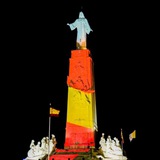
🇪🇸 Santiago el Mayor, apodado el Hijo del Trueno, fue uno de los Doce Apóstoles de Jesucristo. De oficio pescador, conoció a Jesús mientras trabajaba con los hombres de su familia a orillas del Mar de Galilea.
Después de Pentecostés, Santiago acudió a España, comenzando su predicación en Galicia. En Caesaraugusta (Zaragoza) vio la aparición en carne mortal de la Santísima Virgen, con la promesa de que España permanecería eternamente católica.
De regreso en Jerusalén, fue mártirizado por el rey Herodes Agripa. Su cuerpo fue trasladado a Hispania y enterrado en el campo de las estrellas (Compostela), dominio de la reina Lupa, pagana cristianizada.
Después de Pentecostés, Santiago acudió a España, comenzando su predicación en Galicia. En Caesaraugusta (Zaragoza) vio la aparición en carne mortal de la Santísima Virgen, con la promesa de que España permanecería eternamente católica.
De regreso en Jerusalén, fue mártirizado por el rey Herodes Agripa. Su cuerpo fue trasladado a Hispania y enterrado en el campo de las estrellas (Compostela), dominio de la reina Lupa, pagana cristianizada.
🇬🇧 Saint James the Greater, known as the son of the thunder, was one of the Twelve Apostles of Christ. A fisherman, he met Jesus while working with the men of his family on the shores of the Galilee Sea.
After Pentecost, Saint James travelled to Spain, starting his preaching in Galicia. In Caesaraugusta (Zaragoza), he saw a bilocation of the Most Holy Virgin, who promised him Spain would be Catholic forever.
Back in Jerusalem, he was martyred by King Herodes Agripa. His body was brought back to Spain and buried in a place called the stars field (Compostela, in latin), in the Queen Lupa's territory. Lupa was a former-pagan.
After Pentecost, Saint James travelled to Spain, starting his preaching in Galicia. In Caesaraugusta (Zaragoza), he saw a bilocation of the Most Holy Virgin, who promised him Spain would be Catholic forever.
Back in Jerusalem, he was martyred by King Herodes Agripa. His body was brought back to Spain and buried in a place called the stars field (Compostela, in latin), in the Queen Lupa's territory. Lupa was a former-pagan.
🇪🇸 La batalla de Clavijo tuvo lugar alrededor del año 842, cuando el rey Alfonso II se niega a pagar un vergonzoso tributo de 100 doncellas al califa Abderramán II.
Durante la batalla los moros asediaron a los españoles, quienes tuvieron que replegarse al monte de Clavijo. La noche anterior, se le aparece al rey Ramiro en sueños el apostol Santiago, animándolo a luchar el dia siguiente. Durante la batalla, Santiago el apóstol llega empuñando la espada en su caballo blanco dandole la vuelta a la batalla causando 70.000 bajas moras.
🇬🇧 The battle of Clavijo took place around 842, when King Alfonso II refused to pay a shameful tribute of 100 maidens to Caliph Abderraman II.
During the battle the Moors besieged the Spaniards, who had to retreat to Mount Clavijo.The night before, the apostle Santiago appears to King Ramiro in his dreams, encouraging him to fight the next day. During the battle, Santiago enters wielding the sword on his white horse causing 70.000 moor casualties and wining the battle.
Durante la batalla los moros asediaron a los españoles, quienes tuvieron que replegarse al monte de Clavijo. La noche anterior, se le aparece al rey Ramiro en sueños el apostol Santiago, animándolo a luchar el dia siguiente. Durante la batalla, Santiago el apóstol llega empuñando la espada en su caballo blanco dandole la vuelta a la batalla causando 70.000 bajas moras.
🇬🇧 The battle of Clavijo took place around 842, when King Alfonso II refused to pay a shameful tribute of 100 maidens to Caliph Abderraman II.
During the battle the Moors besieged the Spaniards, who had to retreat to Mount Clavijo.The night before, the apostle Santiago appears to King Ramiro in his dreams, encouraging him to fight the next day. During the battle, Santiago enters wielding the sword on his white horse causing 70.000 moor casualties and wining the battle.
🇪🇸 7 días de travesía, los discípulos del apóstol Santiago, llegaron al puerto de Iria Flavia en Galicia para poder situar allí el sepulcro del apóstol. Tras encontrarse allí con diferentes situaciones de peligro, finalmente consiguen llegar al bosque de Libredón donde decidieron enterrar al apóstol.
La historia del traslado de apóstol hasta Santiago de Compostela, se recoge en el códice calixtino. El códice calixtino es el libro que relata los datos de la translación del cuerpo del Apóstol Santiago desde Jerusalén hasta las tierras gallegas, además de cómo sus discípulos robaron sus restos para poder darle sepulcro y conseguir con ello que Santiago sea en su actualidad un centro de peregrinación.
En el siglo IX, el Obispo de Iria Flavia, Teodomiro, se acercó a dicho lugar y descubrió allí la tumba del Apóstol Santiago. Tras este gran descubrimiento, el obispo informó al monarca que gobernaba en ese momento, Alfonso II, que fue al lugar personalmente, convirtiendose en el primero en peregrinar a Santiago
La historia del traslado de apóstol hasta Santiago de Compostela, se recoge en el códice calixtino. El códice calixtino es el libro que relata los datos de la translación del cuerpo del Apóstol Santiago desde Jerusalén hasta las tierras gallegas, además de cómo sus discípulos robaron sus restos para poder darle sepulcro y conseguir con ello que Santiago sea en su actualidad un centro de peregrinación.
En el siglo IX, el Obispo de Iria Flavia, Teodomiro, se acercó a dicho lugar y descubrió allí la tumba del Apóstol Santiago. Tras este gran descubrimiento, el obispo informó al monarca que gobernaba en ese momento, Alfonso II, que fue al lugar personalmente, convirtiendose en el primero en peregrinar a Santiago
🇬🇧 After a seven-day journey, the disciples of the apostle James arrived at the port of Iria Flavia in Galicia in order to place the apostle's tomb there. After meeting there with different situations of danger, they finally managed to reach the forest of Libredón where they decided to bury the apostle.
The story of the transfer of the apostle to Santiago de Compostela is recorded in the Codex Calixtinus. The Codex Calixtinus is the book that tells the details of the transfer of the body of the Apostle St. James from Jerusalem to the lands of Galicia, as well as how his disciples stole his remains in order to give him a tomb and thus make Santiago a center of pilgrimage.
In the ninth century, the Bishop of Iria Flavia, Teodomiro, approached this place and discovered the tomb of the Apostle Santiago there. After this great discovery, the bishop informed the monarch who ruled at that time, Alfonso II, who went to the place personally, becoming the first to go on pilgrimage to Santiago.
The story of the transfer of the apostle to Santiago de Compostela is recorded in the Codex Calixtinus. The Codex Calixtinus is the book that tells the details of the transfer of the body of the Apostle St. James from Jerusalem to the lands of Galicia, as well as how his disciples stole his remains in order to give him a tomb and thus make Santiago a center of pilgrimage.
In the ninth century, the Bishop of Iria Flavia, Teodomiro, approached this place and discovered the tomb of the Apostle Santiago there. After this great discovery, the bishop informed the monarch who ruled at that time, Alfonso II, who went to the place personally, becoming the first to go on pilgrimage to Santiago.
Caminante, son tus huellas
el camino y nada más;
Caminante, no hay camino,
se hace camino al andar.
Al andar se hace el camino,
y al volver la vista atrás
se ve la senda que nunca
se ha de volver a pisar.
Caminante no hay camino
sino estelas en la mar.
el camino y nada más;
Caminante, no hay camino,
se hace camino al andar.
Al andar se hace el camino,
y al volver la vista atrás
se ve la senda que nunca
se ha de volver a pisar.
Caminante no hay camino
sino estelas en la mar.
🇪🇸 La trashumancia es un tipo tradicional de ganadería basado en la adaptación de los desplazamientos de los rebaños a los ciclos climáticos, de manera que durante el invierno, los ganados, normalmente de ovejas o vacas permanecen en los cálidos valles, dehesas y tierras bajas del sur y oeste de España y a finales de la primavera se desplazan hacia las montañas del norte y el este.
🇬🇧 Transhumance is a traditional type of livestock farming based on the adaptation of herd movements to climatic cycles, so that during the winter, the livestock, normally sheep or cows, remain in the warm valleys, pastures and lowlands of southern and western Spain and in late spring they move to the mountains of the north and east.
🇬🇧 Transhumance is a traditional type of livestock farming based on the adaptation of herd movements to climatic cycles, so that during the winter, the livestock, normally sheep or cows, remain in the warm valleys, pastures and lowlands of southern and western Spain and in late spring they move to the mountains of the north and east.
🇪🇸 Las cañadas son las rutas utilizadas por los ganaderos trashumantes en su viaje de norte a sur buscando los mejores pastos. Estas vías se clasifican según sus medidas de la siguiente forma: cañadas, 75 metros (90 varas castellanas); cordel, 38 metros; vereda, 21 metros y colada, de anchura variable. Estas medidas se fijaron por el Honrado Concejo de la Mesta, institución fundada por Alfonso X el Sabio allá por el siglo XIII, y aún se mantienen vigentes y en uso.
🇬🇧 The cañadas are the routes used by transhumant cattle breeders on their journey from north to south in search of the best pastures. These routes are classified according to their width: cañada, 75 meters (90 Castilian rods); cordel, 38 meters; vereda, 21 meters and colada, of variable width. These measures were set by the Honrado Concejo de la Mesta, an institution founded by Alfonso X the Wise back in the 13th century, and are still in force and in use.
🇬🇧 The cañadas are the routes used by transhumant cattle breeders on their journey from north to south in search of the best pastures. These routes are classified according to their width: cañada, 75 meters (90 Castilian rods); cordel, 38 meters; vereda, 21 meters and colada, of variable width. These measures were set by the Honrado Concejo de la Mesta, an institution founded by Alfonso X the Wise back in the 13th century, and are still in force and in use.
🇪🇸 La trashumancia debe hacerse solamente a caballo o a pie, a lo largo de las rutas existen lugares para el descanso de los pastores y de los animales como abrevaderos, descansaderos, chozos, e incluso ermitas (de las que hablaremos en futuros posts).
La última imagen es un chozo, usado tanto por los pastores trashumantes como por agricultores y ganaderos locales para hacer fuego y resguardarse durante la noche o el mal tiempo.
🇬🇧 Transhumance must be done by horse or by foot, along the routes there are places for shepherds and animals to rest such as troughs, resting places, huts, and even hermitages (which we will talk about in future posts).
The last pic is a hut, used both by transhumant and local shepherds and by local farmers to start a fire and take shelter during the night or bad weather.
La última imagen es un chozo, usado tanto por los pastores trashumantes como por agricultores y ganaderos locales para hacer fuego y resguardarse durante la noche o el mal tiempo.
🇬🇧 Transhumance must be done by horse or by foot, along the routes there are places for shepherds and animals to rest such as troughs, resting places, huts, and even hermitages (which we will talk about in future posts).
The last pic is a hut, used both by transhumant and local shepherds and by local farmers to start a fire and take shelter during the night or bad weather.
🇪🇸 La vida de un ganadero trashumante no es facil, a la dureza de las tareas típicas de ganadero se suman las condiciones meteorológicas, la dificultad de las rutas. Las habilidades y el conocimiento del terreno de estos ganaderos asustan a cualquier "prepper" o "siegepilleado" que podamos encontrarnos por Telegram.
🇬🇧 The life of a transhumant breeder is not easy, to the toughness of the typical farmer tasks is added the weather conditions, the difficulty of the routes and other dangers. The skills and terrain knowledge of these farmers scare any "prepper" or "siegepilled" that we can find in Telegram.
🇬🇧 The life of a transhumant breeder is not easy, to the toughness of the typical farmer tasks is added the weather conditions, the difficulty of the routes and other dangers. The skills and terrain knowledge of these farmers scare any "prepper" or "siegepilled" that we can find in Telegram.
🇪🇸 La conquista romana de Hispania arranca en el 218 a.C. con el desembarco en Ampurias, y concluye con la pacificación de Asturias por Octavio Augusto en el 19 a.C. Aparte de vastos recursos minerales, agropecuarios, pesqueros y manufactureros; la mayor aportación hispana a la Civilización será el capital humano: guerreros de élite como la Legión IX Hispana o los pretorianos celtíberos de Augusto, tres de sus más grandes emperadores -Trajano, Adriano y Teodosio- e intelectuales de la talla de Séneca, preceptor de Nerón.
🇬🇧 The Roman conquest of Hispania starts in 218 BC, with the Ampurias landing, and concludes with the pacification of Asturias by Augustus in 19 BC. Apart from hugw mineral, farming, fishing and manufacturing resources; the best Hispanic contribution to the Roman civilization was human capital: elitee warriors like the Legio IX Hispana or Augustus' Celtiberian Praetorians, three of the greatest Emperors -Trajan, Hadrian and Theodosius- and scholars such as Senecca, Nero's master.
🇬🇧 The Roman conquest of Hispania starts in 218 BC, with the Ampurias landing, and concludes with the pacification of Asturias by Augustus in 19 BC. Apart from hugw mineral, farming, fishing and manufacturing resources; the best Hispanic contribution to the Roman civilization was human capital: elitee warriors like the Legio IX Hispana or Augustus' Celtiberian Praetorians, three of the greatest Emperors -Trajan, Hadrian and Theodosius- and scholars such as Senecca, Nero's master.
Forwarded from Heathens Begone (David servus Dei)
This media is not supported in your browser
VIEW IN TELEGRAM
Forwarded from La Espada de Roma (David servus Dei)
Viernes 31 julio 2020. San Ignacio de Loyola, confesor (Azpeitia 1491 - Roma 1556).
Fundador de la Compañía de Jesús. Patrón universal de los ejercicios espirituales. Patrón de la Provincia de Guipúzcoa, del Señorío de Vizcaya, y de numerosas poblaciones en toda la Hispanidad.
Fundador de la Compañía de Jesús. Patrón universal de los ejercicios espirituales. Patrón de la Provincia de Guipúzcoa, del Señorío de Vizcaya, y de numerosas poblaciones en toda la Hispanidad.
🇪🇸 Marco Ulpio Trajano nació el 18 de septiembre del año 53 en el seno de una familia turdetana en la antigua ciudad romana de Itálica, en Hispania, siendo el primer emperador de origen provincial. Éste ascendió al trono imperial gracias a sus méritos demostrados en la defensa de la frontera germana. Trajano, fue un emperador modesto pero autoritario, no aceptó que se erigieran grandes estatuas en su honor, pero por otro lado, tras su victoria en la campaña de Dacia, trajo a Roma miles de kilos de oro y plata, con lo que pudo financiar la construcción de su colosal foro en la capital. Tras la ocupación del reino nabateo dio al Imperio romano la mayor extensión jamás alcanzada.