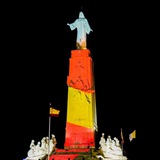
Forwarded from Disidencia
1 de Abril – El Día de la Victoria
En el día de hoy, cautivo y desarmado el Ejército Rojo, han alcanzado las tropas nacionales sus últimos objetivos militares.
LA GUERRA HA TERMINADO
Burgos, 1º de Abril de 1939
El Generalísimo Franco
https://disidencia.info/1-de-abril-de-1939-80-anos-de-victoria/
En el día de hoy, cautivo y desarmado el Ejército Rojo, han alcanzado las tropas nacionales sus últimos objetivos militares.
LA GUERRA HA TERMINADO
Burgos, 1º de Abril de 1939
El Generalísimo Franco
https://disidencia.info/1-de-abril-de-1939-80-anos-de-victoria/
Disidencia
1 de Abril - El Día de la Victoria - Disidencia
En el día de hoy, cautivo y desarmado el Ejército Rojo, han alcanzado las tropas nacionales sus últimos objetivos militares LA GUERRA HA TERMINADO Burgos, 1º de Abril de 1939 El Generalísimo Franco
🇪🇸 Parte oficial de guerra, del cuartel general del generalísimo, correspondiente al día de hoy, primero de abril de 1939, tercer año triunfal.
En el día de hoy, cautivo y desarmado el Ejército Rojo, han alcanzado las tropas nacionales sus últimos objetivos militares. La guerra ha terminado.
Burgos, primero de abril de 1939, año de la victoria.
El generalísimo Franco.
🇬🇧 Official war report from the Generalissimo's headquarters for today, the first of April 1939, the third triumphal year.
Today, with the Red Army captive and disarmed, the Nationalist troops have reached their last military objectives. The war is over.
Burgos, 1st April 1939, the year of victory.
Generalissimo Franco.
En el día de hoy, cautivo y desarmado el Ejército Rojo, han alcanzado las tropas nacionales sus últimos objetivos militares. La guerra ha terminado.
Burgos, primero de abril de 1939, año de la victoria.
El generalísimo Franco.
🇬🇧 Official war report from the Generalissimo's headquarters for today, the first of April 1939, the third triumphal year.
Today, with the Red Army captive and disarmed, the Nationalist troops have reached their last military objectives. The war is over.
Burgos, 1st April 1939, the year of victory.
Generalissimo Franco.
Forwarded from Traditional Folkways
The blue shirt, with the Roman style of salute with the arm fully extended, is the universal symbol that the Falange has contributed to the national and imperial resurrection of Spain.
The Falange Shirt is a universal symbol. Just as the toga was in the time of the Caesars. Just as the militant monastic habit was in medieval times. Just as the frock-coat was supposed to be later during the Enlightenment. And the dress coat at the time of Liberalism. And just as the overalls are among the Marxist socialists.
The shirt has come to represent the new Catholic universality that the Falange defends. It is not an undergarment, but rather an outer gown. Instead of being a shameful garment, it is a costume, a whole garment, a totalitarian garment. Affirming and aggressive.—Ernesto Gimenez Caballero
The Falange Shirt is a universal symbol. Just as the toga was in the time of the Caesars. Just as the militant monastic habit was in medieval times. Just as the frock-coat was supposed to be later during the Enlightenment. And the dress coat at the time of Liberalism. And just as the overalls are among the Marxist socialists.
The shirt has come to represent the new Catholic universality that the Falange defends. It is not an undergarment, but rather an outer gown. Instead of being a shameful garment, it is a costume, a whole garment, a totalitarian garment. Affirming and aggressive.—Ernesto Gimenez Caballero
Darren Burrows (Doctor en Alaska): España fue el instrumento de Dios para colonizar el Nuevo Mundo
https://www.elconfidencial.com/cultura/2021-04-22/darren-burrows-doctor-en-alaska-entrevista_3044707/
https://www.elconfidencial.com/cultura/2021-04-22/darren-burrows-doctor-en-alaska-entrevista_3044707/
elconfidencial.com
Darren Burrows ('Doctor en Alaska'): "España fue el instrumento de Dios para colonizar el Nuevo Mundo"
Interpretó a un mestizo nativo en la serie de televisión de culto conocido como Ed Chigliak y hoy es armero, granjero, católico, anticomunista y asegura amar nuestro país
Forwarded from Disidencia
Miguel de Cervantes - La Pluma y la Espada
En un 23 de abril de 1616 era enterrado en el convento de las Trinitarias descalzas el que vino a ser llamado Príncipe de los Ingenios españoles.
Miguel de Cervantes Saavedra había fallecido un día antes de diabetes y mala vejez en un Madrid donde los odios africanos entre Quevedo y Góngora no eclipsaron en absoluto la popularidad de las obras cervantinas, y ésta aumentaría en el tiempo.
https://disidencia.info/cervantes-san-jorge-y-los-libros/
En un 23 de abril de 1616 era enterrado en el convento de las Trinitarias descalzas el que vino a ser llamado Príncipe de los Ingenios españoles.
Miguel de Cervantes Saavedra había fallecido un día antes de diabetes y mala vejez en un Madrid donde los odios africanos entre Quevedo y Góngora no eclipsaron en absoluto la popularidad de las obras cervantinas, y ésta aumentaría en el tiempo.
https://disidencia.info/cervantes-san-jorge-y-los-libros/
Disidencia
Miguel de Cervantes - La Pluma y la Espada - Disidencia
1215 palabras Hoy es un 23 de abril y tal día como hoy de 1616 era enterrado en el convento de las Trinitarias descalzas el que vino a ser llamado Príncipe de los Ingenios españoles. Miguel de Cervantes Saavedra había fallecido un día antes de diabetes…
🇪🇸 Bravo, Padilla, Maldonado, Acuña y María «La Leona de Castilla» Pacheco; los caudillos que lideraron al pueblo castellano en la defensa de sus libertades y tradiciones frente a la tiranía de corruptos extranjeros. Derrotados en los campos de Villalar (Valladolid), tal día como hoy de hace 500 años, todos los hombres pagarían con sus cabezas la rebelión.
🇬🇧 Bravo, Padilla, Maldonado, Acuña and María "The Lion of Castille" Pacheco; the warlords who leaded Castillian People in the fight against the corrupt foreign tiranny. In the plains of Villalar (Valladolid) were they defeated, that April 23, 500 years ago. Those men's heads were the payment for their rebellion.
🇬🇧 Bravo, Padilla, Maldonado, Acuña and María "The Lion of Castille" Pacheco; the warlords who leaded Castillian People in the fight against the corrupt foreign tiranny. In the plains of Villalar (Valladolid) were they defeated, that April 23, 500 years ago. Those men's heads were the payment for their rebellion.