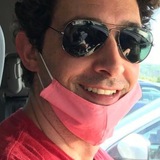
A few months ago, Sam Bankman-Fried, the founder of FTX, was supposedly worth $26 billion. Today he claims to be down to his last $100,000, likely the fastest loss of this level of wealth anyone has ever had.
Shed no tears for Bankman-Fried. Millions of ordinary people who put money in FTX may have lost as much as $8 billion.
Bankman-Fried fooled almost everyone on his way up.
Sequoia Capital, one of the world’s top venture capital firms, which put $214 million into FTX. The financial media fell for him too. In August, barely three months before FTX collapsed, Fortune magazine ran a glowing cover story of SBF, headlined, “The Next Warren Buffett?”
But independent investor and former hedge fund manager Marc Cohodes wasn’t taken. Cohodes warned about FTX earlier and more loudly than almost anyone else.
20/20 hindsight is easy. Being right when everyone else is wrong isn’t. (2/6)
Shed no tears for Bankman-Fried. Millions of ordinary people who put money in FTX may have lost as much as $8 billion.
Bankman-Fried fooled almost everyone on his way up.
Sequoia Capital, one of the world’s top venture capital firms, which put $214 million into FTX. The financial media fell for him too. In August, barely three months before FTX collapsed, Fortune magazine ran a glowing cover story of SBF, headlined, “The Next Warren Buffett?”
But independent investor and former hedge fund manager Marc Cohodes wasn’t taken. Cohodes warned about FTX earlier and more loudly than almost anyone else.
20/20 hindsight is easy. Being right when everyone else is wrong isn’t. (2/6)
👍26
I’ve been fortunate to know Cohodes for almost 25 years. In 2001, I profiled him for The New York Times.
So I called Cohodes and asked him to explain, ideally in non-technical terms, why he’d been so certain FTX and SBF were bound for doom.
Sure, he said.
Cohodes is, as he would put it, an interesting cat.
He has spent nearly his entire career short-selling. “Long” investors buy companies whose prices they expect to rise. Short-sellers look for companies that are overvalued. They borrow stocks they do not own and sell them, hoping to buy them back later at a lower price.
By its nature, short-selling attracts the contrarian and thick-skinned. Stock markets generally rise over time as the overall economy expands, and most people want to invest in companies that are growing. Short-sellers have both fundamentals and psychology working against them.
But shorts play a crucial role in markets by rooting out deceptive managements and outright frauds. One reason that FTX may have grown so quickly and caused so much harm was that shorting it was essentially impossible, so its hype machine had no opponents.
Almost no opponents.
Cohodes likes a good fight. Sometimes he seems to want one. (My article about him in 2001 began, “Marc Cohodes, the highest-profile short-seller on Wall Street, is getting bored.”)
In 2017, he went at a company called MiMedx so hard that two Federal Bureau of Investigation agents visited him at his house and told him to lay off.
The attempt to intimidate him backfired. Two MiMedx executives were later convinced of fraud and sentenced to a year in prison, and Cohodes remains infuriated about the FBI’s house call. (3/6)
So I called Cohodes and asked him to explain, ideally in non-technical terms, why he’d been so certain FTX and SBF were bound for doom.
Sure, he said.
Cohodes is, as he would put it, an interesting cat.
He has spent nearly his entire career short-selling. “Long” investors buy companies whose prices they expect to rise. Short-sellers look for companies that are overvalued. They borrow stocks they do not own and sell them, hoping to buy them back later at a lower price.
By its nature, short-selling attracts the contrarian and thick-skinned. Stock markets generally rise over time as the overall economy expands, and most people want to invest in companies that are growing. Short-sellers have both fundamentals and psychology working against them.
But shorts play a crucial role in markets by rooting out deceptive managements and outright frauds. One reason that FTX may have grown so quickly and caused so much harm was that shorting it was essentially impossible, so its hype machine had no opponents.
Almost no opponents.
Cohodes likes a good fight. Sometimes he seems to want one. (My article about him in 2001 began, “Marc Cohodes, the highest-profile short-seller on Wall Street, is getting bored.”)
In 2017, he went at a company called MiMedx so hard that two Federal Bureau of Investigation agents visited him at his house and told him to lay off.
The attempt to intimidate him backfired. Two MiMedx executives were later convinced of fraud and sentenced to a year in prison, and Cohodes remains infuriated about the FBI’s house call. (3/6)
👍14👏7
In comparison, FTX was straightforward, Cohodes says. He first became interested in the company in early 2022.
Prices of digital assets like Bitcoin had soared when Covid hit, thanks to the cash infusions that central banks pumped into the financial system to help limit the economic effect of lockdowns.
But as lockdowns finally ended, investors realized that the extra cash had created inflationary pressures. Central banks would have to “pull the punch bowl,” removing money from the system and squeezing financial assets. Prices of Bitcoin and cryptocurrencies began to plunge.
But FTX - whose business should have been hurt as the overall cryptocurrency market collapsed - didn’t behave as Cohodes expected. Instead of retrenching to ensure his company would survive until the market turned sunnier again, Bankman-Fried went on an investment spree.
That move got Cohodes’s attention. And not in a good way. (4/6)
Prices of digital assets like Bitcoin had soared when Covid hit, thanks to the cash infusions that central banks pumped into the financial system to help limit the economic effect of lockdowns.
But as lockdowns finally ended, investors realized that the extra cash had created inflationary pressures. Central banks would have to “pull the punch bowl,” removing money from the system and squeezing financial assets. Prices of Bitcoin and cryptocurrencies began to plunge.
But FTX - whose business should have been hurt as the overall cryptocurrency market collapsed - didn’t behave as Cohodes expected. Instead of retrenching to ensure his company would survive until the market turned sunnier again, Bankman-Fried went on an investment spree.
That move got Cohodes’s attention. And not in a good way. (4/6)
👍14🤔2
Italics are Cohodes’s own words:
What really got me was when crypto collapsed, you had the bear market of crypto, the crypto winter… All these companies were going under… What tipped me was this guy was throwing money to try to bail these guys out in front of bankruptcy… How stupid could this guy be… [The financial channel CNBC] called him the J.P. Morgan of crypto -
CNBC - which Cohodes calls the Cartoon Network - was referring to Morgan’s famous 1907 effort to stop a bank run and stock market crash by putting his own credit behind weaker banks. But Morgan made sure he knew the banks he backed were solvent. They faced temporary shortfalls because panicked depositors were pulling cash, but their underlying loans were to real companies and solid.
In contrast, Bankman-Fried’s decision to step in to buy junk crypto companies was simply throwing good money after bad, Cohodes said.
Why is he taking real money and bailing these frauds out… What you should do is let them fail and them pick up the pieces… This just didn’t make any sense, it didn’t make any sense -
So Cohodes decided to look at Bankman-Fried and the rest of the FTX executives and management team.
They were glorified interns, they had no experience, they had no exchange experience, they had no capital markets experience… which led me to believe this is a giant fraud…
I figured he was putting money in because there was either collateral damage he was worried about or there was contagion… As it turns out, he [SBF] was worried about these scam tokens they put out. (5/6)
What really got me was when crypto collapsed, you had the bear market of crypto, the crypto winter… All these companies were going under… What tipped me was this guy was throwing money to try to bail these guys out in front of bankruptcy… How stupid could this guy be… [The financial channel CNBC] called him the J.P. Morgan of crypto -
CNBC - which Cohodes calls the Cartoon Network - was referring to Morgan’s famous 1907 effort to stop a bank run and stock market crash by putting his own credit behind weaker banks. But Morgan made sure he knew the banks he backed were solvent. They faced temporary shortfalls because panicked depositors were pulling cash, but their underlying loans were to real companies and solid.
In contrast, Bankman-Fried’s decision to step in to buy junk crypto companies was simply throwing good money after bad, Cohodes said.
Why is he taking real money and bailing these frauds out… What you should do is let them fail and them pick up the pieces… This just didn’t make any sense, it didn’t make any sense -
So Cohodes decided to look at Bankman-Fried and the rest of the FTX executives and management team.
They were glorified interns, they had no experience, they had no exchange experience, they had no capital markets experience… which led me to believe this is a giant fraud…
I figured he was putting money in because there was either collateral damage he was worried about or there was contagion… As it turns out, he [SBF] was worried about these scam tokens they put out. (5/6)
👍19
Tokens are digital “coins” that anyone can create. They can be backed by anything. FTX’s tokens, called FTTs, were designed to give their holders a share of FTX’s future revenues, making them a little like shares in FTX, except with fewer rights and protections.
Tokens can be traded for other tokens or sold for “fiat currency” like dollars. FTX’s underlying business was to offer people to buy and sell these tokens as well as use other, more exotic financial instruments to bet on their future value.
In other words, FTX created a “currency,” FTT. Then FTX, which was based in the Bahamas, provided an “exchange” where FTT coins could be traded.
Not surprisingly, this setup gave FTX and Alameda, a hedge fund affiliated with FTX which Bankman-Fried also owned, powerful control over the price of the FTT tokens - at least in the short run.
Tokens for crypto – it’s a completely manipulated market… It’s a completely different world… He paid Tom Brady in these tokens, he gave out these tokens, but the tokens were a completely manipulated market.
FTX’s collapse highlighted the lack of protections for investors in cryptocurrencies, Cohodes says, a problem that runs deeper than a single bad company. American financial regulators are far from perfect, as the banking crisis of 2008 and the technology stock collapse of 2000 prove. But they offer some protection against outright fraud and theft.
You cannot trust any of the shit that’s offshore, I wouldn’t trust any offshore exchange.
But [FTX] was the biggest, the most unorganized, the most leverage… It wasn’t in my mind one thing, it was everything… Enron owned power plants, Sunbeam, which was a fraud, the products worked… Normally the score is 8 to 3 or 8 to 5, it’s not 8 to 0. [With FTX], nothing worked.
[END OF PART 1] (6/6)
Tokens can be traded for other tokens or sold for “fiat currency” like dollars. FTX’s underlying business was to offer people to buy and sell these tokens as well as use other, more exotic financial instruments to bet on their future value.
In other words, FTX created a “currency,” FTT. Then FTX, which was based in the Bahamas, provided an “exchange” where FTT coins could be traded.
Not surprisingly, this setup gave FTX and Alameda, a hedge fund affiliated with FTX which Bankman-Fried also owned, powerful control over the price of the FTT tokens - at least in the short run.
Tokens for crypto – it’s a completely manipulated market… It’s a completely different world… He paid Tom Brady in these tokens, he gave out these tokens, but the tokens were a completely manipulated market.
FTX’s collapse highlighted the lack of protections for investors in cryptocurrencies, Cohodes says, a problem that runs deeper than a single bad company. American financial regulators are far from perfect, as the banking crisis of 2008 and the technology stock collapse of 2000 prove. But they offer some protection against outright fraud and theft.
You cannot trust any of the shit that’s offshore, I wouldn’t trust any offshore exchange.
But [FTX] was the biggest, the most unorganized, the most leverage… It wasn’t in my mind one thing, it was everything… Enron owned power plants, Sunbeam, which was a fraud, the products worked… Normally the score is 8 to 3 or 8 to 5, it’s not 8 to 0. [With FTX], nothing worked.
[END OF PART 1] (6/6)
👍42😱4😁3
PART 2: An interview with Marc Cohodes, the investor who called the FTX/Sam Bankman-Fried collapse BEFORE it happened
Cohodes explains why the media failed to cover FTX properly - and why SBF is STILL talking
(SECOND OF TWO PARTS)
Is FTX founder Sam Bankman-Fried a sociopath?
Marc Cohodes thinks so.
FTX is the cryptocurrency exchange that collapsed last month, costing investors billions. Bankman-Fried - sometimes called SBF - is the chubby 30-year-old who briefly had a fortune estimated at $26 billion and is now holed up in the Bahamas, where FTX was based.
Cohodes is a veteran Wall Street investor who was one of the few people to predict FTX’s failure.
Cohodes and I have known each other since the 1990s, so I asked him to explain FTX to Unreported Truths. In Part 1, he explained why he was so sure FTX was a fraud. Now he talks about the media’s failure on the story - and why Bankman-Fried still won’t shut up. (1/10)
Cohodes explains why the media failed to cover FTX properly - and why SBF is STILL talking
(SECOND OF TWO PARTS)
Is FTX founder Sam Bankman-Fried a sociopath?
Marc Cohodes thinks so.
FTX is the cryptocurrency exchange that collapsed last month, costing investors billions. Bankman-Fried - sometimes called SBF - is the chubby 30-year-old who briefly had a fortune estimated at $26 billion and is now holed up in the Bahamas, where FTX was based.
Cohodes is a veteran Wall Street investor who was one of the few people to predict FTX’s failure.
Cohodes and I have known each other since the 1990s, so I asked him to explain FTX to Unreported Truths. In Part 1, he explained why he was so sure FTX was a fraud. Now he talks about the media’s failure on the story - and why Bankman-Fried still won’t shut up. (1/10)
👍15
FTX’s collapse was so sudden and complete that no one knows how much the company might owe its clients, lenders, and others, much less how much money it has.
In a scathing court filing on November 17, John J. Ray III, who is overseeing the FTX bankruptcy and who also supervised Enron’s bankruptcy, wrote that he had never “seen such a complete failure of corporate controls and such a complete absence of trustworthy financial information.”
SOURCE
Yet even now Sam Bankman-Fried is engaging in a public tour to downplay his responsibility for the FTX collapse. In interviews this week, he has minimized his relationship with Alameda Research, a hedge fund affiliated with FTX that appears to have looted FTX’s customer deposits. (2/10)
In a scathing court filing on November 17, John J. Ray III, who is overseeing the FTX bankruptcy and who also supervised Enron’s bankruptcy, wrote that he had never “seen such a complete failure of corporate controls and such a complete absence of trustworthy financial information.”
SOURCE
Yet even now Sam Bankman-Fried is engaging in a public tour to downplay his responsibility for the FTX collapse. In interviews this week, he has minimized his relationship with Alameda Research, a hedge fund affiliated with FTX that appears to have looted FTX’s customer deposits. (2/10)
👍14🤬8
This defense would be more compelling if Bankman-Fried did not OWN 90 percent of Alameda - and if it had not lent him $1 billion, as the bankruptcy filing revealed.
To Cohodes, Bankman-Fried is simply proving to the world what Cohodes has known all along. SBF is a sociopath and a compulsive liar.
Throughout, italics are Cohodes’s own words:
All these fraudsters that I’ve dealt with over the years, they all have this sociopathic bent, where they can look at you straight in the face and lie their asses off, and you think they’re telling the truth… All these guys, the guy on top has the same sociopathic view…
You are Alameda… You are on the board where you made these investments and the whole thing, so that is you, how can you say you didn’t know…
Why is SBF talking at all?
Cohodes argues he realizes he has no viable legal defense and so is simply trying to make his case (and bias potential jurors) in interviews where he is not under oath.
He’s trying to play a game in the court of the public opinion, and trying to get ahead of it… This is the court of public opinion… This guy talks in circles without saying anything… “I didn’t knowingly commit fraud.” That is like, I’m accidentally pregnant… (3/10)
To Cohodes, Bankman-Fried is simply proving to the world what Cohodes has known all along. SBF is a sociopath and a compulsive liar.
Throughout, italics are Cohodes’s own words:
All these fraudsters that I’ve dealt with over the years, they all have this sociopathic bent, where they can look at you straight in the face and lie their asses off, and you think they’re telling the truth… All these guys, the guy on top has the same sociopathic view…
You are Alameda… You are on the board where you made these investments and the whole thing, so that is you, how can you say you didn’t know…
Why is SBF talking at all?
Cohodes argues he realizes he has no viable legal defense and so is simply trying to make his case (and bias potential jurors) in interviews where he is not under oath.
He’s trying to play a game in the court of the public opinion, and trying to get ahead of it… This is the court of public opinion… This guy talks in circles without saying anything… “I didn’t knowingly commit fraud.” That is like, I’m accidentally pregnant… (3/10)
👍16🤬5😁1
Cohodes says Bankman-Fried’s behavior is particularly reprehensible because FTX targeted retail investors in the United States and around the world.
In 2020 and 2021, as central banks pumped money into the financial system to cushion the effects of Covid lockdowns, the prices of financial assets like cryptocurrencies soared. Developers of and early investors in new cryptocurrencies could make fortunes overnight.
These were mostly men under 40, often under 30. A free-spending culture developed around crypto that put Wall Street in the 1980s to shame. Gluttony for its own sake became a form of competition.
SOURCE (4/10)
In 2020 and 2021, as central banks pumped money into the financial system to cushion the effects of Covid lockdowns, the prices of financial assets like cryptocurrencies soared. Developers of and early investors in new cryptocurrencies could make fortunes overnight.
These were mostly men under 40, often under 30. A free-spending culture developed around crypto that put Wall Street in the 1980s to shame. Gluttony for its own sake became a form of competition.
SOURCE (4/10)
👍14😱3🤮1
With fortunes apparently available for the taking, unsophisticated investors who had little understanding of crypto or its risks began to invest too. Crypto companies encouraged them, explicitly marketing leveraged currency trading - among the riskiest forms of speculation, essentially gambling on borrowed money - as an investment appropriate for average people.
FTX was among the most aggressive advertisers, running a Super Bowl spot featuring the comedian Larry David, with the tagline “Don’t Miss Out.”
As inappropriate as that ad was, another featuring quarterback Tom Brady and supermodel Gisele Bundchen, who at the time were still married, was worse. (5/10)
FTX was among the most aggressive advertisers, running a Super Bowl spot featuring the comedian Larry David, with the tagline “Don’t Miss Out.”
As inappropriate as that ad was, another featuring quarterback Tom Brady and supermodel Gisele Bundchen, who at the time were still married, was worse. (5/10)
👍18
It featured nearly a dozen people - including one who was supposed to be Brady’s plumber - doing little more than saying “I’m in” as Brady and Bundchen supposedly explained the wonders of cryptocurrency investing. In retrospect, the ad looks like nothing more than marketing for a Ponzi scheme on a massive scale.
Cohodes: It was a giant Ponzi scheme to try to use customer money to control an agenda… Crypto was a hook to get Tom Brady to induce the fish…
In an April 2022 interview with Bloomberg, Bankman-Fried hinted as much, describing cryptocurrency tokens as “magic” and a “a pretty cool box” that would make be profitable as long as everyone continued to invest in them. “And then it goes to infinity. And then everyone makes money,” he said.
In response, Bloomberg reporter Matt Levine said that Bankman-Fried had described a Ponzi scheme. “You're just like, well, I'm in the Ponzi business and it's pretty good,” he said.
Even more stunning, Bankman-Fried did not disagree with Levine’s interpretation.
“I think that’s a pretty reasonable response, but let me play around with this a little bit,” he said. “Because that's one framing of this. And I think there's like a sort of depressing amount of validity…” before concluding that the reality would not matter as long as investors continued to put in money:
“If the world never decides that we are wrong about this in like a coordinated way, right? Like you're kind of the guy calling and saying, no, this thing's actually worthless, but in what sense are you right?” (6/10)
Cohodes: It was a giant Ponzi scheme to try to use customer money to control an agenda… Crypto was a hook to get Tom Brady to induce the fish…
In an April 2022 interview with Bloomberg, Bankman-Fried hinted as much, describing cryptocurrency tokens as “magic” and a “a pretty cool box” that would make be profitable as long as everyone continued to invest in them. “And then it goes to infinity. And then everyone makes money,” he said.
In response, Bloomberg reporter Matt Levine said that Bankman-Fried had described a Ponzi scheme. “You're just like, well, I'm in the Ponzi business and it's pretty good,” he said.
Even more stunning, Bankman-Fried did not disagree with Levine’s interpretation.
“I think that’s a pretty reasonable response, but let me play around with this a little bit,” he said. “Because that's one framing of this. And I think there's like a sort of depressing amount of validity…” before concluding that the reality would not matter as long as investors continued to put in money:
“If the world never decides that we are wrong about this in like a coordinated way, right? Like you're kind of the guy calling and saying, no, this thing's actually worthless, but in what sense are you right?” (6/10)
👍19❤2
Yet at the same time, SBF pitched himself as the friend of small investors, a crypto executive who wanted to establish an exchange that would be fair for all.
He regularly traveled to Washington to lobby regulators, and he donated more than $40 million to Democratic politicians in 2022 - and one point suggested he might donate as much as $1 billion to Democrats in 2024 race. (He has now claimed he secretly donated $40 million to Republicans in 2022 as well, but he has provided no public evidence for that claim.) He donated millions to left-leaning media sites such as Vox.
FTX even brought Bill Clinton and Tony Blair to a conference in the Bahamas in April, where SBF moderated a panel on cryptocurrency with them. “Crypto’s strange new respectability,” Politico headlined an article about the conference. Clinton called crypto “obviously serious” and said “you want to do right by it in the regulatory space,” Politico reported. (7/10)
He regularly traveled to Washington to lobby regulators, and he donated more than $40 million to Democratic politicians in 2022 - and one point suggested he might donate as much as $1 billion to Democrats in 2024 race. (He has now claimed he secretly donated $40 million to Republicans in 2022 as well, but he has provided no public evidence for that claim.) He donated millions to left-leaning media sites such as Vox.
FTX even brought Bill Clinton and Tony Blair to a conference in the Bahamas in April, where SBF moderated a panel on cryptocurrency with them. “Crypto’s strange new respectability,” Politico headlined an article about the conference. Clinton called crypto “obviously serious” and said “you want to do right by it in the regulatory space,” Politico reported. (7/10)
👍10🤮3
But Bankman-Fried wasn’t content to be known as a voice for fairness in cryptocurrency. He claimed to see himself as the 21st century’s savior, pretending that he only wanted to make money… to give it away.
In interviews, he called himself a believer in “effective altruism,” a theory that basically claims that very smart people should try to get as rich as possible to become hyper-charitable. A doctor might save 100 lives. A Wall Street billionaire gives away his fortune to build a medical school in Africa to train physicians can save 100,000.
That’s the idea, anyway.
So far effective altruism appears to be mainly a way for Silicon Valley billionaires to feel less guilty about how rich they are. But none of the new mega-rich became more closely associated with the mantra than Sam Bankman-Fried, who bragged driving a Toyota Corolla (but rarely discussed his $40 million penthouse).
None of this sat well with Marc Cohodes:
You’re supposed to trust him because he dresses like a schlep and drives a Corolla…
When he looked at SBF, Cohodes didn’t see a genius, just an chubby, sloppily dressed geek who played a lot of video games and needed a haircut:
If you’re a mover and shaker under 30, there’s something special about you… There was nothing special about this guy, nothing, there was nothing about this guy that makes you say wow…
But Bankman-Fried’s friends in the media did not agree. (8/10)
In interviews, he called himself a believer in “effective altruism,” a theory that basically claims that very smart people should try to get as rich as possible to become hyper-charitable. A doctor might save 100 lives. A Wall Street billionaire gives away his fortune to build a medical school in Africa to train physicians can save 100,000.
That’s the idea, anyway.
So far effective altruism appears to be mainly a way for Silicon Valley billionaires to feel less guilty about how rich they are. But none of the new mega-rich became more closely associated with the mantra than Sam Bankman-Fried, who bragged driving a Toyota Corolla (but rarely discussed his $40 million penthouse).
None of this sat well with Marc Cohodes:
You’re supposed to trust him because he dresses like a schlep and drives a Corolla…
When he looked at SBF, Cohodes didn’t see a genius, just an chubby, sloppily dressed geek who played a lot of video games and needed a haircut:
If you’re a mover and shaker under 30, there’s something special about you… There was nothing special about this guy, nothing, there was nothing about this guy that makes you say wow…
But Bankman-Fried’s friends in the media did not agree. (8/10)
👍17
By the summer, Cohodes believed he had garnered enough evidence to interest mainstream media outlets. On July 3rd, he approached the cryptocurrencies team at Bloomberg, the financial news service. Bloomberg was not interested:
I have a real problem with the mainstream media… I think this whole thing’s been covered up and I think they’ve failed people bad… Bloomberg said if we go to him with these questions, we’ll lose access, and then they said it’s bad for business…
And so Bankman-Fried’s ride continued - until November 2, when a cryptocurrency-focused news site called Coindesk.com published Alameda’s leaked balance sheet, showing it owed $7.4 billion in loans, while relying heavily on FTX’s FTT tokens for assets. (9/10)
I have a real problem with the mainstream media… I think this whole thing’s been covered up and I think they’ve failed people bad… Bloomberg said if we go to him with these questions, we’ll lose access, and then they said it’s bad for business…
And so Bankman-Fried’s ride continued - until November 2, when a cryptocurrency-focused news site called Coindesk.com published Alameda’s leaked balance sheet, showing it owed $7.4 billion in loans, while relying heavily on FTX’s FTT tokens for assets. (9/10)
👍12👏2
Considering that Alameda hugely influenced the price of the FTT tokens, this would be a bit like Citibank simply declaring it had enough “Citidollars” in its accounts to pay off loans to other banks. The Coindesk.com report laid bare how much trouble FTX and Alameda were in, and a run on FTX began immediately as clients tried to pull their deposits. But they couldn’t, because FTX had transferred billions of dollars to Alameda.
FTX collapsed within days. But Sam Bankman-Fried remains free, in the Bahamas, still claiming that he didn’t do anything illegal.
Cohodes’s last words:
He had the Wall Street machine, and he had the mass media… Between the New York Times, which has been puffing this guy, Bloomberg, which has been puffing this guy, CNBC… They let this shit get carried away and they idolize people without trying to check facts… There’s a huge, huge huge debacle here… It was all out there and everyone failed everyone huge. (10/10)
FTX collapsed within days. But Sam Bankman-Fried remains free, in the Bahamas, still claiming that he didn’t do anything illegal.
Cohodes’s last words:
He had the Wall Street machine, and he had the mass media… Between the New York Times, which has been puffing this guy, Bloomberg, which has been puffing this guy, CNBC… They let this shit get carried away and they idolize people without trying to check facts… There’s a huge, huge huge debacle here… It was all out there and everyone failed everyone huge. (10/10)
👍57🤬26❤1
mRNA Covid booster campaigns have flamed out. Will lower excess mortality follow?
New datapoints suggest yes. A continuing trend will be VERY good news - and even harder for Covid vaccine advocates to explain.
New evidence of a link between all-cause mortality and mRNA Covid vaccines is arriving - for an unexpectedly hopeful reason.
After a short burst of booster shots earlier this fall, people in highly mRNA vaccinated countries are resoundingly rejecting more jabs. The $100-billion-plus experiment with novel Covid vaccines is finally grinding to a halt.
Now death rates, which have run 15 to 20 percent above normal in the mRNA countries all year, may be dropping somewhat too.
The figures are fragmentary, but promising. (1/2)
New datapoints suggest yes. A continuing trend will be VERY good news - and even harder for Covid vaccine advocates to explain.
New evidence of a link between all-cause mortality and mRNA Covid vaccines is arriving - for an unexpectedly hopeful reason.
After a short burst of booster shots earlier this fall, people in highly mRNA vaccinated countries are resoundingly rejecting more jabs. The $100-billion-plus experiment with novel Covid vaccines is finally grinding to a halt.
Now death rates, which have run 15 to 20 percent above normal in the mRNA countries all year, may be dropping somewhat too.
The figures are fragmentary, but promising. (1/2)
👍41🔥3🤔3
Just a few hours ago, Victoria, Australia, which comes closer than anywhere else in the world to counting actual deaths in real time, reported 3,736 deaths in November. That figure was only about 5 percent above the 2016-2021 average - well below monthly increases from earlier in the year.
Last Thursday, a European consortium called EuroMOMO said its most recent weekly estimates “show elevated but decreasing level of excess mortality.”
SOURCE
Of course, the trend is only in its earliest stages, and may yet reverse. But if it continues, the trend will be the strongest evidence yet that the mRNA shots themselves - not “long Covid” or other potential factors - have driven deaths higher this year in the countries that used them.
(Why? The answer lurks behind the paywall, at least for the next 72 hours.) (2/2)
Last Thursday, a European consortium called EuroMOMO said its most recent weekly estimates “show elevated but decreasing level of excess mortality.”
SOURCE
Of course, the trend is only in its earliest stages, and may yet reverse. But if it continues, the trend will be the strongest evidence yet that the mRNA shots themselves - not “long Covid” or other potential factors - have driven deaths higher this year in the countries that used them.
(Why? The answer lurks behind the paywall, at least for the next 72 hours.) (2/2)
👍83🔥9❤2🤔2
This media is not supported in your browser
VIEW IN TELEGRAM
After mass protests in China-including reports of a "Quarantine Site" being set ablaze in Lanzhaou.
The Chinese Communist Party is ending their Zero Covid Policy.
China, the origin of Covid-19, had been one of the last remaining hold-outs of school closures, digital tracking and other failed containment policies.
With this change of course, Covid-19 lockdowns are being brushed to the dust bin of history.
For the time being, we have won. The pandemic is over.
The Chinese Communist Party is ending their Zero Covid Policy.
China, the origin of Covid-19, had been one of the last remaining hold-outs of school closures, digital tracking and other failed containment policies.
With this change of course, Covid-19 lockdowns are being brushed to the dust bin of history.
For the time being, we have won. The pandemic is over.
👏200👍81❤42🔥16🤔11🤣5🤮3🥰2❤🔥1