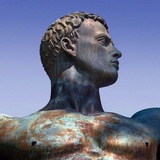
Fast and Kubrick, as is to be expected in a monumental film, subordinated the historical facts to the higher goals of exciting plot and concise message. But from where does research draw its knowledge about Spartacus? And what do the ancient sources report about the rebel who disavowed quite a few top Roman officials and an entire consular army?
"At the same time, Spartacus, a Thracian by birth who had once fought as a soldier with the Romans but had then been captured, sold as a gladiator, and trained in the gladiatorial school at Capua, persuaded about 70 of his comrades to fight for their freedom rather than for the amusement of spectators." With these words Appian , author of several historical works, introduces the rebel leader to his readership in his "Civil Wars". For Plutarch , the learned biographer and author of parallel histories of famous Greeks and Romans, Spartacus was "a Thracian of nomadic origin, who not only boasted great boldness and strength, but was also sharp of mind and extensively educated, more than befitted his destiny." He was thus, sums up the Greek Plutarch in his biography of Crassus, "more Hellene than Thracian".
Campania was a center of gladiatorial activity during the Roman Republic. In the schools, the ludi, of Capua and Pompeii, the young men prepared themselves for gladiatorial careers under the strict eyes of the instructors: The men were trained here to become true fighting machines, who had to kill in order to escape death themselves. The regulations in the ludi corresponded to military discipline: The gladiators were barracked and practiced, day in and day out, with heavy wooden weapons the serious case in the arena. The school of Capua, where Spartacus learned the art of killing together with dozens of other men, mostly from Gaul and Thrace, was privately owned. A certain Lentulus Batiatus had kept them there like prisoners and rented them out to the organizers of gladiator fights, Plutarch notes.
In 73 BC, 200 gladiators planned to break out of Batiatus' asylum, but were betrayed. A group of 70 men armed themselves with kitchen utensils and fought their way out of the school. They captured equipment from gladiators and defeated a small militia unit that had moved out to pursue the gladiators. Thus, as Plutarch puts it, the rebels were in "possession of real weapons of war." The group, now marauding through Campania, immediately received an influx of fugitive slaves from the region; the Gauls Crixus and Oenomaus and the Thracian Spartacus were designated as leaders. It was decided to retreat first to Mount Vesuvius, where defensive positions were established.
Much about the accounts of Spartacus and the events immediately following the revolt is confused, even contradictory. Whether Spartacus came from Thrace, as Appian claims, or whether he was simply a gladiator fighting as a thraex, a "Thracian" (i.e., wearing heavy armor and a short, sickle-like sword), eludes us. Also his prehistory is lost in the darkness. Was Spartacus, as Appian implies, an auxiliary soldier provided by the Roman confederates or even a legionary, that is, a Roman citizen? Or had he become a Roman prisoner of war and thus a gladiator? We will never know. Our ancient informants - apart from Plutarch and Appian, there are a handful of scattered textual testimonies - almost all wrote from a considerable temporal distance. Finally, the voice of the victor speaks in the sources, of course, for whom the insurgents were nothing but a gang of runaway criminals and slaves - even if especially in Plutarch's report respect for Spartacus as a person and military leader clearly shines through...
"At the same time, Spartacus, a Thracian by birth who had once fought as a soldier with the Romans but had then been captured, sold as a gladiator, and trained in the gladiatorial school at Capua, persuaded about 70 of his comrades to fight for their freedom rather than for the amusement of spectators." With these words Appian , author of several historical works, introduces the rebel leader to his readership in his "Civil Wars". For Plutarch , the learned biographer and author of parallel histories of famous Greeks and Romans, Spartacus was "a Thracian of nomadic origin, who not only boasted great boldness and strength, but was also sharp of mind and extensively educated, more than befitted his destiny." He was thus, sums up the Greek Plutarch in his biography of Crassus, "more Hellene than Thracian".
Campania was a center of gladiatorial activity during the Roman Republic. In the schools, the ludi, of Capua and Pompeii, the young men prepared themselves for gladiatorial careers under the strict eyes of the instructors: The men were trained here to become true fighting machines, who had to kill in order to escape death themselves. The regulations in the ludi corresponded to military discipline: The gladiators were barracked and practiced, day in and day out, with heavy wooden weapons the serious case in the arena. The school of Capua, where Spartacus learned the art of killing together with dozens of other men, mostly from Gaul and Thrace, was privately owned. A certain Lentulus Batiatus had kept them there like prisoners and rented them out to the organizers of gladiator fights, Plutarch notes.
In 73 BC, 200 gladiators planned to break out of Batiatus' asylum, but were betrayed. A group of 70 men armed themselves with kitchen utensils and fought their way out of the school. They captured equipment from gladiators and defeated a small militia unit that had moved out to pursue the gladiators. Thus, as Plutarch puts it, the rebels were in "possession of real weapons of war." The group, now marauding through Campania, immediately received an influx of fugitive slaves from the region; the Gauls Crixus and Oenomaus and the Thracian Spartacus were designated as leaders. It was decided to retreat first to Mount Vesuvius, where defensive positions were established.
Much about the accounts of Spartacus and the events immediately following the revolt is confused, even contradictory. Whether Spartacus came from Thrace, as Appian claims, or whether he was simply a gladiator fighting as a thraex, a "Thracian" (i.e., wearing heavy armor and a short, sickle-like sword), eludes us. Also his prehistory is lost in the darkness. Was Spartacus, as Appian implies, an auxiliary soldier provided by the Roman confederates or even a legionary, that is, a Roman citizen? Or had he become a Roman prisoner of war and thus a gladiator? We will never know. Our ancient informants - apart from Plutarch and Appian, there are a handful of scattered textual testimonies - almost all wrote from a considerable temporal distance. Finally, the voice of the victor speaks in the sources, of course, for whom the insurgents were nothing but a gang of runaway criminals and slaves - even if especially in Plutarch's report respect for Spartacus as a person and military leader clearly shines through...
animation.gif
19 KB
Ulrich von Jungingen (1360 – 15 July 1410) was the 26th Grand Master of the Teutonic Knights, serving from 1407 to 1410. His policy of confrontation with the Grand Duchy of Lithuania and the Kingdom of Poland would spark the Polish–Lithuanian–Teutonic War and lead to disaster for his Order, and his own death, at the Battle of Grunwald.
The Siege of Marienburg was an unsuccessful two-month siege of the castle in Marienburg (Malbork), the capital of the monastic state of the Teutonic Knights. The joint Polish and Lithuanian forces, under command of King Władysław II Jagiełło and Grand Duke Vytautas, besieged the castle between 26 July and 19 September 1410 in a bid of complete conquest of Prussia after the great victory in the Battle of Grunwald (Tannenberg). However, the castle withstood the siege and the Knights conceded only to minor territorial losses in the Peace of Thorn (1411). Marienburg defender Heinrich von Plauen is credited as the savior of the Knights from complete annihilation.
Heinrich von Plauen (the Elder) (ca. 1370–1429) was the 27th Grand Master of the Teutonic Knights, serving from November 1410 to October 1413. He was a stern proponent of prolonging the war with Poland. Because all male members of his family were baptized as Heinrich (Henry), he is sometimes known as Heinrich von Plauen the Elder to differentiate from his relative, Heinrich von Plauen the Younger (died ca. 1441).
The pilots' memorial on the Wasserkuppe - the mountain of pilots - consists of basalt stones as a foundation and an eagle sculpture made of bronze, which was created by the sculptor and animal sculptor Professor August Gaul.
It was erected in 1923 in memory of the fallen pilots of the First World War (1914 - 1918), on the initiative of an association of former front-line pilots. According to estimates of the reporter of the Fuldaer Zeitung, 100,000 people attended the inauguration on August 30, 1923.
The inscription on the airmen's memorial reads:
"WE
DEAD AIRMEN REMAINED
SIEGER
BY US ALONE.
PEOPLE,
YOU FLY AGAIN
AND YOU WILL BE
WINNER
THROUGH YOU
ALONE."
The words must be understood from the spirit of those times after the lost First World War, which were strongly marked by deprivations of the population, reparation payments and inflation.
Kurt Tucholsky rightly criticized the monument and the cult of the glider pilots in the 1920s in the Weltbühne. The inscription was "beautiful, but wrong. The dead aviators are those who were shot down, i.e. defeated - which certainly does not disgrace them. But to construct a victory from a shooting down, which in the opposite case is celebrated as a glory, is surely not acceptable."
From the airmen's memorial, one has a magnificent view over the Rhön.
home sweet home 😍
It was erected in 1923 in memory of the fallen pilots of the First World War (1914 - 1918), on the initiative of an association of former front-line pilots. According to estimates of the reporter of the Fuldaer Zeitung, 100,000 people attended the inauguration on August 30, 1923.
The inscription on the airmen's memorial reads:
"WE
DEAD AIRMEN REMAINED
SIEGER
BY US ALONE.
PEOPLE,
YOU FLY AGAIN
AND YOU WILL BE
WINNER
THROUGH YOU
ALONE."
The words must be understood from the spirit of those times after the lost First World War, which were strongly marked by deprivations of the population, reparation payments and inflation.
Kurt Tucholsky rightly criticized the monument and the cult of the glider pilots in the 1920s in the Weltbühne. The inscription was "beautiful, but wrong. The dead aviators are those who were shot down, i.e. defeated - which certainly does not disgrace them. But to construct a victory from a shooting down, which in the opposite case is celebrated as a glory, is surely not acceptable."
From the airmen's memorial, one has a magnificent view over the Rhön.
home sweet home 😍
👍1
Media is too big
VIEW IN TELEGRAM
Дети за отцов не отвечают. Дочери атамана
23 июня 1921 года, то есть 100 лет назад в г. Порт-Артуре родилась старшая дочь атамана Г.М.Семенова Елена Григорьевна Семенова. Умерла в Новороссийске в доме сестры Татьяны Григорьевны. Сестры Таня и Лиза отбывали срок в Озерлаге, а старшая сводная сестра в других лагерях, была подстрелена охранником и едва выжила. На всю жизнь получила психическое расстройство. Посмотрите небольшой фильм о дочерях атамана Семёнова под названием "Дети за отцов не отвечают. Дочери атамана.
Youtube.com. (2017). Дети за отцов не в ответе О дочерях атамана Семёнова. [online] Available at: <https://www.youtube.com/watch?v=ULtd8YV3YAY&t=5s> [Accessed 1 August 2021].
23 июня 1921 года, то есть 100 лет назад в г. Порт-Артуре родилась старшая дочь атамана Г.М.Семенова Елена Григорьевна Семенова. Умерла в Новороссийске в доме сестры Татьяны Григорьевны. Сестры Таня и Лиза отбывали срок в Озерлаге, а старшая сводная сестра в других лагерях, была подстрелена охранником и едва выжила. На всю жизнь получила психическое расстройство. Посмотрите небольшой фильм о дочерях атамана Семёнова под названием "Дети за отцов не отвечают. Дочери атамана.
Youtube.com. (2017). Дети за отцов не в ответе О дочерях атамана Семёнова. [online] Available at: <https://www.youtube.com/watch?v=ULtd8YV3YAY&t=5s> [Accessed 1 August 2021].