This media is not supported in your browser
VIEW IN TELEGRAM
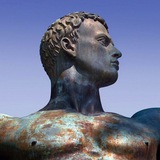
American Bread. Credit: uzn.
👏15💯13✍4❤2
Forwarded from Vault of Secrets - Unpopular History
Der Spiegel: During your career, you have kept your distance from Western style democracy. Are you still convinced that an authoritarian system is the future for Asia?
Lee Kuan Yew: Why should I be against democracy? The British came here, never gave me democracy, except when they were about to leave. But I cannot run my system based on their rules. I have to amend it to fit my people's position. In multiracial societies, you don't vote in accordance with your economic interests and social interests, you vote in accordance with race and religion. Supposing I'd run their system here, Malays would vote for Muslims, Indians would vote for Indians, Chinese would vote for Chinese. I would have a constant clash in my Parliament which cannot be resolved because the Chinese majority would always overrule them. So I found a formula that changes that."
www.spiegel.de (2005). Der Spiegel International - Interview with Singapore’s founder Lee Kuan Yew: ‘It’s Stupid to be Afraid’. Available at: https://www.spiegel.de/international/spiegel/spiegel-interview-with-singapore-s-lee-kuan-yew-it-s-stupid-to-be-afraid-a-369128.html.
Lee Kuan Yew: Why should I be against democracy? The British came here, never gave me democracy, except when they were about to leave. But I cannot run my system based on their rules. I have to amend it to fit my people's position. In multiracial societies, you don't vote in accordance with your economic interests and social interests, you vote in accordance with race and religion. Supposing I'd run their system here, Malays would vote for Muslims, Indians would vote for Indians, Chinese would vote for Chinese. I would have a constant clash in my Parliament which cannot be resolved because the Chinese majority would always overrule them. So I found a formula that changes that."
www.spiegel.de (2005). Der Spiegel International - Interview with Singapore’s founder Lee Kuan Yew: ‘It’s Stupid to be Afraid’. Available at: https://www.spiegel.de/international/spiegel/spiegel-interview-with-singapore-s-lee-kuan-yew-it-s-stupid-to-be-afraid-a-369128.html.
❤11💯6🔥5👍1
Forwarded from Macedonian National Committee (Hacon)
Europeans have witnessed their own downfall — we have brought bourgeois decay upon ourselves. No one is to blame but ourselves. Europeans will rise from the ashes, just as our ancestors rose after the fall of Rome.
Pierre Drieu La Rochelle
Pierre Drieu La Rochelle
🔥25🫡7👍1
"You see, when we say "non-Communist" the West are not satisfied. They say, "Ah, equivocation, fellow traveller". Well, maybe. I don't think so. The communists know what non-communism means. It means no communism. That's why it's non. No communism in Singapore, in Malaysia; which means they've got to fight them. But in fighting them we don't necessarily have to become British or American stooges."
Lee Kuan Yew. (1965). Interview with Alan Ashbolt. Recorded at Canberra TV Studios on 17 March 1965. Broadcast by Radio Malaysia, Singapore, on 24 March 1965 at 22:30.
Lee Kuan Yew. (1965). Interview with Alan Ashbolt. Recorded at Canberra TV Studios on 17 March 1965. Broadcast by Radio Malaysia, Singapore, on 24 March 1965 at 22:30.
⚡12❤4👍2🔥2
Forwarded from Vault of Secrets - Unpopular History (M Himself)
"The 2,400 year old Ust-Taseyevsky idol 'underwent racial realignment early in Middle Ages', losing his European looks... how come he had Caucasian features almost two millennia before the Russian conquest of Siberia?... Archeologist Yuri Grevtsov said: 'Analysis of the sculpture's micro-relief showed that the original image went through some improvements. The first 'edition' was made by knocking, charring and the polishing the lines... a 'less experienced sculptor' got to work on the idol and 'sharply delineated and narrowed the sculpture's asymmetric eyes. 'The moustache and the beard were partially 'shaved'. 'Judging by archeological finds found inside the grottos, this anthropomorphic idol was made during the Scythian time,' Yuri Grevtsov said. 'The first change came when the more European looking face was transformed to make it appear more Mongoloid was likely to have happened in the early Middle Ages with a shift of the population in the Angara River area,' he said." (Zubchuk, 2016)
🔥11❤4👍2
The Russian Liberation Army (ROA) cigarette case, which fought for the Germans in WWII, "For the desecrated churches and the murdered fathers, we will cut down and hang all the Judeo-Bolsheviks."
#NeverForgetTheLeftHatesYou
#NeverForgetTheLeftHatesYou
👍33❤7🔥3
A Third Reich Cossack Volunteer cigarette case, "For the desecrated church, for the murdered fathers, we will beat and tear into pieces, Communists and Yids."
#NeverForgetTheLeftHatesYou
#NeverForgetTheLeftHatesYou
⚡19👍9❤4
Why do so many hate communism? Because this is the result of communism. The communists in African countries deny farm attacks — here is an example of farm murders in Rhodesia in 1978 published in "Africa's Superpower" (1981). These topics are completely removed from history books. Why? How did someone have so much authority as to cleanse history of this and rename them 'freedom fighters'? Whose perspective is being assumed in history books? These were terrorists trained by the Soviet Union and China — and these are the people the UN and Kissinger helped to put into power as "democratic." Rape and farm attacks continue — they never ended because terrorism is part and parcel of Bolshevism. To protect your nation from communist terrorism does not break any natural or religious law; whose laws does it break?
#NeverForgetTheLeftHatesYou
@VaultOfSecrets
#NeverForgetTheLeftHatesYou
@VaultOfSecrets
🔥20👏8👍2🙏2
Forwarded from Vault of Secrets - Unpopular History
Southern African Terrorism: The First Full Account in Detail of Terrorism and Insurgency in Southern Africa, Told and Analysed by Michael Morris (1971)
From the Book's Insert:
This book is the first major comprehensive account of the terrorist and insurgent warfare in Southern Africa, concentrating mainly on the frontline in Rhodesia and South West Africa, with references to Angola and Mozambique. It traces the origins of the struggle, vividly details many of the actions, and gives an educated forecast of likely developments and trends.
Here is recounted the first major clash in South West Africa at Ongulumbashe, the 1967 joint sortie of ZAPU and ANC into Rhodesia, the hand-to-hand fight to the death in the Hanyeko incident, the dilemmas facing President Kaunda, the dangers to Cabora Bassa, the thorny question of retaliatory strikes against countries harboring terrorists, the internal frictions within insurgent ranks, and a host of other facets.
It is at once a fascinating account of immediate history and a moving and thrilling adventure. It has strength as a chronicle because it has looked at not only the broad historical canvas, but also in fine detail at many individual participants. The inclusion of needle-sharp action photographs and descriptive area maps adds considerably to the already vastly interesting subject matter.
Perhaps the greatest benefit this exciting book has is that it is the work not of a journalist on a fortnight's tour of forward areas (a "battlefront quickie"), but is that of a young and imaginative South African policeman who has, in the course of his career, actually experienced at first hand much of what he has here written. More than that, he has written this tragic tale with the acute sensitivity and imagination that has enabled him to produce seven books of poetry. Readers of many differing opinions and political persuasions should find this book one of the most rewarding packages they have encountered for some while.
Link to the Book
From the Book's Insert:
This book is the first major comprehensive account of the terrorist and insurgent warfare in Southern Africa, concentrating mainly on the frontline in Rhodesia and South West Africa, with references to Angola and Mozambique. It traces the origins of the struggle, vividly details many of the actions, and gives an educated forecast of likely developments and trends.
Here is recounted the first major clash in South West Africa at Ongulumbashe, the 1967 joint sortie of ZAPU and ANC into Rhodesia, the hand-to-hand fight to the death in the Hanyeko incident, the dilemmas facing President Kaunda, the dangers to Cabora Bassa, the thorny question of retaliatory strikes against countries harboring terrorists, the internal frictions within insurgent ranks, and a host of other facets.
It is at once a fascinating account of immediate history and a moving and thrilling adventure. It has strength as a chronicle because it has looked at not only the broad historical canvas, but also in fine detail at many individual participants. The inclusion of needle-sharp action photographs and descriptive area maps adds considerably to the already vastly interesting subject matter.
Perhaps the greatest benefit this exciting book has is that it is the work not of a journalist on a fortnight's tour of forward areas (a "battlefront quickie"), but is that of a young and imaginative South African policeman who has, in the course of his career, actually experienced at first hand much of what he has here written. More than that, he has written this tragic tale with the acute sensitivity and imagination that has enabled him to produce seven books of poetry. Readers of many differing opinions and political persuasions should find this book one of the most rewarding packages they have encountered for some while.
Link to the Book
✍8❤1
Ucoz.ru. (2018). SOUTH AFRICAN MARINE CORPS - Translations - Historical material - White Africa Information Portal. [online] Available at: https://whiteafrica.ucoz.ru/publ/korpus_morskoj_pekhoty_juzhnoj_afriki/1-1-0-35
👍4🔥3❤1
Niall_Ferguson_Empire_how_Britain_made_the_modern_world_Penguin.pdf
3.4 MB
Empire: The Rise and Demise of the British World Order and the Lessons for Global Power.
✍6👍2