This media is not supported in your browser
VIEW IN TELEGRAM
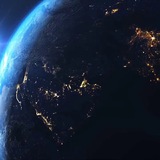
A full rotation of the planet Mars
🤩4❤2
This media is not supported in your browser
VIEW IN TELEGRAM
🛸 16 years of Cupola.
On February 8, 2010, the Cupola — a panoramic module for the ISS — was launched aboard Endeavour STS-130.
Its windows provide a 360° view: observing spacewalks, visiting spacecraft, and the external parts of the station. Cupola helps with science, Earth observation, and supports the crew's psychological well-being.
On February 8, 2010, the Cupola — a panoramic module for the ISS — was launched aboard Endeavour STS-130.
Its windows provide a 360° view: observing spacewalks, visiting spacecraft, and the external parts of the station. Cupola helps with science, Earth observation, and supports the crew's psychological well-being.
❤2👍2🤩1
This media is not supported in your browser
VIEW IN TELEGRAM
🚀 Apollo 8 VS Artemis 1: a new path to the Moon.
Although the goal is the same — the Moon, the routes have changed significantly.
The Apollo 8 mission (1968) used a direct trajectory, 'Trans-Lunar Injection,' providing a close orbit around the satellite.
Artemis 1 (2022) chose a 'Distant Retrograde Orbit' (DRO), testing the limits of the Orion capsule's capabilities and the stability of gravity for long-duration missions.
These paths demonstrate the evolution of technology and preparation for longer missions to the Moon.
Although the goal is the same — the Moon, the routes have changed significantly.
The Apollo 8 mission (1968) used a direct trajectory, 'Trans-Lunar Injection,' providing a close orbit around the satellite.
Artemis 1 (2022) chose a 'Distant Retrograde Orbit' (DRO), testing the limits of the Orion capsule's capabilities and the stability of gravity for long-duration missions.
These paths demonstrate the evolution of technology and preparation for longer missions to the Moon.
❤3👍1🥴1
🌍 Earth's rotation over 24 hours.
An astrophotographer captured the night sky using a fisheye lens for an entire day, taking automatic exposures, and then stabilized the frames using their own software.
The result is an impressive time-lapse showing the movement of stars over the Earth.
An astrophotographer captured the night sky using a fisheye lens for an entire day, taking automatic exposures, and then stabilized the frames using their own software.
The result is an impressive time-lapse showing the movement of stars over the Earth.
❤9🆒2
This media is not supported in your browser
VIEW IN TELEGRAM
🌛 China on the way to the Moon.
China has successfully tested the new manned spacecraft Mengtian and an experimental version of the Long March 10A rocket.
The test confirmed the operation of the spacecraft's emergency system and the controlled landing of the rocket’s first stage in the ocean.
A step toward the ambitious goal — a manned mission to the Moon by 2030.
China has successfully tested the new manned spacecraft Mengtian and an experimental version of the Long March 10A rocket.
The test confirmed the operation of the spacecraft's emergency system and the controlled landing of the rocket’s first stage in the ocean.
A step toward the ambitious goal — a manned mission to the Moon by 2030.
🔥5❤1🆒1
This media is not supported in your browser
VIEW IN TELEGRAM
✈️ Aircraft fuel tank inspection.
Fuel tanks are part of the wing and fuselage structure, so technicians enter them to examine elements that are inaccessible from the outside. They check ribs, fasteners, sealant, wiring, pumps, and connectors for cracks, corrosion, leaks, or electrical faults.
The process is safe: the tank is drained in advance, ventilated, fuel vapors are removed, and monitored in real time.
Technicians use protective gear and work under supervision — all of this is necessary to keep airplanes safe during thousands of hours of flight.
Fuel tanks are part of the wing and fuselage structure, so technicians enter them to examine elements that are inaccessible from the outside. They check ribs, fasteners, sealant, wiring, pumps, and connectors for cracks, corrosion, leaks, or electrical faults.
The process is safe: the tank is drained in advance, ventilated, fuel vapors are removed, and monitored in real time.
Technicians use protective gear and work under supervision — all of this is necessary to keep airplanes safe during thousands of hours of flight.
❤5👍3😱2🙏2🍌1🆒1
This media is not supported in your browser
VIEW IN TELEGRAM
Impressive animation from the GOES-18 satellite, showing a dust storm from space. The element swept over northern Mexico
❤6🤩1🍌1
This media is not supported in your browser
VIEW IN TELEGRAM
What happens if a star approaches a black hole? 💥
This video clearly demonstrates the process: the star gradually approaches the black hole, its orbital speed increases, and at the moment of close encounter the outer layers of the star begin to tear away. Most of the stellar material is scattered into interstellar space, but some of the material is captured and starts rotating around the black hole, forming a bright accretion disk.
This video clearly demonstrates the process: the star gradually approaches the black hole, its orbital speed increases, and at the moment of close encounter the outer layers of the star begin to tear away. Most of the stellar material is scattered into interstellar space, but some of the material is captured and starts rotating around the black hole, forming a bright accretion disk.
❤6🆒2👍1🍌1
This media is not supported in your browser
VIEW IN TELEGRAM
Sunset on Mars, captured by the Curiosity rover ☀️
Due to the peculiarities of light scattering in the atmosphere of the red planet, the sky turns blue during sunset.
Due to the peculiarities of light scattering in the atmosphere of the red planet, the sky turns blue during sunset.
❤7🤩2🆒2
This media is not supported in your browser
VIEW IN TELEGRAM
Is the speed of light really that high?💡
A ray of light can circle the Earth seven and a half times in just one second. Seems fast, let's scale it up.
To cover the distance to the Moon, light takes already 1.255 seconds. And to travel from Earth to Mars — about 3 minutes. And these are just the nearest neighbors in the Solar System.
A ray of light can circle the Earth seven and a half times in just one second. Seems fast, let's scale it up.
To cover the distance to the Moon, light takes already 1.255 seconds. And to travel from Earth to Mars — about 3 minutes. And these are just the nearest neighbors in the Solar System.
🔥3🤯3🆒2❤1👍1🤡1
🌟 After the star's outburst.
In 2002, a dim star in the constellation Monoceros suddenly became 600,000 times brighter than the Sun. This is about V838 Monocerotis, located approximately 20,000 light-years from Earth. During the outburst, the star expanded sharply in size and illuminated the dust surrounding it.
It was these dust shells that NASA captured using the Hubble Space Telescope over several months in 2002. The images show light traveling through increasingly distant layers of dust, creating a "light echo" effect.
Although the star itself has long returned to its previous brightness, its outburst continues to help scientists better understand stellar evolution in the Universe.
In 2002, a dim star in the constellation Monoceros suddenly became 600,000 times brighter than the Sun. This is about V838 Monocerotis, located approximately 20,000 light-years from Earth. During the outburst, the star expanded sharply in size and illuminated the dust surrounding it.
It was these dust shells that NASA captured using the Hubble Space Telescope over several months in 2002. The images show light traveling through increasingly distant layers of dust, creating a "light echo" effect.
Although the star itself has long returned to its previous brightness, its outburst continues to help scientists better understand stellar evolution in the Universe.
❤6🤩2🆒1