Copying files that builds on local development environment to client system?!
I want to set-up a CI CD pipeline by which i want to build Exe files on my local development environment amd then copy those files to client system, most of my clients don't have a public IP.
I use Azure Devops for holding my code.
Project is .net8 WinForms application.
Ton of third party libraries but exe file is simple 240-300MB one file
https://redd.it/1kh5x89
@r_devops
I want to set-up a CI CD pipeline by which i want to build Exe files on my local development environment amd then copy those files to client system, most of my clients don't have a public IP.
I use Azure Devops for holding my code.
Project is .net8 WinForms application.
Ton of third party libraries but exe file is simple 240-300MB one file
https://redd.it/1kh5x89
@r_devops
Reddit
From the devops community on Reddit
Explore this post and more from the devops community
What every DevOps needs to know about DevSecOps
The FREE open-source dynamic DevOps roadmap content is extending more and more. One recent contribution was adding more content to the "growth" section of DevSecOps.
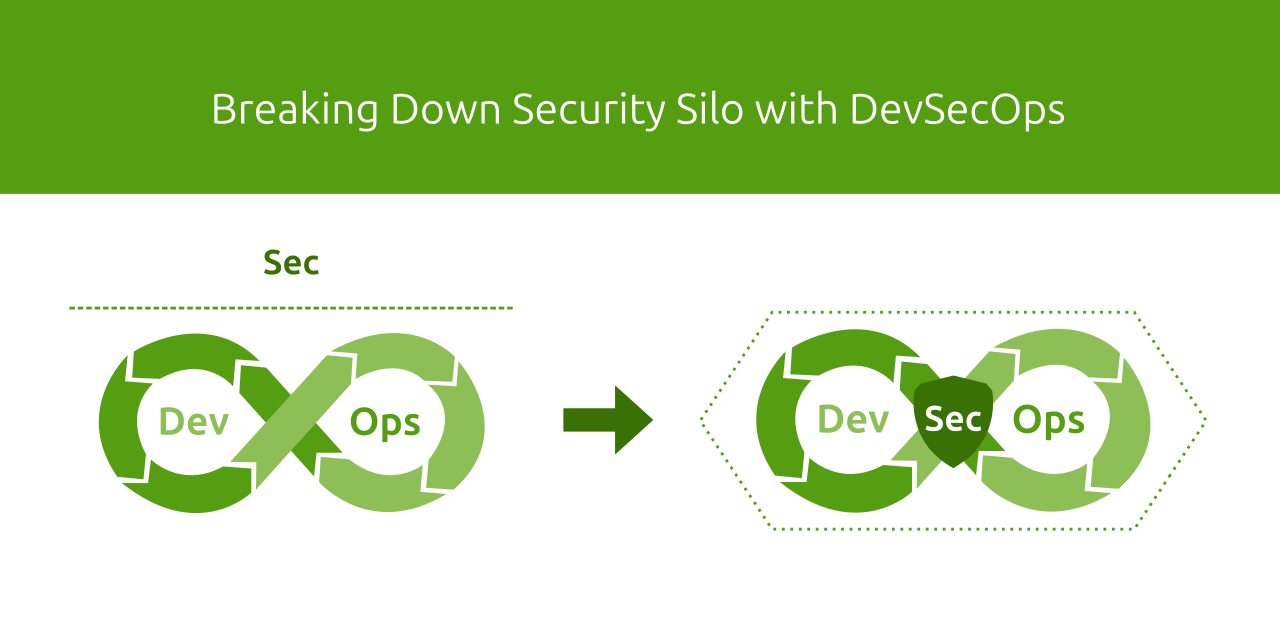
!breaking down security silo
With all Software Supply Chain Security breaches, learning and integrating DevSecOps in DevOps is not a luxury anymore.
The new update includes identifying the threats, DevSecOps processes, and tools.
Dynamic DevOps Roadmap - Growth - DevSecOps
Remember, this is an open-source project, so feel free to contribute (though the project doesn't accept AI-generated content!).
Enjoy :-)
https://redd.it/1kh7tm1
@r_devops
The FREE open-source dynamic DevOps roadmap content is extending more and more. One recent contribution was adding more content to the "growth" section of DevSecOps.
!breaking down security silo
With all Software Supply Chain Security breaches, learning and integrating DevSecOps in DevOps is not a luxury anymore.
The new update includes identifying the threats, DevSecOps processes, and tools.
Dynamic DevOps Roadmap - Growth - DevSecOps
Remember, this is an open-source project, so feel free to contribute (though the project doesn't accept AI-generated content!).
Enjoy :-)
https://redd.it/1kh7tm1
@r_devops
CKA? Or EKS project?
Here's a bit of context as to why I feel like I need to get out of dodge ASAP...
IT Management: "We need more automation! Nobody should be using User Data scripts."
Me: *Writes several Ansible roles to fully install/configure clustered applications like Gitlab, Splunk, ELK, etc. Basically an IT Manager's desired "push button" automation, you push a Gitlab CI Terraform + Ansible Pipeline and 45 minutes later you login to a HTTPS configured web portal to the application with default credentials and all bells and whistles.*
IT Team: *Throws it in the trash.*
IT Team: "Cool story bro, now can you do it all with Bash User Data (AWS) scripts? Nobody here knows how to use Ansible."
So long story short, I feel like I need another job, preferably one where my automation stuff actually gets used instead of stuffed into the broom closet.
My initial plan was to study for the CKA and maybe do a project to showcase knowledge of Kubernetes, then fish around.
Having spent a couple months doing the CKA course on KodeKloud, I am 25% of the way through.
I'm no stranger to certifications, having gotten several others before (RHCE, MCSE, OSCP, VCP, AWS-SAA), but this one:
Seems to be 2-3 times the length and scope of other certifications (e.g. I feel like I'm studying for 2-3 exams at once).
Much of the material seems largely irrelevant to practical use in the sense that managed Kubernetes like EKS seems to make knowing how to use kubeadm largely worthless among various other components.
However, I'm also torn about the personal project angle. I was planning to throw ELK on EKS, maybe showcase things like cert manager, external-dns, and the alb ingress controller.
But the biggest uncertainty is whether or not hiring managers even care about things like that? Do they even bother looking if you do it?
I'm not strictly looking for DevOps role, I just want to automate stuff, and that might overlap with DevOps roles (IMO). I just feel like I might end up doing the work, and the only thing the hiring manager cares about is whether or not I can LeetCode with 3 different lower-level programming languages.
https://redd.it/1kh84lw
@r_devops
Here's a bit of context as to why I feel like I need to get out of dodge ASAP...
IT Management: "We need more automation! Nobody should be using User Data scripts."
Me: *Writes several Ansible roles to fully install/configure clustered applications like Gitlab, Splunk, ELK, etc. Basically an IT Manager's desired "push button" automation, you push a Gitlab CI Terraform + Ansible Pipeline and 45 minutes later you login to a HTTPS configured web portal to the application with default credentials and all bells and whistles.*
IT Team: *Throws it in the trash.*
IT Team: "Cool story bro, now can you do it all with Bash User Data (AWS) scripts? Nobody here knows how to use Ansible."
So long story short, I feel like I need another job, preferably one where my automation stuff actually gets used instead of stuffed into the broom closet.
My initial plan was to study for the CKA and maybe do a project to showcase knowledge of Kubernetes, then fish around.
Having spent a couple months doing the CKA course on KodeKloud, I am 25% of the way through.
I'm no stranger to certifications, having gotten several others before (RHCE, MCSE, OSCP, VCP, AWS-SAA), but this one:
Seems to be 2-3 times the length and scope of other certifications (e.g. I feel like I'm studying for 2-3 exams at once).
Much of the material seems largely irrelevant to practical use in the sense that managed Kubernetes like EKS seems to make knowing how to use kubeadm largely worthless among various other components.
However, I'm also torn about the personal project angle. I was planning to throw ELK on EKS, maybe showcase things like cert manager, external-dns, and the alb ingress controller.
But the biggest uncertainty is whether or not hiring managers even care about things like that? Do they even bother looking if you do it?
I'm not strictly looking for DevOps role, I just want to automate stuff, and that might overlap with DevOps roles (IMO). I just feel like I might end up doing the work, and the only thing the hiring manager cares about is whether or not I can LeetCode with 3 different lower-level programming languages.
https://redd.it/1kh84lw
@r_devops
Reddit
From the devops community on Reddit
Explore this post and more from the devops community
💾 Why You Should Consider MinIO Over AWS S3 + How to Build Your Own S3-Compatible Storage with Java
Hello !
I just published a 2-part series exploring object storage and S3 alternatives.
✅ In Part 1, I break down AWS S3 vs MinIO, their pros/cons, and the key use cases where MinIO truly shines—especially for on-premise or cost-sensitive environments.
https://medium.com/@yassine.ramzi2010/revolutionizing-private-cloud-storage-with-minio-clusters-3cc4bd87c6c9
📦 In Part 2, I show how to build your own S3-compatible storage using MinIO and connect to it with a Java Spring Boot client. Think of it as your first step toward full ownership of your object storage.
https://medium.com/@yassine.ramzi2010/build-your-own-s3-compatible-object-storage-with-minio-and-java-2e6b0adc4206
🛠 Coming next: We’ll scale MinIO in a clustered setup, add HTTPS support, and go deeper into production-readiness.
https://redd.it/1kgy054
@r_devops
Hello !
I just published a 2-part series exploring object storage and S3 alternatives.
✅ In Part 1, I break down AWS S3 vs MinIO, their pros/cons, and the key use cases where MinIO truly shines—especially for on-premise or cost-sensitive environments.
https://medium.com/@yassine.ramzi2010/revolutionizing-private-cloud-storage-with-minio-clusters-3cc4bd87c6c9
📦 In Part 2, I show how to build your own S3-compatible storage using MinIO and connect to it with a Java Spring Boot client. Think of it as your first step toward full ownership of your object storage.
https://medium.com/@yassine.ramzi2010/build-your-own-s3-compatible-object-storage-with-minio-and-java-2e6b0adc4206
🛠 Coming next: We’ll scale MinIO in a clustered setup, add HTTPS support, and go deeper into production-readiness.
https://redd.it/1kgy054
@r_devops
Medium
🚀 Revolutionizing Private Cloud Storage with MinIO Clusters
How MinIO is Redefining Object Storage for Large-Scale Enterprises
Pods, Probes & Sidecars: Your First Real Step into Kubernetes Magic
Hey Folks, In our last post, we broke down Docker Compose vs Kubernetes – Why You’ll Eventually Need K8s. Now, it’s time to officially dive into Kubernetes, starting with the smallest, yet most powerful building block: Pods!
This post covers:
1. What are Pods (and why they matter)
2. Creating Pods the quick way (
3. YAML anatomy for Pods, from containers to volumes, probes, env vars & more
4. Debugging common errors like
5. Multi-container Pods with the Sidecar Pattern
6. Full working example (yes, with liveness + readiness probes!)
Read the full piece, What Are Pods in Kubernetes? A Beginner’s Guide with Real Examples
Let’s go K8S, folks!
https://redd.it/1khdt4z
@r_devops
Hey Folks, In our last post, we broke down Docker Compose vs Kubernetes – Why You’ll Eventually Need K8s. Now, it’s time to officially dive into Kubernetes, starting with the smallest, yet most powerful building block: Pods!
This post covers:
1. What are Pods (and why they matter)
2. Creating Pods the quick way (
kubectl run) vs the declarative way (YAML)3. YAML anatomy for Pods, from containers to volumes, probes, env vars & more
4. Debugging common errors like
ImagePullBackOff5. Multi-container Pods with the Sidecar Pattern
6. Full working example (yes, with liveness + readiness probes!)
Read the full piece, What Are Pods in Kubernetes? A Beginner’s Guide with Real Examples
Let’s go K8S, folks!
https://redd.it/1khdt4z
@r_devops
Medium
What Are Pods in Kubernetes? A Beginner’s Guide with Real Examples
From kubectl run to YAML: Creating and Managing Pods in Kubernetes, ReadList 6.
How are you managing/identifying multiple AWS accounts?
Which tool or extension are you guys using to manage and identify multiple AWS accounts in your browser?
Personally i have to deal with 30+ AWS accounts. An old devops team over engineered our AWS landing zone and left with 37 aws accounts. There are 5 environments and each env has its own data account, network account, worload account, deployment account, shared service and security accounts 🫠
I use multi SSO to work with multiple accounts but i was frequently asking myself: Wait..which account is this again? 😵
So i created this chrome extension for my sanity which is better than aws alias and its quite handy. It can set a friendly name along with AWS account ID in every AWS page. It can set color in tab along with a shortcutname so than you can easily identiy which account is what.
Name: AWS account ID mapper
Link:
https://chromewebstore.google.com/detail/aws-account-id-mapper/cljbmalgdnncddljadobmcpijdahhkga
https://redd.it/1kheabl
@r_devops
Which tool or extension are you guys using to manage and identify multiple AWS accounts in your browser?
Personally i have to deal with 30+ AWS accounts. An old devops team over engineered our AWS landing zone and left with 37 aws accounts. There are 5 environments and each env has its own data account, network account, worload account, deployment account, shared service and security accounts 🫠
I use multi SSO to work with multiple accounts but i was frequently asking myself: Wait..which account is this again? 😵
So i created this chrome extension for my sanity which is better than aws alias and its quite handy. It can set a friendly name along with AWS account ID in every AWS page. It can set color in tab along with a shortcutname so than you can easily identiy which account is what.
Name: AWS account ID mapper
Link:
https://chromewebstore.google.com/detail/aws-account-id-mapper/cljbmalgdnncddljadobmcpijdahhkga
https://redd.it/1kheabl
@r_devops
Google
AWS Account ID Mapper - Chrome Web Store
Map AWS Account ID in AWS Console, multi-session pages & browser tab with a friendly name, shortcutname and color
For companies not using GitHub, what are you using for CI CD?
Been at a company where we've been using Jenkins for 15 years, but haven't found a truly open source competitor that can compete, especially with drone being acquired by harness.
So for people using solutions like Bitbucket DC or Gitea, what are you all using?
https://redd.it/1khh1bj
@r_devops
Been at a company where we've been using Jenkins for 15 years, but haven't found a truly open source competitor that can compete, especially with drone being acquired by harness.
So for people using solutions like Bitbucket DC or Gitea, what are you all using?
https://redd.it/1khh1bj
@r_devops
Reddit
From the devops community on Reddit
Explore this post and more from the devops community
Automating Test Environment Creation
Hey folks, I’m working on an internal tool that lets any developer in our organization spin up a fully-isolated Azure App Service slot for a given GitHub feature branch, all from a simple .NET/Blazor UI. The high-level flow looks like this:
1. **List feature branches** via the GitHub API so the user can pick one.
2. **Create an App Service slot** under our existing Web App using the Azure .NET SDK.
3. **Wire the slot to the chosen branch** so Azure pulls and deploys that branch automatically.
Along the way I’ve experimented with:
* **ARM/Bicep** definitions for `Microsoft.Web/sites/slots` \+ `sourcecontrols/web`
* The **Azure SDK** (`Azure.ResourceManager.AppService`) to `CreateOrUpdateAsync` both the slot and its source-control resource
* **Tenant-wide PAT registration** under `Microsoft.Web/sourcecontrols/GitHub` so slots can reference a named token
* **Azure CLI** and **Terraform** shortcuts
* **ZipDeploy** and **GitHub Actions** variants to avoid the PAT/token dance
It all *works*, but it feels a bit fragile (especially around PAT/token provisioning and ARM quirks). Before I double down on any one approach, I’d love some community wisdom:
* **Has anyone built a similar “self-service” slot-provisioning portal?**
* **Which pattern gave you the best balance of simplicity, security, and maintainability?**
* **How do you handle Git credentials in a scalable, least-privilege way?**
* **Any pitfalls I should watch out for** (permissions, token rotation, slot warm-up, cost cleanup, etc.)?
Thanks in advance for any pointers, code samples, or war-stories!
https://redd.it/1khl7p2
@r_devops
Hey folks, I’m working on an internal tool that lets any developer in our organization spin up a fully-isolated Azure App Service slot for a given GitHub feature branch, all from a simple .NET/Blazor UI. The high-level flow looks like this:
1. **List feature branches** via the GitHub API so the user can pick one.
2. **Create an App Service slot** under our existing Web App using the Azure .NET SDK.
3. **Wire the slot to the chosen branch** so Azure pulls and deploys that branch automatically.
Along the way I’ve experimented with:
* **ARM/Bicep** definitions for `Microsoft.Web/sites/slots` \+ `sourcecontrols/web`
* The **Azure SDK** (`Azure.ResourceManager.AppService`) to `CreateOrUpdateAsync` both the slot and its source-control resource
* **Tenant-wide PAT registration** under `Microsoft.Web/sourcecontrols/GitHub` so slots can reference a named token
* **Azure CLI** and **Terraform** shortcuts
* **ZipDeploy** and **GitHub Actions** variants to avoid the PAT/token dance
It all *works*, but it feels a bit fragile (especially around PAT/token provisioning and ARM quirks). Before I double down on any one approach, I’d love some community wisdom:
* **Has anyone built a similar “self-service” slot-provisioning portal?**
* **Which pattern gave you the best balance of simplicity, security, and maintainability?**
* **How do you handle Git credentials in a scalable, least-privilege way?**
* **Any pitfalls I should watch out for** (permissions, token rotation, slot warm-up, cost cleanup, etc.)?
Thanks in advance for any pointers, code samples, or war-stories!
https://redd.it/1khl7p2
@r_devops
Reddit
From the devops community on Reddit
Explore this post and more from the devops community
Can you recommend a guide for a professional GitLab-Setup(Homelab) with industry standard?
Recently got shifted into DevOps and want to deepen my understanding of self hosting securely - thanks in advance!
https://redd.it/1khnloj
@r_devops
Recently got shifted into DevOps and want to deepen my understanding of self hosting securely - thanks in advance!
https://redd.it/1khnloj
@r_devops
Reddit
From the devops community on Reddit
Explore this post and more from the devops community
Honest question would you actually find this Keycloak tool useful?
I’m building a small tool on the side that lets you fill out a form (realm name, clients, roles, users, etc.) and it generates a full Keycloak realm JSON for import.
Not trying to promote anything just honestly wondering if this would be useful to anyone else, or if I’m just solving my own problem.
I’ve always found setting up Keycloak realms kind of annoying… editing JSON manually or wrestling with the Admin API isn’t the smoothest experience.
How do you usually handle this stuff? Is this something that’s bugged you too, or is it just me overthinking it?
https://redd.it/1kholwc
@r_devops
I’m building a small tool on the side that lets you fill out a form (realm name, clients, roles, users, etc.) and it generates a full Keycloak realm JSON for import.
Not trying to promote anything just honestly wondering if this would be useful to anyone else, or if I’m just solving my own problem.
I’ve always found setting up Keycloak realms kind of annoying… editing JSON manually or wrestling with the Admin API isn’t the smoothest experience.
How do you usually handle this stuff? Is this something that’s bugged you too, or is it just me overthinking it?
https://redd.it/1kholwc
@r_devops
Reddit
From the devops community on Reddit
Explore this post and more from the devops community
Research regarding DevOps
Hi guys! I'm in my final year of my degree while working as an DevOps Intern, we have a final year research and I would like to do it regarding devops, specially DevOps + AI l, are there any research topics that you guys would suggest? Thanks in advance.
https://redd.it/1khpht3
@r_devops
Hi guys! I'm in my final year of my degree while working as an DevOps Intern, we have a final year research and I would like to do it regarding devops, specially DevOps + AI l, are there any research topics that you guys would suggest? Thanks in advance.
https://redd.it/1khpht3
@r_devops
Reddit
From the devops community on Reddit
Explore this post and more from the devops community
Anyone have a great solution for centralizing LLM prompts across an enterprise team for copilot and/or other uses?
Our team has been readily adopting LLM-driven tools, namely copilot/vs code extensions, for approved models to increase productivity. One solution that we're lacking is how to centralize agent prompts for the purpose of sourcing prompts consistently across our team. I'm thinking a GitHub repository that holds agent/mode prompts that can be leveraged by LLM-driven extensions. Anyone have a good solution for this? Do we need to be hosting our own internal MCPs?
https://redd.it/1khqo3y
@r_devops
Our team has been readily adopting LLM-driven tools, namely copilot/vs code extensions, for approved models to increase productivity. One solution that we're lacking is how to centralize agent prompts for the purpose of sourcing prompts consistently across our team. I'm thinking a GitHub repository that holds agent/mode prompts that can be leveraged by LLM-driven extensions. Anyone have a good solution for this? Do we need to be hosting our own internal MCPs?
https://redd.it/1khqo3y
@r_devops
Reddit
From the devops community on Reddit
Explore this post and more from the devops community
Just learned how AWS Lambda cold starts actually work—and it changed how I write functions
I used to think cold starts were just “some delay you can’t control,” but after digging deeper this week, I realized I was kinda lazy with how I structured my functions.
Here’s what clicked for me:
Cold start = time to spin up the container and init your code
Anything outside the handler runs on every cold start
So if you load big libraries or set up DB connections globally, it slows things down
Keeping setup minimal and in the handler helps a lot
I Changed one function and shaved off nearly 300ms of latency. Wild how small changes matter at scale.
Anyone else found smart ways to reduce them?
https://redd.it/1khsjy7
@r_devops
I used to think cold starts were just “some delay you can’t control,” but after digging deeper this week, I realized I was kinda lazy with how I structured my functions.
Here’s what clicked for me:
Cold start = time to spin up the container and init your code
Anything outside the handler runs on every cold start
So if you load big libraries or set up DB connections globally, it slows things down
Keeping setup minimal and in the handler helps a lot
I Changed one function and shaved off nearly 300ms of latency. Wild how small changes matter at scale.
Anyone else found smart ways to reduce them?
https://redd.it/1khsjy7
@r_devops
Reddit
From the devops community on Reddit
Explore this post and more from the devops community
What is your favorite DevOps technology you use regularly?
As an opposing post to https://www.reddit.com/r/devops/comments/1kh3iwb/whats\_one\_devops\_tool\_you\_tried\_but\_just\_didnt/, name a technology you use often that you think is great and would recommend to others.
https://redd.it/1khrsjg
@r_devops
As an opposing post to https://www.reddit.com/r/devops/comments/1kh3iwb/whats\_one\_devops\_tool\_you\_tried\_but\_just\_didnt/, name a technology you use often that you think is great and would recommend to others.
https://redd.it/1khrsjg
@r_devops
Reddit
From the devops community on Reddit
Explore this post and more from the devops community
Can you log into Quay.io using Red Hat credentials?
I signed up for Quay.io, and I noticed I was able to do so without having to set a password. I was able to do it just with my existing Red Hat account. I liked this because I like to leverage SSO whenever I can to minimize the number of password or password equivalents floating around out there.
But when I started to actually use Quay.io by setting up authenticate docker on my machine with docker login, I found that in order to authenticate it, I had to get an "encrypted password" (as opposed to a regular one so I don't end up storing a password in plain text on my machine, as they note). And in order to get that, I had to set a password. It didn't seem to let me generate an encrypted password just using the login I had already performed using my Red Hat credentials.
Is there a way to do this flow just using the Red Hat SSO?
https://redd.it/1khu1rm
@r_devops
I signed up for Quay.io, and I noticed I was able to do so without having to set a password. I was able to do it just with my existing Red Hat account. I liked this because I like to leverage SSO whenever I can to minimize the number of password or password equivalents floating around out there.
But when I started to actually use Quay.io by setting up authenticate docker on my machine with docker login, I found that in order to authenticate it, I had to get an "encrypted password" (as opposed to a regular one so I don't end up storing a password in plain text on my machine, as they note). And in order to get that, I had to set a password. It didn't seem to let me generate an encrypted password just using the login I had already performed using my Red Hat credentials.
Is there a way to do this flow just using the Red Hat SSO?
https://redd.it/1khu1rm
@r_devops
Reddit
From the devops community on Reddit
Explore this post and more from the devops community
Deep in the DevOps Sea
Hello fellow Devopians,
I began my journey in Tech Support/Devops not too long ago. Prior, my background was in supporting a singular ERP system that interfaced with SAP for a business line at a fortune 500 company.
I moved to devops as i really enjoyed managing the application customer service process. I think what I liked most about it is I had the answer to most questions, and I could turn issues around quick with a high level of customer satisfaction. That was very fulfilling to me.
Now, I support two applications in a different business line where i have little functional knowledge (cost accounting/project controls). These two applications are struggling, with one being completely off-line as we work to get it to meet business standards and gain acceptance from users.
I feel like i have a solid grasp on the administrative portion of it, getting approvals, reporting efforts to upper management, etc. I do struggle with communicating to the customer as they can be incendiary. I lack the technical knowledge, however. I hear a lot of terms like EDM, ODS, ETL. The applications i support are built with SQL and C# and I lack experience with both of these languages. I was hoping that i would gain technical expertise in my current seat, however most technical meetings are full of big feelings and people shouting over each other.
I'm looking for suggestions on how to advance my technical knowledge so I can contribute more in that aspect. Thanks for any input/advice.
https://redd.it/1khz7js
@r_devops
Hello fellow Devopians,
I began my journey in Tech Support/Devops not too long ago. Prior, my background was in supporting a singular ERP system that interfaced with SAP for a business line at a fortune 500 company.
I moved to devops as i really enjoyed managing the application customer service process. I think what I liked most about it is I had the answer to most questions, and I could turn issues around quick with a high level of customer satisfaction. That was very fulfilling to me.
Now, I support two applications in a different business line where i have little functional knowledge (cost accounting/project controls). These two applications are struggling, with one being completely off-line as we work to get it to meet business standards and gain acceptance from users.
I feel like i have a solid grasp on the administrative portion of it, getting approvals, reporting efforts to upper management, etc. I do struggle with communicating to the customer as they can be incendiary. I lack the technical knowledge, however. I hear a lot of terms like EDM, ODS, ETL. The applications i support are built with SQL and C# and I lack experience with both of these languages. I was hoping that i would gain technical expertise in my current seat, however most technical meetings are full of big feelings and people shouting over each other.
I'm looking for suggestions on how to advance my technical knowledge so I can contribute more in that aspect. Thanks for any input/advice.
https://redd.it/1khz7js
@r_devops
Reddit
From the devops community on Reddit
Explore this post and more from the devops community
Dev ops beginner
Hi all,
I have a degree in cyber security but I have been moved to dev ops. Now my aim has slightly changed a little and I want dev sec ops. At the moment we are using terraform with AWS heavily based.
I am not that good in coding but I can understand it very well. Where do I start? I know terra form would be a good option and aws cloud partitioner?.
I would really need some GitHub exercise to explore more about terraform etc.
Any ideas or where do I start?
https://redd.it/1ki7olw
@r_devops
Hi all,
I have a degree in cyber security but I have been moved to dev ops. Now my aim has slightly changed a little and I want dev sec ops. At the moment we are using terraform with AWS heavily based.
I am not that good in coding but I can understand it very well. Where do I start? I know terra form would be a good option and aws cloud partitioner?.
I would really need some GitHub exercise to explore more about terraform etc.
Any ideas or where do I start?
https://redd.it/1ki7olw
@r_devops
Reddit
From the devops community on Reddit
Explore this post and more from the devops community
DevOps, Cloud Engineering + AI/ML
I know I know, another AI thread.
Tell me, what is your org doing on the AI/ML field?
Have you started using any tools and moving towards GenAIops/MLops or whatever the buzz word is?
Do you have any thoughts on the fusion between classic Cloud Engineering and AI?
And finally, if you are in position to make a difference in your org and adopt ML/AI tools/technologies what would you do?
https://redd.it/1ki8mb9
@r_devops
I know I know, another AI thread.
Tell me, what is your org doing on the AI/ML field?
Have you started using any tools and moving towards GenAIops/MLops or whatever the buzz word is?
Do you have any thoughts on the fusion between classic Cloud Engineering and AI?
And finally, if you are in position to make a difference in your org and adopt ML/AI tools/technologies what would you do?
https://redd.it/1ki8mb9
@r_devops
Reddit
From the devops community on Reddit
Explore this post and more from the devops community
Those in the fed space, what are you using for your DevSecOps tooling?
Curious what government/federal agencies are using for their tooling in regards to SAST, DAST, SCA, IaC, containers, etc. and what’s worked and what hasn’t. Lots more constraints in what can be used in this space. Thanks!
https://redd.it/1ki6rgz
@r_devops
Curious what government/federal agencies are using for their tooling in regards to SAST, DAST, SCA, IaC, containers, etc. and what’s worked and what hasn’t. Lots more constraints in what can be used in this space. Thanks!
https://redd.it/1ki6rgz
@r_devops
Reddit
From the devops community on Reddit
Explore this post and more from the devops community
Thinking of Getting Into DevOps? Here's Some Honest Advice for Freshers and Career Changers
Hello Reddit!
I wanted to share some honest thoughts and tips for those considering a career in DevOps—whether you're a recent graduate or someone looking to transition into this field.
In my opinion, DevOps is a rewarding role full of challenges. It's exciting, but it's not an entry-level position in the traditional sense. You’re expected to have a good grasp of various tools and, more importantly, know how to integrate them effectively. DevOps isn't just about tools like Kubernetes, Ansible, Terraform, CI/CD pipelines, Docker Compose, AWS, or GCP—it's about understanding the culture of DevOps and choosing the right tools to support it.
# Be Aware of the Current Job Market
That said, the current tech job market is very competitive. For every DevOps/SRE/Cloud Engineer role, you're likely competing against hundreds if not thousands of applicants. If you're just getting started and haven’t fully committed to learning DevOps yet, you might want to explore alternative roles for now. DevOps is heavily saturated, especially in North America.
To be blunt: if you're applying for junior DevOps roles, your chances are unfortunately quite slim. Many companies are outsourcing to countries like India, where they can hire two or three senior engineers for the cost of one junior hire. That's the reality of the market right now.
# If You’re Serious About DevOps, Here’s My Advice
If you're still passionate about becoming a DevOps engineer, here are a few suggestions that might help:
Understand the DevOps culture first. Don't just focus on the tools. Learn how DevOps bridges the gap between development and operations, and why it matters to businesses. Interviewers often ask about this.
Check out **https://roadmap.sh/devops**. It's a great starting point to understand the ecosystem and which tools to learn.
Linux: You don’t need to be a Linux expert, but you should be comfortable navigating the system, manipulating files, and using tools like `sed`, `awk`, `grep`, and basic troubleshooting commands. Know where logs are and how to read them.
Terraform: It’s not overly difficult to learn, but focus on best practices—using remote backends, writing reusable modules from scratch, and understanding state management.
Cloud Service Providers: Pick one—either AWS or GCP. Learn the core concepts: VPCs, IAM, scaling applications, setting up multi-AZ and multi-region deployments, and configuring load balancers.
Kubernetes: Learn how to scale applications using HPA (Horizontal Pod Autoscaler) and Cluster Autoscaler. More importantly, understand GitOps principles and why they're important in modern Kubernetes workflows.
Programming Language: Learn Python for scripting and automation. It's widely used in DevOps for tasks like writing infrastructure scripts, automating CI/CD pipelines, creating monitoring tools, or working with cloud SDKs. You don’t need to be a software engineer, but you should be comfortable writing and understanding basic to intermediate-level scripts.
Hands-on Practice: Set up your own lab. Play around with Ansible, self-hosted GitHub runners, Terraform, and Kubernetes. Document everything in GitHub. This builds your portfolio and gives hiring managers something to evaluate beyond your resume. But please don’t just copy/paste from ChatGPT. Make sure you understand line by line what you’ve built.
# Interview Tips
During interviews, avoid giving answers that sound like they came straight from ChatGPT. Most interviewers can tell. Instead, use the STAR method (Situation, Task, Action, Result) to structure your responses. Be human, be yourself, be honest, and show genuine interest in the company and the role. Most companies list their core values on their websites. Take the time to understand them, reflect on how they align with your own values, and prepare an example that demonstrates this alignment during your interview.
I used ChatGPT to help structure
Hello Reddit!
I wanted to share some honest thoughts and tips for those considering a career in DevOps—whether you're a recent graduate or someone looking to transition into this field.
In my opinion, DevOps is a rewarding role full of challenges. It's exciting, but it's not an entry-level position in the traditional sense. You’re expected to have a good grasp of various tools and, more importantly, know how to integrate them effectively. DevOps isn't just about tools like Kubernetes, Ansible, Terraform, CI/CD pipelines, Docker Compose, AWS, or GCP—it's about understanding the culture of DevOps and choosing the right tools to support it.
# Be Aware of the Current Job Market
That said, the current tech job market is very competitive. For every DevOps/SRE/Cloud Engineer role, you're likely competing against hundreds if not thousands of applicants. If you're just getting started and haven’t fully committed to learning DevOps yet, you might want to explore alternative roles for now. DevOps is heavily saturated, especially in North America.
To be blunt: if you're applying for junior DevOps roles, your chances are unfortunately quite slim. Many companies are outsourcing to countries like India, where they can hire two or three senior engineers for the cost of one junior hire. That's the reality of the market right now.
# If You’re Serious About DevOps, Here’s My Advice
If you're still passionate about becoming a DevOps engineer, here are a few suggestions that might help:
Understand the DevOps culture first. Don't just focus on the tools. Learn how DevOps bridges the gap between development and operations, and why it matters to businesses. Interviewers often ask about this.
Check out **https://roadmap.sh/devops**. It's a great starting point to understand the ecosystem and which tools to learn.
Linux: You don’t need to be a Linux expert, but you should be comfortable navigating the system, manipulating files, and using tools like `sed`, `awk`, `grep`, and basic troubleshooting commands. Know where logs are and how to read them.
Terraform: It’s not overly difficult to learn, but focus on best practices—using remote backends, writing reusable modules from scratch, and understanding state management.
Cloud Service Providers: Pick one—either AWS or GCP. Learn the core concepts: VPCs, IAM, scaling applications, setting up multi-AZ and multi-region deployments, and configuring load balancers.
Kubernetes: Learn how to scale applications using HPA (Horizontal Pod Autoscaler) and Cluster Autoscaler. More importantly, understand GitOps principles and why they're important in modern Kubernetes workflows.
Programming Language: Learn Python for scripting and automation. It's widely used in DevOps for tasks like writing infrastructure scripts, automating CI/CD pipelines, creating monitoring tools, or working with cloud SDKs. You don’t need to be a software engineer, but you should be comfortable writing and understanding basic to intermediate-level scripts.
Hands-on Practice: Set up your own lab. Play around with Ansible, self-hosted GitHub runners, Terraform, and Kubernetes. Document everything in GitHub. This builds your portfolio and gives hiring managers something to evaluate beyond your resume. But please don’t just copy/paste from ChatGPT. Make sure you understand line by line what you’ve built.
# Interview Tips
During interviews, avoid giving answers that sound like they came straight from ChatGPT. Most interviewers can tell. Instead, use the STAR method (Situation, Task, Action, Result) to structure your responses. Be human, be yourself, be honest, and show genuine interest in the company and the role. Most companies list their core values on their websites. Take the time to understand them, reflect on how they align with your own values, and prepare an example that demonstrates this alignment during your interview.
I used ChatGPT to help structure
roadmap.sh
DevOps Roadmap: Learn to become a DevOps Engineer or SRE
Step by step guide for DevOps, SRE or any other Operations Role in 2026
and refine this write-up. That's all for now. If you have any questions or want to know more about breaking into DevOps, feel free to reply—I’ll do my best to help!
https://redd.it/1kia05y
@r_devops
https://redd.it/1kia05y
@r_devops
Reddit
From the devops community on Reddit: Thinking of Getting Into DevOps? Here's Some Honest Advice for Freshers and Career Changers
Explore this post and more from the devops community