
Artificial Intelligence and Machine Learning in Pediatric Biomedical Research
🎥 Artificial Intelligence and Machine Learning in Pediatric Biomedical Research
👁 1 раз ⏳ 3400 сек.
🎥 Artificial Intelligence and Machine Learning in Pediatric Biomedical Research
👁 1 раз ⏳ 3400 сек.
Prof. Judith Dexheimer, Associate Professor at Cincinnati Children's Hospital Medical Center

Dr. Dexheimer is an Associate Professor of Pediatrics at Cincinnati Children’s Hospital Medical Center and the University of Cincinnati. She is a clinical informaticist working on the development and implementation of machine learning applications into clinical care. Her research focus areas include machine learning techniques, real-time patient identification system, disparate data merging, and applications of cli
Vk
Artificial Intelligence and Machine Learning in Pediatric Biomedical Research
Prof. Judith Dexheimer, Associate Professor at Cincinnati Children's Hospital Medical Center
Dr. Dexheimer is an Associate Professor of Pediatrics at Cincinnati Children’s Hospital Medical Center and the University of Cincinnati. She is a clinical informaticist…
Dr. Dexheimer is an Associate Professor of Pediatrics at Cincinnati Children’s Hospital Medical Center and the University of Cincinnati. She is a clinical informaticist…
Tensorflow 2.0 Keras - python - Mastery Series
🎥 Tensorflow 2.0 Keras - python - Mastery Series
👁 1 раз ⏳ 464 сек.
🎥 Tensorflow 2.0 Keras - python - Mastery Series
👁 1 раз ⏳ 464 сек.
This is the first video on the Tensorflow 2.0 Series
Getting started with first program
Vk
Tensorflow 2.0 Keras - python - Mastery Series
This is the first video on the Tensorflow 2.0 Series
Getting started with first program
Getting started with first program
Тренировка по машинному обучению 3 августа 2019
🔗 Тренировка по машинному обучению 3 августа 2019
Тренировки по машинному обучению — это открытый митап, на который мы приглашаем участников разных соревнований в сфере анализа данных чтобы познакомиться, рассказать про задачи и опыт участия в конкурсах, пообщаться и обменяться опытом. С докладами выступают успешные участники последних соревнований на Kaggle и других платформах. Они расскажут, какие техники и методы использовали в решениях они сами, а какие помогли их конкурентам. Программа 12.00 — 12.30 | Илья Ларченко — Kaggle Freesound Audio Tagging 2
🔗 Тренировка по машинному обучению 3 августа 2019
Тренировки по машинному обучению — это открытый митап, на который мы приглашаем участников разных соревнований в сфере анализа данных чтобы познакомиться, рассказать про задачи и опыт участия в конкурсах, пообщаться и обменяться опытом. С докладами выступают успешные участники последних соревнований на Kaggle и других платформах. Они расскажут, какие техники и методы использовали в решениях они сами, а какие помогли их конкурентам. Программа 12.00 — 12.30 | Илья Ларченко — Kaggle Freesound Audio Tagging 2
YouTube
Enjoy the videos and music you love, upload original content, and share it all with friends, family, and the world on YouTube.
Ограничения машинного обучения
Наш телеграм канал - tglink.me/ai_machinelearning_big_data
Большинство людей, читающих эту статью, вероятно, знакомы с машинным обучением и соответствующими алгоритмами, используемыми для классификации или прогнозирования результатов на основе данных. Тем не менее, важно понимать, что машинное обучение не является решением всех проблем. Учитывая полезность машинного обучения, может быть трудно согласиться с тем, что иногда это не лучшее решение проблемы.
#BigData
#Машинноеобучениe
#Искусственныйинтеллект
https://habr.com/ru/post/462365/
🔗 Ограничения машинного обучения
Привет, Хабр! Представляю вашему вниманию перевод статьи “The Limitations of Machine Learning“ автора Matthew Stewart. Большинство людей, читающих эту статью, в...
Наш телеграм канал - tglink.me/ai_machinelearning_big_data
Большинство людей, читающих эту статью, вероятно, знакомы с машинным обучением и соответствующими алгоритмами, используемыми для классификации или прогнозирования результатов на основе данных. Тем не менее, важно понимать, что машинное обучение не является решением всех проблем. Учитывая полезность машинного обучения, может быть трудно согласиться с тем, что иногда это не лучшее решение проблемы.
#BigData
#Машинноеобучениe
#Искусственныйинтеллект
https://habr.com/ru/post/462365/
🔗 Ограничения машинного обучения
Привет, Хабр! Представляю вашему вниманию перевод статьи “The Limitations of Machine Learning“ автора Matthew Stewart. Большинство людей, читающих эту статью, в...
Tighten the Towel! Simulating Liquid-Fabric Interactions
🔗 Tighten the Towel! Simulating Liquid-Fabric Interactions
📝 The paper "A Multi-Scale Model for Simulating Liquid-Fabric Interactions" is available here: https://www.cs.columbia.edu/cg/wetcloth/ ❤️ Pick up cool perks on our Patreon page: https://www.patreon.com/TwoMinutePapers 🙏 We would like to thank our generous Patreon supporters who make Two Minute Papers possible: 313V, Alex Haro, Andrew Melnychuk, Angelos Evripiotis, Anthony Vdovitchenko, Brian Gilman, Bruno Brito, Bryan Learn, Christian Ahlin, Christoph Jadanowski, Claudio Fernandes, Daniel Hasegan, Dennis
🔗 Tighten the Towel! Simulating Liquid-Fabric Interactions
📝 The paper "A Multi-Scale Model for Simulating Liquid-Fabric Interactions" is available here: https://www.cs.columbia.edu/cg/wetcloth/ ❤️ Pick up cool perks on our Patreon page: https://www.patreon.com/TwoMinutePapers 🙏 We would like to thank our generous Patreon supporters who make Two Minute Papers possible: 313V, Alex Haro, Andrew Melnychuk, Angelos Evripiotis, Anthony Vdovitchenko, Brian Gilman, Bruno Brito, Bryan Learn, Christian Ahlin, Christoph Jadanowski, Claudio Fernandes, Daniel Hasegan, Dennis
YouTube
Tighten the Towel! Simulating Liquid-Fabric Interactions
📸 We are now available on Instagram with short snippets of our new episodes. Check us out there! https://www.instagram.com/twominutepapers/
📝 The paper "A Multi-Scale Model for Simulating Liquid-Fabric Interactions" is available here:
https://www.cs.colu…
📝 The paper "A Multi-Scale Model for Simulating Liquid-Fabric Interactions" is available here:
https://www.cs.colu…
How to Develop a Pix2Pix GAN for Image-to-Image Translation
https://machinelearningmastery.com/how-to-develop-a-pix2pix-gan-for-image-to-image-translation/
🔗 How to Develop a Pix2Pix GAN for Image-to-Image Translation
The Pix2Pix Generative Adversarial Network, or GAN, is an approach to training a deep convolutional neural network for image-to-image translation tasks. The careful configuration of architecture as a type of image-conditional GAN allows for both the generation of large images compared to prior GAN models (e.g. such as 256×256 pixels) and the capability of performing …
https://machinelearningmastery.com/how-to-develop-a-pix2pix-gan-for-image-to-image-translation/
🔗 How to Develop a Pix2Pix GAN for Image-to-Image Translation
The Pix2Pix Generative Adversarial Network, or GAN, is an approach to training a deep convolutional neural network for image-to-image translation tasks. The careful configuration of architecture as a type of image-conditional GAN allows for both the generation of large images compared to prior GAN models (e.g. such as 256×256 pixels) and the capability of performing …
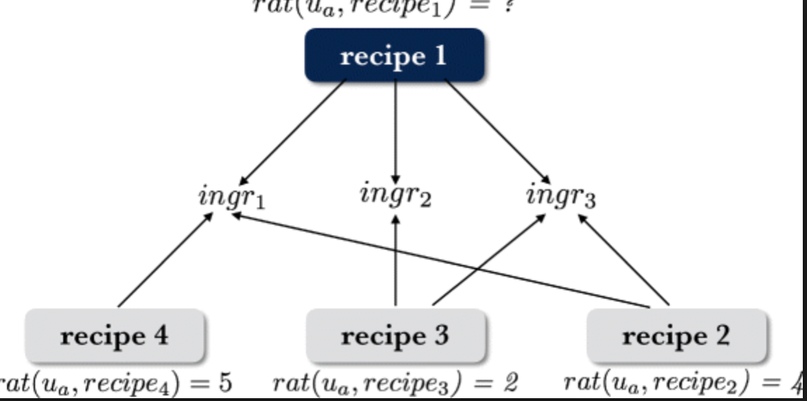
Personalized, Health-Aware Recipe Recommendation: An Ensemble Topic
arxiv.org/abs/1908.0014
🔗 Personalized, Health-Aware Recipe Recommendation: An Ensemble Topic Modeling Based Approach
Food choices are personal and complex and have a significant impact on our long-term health and quality of life. By helping users to make informed and satisfying decisions, Recommender Systems (RS) have the potential to support users in making healthier food choices. Intelligent users-modeling is a key challenge in achieving this potential. This paper investigates Ensemble Topic Modelling (EnsTM) based Feature Identification techniques for efficient user-modeling and recipe recommendation. It builds on findings in EnsTM to propose a reduced data representation format and a smart user-modeling strategy that makes capturing user-preference fast, efficient and interactive. This approach enables personalization, even in a cold-start scenario. This paper proposes two different EnsTM based and one Hybrid EnsTM based recommenders. We compared all three EnsTM based variations through a user study with 48 participants, using a large-scale,real-world corpus of 230,876 recipes, and compare against a conventional Content
arxiv.org/abs/1908.0014
🔗 Personalized, Health-Aware Recipe Recommendation: An Ensemble Topic Modeling Based Approach
Food choices are personal and complex and have a significant impact on our long-term health and quality of life. By helping users to make informed and satisfying decisions, Recommender Systems (RS) have the potential to support users in making healthier food choices. Intelligent users-modeling is a key challenge in achieving this potential. This paper investigates Ensemble Topic Modelling (EnsTM) based Feature Identification techniques for efficient user-modeling and recipe recommendation. It builds on findings in EnsTM to propose a reduced data representation format and a smart user-modeling strategy that makes capturing user-preference fast, efficient and interactive. This approach enables personalization, even in a cold-start scenario. This paper proposes two different EnsTM based and one Hybrid EnsTM based recommenders. We compared all three EnsTM based variations through a user study with 48 participants, using a large-scale,real-world corpus of 230,876 recipes, and compare against a conventional Content
Статистика на службе у бизнеса. Методология расчёта множественных экспериментов
Как и было обещано в предыдущей статье, сегодня мы продолжим разговор о методологиях, применяемых в A/B-тестировании и рассмотрим методы оценки результатов множественных экспериментов. Мы увидим, что методологии довольно просты, и математическая статистика не так страшна, а первооснова всего — аналитическое мышление и здравый смысл. Однако предварительно хотелось бы сказать пару слов о том, какие же бизнес-задачи помогают решать строгие математические методы, нужны ли они Вам на данном этапе развития Вашей компании и какие pros and cons существуют в Большой аналитике.
https://habr.com/ru/post/462345/
🔗 Статистика на службе у бизнеса. Методология расчёта множественных экспериментов
Добрый день! Как и было обещано в предыдущей статье, сегодня мы продолжим разговор о методологиях, применяемых в A/B-тестировании и рассмотрим методы оценки рез...
Как и было обещано в предыдущей статье, сегодня мы продолжим разговор о методологиях, применяемых в A/B-тестировании и рассмотрим методы оценки результатов множественных экспериментов. Мы увидим, что методологии довольно просты, и математическая статистика не так страшна, а первооснова всего — аналитическое мышление и здравый смысл. Однако предварительно хотелось бы сказать пару слов о том, какие же бизнес-задачи помогают решать строгие математические методы, нужны ли они Вам на данном этапе развития Вашей компании и какие pros and cons существуют в Большой аналитике.
https://habr.com/ru/post/462345/
🔗 Статистика на службе у бизнеса. Методология расчёта множественных экспериментов
Добрый день! Как и было обещано в предыдущей статье, сегодня мы продолжим разговор о методологиях, применяемых в A/B-тестировании и рассмотрим методы оценки рез...
Consider TPOT your Data Science Assistant. TPOT is a Python Automated Machine Learning tool that optimizes machine learning pipelines using genetic programming.
https://github.com/EpistasisLab/tpot
🔗 EpistasisLab/tpot
A Python Automated Machine Learning tool that optimizes machine learning pipelines using genetic programming. - EpistasisLab/tpot
https://github.com/EpistasisLab/tpot
🔗 EpistasisLab/tpot
A Python Automated Machine Learning tool that optimizes machine learning pipelines using genetic programming. - EpistasisLab/tpot
GitHub
GitHub - EpistasisLab/tpot: A Python Automated Machine Learning tool that optimizes machine learning pipelines using genetic programming.
A Python Automated Machine Learning tool that optimizes machine learning pipelines using genetic programming. - EpistasisLab/tpot
#ProgrammingKnowledge #ComputerVision #OpenCV
OpenCV Python Tutorial For Beginners 30 - Probabilistic Hough Transform using HoughLinesP in OpenCV
🎥 OpenCV Python Tutorial For Beginners 30 - Probabilistic Hough Transform using HoughLinesP in OpenCV
👁 1 раз ⏳ 648 сек.
OpenCV Python Tutorial For Beginners 30 - Probabilistic Hough Transform using HoughLinesP in OpenCV
🎥 OpenCV Python Tutorial For Beginners 30 - Probabilistic Hough Transform using HoughLinesP in OpenCV
👁 1 раз ⏳ 648 сек.
code - https://gist.github.com/pknowledge/baa1e9785d818e70be78f7ac5795ee51
In this video on OpenCV Python Tutorial For Beginners, we are  going to see Probabilistic Hough Transform using HoughLinesP  method in OpenCV.
OpenCV implements two kind of Hough Line Transforms
The Standard Hough Transform  (HoughLines method)
The Probabilistic Hough Line Transform  (HoughLinesP method)

lines=cv.HoughLinesP(image, rho, theta, threshold[, lines[, minLineLength[, maxLineGap]]])

rho : Distance resolution of the accum
Vk
OpenCV Python Tutorial For Beginners 30 - Probabilistic Hough Transform using HoughLinesP in OpenCV
code - https://gist.github.com/pknowledge/baa1e9785d818e70be78f7ac5795ee51
In this video on OpenCV Python Tutorial For Beginners, we are going to see Probabilistic Hough Transform using HoughLinesP method in OpenCV.
OpenCV implements two kind of Hough Line…
In this video on OpenCV Python Tutorial For Beginners, we are going to see Probabilistic Hough Transform using HoughLinesP method in OpenCV.
OpenCV implements two kind of Hough Line…
#Python #ArtificialIntelligence #AI
AI Teaches Itself to Play Flappy Bird - Using NEAT Python!
🎥 AI Teaches Itself to Play Flappy Bird - Using NEAT Python!
👁 1 раз ⏳ 617 сек.
AI Teaches Itself to Play Flappy Bird - Using NEAT Python!
🎥 AI Teaches Itself to Play Flappy Bird - Using NEAT Python!
👁 1 раз ⏳ 617 сек.
Watch an genetic/evolutionary algorithm slowly progress and teach itself to flappy bird. The AI that learns to play this game using an algorithm called NEAT. In this video I show how the AI works and go into some specific details about the concepts behind it.

Code: https://github.com/techwithtim/NEAT-Flappy-Bird
NEAT-Python Moduler: https://neat-python.readthedocs.io/en/latest/
Original NEAT Paper: https://nn.cs.utexas.edu/downloads/papers/stanley.cec02.pdf

Inspired By: https://www.youtube.com/watch?v=WSW-
Vk
AI Teaches Itself to Play Flappy Bird - Using NEAT Python!
Watch an genetic/evolutionary algorithm slowly progress and teach itself to flappy bird. The AI that learns to play this game using an algorithm called NEAT. In this video I show how the AI works and go into some specific details about the concepts behind…
Differential Privacy Note 2: A Powerful Synopsis from the Bible of Privacy
“Tell me and I forget. Teach me and I remember. Involve me and I learn.” — Benjamin Franklin
https://towardsdatascience.com/differential-privacy-note-2-a-powerful-synopsis-from-the-bible-of-privacy-51e2f99d3900?source=collection_home---4------2-----------------------
🔗 Differential Privacy Note 2: A Powerful Synopsis from the Bible of Privacy
“Tell me and I forget. Teach me and I remember. Involve me and I learn.”
— Benjamin Franklin
“Tell me and I forget. Teach me and I remember. Involve me and I learn.” — Benjamin Franklin
https://towardsdatascience.com/differential-privacy-note-2-a-powerful-synopsis-from-the-bible-of-privacy-51e2f99d3900?source=collection_home---4------2-----------------------
🔗 Differential Privacy Note 2: A Powerful Synopsis from the Bible of Privacy
“Tell me and I forget. Teach me and I remember. Involve me and I learn.”
— Benjamin Franklin
Medium
Differential Privacy Note 2: A Powerful Synopsis from the Bible of Privacy
“Tell me and I forget. Teach me and I remember. Involve me and I learn.” — Benjamin Franklin
What is Decision Intelligence?
A new discipline for leadership in the AI era
https://towardsdatascience.com/introduction-to-decision-intelligence-5d147ddab767?source=collection_home---4------1-----------------------
🔗 Introduction to Decision Intelligence
A new discipline for leadership in the AI era
A new discipline for leadership in the AI era
https://towardsdatascience.com/introduction-to-decision-intelligence-5d147ddab767?source=collection_home---4------1-----------------------
🔗 Introduction to Decision Intelligence
A new discipline for leadership in the AI era
Medium
Introduction to Decision Intelligence
A new discipline for leadership in the AI era
Model predicts cognitive decline due to Alzheimer’s, up to two years out
Researchers hope the system can zero in on the right patients to enroll in clinical trials, to speed discovery of drug treatments.
https://news.mit.edu/2019/model-predicts-alzheimers-decline-0802
🔗 Model predicts cognitive decline due to Alzheimer’s, up to two years out
Researchers hope the system can zero in on the right patients to enroll in clinical trials, to speed discovery of drug treatments.
Researchers hope the system can zero in on the right patients to enroll in clinical trials, to speed discovery of drug treatments.
https://news.mit.edu/2019/model-predicts-alzheimers-decline-0802
🔗 Model predicts cognitive decline due to Alzheimer’s, up to two years out
Researchers hope the system can zero in on the right patients to enroll in clinical trials, to speed discovery of drug treatments.
MIT News
Model predicts cognitive decline due to Alzheimer’s, up to two years out
An artificial intelligence model developed at MIT predicts cognitive decline of patients at risk for Alzheimer’s disease by predicting their cognition test scores up to two years in the future. The model could be used to improve the selection of candidate…
Курс «Программирование на языке Python для сбора и анализа данных»
Наш телеграм канал - tglink.me/ai_machinelearning_big_data
1. Первое знакомство
2. Списки и цикл for
3. Ввод-вывод списков и проверка условий
4. Функции
5. Словари, списковые включения
6. Сортировка. Форматирование строк
7. Указатели. Множества. Строки. Файлы
8. Извлечение данных из веб-страниц
9. Работа с открытыми API с помощью XML
#python
🎥 Лекция №1: первое знакомство
👁 2 раз ⏳ 2902 сек.
🎥 Лекция №2: Списки и цикл for
👁 1 раз ⏳ 4009 сек.
🎥 Лекция №3: ввод-вывод списков и проверка условий
👁 1 раз ⏳ 4227 сек.
🎥 Лекция №4: функции
👁 1 раз ⏳ 4247 сек.
🎥 Лекция №5: словари, списковые включения
👁 1 раз ⏳ 2632 сек.
🎥 Лекция №6. Сортировка. Форматирование строк
👁 1 раз ⏳ 3229 сек.
🎥 Лекция №7: Указатели. Множества. Строки. Файлы
👁 1 раз ⏳ 3848 сек.
🎥 Лекция 8. Извлечение данных из веб-страниц
👁 1 раз ⏳ 3044 сек.
🎥 Лекция №9: Работа с открытыми API с помощью XML
👁 1 раз ⏳ 1458 сек.
Наш телеграм канал - tglink.me/ai_machinelearning_big_data
1. Первое знакомство
2. Списки и цикл for
3. Ввод-вывод списков и проверка условий
4. Функции
5. Словари, списковые включения
6. Сортировка. Форматирование строк
7. Указатели. Множества. Строки. Файлы
8. Извлечение данных из веб-страниц
9. Работа с открытыми API с помощью XML
#python
🎥 Лекция №1: первое знакомство
👁 2 раз ⏳ 2902 сек.
Курс «Программирование на языке Python для сбора и анализа данных», НИУ ВШЭ, 2015-16 учебный год, лектор Илья Щуров. Лекция №1: первое знакомство.
...
🎥 Лекция №2: Списки и цикл for
👁 1 раз ⏳ 4009 сек.
Курс «Программирование на языке Python для сбора и анализа данных», НИУ ВШЭ, 2015-16 учебный год, лектор Илья Щуров. Лекция №2: Списки и цикл for, ...🎥 Лекция №3: ввод-вывод списков и проверка условий
👁 1 раз ⏳ 4227 сек.
Курс «Программирование на языке Python для сбора и анализа данных», НИУ ВШЭ, 2015-16 учебный год, лектор Илья Щуров. Лекция №3: ввод-вывод списков ...🎥 Лекция №4: функции
👁 1 раз ⏳ 4247 сек.
Курс «Программирование на языке Python для сбора и анализа данных», НИУ ВШЭ, 2015-16 учебный год, лектор Илья Щуров. Лекция №4: функции, 24 октября...🎥 Лекция №5: словари, списковые включения
👁 1 раз ⏳ 2632 сек.
Курс «Программирование на языке Python для сбора и анализа данных», НИУ ВШЭ, 2015-16 учебный год, лектор Илья Щуров. Лекция №5: Словари. Списковые ...🎥 Лекция №6. Сортировка. Форматирование строк
👁 1 раз ⏳ 3229 сек.
Курс «Программирование на языке Python для сбора и анализа данных», НИУ ВШЭ, 2015-16 учебный год, лектор Илья Щуров. Лекция №6: Сортировка. Формати...🎥 Лекция №7: Указатели. Множества. Строки. Файлы
👁 1 раз ⏳ 3848 сек.
Курс «Программирование на языке Python для сбора и анализа данных», НИУ ВШЭ, 2015-16 учебный год, лектор Илья Щуров. Лекция №7: Указатели. Множест...🎥 Лекция 8. Извлечение данных из веб-страниц
👁 1 раз ⏳ 3044 сек.
Курс «Программирование на языке Python для сбора и анализа данных», НИУ ВШЭ, 2015-16 учебный год, лектор Илья Щуров. Лекция №8: Извлечение данных ...🎥 Лекция №9: Работа с открытыми API с помощью XML
👁 1 раз ⏳ 1458 сек.
Курс «Программирование на языке Python для сбора и анализа данных», НИУ ВШЭ, 2015-16 учебный год, лектор Илья Щуров. Лекция №9: Работа с открытыми ...Vk
Лекция №1: первое знакомство
Курс «Программирование на языке Python для сбора и анализа данных», НИУ ВШЭ, 2015-16 учебный год, лектор Илья Щуров. Лекция №1: первое знакомство. ...
Deep Sensor Fusion for Real-Time Odometry Estimation
Authors: Michelle Valente, Cyril Joly, Arnaud de La Fortelle
Abstract: …consecutive frames. Results on a real road dataset show that the fusion network runs in real-time and is able to improve the odometry estimation of a single sensor alone by learning how to fuse two different types of data information.
https://arxiv.org/abs/1908.00524
🔗 Deep Sensor Fusion for Real-Time Odometry Estimation
Cameras and 2D laser scanners, in combination, are able to provide low-cost, light-weight and accurate solutions, which make their fusion well-suited for many robot navigation tasks. However, correct data fusion depends on precise calibration of the rigid body transform between the sensors. In this paper we present the first framework that makes use of Convolutional Neural Networks (CNNs) for odometry estimation fusing 2D laser scanners and mono-cameras. The use of CNNs provides the tools to not only extract the features from the two sensors, but also to fuse and match them without needing a calibration between the sensors. We transform the odometry estimation into an ordinal classification problem in order to find accurate rotation and translation values between consecutive frames. Results on a real road dataset show that the fusion network runs in real-time and is able to improve the odometry estimation of a single sensor alone by learning how to fuse two different types of data information.
Authors: Michelle Valente, Cyril Joly, Arnaud de La Fortelle
Abstract: …consecutive frames. Results on a real road dataset show that the fusion network runs in real-time and is able to improve the odometry estimation of a single sensor alone by learning how to fuse two different types of data information.
https://arxiv.org/abs/1908.00524
🔗 Deep Sensor Fusion for Real-Time Odometry Estimation
Cameras and 2D laser scanners, in combination, are able to provide low-cost, light-weight and accurate solutions, which make their fusion well-suited for many robot navigation tasks. However, correct data fusion depends on precise calibration of the rigid body transform between the sensors. In this paper we present the first framework that makes use of Convolutional Neural Networks (CNNs) for odometry estimation fusing 2D laser scanners and mono-cameras. The use of CNNs provides the tools to not only extract the features from the two sensors, but also to fuse and match them without needing a calibration between the sensors. We transform the odometry estimation into an ordinal classification problem in order to find accurate rotation and translation values between consecutive frames. Results on a real road dataset show that the fusion network runs in real-time and is able to improve the odometry estimation of a single sensor alone by learning how to fuse two different types of data information.

"Songs to sing in the car" - recommender systems at Spotify (human vs machine) | AI Podcast Clips
🔗 "Songs to sing in the car" - recommender systems at Spotify (human vs machine) | AI Podcast Clips
This is a clip from a conversation with Gustav Soderstrom on the Artificial Intelligence podcast. You can watch the full conversation here: https://bit.ly/2yzx6hN or watch other AI clips here: https://bit.ly/2JYkbfZ Gustav Soderstrom is the Chief Research & Development Officer at Spotify, leading Product, Design, Data, Technology & Engineering teams. Full episode: https://bit.ly/2yzx6hN Clips playlist: https://bit.ly/2JYkbfZ Full episodes playlist: https://bit.ly/2EcbaKf Podcast website: https://lexfridman.com
🔗 "Songs to sing in the car" - recommender systems at Spotify (human vs machine) | AI Podcast Clips
This is a clip from a conversation with Gustav Soderstrom on the Artificial Intelligence podcast. You can watch the full conversation here: https://bit.ly/2yzx6hN or watch other AI clips here: https://bit.ly/2JYkbfZ Gustav Soderstrom is the Chief Research & Development Officer at Spotify, leading Product, Design, Data, Technology & Engineering teams. Full episode: https://bit.ly/2yzx6hN Clips playlist: https://bit.ly/2JYkbfZ Full episodes playlist: https://bit.ly/2EcbaKf Podcast website: https://lexfridman.com
YouTube
"Songs to sing in the car" - recommender systems at Spotify (human vs machine) | AI Podcast Clips
This is a clip from a conversation with Gustav Soderstrom on the Artificial Intelligence podcast. You can watch the full conversation here: https://bit.ly/2yz...
Treat Negation Stopwords Differently According to Your NLP Task
The negation words (not, nor, never) are considered to be stopwords in NLTK, spacy and sklearn, but we should pay different attention
https://towardsdatascience.com/treat-negation-stopwords-differently-according-to-your-nlp-task-e5a59ab7c91f?source=collection_home---4------1-----------------------
🔗 Treat Negation Stopwords Differently According to Your NLP Task
The negation words (not, nor, never) are considered to be stopwords in NLTK, spacy and sklearn, but we should pay different attention…
The negation words (not, nor, never) are considered to be stopwords in NLTK, spacy and sklearn, but we should pay different attention
https://towardsdatascience.com/treat-negation-stopwords-differently-according-to-your-nlp-task-e5a59ab7c91f?source=collection_home---4------1-----------------------
🔗 Treat Negation Stopwords Differently According to Your NLP Task
The negation words (not, nor, never) are considered to be stopwords in NLTK, spacy and sklearn, but we should pay different attention…
Medium
Treat Negation Stopwords Differently According to Your NLP Task
The negation words (not, nor, never) are considered to be stopwords in NLTK, spacy and sklearn, but we should pay different attention…
Shifts & Twists in Business Analytics: Reflections from Qlik Qonnections and Alteryx Inspire
Business Analytics evolves mostly upward, but with unexpected shifts in thinking and sudden twists in technology.
https://towardsdatascience.com/https-towardsdatascience-com-shifts-twists-in-business-analytics-bec8766091b9?source=topic_page---------2------------------1
🔗 Shifts & Twists in Business Analytics: Reflections from Qlik Qonnections and Alteryx Inspire
Business Analytics evolves mostly upward, but with unexpected shifts in thinking and sudden twists in technology.
Business Analytics evolves mostly upward, but with unexpected shifts in thinking and sudden twists in technology.
https://towardsdatascience.com/https-towardsdatascience-com-shifts-twists-in-business-analytics-bec8766091b9?source=topic_page---------2------------------1
🔗 Shifts & Twists in Business Analytics: Reflections from Qlik Qonnections and Alteryx Inspire
Business Analytics evolves mostly upward, but with unexpected shifts in thinking and sudden twists in technology.
Medium
Shifts & Twists in Business Analytics:Reflections from Qlik Qonnections and Alteryx Inspire
Business Analytics evolves mostly upward, but with unexpected shifts in thinking and sudden twists in technology.
LSTM-based African Language Classification
Tired of German-French dataset? Look at Yemba, and stand out. Mechanics of LSTM, GRU explained and applied, with powerful visuals and code.
https://towardsdatascience.com/lstm-based-african-language-classification-e4f644c0f29e?source=collection_home---4------0-----------------------
🔗 LSTM-based African Language Classification
Tired of German-French dataset? Look at Yemba, and stand out. Mechanics of LSTM, GRU explained and applied, with powerful visuals and code.
Tired of German-French dataset? Look at Yemba, and stand out. Mechanics of LSTM, GRU explained and applied, with powerful visuals and code.
https://towardsdatascience.com/lstm-based-african-language-classification-e4f644c0f29e?source=collection_home---4------0-----------------------
🔗 LSTM-based African Language Classification
Tired of German-French dataset? Look at Yemba, and stand out. Mechanics of LSTM, GRU explained and applied, with powerful visuals and code.
Medium
LSTM-based African Language Classification
Tired of German-French dataset? Look at Yemba, and stand out. Mechanics of LSTM, GRU explained and applied, with powerful visuals and code.
Deep Generative Model Driven Protein Folding Simulation
Authors: Heng Ma, Debsindhu Bhowmik, Hyungro Lee, Matteo Turilli, Michael T. Young, Shantenu Jha, Arvind Ramanathan
Abstract: …ensemble of MD runs, and (2) identifying novel states from which simulations can be initiated to sample rare events (e.g., sampling folding events).
https://arxiv.org/abs/1908.00496
🔗 Deep Generative Model Driven Protein Folding Simulation
Significant progress in computer hardware and software have enabled molecular dynamics (MD) simulations to model complex biological phenomena such as protein folding. However, enabling MD simulations to access biologically relevant timescales (e.g., beyond milliseconds) still remains challenging. These limitations include (1) quantifying which set of states have already been (sufficiently) sampled in an ensemble of MD runs, and (2) identifying novel states from which simulations can be initiated to sample rare events (e.g., sampling folding events). With the recent success of deep learning and artificial intelligence techniques in analyzing large datasets, we posit that these techniques can also be used to adaptively guide MD simulations to model such complex biological phenomena. Leveraging our recently developed unsupervised deep learning technique to cluster protein folding trajectories into partially folded intermediates, we build an iterative workflow that enables our generative model to be coupled with
Authors: Heng Ma, Debsindhu Bhowmik, Hyungro Lee, Matteo Turilli, Michael T. Young, Shantenu Jha, Arvind Ramanathan
Abstract: …ensemble of MD runs, and (2) identifying novel states from which simulations can be initiated to sample rare events (e.g., sampling folding events).
https://arxiv.org/abs/1908.00496
🔗 Deep Generative Model Driven Protein Folding Simulation
Significant progress in computer hardware and software have enabled molecular dynamics (MD) simulations to model complex biological phenomena such as protein folding. However, enabling MD simulations to access biologically relevant timescales (e.g., beyond milliseconds) still remains challenging. These limitations include (1) quantifying which set of states have already been (sufficiently) sampled in an ensemble of MD runs, and (2) identifying novel states from which simulations can be initiated to sample rare events (e.g., sampling folding events). With the recent success of deep learning and artificial intelligence techniques in analyzing large datasets, we posit that these techniques can also be used to adaptively guide MD simulations to model such complex biological phenomena. Leveraging our recently developed unsupervised deep learning technique to cluster protein folding trajectories into partially folded intermediates, we build an iterative workflow that enables our generative model to be coupled with
