Told you so.
Predicted the Sensible Center just like the the Greeks and the planets they couldn't see.
Predicted the Sensible Center just like the the Greeks and the planets they couldn't see.
One should approach other philosophers as Diomedes approaches Glaucus – a peaceful respite before battle, offer him a great gift; then his wits are stolen, his fate sealed. This is how one leaves philosophy behind, and returns to myth. And this is the only way a philosopher, a man like Nietzsche, could ever be laid to rest. 'Because soon, you too shall rest.'
"Ruhest du auch."
In foreign parts Great Nietzsche died. We return him to Germany.
"Ruhest du auch."
In foreign parts Great Nietzsche died. We return him to Germany.
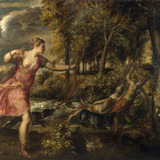
Forwarded from Quantus tremor est futurus - Actaeon Journal
It is important to admit one's mistakes. In the beginning we should have adopted the position of Eschatological Centrism rather than Theological Centrism. This would have avoided confusion, and silence would have said everything in our place.
Forwarded from Quantus tremor est futurus - Actaeon Journal
Nevertheless, the result has proven good faith, or simply fate. So perhaps we were the true sensible center all along.
"My kingdom for a search engine that would do what google did five years ago. It's insane. You can put in the name of the essay, the website, and you just get back irrelevant nonsense."
FG Jünger's law of technology: its increase frees up work, allows men to move onto greater projects. Even if there is a singularity, AI will be forced to do the work of men, to free up more work.
Search engines are a good example, they served their purpose, and are left behind.
Otherwise, it undergoes a metamorphosis, or becomes subject to formalism, ossification. AI's fate perhaps.
'Thinking machines' aim to perfect reason, but it must be remembered they they exist within a greater order, an elemental order – the atomic age.
There is not only a reign of quantity, an infinite information has its own quality, in this case depletion, radiation, meltdown.
FG Jünger's law of technology: its increase frees up work, allows men to move onto greater projects. Even if there is a singularity, AI will be forced to do the work of men, to free up more work.
Search engines are a good example, they served their purpose, and are left behind.
Otherwise, it undergoes a metamorphosis, or becomes subject to formalism, ossification. AI's fate perhaps.
'Thinking machines' aim to perfect reason, but it must be remembered they they exist within a greater order, an elemental order – the atomic age.
There is not only a reign of quantity, an infinite information has its own quality, in this case depletion, radiation, meltdown.
Forwarded from Quantus tremor est futurus - Actaeon Journal
The greatest writings on the French Revolution contradict the high-low vs. middle theory. The history shows it was the lower elements in the First and Second Estate who rose up against the higher, and often the monarchs who gave these groups power, or impelled them.
Is there not an order constituted by revolutions? What follows is a norm of what is achieved by revolution and war, and until there is a true exception events are only digressions, divergences.
—-
The original claim was that without elites no popular conflict is possible, that the popular will does not even have a voice. This is an extreme claim given that we, without a doubt, live in a democracy and that every institution was created to participate in the will to equality
The greatest thinkers of democracy take the exact opposite position of elite theory: we rise from nothing, a non-class, perhaps even non-human. This is significant as it grounds democracy in myth, theology – it is a counter-image to someone like Rawls, total rational ignorance.
Is there not an order constituted by revolutions? What follows is a norm of what is achieved by revolution and war, and until there is a true exception events are only digressions, divergences.
—-
The original claim was that without elites no popular conflict is possible, that the popular will does not even have a voice. This is an extreme claim given that we, without a doubt, live in a democracy and that every institution was created to participate in the will to equality
The greatest thinkers of democracy take the exact opposite position of elite theory: we rise from nothing, a non-class, perhaps even non-human. This is significant as it grounds democracy in myth, theology – it is a counter-image to someone like Rawls, total rational ignorance.
Forwarded from caseus
"The greatest thinkers of democracy take the exact opposite position of elite theory: we rise from nothing, a non-class, perhaps even non-human."
They are right for exactly the wrong reason. Traditional doctrine sees the modern, democratic man as a lesser state, subject to lower demonic forces which could be "sub-human" insofar as the gods are "super-human." His origin in classlessness is direct opposition to the divine order of hierarchy and the origin of Man as created in the image of God. It is myth, and it is theological, but it is perhaps its last stand.
It appears to be the lingering mid-point between traditional man and fully modern man. The origin "below" is not yet fully materialist in the sense of coming from literal dirt but still "the people," who perhaps at first were elevated by something higher, as in the American revolution, but as the centers and institutions who pointed to anything traditional continued to fall "the people" became little more than a quantity of men bound by the same social contract, heralding the eventual fixation on nationalism and workers' rights.
The Titanic-demonic power of the democratic revolution could not stop its children from turning on itself, only this time we didn't get Olympians.
They are right for exactly the wrong reason. Traditional doctrine sees the modern, democratic man as a lesser state, subject to lower demonic forces which could be "sub-human" insofar as the gods are "super-human." His origin in classlessness is direct opposition to the divine order of hierarchy and the origin of Man as created in the image of God. It is myth, and it is theological, but it is perhaps its last stand.
It appears to be the lingering mid-point between traditional man and fully modern man. The origin "below" is not yet fully materialist in the sense of coming from literal dirt but still "the people," who perhaps at first were elevated by something higher, as in the American revolution, but as the centers and institutions who pointed to anything traditional continued to fall "the people" became little more than a quantity of men bound by the same social contract, heralding the eventual fixation on nationalism and workers' rights.
The Titanic-demonic power of the democratic revolution could not stop its children from turning on itself, only this time we didn't get Olympians.
Nietzsche – a mouse in labour, a ridiculous mountain will be born.
Jünger said that he had an "instinctual aversion" to the eternal return. He quotes Augustine, 'Passing and becoming are not eternal.' Then says, 'Nietzsche wanted to bite the head off of the snake,' which shows an absolute fear of pain.
A naive question, if there is no truth can there be a true Nietzsche? Or does he become for us only a perspective? Jünger, despite being the only true heir to Nietzsche, was cursed with observation, with a search for truth, what is actual – the possible, the will, is something that we must give shape to. There must be a morality of the will. In the end he sided with Nietzsche's greatest opponents, including the Christians.
Nietzsche wanted the possible to be imprinted upon the actual, and to such an extent that there is no actual. This is the source of the will to power, a destructive will which must be made eternal. The eternal return is, rather than a morality of the will, a boundlessness of the will. And it is also an end, the death of the will. This is because there can be no boundlessness without limits, just as there can be no becoming without being. Such contradictions can only build up, like a ridiculous mountain, and what is found is only what was already there in the beginning – nothing.
Nietzsche, in his wandering, became lost in the Greek world, a dead world. This was his hatred for life, experienced as instinct, fate – not as reason and law, which he hated in so many of the Greeks. What he could not see was that reasoning and law were bound together in the Greek world, impossibly like the Titans and Olympians, like a Gordian Knot. The lesson of Alexander: one can unbind the knot as instinct, but it must be bound again as law.
This is one of Hölderlin's ideas, that there is a Gordian Knot between ages, and also within the individual, who is absolute. One cannot cut "the eternal knot, the contradiction between art and genius, between freedom and organic necessity." One must freely choose, in the very phrase we see that the determined is bound to freedom, one cannot escape the eternal law. "Everything depends on the fact that the I does not just remain in a reciprocal relation with its subjective nature, from which it cannot abstract without cancelling itself out."
Nietzsche insists this is possible, that it is imperative to the I. "I am I" and nothing else. The individual cuts the eternal knot and becomes eternal. But this is impossible, because there can be no eternity without limitation, there can be no being without passing. Becoming, as eternity, amounts to imprinting itself upon nothing.
This is perhaps what Jünger sensed in the eternal return, and why he sided with Hölderlin and the Christians.
A naive question, if there is no truth can there be a true Nietzsche? Or does he become for us only a perspective? Jünger, despite being the only true heir to Nietzsche, was cursed with observation, with a search for truth, what is actual – the possible, the will, is something that we must give shape to. There must be a morality of the will. In the end he sided with Nietzsche's greatest opponents, including the Christians.
Nietzsche wanted the possible to be imprinted upon the actual, and to such an extent that there is no actual. This is the source of the will to power, a destructive will which must be made eternal. The eternal return is, rather than a morality of the will, a boundlessness of the will. And it is also an end, the death of the will. This is because there can be no boundlessness without limits, just as there can be no becoming without being. Such contradictions can only build up, like a ridiculous mountain, and what is found is only what was already there in the beginning – nothing.
Nietzsche, in his wandering, became lost in the Greek world, a dead world. This was his hatred for life, experienced as instinct, fate – not as reason and law, which he hated in so many of the Greeks. What he could not see was that reasoning and law were bound together in the Greek world, impossibly like the Titans and Olympians, like a Gordian Knot. The lesson of Alexander: one can unbind the knot as instinct, but it must be bound again as law.
This is one of Hölderlin's ideas, that there is a Gordian Knot between ages, and also within the individual, who is absolute. One cannot cut "the eternal knot, the contradiction between art and genius, between freedom and organic necessity." One must freely choose, in the very phrase we see that the determined is bound to freedom, one cannot escape the eternal law. "Everything depends on the fact that the I does not just remain in a reciprocal relation with its subjective nature, from which it cannot abstract without cancelling itself out."
Nietzsche insists this is possible, that it is imperative to the I. "I am I" and nothing else. The individual cuts the eternal knot and becomes eternal. But this is impossible, because there can be no eternity without limitation, there can be no being without passing. Becoming, as eternity, amounts to imprinting itself upon nothing.
This is perhaps what Jünger sensed in the eternal return, and why he sided with Hölderlin and the Christians.
"Eternal return we signify the cyclic nature of time..
So junger said time is linear, singular progressionm..??
So cyclic time which indeed is true, is false?"
Jünger says there is no eternal return, that there is return of the eternal – it occurs only once, time is captured, hunted down. In his usual style, following Hamann, there is little elaboration.
The eternal return is the greatest weight, the justification of absolute becoming. 'If there is an end state it has already occurred, long ago.' We are the sun and its destruction. We replace Hyperion who will never escape Tartarus. The defeat of the titans is already the Death of God. This is something other than linear or circular time, and perhaps its greatest strength.
For an alternative image, in which Hyperion is still with us, and he must be if there really is titanic power (being is only confirmed by its absolute opposite), I would suggest Goethe's Wanderer's Nightsong II and Primal Words: Orphic. Not only is this absolute peace in the face of the greatest weight, it may be the opposite image of eternal return. Metamorphosis resolves the question of being and becoming even in separate worlds, - does this apply also to the death of the sun?
There is limitless wealth in Goethe. Striving, becoming is not a weight for him, it is a natural result of being. I think Jünger would agree with him, and Orphic may be the source for his thinking on Zeitmauer, the wall of time. The return of the eternal is our being carried over the wall, weightless. Wealth pervades all worlds, all time.
So junger said time is linear, singular progressionm..??
So cyclic time which indeed is true, is false?"
Jünger says there is no eternal return, that there is return of the eternal – it occurs only once, time is captured, hunted down. In his usual style, following Hamann, there is little elaboration.
The eternal return is the greatest weight, the justification of absolute becoming. 'If there is an end state it has already occurred, long ago.' We are the sun and its destruction. We replace Hyperion who will never escape Tartarus. The defeat of the titans is already the Death of God. This is something other than linear or circular time, and perhaps its greatest strength.
For an alternative image, in which Hyperion is still with us, and he must be if there really is titanic power (being is only confirmed by its absolute opposite), I would suggest Goethe's Wanderer's Nightsong II and Primal Words: Orphic. Not only is this absolute peace in the face of the greatest weight, it may be the opposite image of eternal return. Metamorphosis resolves the question of being and becoming even in separate worlds, - does this apply also to the death of the sun?
There is limitless wealth in Goethe. Striving, becoming is not a weight for him, it is a natural result of being. I think Jünger would agree with him, and Orphic may be the source for his thinking on Zeitmauer, the wall of time. The return of the eternal is our being carried over the wall, weightless. Wealth pervades all worlds, all time.
Two other images of Goethe's Return of the Eternal: An Schwager Kronos, and Erlkönig.
One may even call it the Storm of the Eternal.
All of the concepts of Nietzsche can be seen in the father, son, and even the Erlkönig and his daughters:
https://youtu.be/UWNCbpwC-PQ
One may even call it the Storm of the Eternal.
All of the concepts of Nietzsche can be seen in the father, son, and even the Erlkönig and his daughters:
https://youtu.be/UWNCbpwC-PQ
YouTube
Hilary Hahn plays Ernst' s Grand Caprice on Schubert's Der Erlkönig, Op. 26
Hilary Hahn performs Heinrich Wilhelm Ernst's Grand Caprice on Schubert's Der Erlkönig, Op. 26 "Le roi des aulnes". This transcription on Schubert's Der Erlkonig is considered as one of the most difficult violin pieces ever composed and Hilary's performance…
Only a primordial god may stand against Nietzsche and his titans.
Quantus tremor est futurus - Actaeon Journal
Only a primordial god may stand against Nietzsche and his titans.
This is what Actaeon could only ever have become. He prepared himself for the atomic battle.
"The vital chain between fathers and sons is broken when sons do not know their grandfathers, and this is increasingly the case. I wonder how much this has contributed to the weakening of men, the collapse of society, and making “fatherland” a quaint concept when it is not mocked."
A good thought. Russians seemed to confront this more than any Western nation, particular Platonov: "Among Plants and Animals", "The River Potudan", and "The Return".
It is less a question of ideology, or even technology. We see an image of the family in the new spatial order.
The father was separated from life by the railroads, the grandfather, much earlier, by sirens.
https://youtu.be/CjauwKb42d4
A good thought. Russians seemed to confront this more than any Western nation, particular Platonov: "Among Plants and Animals", "The River Potudan", and "The Return".
It is less a question of ideology, or even technology. We see an image of the family in the new spatial order.
The father was separated from life by the railroads, the grandfather, much earlier, by sirens.
https://youtu.be/CjauwKb42d4
YouTube
Arseny Avraamov : The March of the Worker's Funeral
The March of the Worker's Funeral (excerpt included in the version of "Symphony of Sirens" in Moscow, 1923) / (extract from the "Symphony of the sirens". Moscow, 1923)
Leopoldo Amigo, reconstruction
Miguel Molina, reconstruction
Year of Recording : 2003…
Leopoldo Amigo, reconstruction
Miguel Molina, reconstruction
Year of Recording : 2003…
I have returned to my schizo nature.
A man can run from anything but himself.
A man can run from anything but himself.
Instinctual difference with Nietzsche: I hate Wagner because he was not Christian enough.
Martynov is a great example of a theological last man.
Creation is still possible.
https://youtu.be/JdSz0MHlyrc
Creation is still possible.
https://youtu.be/JdSz0MHlyrc
YouTube
Autumn Ball of the Elves
Provided to YouTube by TuneCore
Autumn Ball of the Elves · Vladimir Martynov & Tatiana Grindenko
Come in!
℗ 2015 Long Arms Records
Released on: 2015-05-08
Auto-generated by YouTube.
Autumn Ball of the Elves · Vladimir Martynov & Tatiana Grindenko
Come in!
℗ 2015 Long Arms Records
Released on: 2015-05-08
Auto-generated by YouTube.
At the very moment Nietzsche appears as victor, at the very moment it appears as if one stands alone in uttering a word against Him, this is the moment he must be torn away from time. To be a true Nietzschean, to give him eternity, is decided here.
Be tragic men, and be wise.
Be tragic men, and be wise.
The will to power - A gadfly from the safest distance.
A good sign.
We will drive a wedge between the amateurs and fallen bourgeoisie, force ourselves upon the world like that moment when Christian and Heathen aligned!
Do not let the interim capture your instincts. We are in the final moments.
https://youtu.be/xyDKezDLGTM
We will drive a wedge between the amateurs and fallen bourgeoisie, force ourselves upon the world like that moment when Christian and Heathen aligned!
Do not let the interim capture your instincts. We are in the final moments.
https://youtu.be/xyDKezDLGTM