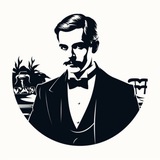
As Confucius might observe with a knowing smile, when distant empires engage in noisy little excursions in Persia, the wise kingdom continues its work quietly: China’s industrial output advanced a solid 5.7% in March, exceeding expectations, while retail sales grew a more contemplative 1.7%, as households appear to be practicing the ancient art of patience rather than enthusiasm. The lesson is familiar: production remains diligent, consumption remains cautious, and harmony between the two is still being negotiated. Beneath this calm surface, the economy reveals its subtle imbalances: factories remain the disciplined students of growth, supported by exports and high-tech ambition, while domestic demand behaves more like a reluctant pupil. Even as external turbulence rises, years of preparation—energy security, diversified supply, and a tolerance for deflation—have allowed China to absorb shocks with composure.
In a nutshell, China’s factories keep working hard while consumers keep thinking hard—leaving growth steady, but balance still politely delayed.
The Macro Butler
And it came to pass on the seventh day, which was a Sunday, that the Warmonger-in-Chief did not rest. Instead, he ascended unto Truth Social to smite the newly anointed Pope Leo XIV, declaring him "weak on crime" and "terrible for foreign policy" — a theological…
In honor of his holiness Donald I—the newly self-anointed Pope of Mar-a-Roma, blessing markets, tariffs, and truth posts alike.
Under the ever-reassuring banners of “efficiency” and “customer experience,” Visa has unveiled AI tools to “simplify” credit card disputes—because nothing says empowerment like replacing human judgment with algorithmic certainty.
With disputes conveniently exploding to over 100 million, the solution is not improvement but transformation: intercept behavior, standardize outcomes, and centralize decision-making into a seamless, data-driven system where every transaction thinks the same way.
https://qz.com/visa-ai-tools-credit-card-dispute-management
With disputes conveniently exploding to over 100 million, the solution is not improvement but transformation: intercept behavior, standardize outcomes, and centralize decision-making into a seamless, data-driven system where every transaction thinks the same way.
https://qz.com/visa-ai-tools-credit-card-dispute-management
Naturally, this is framed as progress, not the quiet construction of a perfectly visible, perfectly controlled financial loop—one where discretion disappears, oversight consolidates, and every action is helpfully optimized on your behalf.
This media is not supported in your browser
VIEW IN TELEGRAM
Welcome, Emperor Trumpoleon—master of tariffs, tweets, and the ever-expanding empire of 'strategic surprises.'
The Macro Butler
In the hallowed spirit of Easter, the Warmonger-in-Chief ascended unto Truth Social to describe the Iranian people as "crazy bastards" and threaten to consign them to darkness and hell — a seasonal greeting that the Pope, having just reminded the world that…
While Washington declared “mission accomplished” somewhere between hour one and the next press conference, Iran—apparently not informed it was supposed to collapse—has been quietly rebuilding bridges, rail lines, and even missile sites faster than the Empire can fix its own potholes. Despite tens of thousands of strikes meant to break both infrastructure and morale, the lights remain on, and repairs are clocked in hours, not months—turning the grand strategy of “bomb now, destabilize later” into a rather awkward demonstration of resilience. Meanwhile, the fragile ceasefire looks less like victory and more like a high-stakes staring contest, where both sides measure not who won, but who can endure the pain longer.
https://x.com/IRANinBULGARIA/status/2042856386963320977?s=20
https://x.com/IRANinBULGARIA/status/2042856386963320977?s=20
In yet another reminder that the little excursion of “Epic Fury” comes with a bill, Saudi Arabia’s Public Investment Fund, better known as PIF, is reportedly considering pulling the plug on LIV Golf—because even sovereign wealth funds eventually notice when a $5 billion vanity project keeps losing money. While management insists everything is “full throttle,” the reality is that tightening budgets, delayed megaprojects, and war-driven pressures and a looming sovereign debt crisis in the region are forcing some discipline—suggesting that the era of endless Gulf funding for feel-good sports experiments may be quietly heading for the exit.
https://www.middleeasteye.net/news/saudi-arabia-cusp-severing-ties-liv-golf-report
https://www.middleeasteye.net/news/saudi-arabia-cusp-severing-ties-liv-golf-report
Even before the latest geopolitical “adventures,” Saudi Arabia was already discovering that trillion-dollar ambition occasionally meets budget reality: flagship projects were being trimmed, postponed, or quietly shelved, reminding everyone that the kingdom has “no ego” when it comes to scaling back. Now, with war adding pressure, a strategic rethink is inevitable—downgrading headline projects like The Line within NEOM from “must-have” to “nice-to-have,” while shifting capital back home. The message is clear: even the most ambitious visions yield to liquidity constraints, and when priorities tighten, global vanity investments are often first in line for the chop.
https://skift.com/2026/04/16/saudi-arabia-scraps-tourism-funding-in-vision-2030-shake-up/
https://skift.com/2026/04/16/saudi-arabia-scraps-tourism-funding-in-vision-2030-shake-up/
While the Empire was busy exporting “stability” abroad, the domestic economy quietly got the memo: U.S. industrial production fell 0.5% MoM in March—well below expectations—dragging YoY growth down to a modest 0.74%. Despite confident narratives about energy independence, the slowdown was led by declines in oil and gas drilling and broader energy output, while manufacturing also disappointed, slipping 0.1% MoM and slowing to just 0.5% YoY. In short, at a time when domestic energy capacity should be strengthening, the data suggest the opposite—highlighting the growing disconnect between geopolitical ambitions and economic realities at home.
While victory narratives still echo loudly, reality appears to be drafting a different script: with conflicts spanning from the Russia–Ukraine front to the Gulf, the global system is edging deeper into a war-cycle footing—now extending beyond battlefields into factories. Reports that the U.S. is exploring converting civilian industrial capacity—from General Motors and Ford Motor Company to GE Aerospace—into weapons production underscore a broader structural shift toward militarizing supply chains. Framed as strengthening the defence industrial base, it also signals tightening resource constraints and depleted inventories, suggesting that this “temporary” conflict environment is quietly evolving into a more durable war economy.
https://www.reuters.com/business/autos-transportation/pentagon-approaches-automakers-manufacturers-boost-weapons-production-wsj-2026-04-16/
https://www.reuters.com/business/autos-transportation/pentagon-approaches-automakers-manufacturers-boost-weapons-production-wsj-2026-04-16/
History suggests that when things get serious, America simply tells its car factories to stop making SUVs and start making history—just like in WWII, or more recently when General Motors and Ford Motor Company briefly became ventilator specialists. So, the idea of assembly lines rolling out tanks isn’t exactly science fiction—though this time the real production bottleneck might be less about steel and more about unions, politics. In short: when the world says, “war economy,” Detroit hears “new product line.”
https://supplychaingamechanger.com/how-americas-industrial-production-helped-win-world-war-ii/
https://supplychaingamechanger.com/how-americas-industrial-production-helped-win-world-war-ii/
In a nutshell, as war narratives rise, U.S. industry quietly slows while factories prepare to swap SUVs for tanks—because nothing says “economic strength” like declining output and a sudden pivot to a wartime business model.
On the other side of the world, the “Epic F**k Up” has officially reached peak modern tragedy: TOTO has paused orders for its famously luxurious prefab bathrooms—not due to demand, but because even toilets now depend on oil geopolitics. With naphtha shortages squeezing plastic supply, Japan’s bathroom kingpin is out of key materials, proving that when energy markets break, it’s not just supply chains that crack… it’s your bathroom upgrade plans too.
https://www.japantimes.co.jp/business/2026/04/13/companies/toto-bathroom-order-halt-oil-supply-shortage/
https://www.japantimes.co.jp/business/2026/04/13/companies/toto-bathroom-order-halt-oil-supply-shortage/
As if fertilizer shortages and diesel prices weren’t enough fun, Mother Nature decided to join the party: with about 60% of the U.S. now in drought, crops, livestock, and ultimately grocery bills are all lining up for impact. From parched southern fields to shrinking western snowpack, farmers are juggling water cuts and rising costs—because nothing completes a supply shock quite like a historic drought showing up right on schedule.
The Macro Butler
The wise nation does not react—it prepares. China has continued its quiet accumulation of gold, with the People's Bank of China extending its buying streak while selling the most dangerous asset it could still own US IOUs. This is less a hedge and more a patient…
It’s not just China dancing away from the dollar—Brazil has joined the samba. The Banco Central do Brasil has doubled its gold holdings in a year, lifting them to over 7% of reserves while the dollar’s share quietly slips to a record low. That’s not a casual step, that’s a full rhythm change. Central banks worldwide are doing the same, piling into gold not because inflation is loud, but because trust in sovereign debt is getting a bit offbeat. When confidence starts missing a step, capital doesn’t argue—it dances its way into assets with no strings attached. Gold, naturally, knows all the moves.
https://www.reuters.com/world/americas/brazils-central-bank-boosts-gold-holdings-second-largest-reserve-asset-2025-2026-03-31/
https://www.reuters.com/world/americas/brazils-central-bank-boosts-gold-holdings-second-largest-reserve-asset-2025-2026-03-31/
In the land that calls itself holy, where power speaks in the language of righteousness and judgment is rendered in the name of virtue, a decree was issued. The Ministry of Diaspora Affairs set forth a list—ten names marked as transgressors in the year 2025—measured not by deed alone, but by voice, reach, and influence among the people. For in this order, to speak is to be weighed, and to question is to be recorded. Many among the named had spoken not against a people, but against the actions of a state; yet in the ledger of authority, distinction fades, and all dissent is gathered under one charge.
https://s2jnews.com/israel-release-its-official-top-ten-prominent-antisemitic-influencers-of-2025-list/
https://s2jnews.com/israel-release-its-official-top-ten-prominent-antisemitic-influencers-of-2025-list/
Thus, the message is made clear: influence shall be counted, speech shall be judged, and those who shape opinion shall themselves become the object of scrutiny, for in such a system, perception is not merely observed—it is governed.
Media is too big
VIEW IN TELEGRAM
As everybody knows, the hands behind the curtain are both unseen and unquestionable—guiding events with a clarity that requires no further inquiry.
👍3
The Macro Butler
The modern wisdom of Don Tzu, that most venerable of strategic philosophers, has finally resolved the Strait of Hormuz crisis with the elegance that only a Truth Social post can deliver: break an enemy blockade by blockading their blockade. The logic is impenetrable.…
While the “blockade of the blockade” is apparently still in full theatrical release, even as bombs conveniently pause when it suits the script, Don Tzu graciously thanked Iran for reopening a Strait that was never closed those countries of the Global South—while proudly maintaining a blockade that somehow remains both fully enforced and selectively invisible. In the grand choreography of geopolitics, ceasefires apply, except when they don’t, blockades hold, except when they’re lifted, and everyone declares victory in a game where the rules seem to change mid-sentence.
👍2