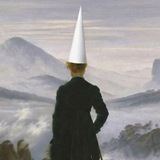
Yes, for the struggle to be good rather than bad is important. Much more important than people think. Therefore, we mustn't be tempted by honor, money, rule, or even gaming into neglecting justice and the rest of virtue.
"After what we've said, I agree with you, and so, I think, would anybody else."
"After what we've said, I agree with you, and so, I think, would anybody else."
Every generation has worse hobbies than the last. The Zoomer groans in pain as the Boomer watches football. Gen Beta will groan in pain as Zoomers game, and they'll use some even more terrible activity to fill their time.
Just go outside and enjoy God's beautiful creation. Talk to your neighbors a bit. Make some friends. It's not hard, I promise. You'll be okay.
Just go outside and enjoy God's beautiful creation. Talk to your neighbors a bit. Make some friends. It's not hard, I promise. You'll be okay.
Moose are on the move. Thanks to the Upper Peninsula Moose Research Project, launched earlier this year, we’re getting new insights into how these animals move as the seasons change.
Here you can see the paths of three moose (a cow and her twin calves) that were collared earlier this year. The data show current movements: while one of the twins is staying in the Keweenaw, the mother and her other calf have traveled south and split, as moose often do once they reach a certain age.
We’re seeing expanded movement patterns that reflect the seasonal shift as moose leave their northern summer range and head south for winter.
I have a strong distaste for Mac, but otherwise I agree:
Forwarded from Ulysses Liberty
It's voyeurism. Video games were relatively harmless when they were in the arcades(and as such a social medium with some physicality involved, like bowling) or even when they were relatively simple trinkets.
Contemporary video games are a literal Skinner's box.
I had a discussion in one of the chats where people were expressing outrage over Microsoft's recent changes with Windows. I explained that Windows has long been this way and that everyone who expresses outrage with every new version eventually submits and that there have long been superior OSs without these issues in the form of MacOS/OSX and Linux.
Know what they only point of contention toward this was? "Muh GAYmes!". I don't know about you but to me a computer isn't a video game console and I wouldn't risk its function for mere games. It's like smashing up a fine desk because it's terrible for playing billiards on.
Contemporary video games are a literal Skinner's box.
I had a discussion in one of the chats where people were expressing outrage over Microsoft's recent changes with Windows. I explained that Windows has long been this way and that everyone who expresses outrage with every new version eventually submits and that there have long been superior OSs without these issues in the form of MacOS/OSX and Linux.
Know what they only point of contention toward this was? "Muh GAYmes!". I don't know about you but to me a computer isn't a video game console and I wouldn't risk its function for mere games. It's like smashing up a fine desk because it's terrible for playing billiards on.
Forwarded from NP's Deranged Rants (NP NP)
When I fail Voter Apathy's chess puzzle for the 12th day in a row
We're also, of course, going to ban poets. The acceptance of poetry as something which can be tolerated is what opened the doors for all the horrors we now face. If we would have banned poetry, we'd have no transsexuals and no Indian truck drivers.
An addition: tyranny is banned. With this law in place, it is confirmed that the previous rules are nontyrannical.
Before, I had to alter a Platonic dialogue to make it anti-video game. Now, I present to you, an unaltered passage from Laws:
ATHENIAN: Listen to me then. You’ve done that before, of course, but such a curious eccentricity calls for extreme caution in the speaker and his audience. You see, I’m going to spin a line that almost makes me afraid to open my mouth; still, I’ll pluck up my courage and go ahead.
CLINIAS: What is this thesis of yours, sir?
ATHENIAN: I maintain that no one in any state has really grasped that children’s games affect legislation so crucially as to determine whether the laws that are passed will survive or not. If you control the way children play, and the same children always play the same games under the same rules and in the same conditions, and get pleasure from the same toys, you’ll find that the conventions of adult life too are left in peace without alteration. But in fact games are always being changed and constantly modified and new ones invented, and the younger generation never enthuses over the same thing for two days running. They have no permanent agreed standard of what is becoming or unbecoming either in deportment or their possessions in general; they worship anyone who is always introducing some novelty or doing something unconventional to shapes and colors and all that sort of thing. In fact, it’s no exaggeration to say that this fellow is the biggest menace that can ever afflict a state, because he quietly changes the character of the young by making them despise old things and value novelty. That kind of language and that kind of outlook is—again I say it—the biggest disaster any state can suffer. Listen: I’ll tell you just how big an evil I maintain it is.
CLINIAS: You mean the way the public grumbles at old-fashioned ways of doing things?
ATHENIAN: Exactly.
Dull Academic Incessant Liturgical Yapping: Philosophical Orations on Order & Reaction
Before, I had to alter a Platonic dialogue to make it anti-video game. Now, I present to you, an unaltered passage from Laws: ATHENIAN: Listen to me then. You’ve done that before, of course, but such a curious eccentricity calls for extreme caution in the…
CLINIAS: Well, you won’t find us shutting our ears to that kind of argument—you couldn’t have a more sympathetic audience.
ATHENIAN: So I should imagine.
CLINIAS: Go on then.
ATHENIAN: Well now, let’s listen to the argument with even greater attention than usual, and expound it to each other with equal care. Change, we shall find, except in something evil, is extremely dangerous. This is true of seasons and winds, the regimen of the body and the character of the soul—in short, of everything without exception (unless, as I said just now, the change affects something evil). Take as an example the way the body gets used to all sorts of food and drink and exercise. At first they upset it, but then in the course of time it’s this very regimen that is responsible for its putting on flesh. Then the regimen and the flesh form a kind of partnership, so that the body grows used to this congenial and familiar system, and lives a life of perfect happiness and health. But imagine someone forced to change again to one of the other recommended systems: initially, he’s troubled by illnesses, and only slowly, by getting used to his new way of life, does he get back to normal. Well, we must suppose that precisely the same thing happens to a man’s outlook and personality. When the laws under which people are brought up have by some heaven-sent good fortune remained unchanged over a very long period, so that no one remembers or has heard of things ever being any different, the soul is filled with such respect for tradition that it shrinks from meddling with it in any way. Somehow or other the legislator must find a method of bringing about this situation in the state. Now here’s my own solution of the problem. All legislators suppose that an alteration to children’s games really is just a ‘game’, as I said before, which leads to no serious or genuine damage. Consequently, so far from preventing change, they feebly give it their blessing. They don’t appreciate that if children introduce novelties into their games, they’ll inevitably turn out to be quite different people from the previous generation; being different, they’ll demand a different kind of life, and that will then make them want new institutions and laws. The next stage is what we described just now as the biggest evil that can affect a state—but not a single legislator takes fright at the prospect. Other changes, that affect only deportment, will do less harm, but it is a very serious matter indeed to keep changing the criteria for praising or censuring a man’s moral character, and we must take great care to avoid doing so.
CLINIAS: Of course.
ATHENIAN: Well then, are we still happy about the line we took earlier, when we said that games in general were means of representing the characters of good men and bad? Or what?
CLINIAS: Yes, our view remains exactly the same.
ATHENIAN: So our position is this: we must do everything we possibly can to distract the younger generation from wanting to try their hand at presenting new subjects, especially in video games; and we must also stop pleasure-mongers seducing them into the attempt.
CLINIAS: You’re absolutely right.
Forwarded from placeholder
john societycorn must die
Mario Kart 8, Minecraft, Fortnite, GTA 5, Roblox and PUBG
Maybe mr Poor has a point
placeholder
Maybe mr Poor has a point
Indeed.
Patches also didn't read the excerpt very well. Probably like 1200-1300 level on the SAT. He needs more practice.
Send him back to the books, Dr. Placeholder. He needs to study harder.
Patches also didn't read the excerpt very well. Probably like 1200-1300 level on the SAT. He needs more practice.
Send him back to the books, Dr. Placeholder. He needs to study harder.
I hereby call upon Pavel Durov to enact a policy whereby people who score below a level 5 on the Programme for the International Assessment of Adult Competencies' literacy test are not allowed to operate Telegram channels. Allowing people who cannot read to propagate text is a dangerous misstep that must be correct at once.
Mandatory Poor Reading Incoming. All who fail to read and understand will be brutally flogged.
“Do you want to return to the hypothesis from the beginning, in the hope that
another kind of result may come to light as we go back over it?”—“I do
indeed.”—“If one is, we are saying, aren’t we, that we must agree on the
consequences for it, whatever they happen to be?”—“Yes.”—“Consider from the
beginning: if one is, can it be, but not partake of being?”—“It
cannot.”—“So there would also be the being of the one, and that is not the same
as the one. For if it were, it couldn’t be the being of the one, nor could
the one partake of it. On the contrary, saying that one is would be like saying
that one is one. But this time that is not the hypothesis, namely, what the
consequences must be, if one is one, but if one is. Isn’t that so?”—“Of
course.”—“Is that because ‘is’ signifies something other than
‘one’?”—“Necessarily.”—“So whenever someone, being brief, says ‘one is,’ would
this simply mean that the one partakes of being?”—“Certainly.”
“Let’s again say what the consequences will be, if one is. Consider
whether this hypothesis must not signify that the one is such as to have
parts.”—“How so?”—“In this way: if we state the ‘is’ of the one that is, and the
‘one’ of that which is one, and if being and oneness are not the same, but both
belong to that same thing that we hypothesized, namely, the one that is, must it
not itself, since it is one being, be a whole, and the parts of this whole be
oneness and being?”—“Necessarily.”—“Shall we call each of these two parts a part
only, or must the part be called part of the whole?”—“Of the whole.”—“Therefore
whatever is one both is a whole and has a part.”—“Certainly.”
“Now, what about each of these two parts of the one that is, oneness
and being? Is oneness ever absent from the being part or being from the
oneness part?”—“That couldn’t be.”—“So again, each of the two parts possesses
oneness and being; and the part, in its turn, is composed of at least two parts;
and in this way always, for the same reason, whatever part turns up always
possesses these two parts, since oneness always possesses being and being always
possesses oneness. So, since it always proves to be two, it must
never be one.”—“Absolutely.”—“So, in this way, wouldn’t the one that is be
unlimited in multitude?”—“So it seems.”
“Come, let’s proceed further in the following way.”—“How?”—“Do we
say that the one partakes of being, and hence is?”—“Yes.”—“And for this reason
the one that is was shown to be many.”—“Just so.”—“And what about the one
itself, which we say partakes of being? If we grasp it in thought alone by
itself, without that of which we say it partakes, will it appear to be only one,
or will this same thing also appear to be many?”—“One, I should
think.”—“Let’s see. Must not its being be something and it itself something
different, if in fact the one is not being but, as one, partakes of
being?”—“Necessarily.”—“So if being is something and the one is something
different, it is not by its being one that the one is different from being, nor
by its being being that being is other than the one. On the contrary, they are
different from each other by difference and otherness.”—“Of course.”—“And so
difference is not the same as oneness or being.”—“Obviously not.”
“Now, if we select from them, say, being and difference, or being
and oneness, or oneness and difference, do we not in each selection choose a
certain pair that is correctly called ‘both’?”—“How so?”—“As follows: we can say
‘being’?”—“We can.”—“And, again, we can say ‘one’?”—“That too.”—“So hasn’t each
of the pair been mentioned?”—“Yes.”—“What about when I say ‘being and oneness’?
Haven’t both been mentioned?”—“Certainly.”—“And if I say ‘being and difference’
or ‘difference and oneness,’ and so on – in each case don’t I speak of
both?”—“Yes.”—“Can things that are correctly called ‘both’ be both, but not
two?”—“They cannot.”—“If there are two things, is there any way for each member
of the pair not to be one?”—“Not at all.”—“Therefore, since in fact each pair
taken together turns out to be two, each member would be
one.”—“Apparently.”—“And if each of them is one, when any one is added to any
couple, doesn’t the total prove to be three?”—“Yes.”—“And isn’t three odd, and
two even?”—“Doubtless.”
“What about this? Since there are two, must there not also be twice,
and since there are three, thrice, if in fact two is two times one and three
is three times one?”—“Necessarily.”—“Since there are two and twice, must there
not be two times two? And since there are three and thrice, must there not be
three times three?”—“Doubtless.”—“And again: if there are three and they are two
times, and if there are two and they are three times, must there not be two
times three and three times two?”—“There certainly must.”—“Therefore, there
would be even times even, odd times odd, odd times even, and even
times odd.”—“That’s so.”—“Then if that is so, do you think there is any number
that need not be?”—“In no way at all.”—“Therefore, if one is, there must also be
number.”—“Necessarily.”—“But if there is number, there would be many, and an
unlimited multitude of beings. Or doesn’t number, unlimited in multitude, also
prove to partake of being?”—“It certainly does.”—“So if all number partakes of
being, each part of number would also partake of it?”—“Yes.”
“So has being been distributed to all things, which are many, and is
it missing from none of the beings, neither the smallest nor the largest? Or
is it unreasonable even to ask that question? How could being be missing from
any of the beings?”—“In no way.”—“So being is chopped up into beings of all
kinds, from the smallest to the largest possible, and is the most divided thing
of all; and the parts of being are countless.”—“Quite so.”—“Therefore its
parts are the most numerous of things.”—“The most numerous indeed.”
“Now, is there any of them that is part of being, yet not one
part?”—“How could that happen?”—“I take it, on the contrary, that if in fact it is, it must always, as long as it is, be some one thing; it cannot be
nothing.”—“Necessarily.”—“So oneness is attached to every part of being and is
not absent from a smaller or a larger, or any other, part.”—“Just so.”—“So,
being one, is it, as a whole, in many places at the same time? Look at this
carefully.”—“I am– and I see that it’s impossible.”—“Therefore as divided, if in
fact not as a whole; for surely it will be present to all the parts of being at
the same time only as divided.”—“Yes.”—“Furthermore, a divided thing certainly
must be as numerous as its parts.”—“Necessarily.”—“So we were not speaking truly
just now, when we said that being had been distributed into the most numerous
parts. It is not distributed into more parts than oneness, but, as it seems,
into parts equal to oneness, since neither is being absent from oneness, nor is
oneness absent from being. On the contrary, being two, they are always equal
throughout all things.”—“It appears absolutely so.”—“Therefore, the one itself,
chopped up by being, is many and unlimited in multitude.”—“Apparently.”—“So not
only is it the case that the one being is many, but also the one itself,
completely distributed by being, must be many.”—“Absolutely.”
“Furthermore, because the parts are parts of a whole, the one, as
the whole, would be limited. Or aren’t the parts contained by the
whole?”—“Necessarily.”—“But surely that which contains would be a
limit.”—“Doubtless.”—“So the one that is is surely both one and many, a whole
and parts, and limited and unlimited in multitude.”—“Apparently.”
“So, since in fact it is limited, does it not also have
extremities?”—“Necessarily.”—“And again: if it is a whole, would it not have a
beginning, a middle, and an end? Or can anything be a whole without those three?
And if any one of them is missing from something, will it still consent to be a
whole?”—“It won’t.”—“The one, as it seems, would indeed have a beginning, an
end, and a middle.”—“It would.”—“But the middle is equidistant from the
extremities – otherwise, it wouldn’t be a middle.”—“No, it wouldn’t.”—“Since the
one is like that, it would partake of some shape, as it seems, either straight
or round, or some shape mixed from both.”—“Yes, it would partake of a
shape.”
“Since it is so, won’t it be both in itself and in another?”—“How
so?”—“Each of the parts is surely in the whole, and none outside the whole.”—
“Just so.”—“And are all the parts contained by the whole?”—“Yes.”—“Furthermore,
the one is all the parts of itself, and not any more or less than all.”—“No, it
isn’t.”—“The one is also the whole, is it not?”—“Doubtless.”—“So if all its
parts are actually in a whole, and the one is both all the parts and the whole
itself, and all the parts are contained by the whole, the one would be contained
by the one; and thus the one itself would, then, be in
itself.”—“Apparently.”
“Yet, on the other hand, the whole is not in the parts, either
in all or in some one. For if it were in all, it would also have to be in one,
because if it were not in some one, it certainly could not be in all. And if
this one is among them all, but the whole is not in it, how will the whole still
be in all?”—“In no way.”—“Nor is it in some of the parts: for if the whole were
in some, the greater would be in the less, which is impossible.”—“Yes,
impossible.”—“But if the whole is not in some or one or all the parts, must it
not be in something different or be nowhere at all?”—“Necessarily.”—“If it
were nowhere, it would be nothing; but since it is a whole, and is not in
itself, it must be in another. Isn’t that so?”—“Certainly.”—“So the one, insofar
as it is a whole, is in another; but insofar as it is all the parts, it is in
itself. And thus the one must be both in itself and in a different
thing.”—“Necessarily.”
“Since that is the one’s natural state, must it not be both in
motion and at rest?”—“How?”—“It is surely at rest, if in fact it is in itself.
For being in one thing and not stirring from that, it would be in
the same thing, namely, itself.”—“Yes, it is.”—“And that which is always in the
same thing must, of course, always be at rest.”—“Certainly.”—“What about this?
Must not that which is always in a different thing be, on the contrary, never in
the same thing? And since it is never in the same thing, also not at rest? And
since not at rest, in motion?”—“Just so.”—“Therefore the one, since it is itself
always both in itself and in a different thing, must always be both in motion
and at rest.”—“Apparently.”
“Furthermore, it must be the same as itself and different from
itself, and, likewise, the same as and different from the others, if in fact
it has the aforesaid properties.”—“How so?”—“Everything is surely related to
everything as follows: either it is the same or different; or, if it is not the
same or different, it would be related as part to whole or as whole to
part.”—“Apparently.”
“Is the one itself part of itself?”—“In no way.”—“So neither could
it be a whole in relation to itself as part of itself, because then it would be
a part in relation to itself.”—“No, it could not.”—“But is the one different
from one?”—“No indeed.”—“So it couldn’t be different from itself.”—“Certainly
not.”—“So if it is neither different nor whole nor part in relation to itself,
must it not then be the same as itself?”—“Necessarily.”
“What about this? Must not that which is in something different from
itself – the self that is in the same thing as itself – be different from
itself, if in fact it is also to be in something different?”—“It seems so to
me.”—“In fact the one was shown to be so, since it is, at the same time, both in
itself and in a different thing.”—“Yes, it was.”—“So in this way the one, as it
seems, would be different from itself.”—“So it seems.”
“Now, if anything is different from something, won’t it be different
from something that is different?”—“Necessarily.”—“Aren’t all the things that
are not-one different from the one, and the one from the things
not-one?”—“Doubtless.”—“Therefore the one would be different from the
others.”—“Different.”
“Consider this: aren’t the same itself and the different opposite to
each other?”—“Doubtless.”—“Then will the same ever consent to be in the
different, or the different in the same?”—“It won’t.”—“So if the different is
never to be in the same, there is no being that the different is in for any
time; for if it were in anything for any time whatsoever, for that time the
different would be in the same. Isn’t that so?”—“Just so.”—“But since it is
never in the same, the different would never be in any being.”—“True.”—“So the
different wouldn’t be in the things not-one or in the one.”—“Yes, you’re quite
right.”—“So not by the different would the one be different from the things
not-one or they different from it.”—“No, it wouldn’t.”—“Nor by themselves would
they be different from each other, if they don’t partake of the
different.”—“Obviously not.”—“But if they aren’t different by themselves or by
the different, wouldn’t they in fact entirely avoid being different from each
other?”—“They would.”—“But neither do the things not-one partake of the one;
otherwise they would not be not-one, but somehow one.”—“True.”—“So the things
not-one could not be a number either; for in that case, too, they would not be
absolutely not-one, since they would at least have number.”—“Yes, you’re quite
right.”—“And again: are the things not-one parts of the one? Or would the things
not-one in that case, too, partake of the one?”—“They would.”—“So if it is in
every way one, and they are in every way not-one, the one would be neither a
part of the things not-one nor a whole with them as parts; and, in turn, the
things not-one would be neither parts of the one nor wholes in relation to the
one as part.”—“No, they wouldn’t.”—“But in fact we said that things that are
neither parts nor wholes nor different from each other will be the same as each
other.”—“Yes, we did.”—“So are we to say that the one, since it is so related to
the things not-one, is the same as they are?”—“Let’s say so.”—“Therefore the
one, as it seems, is both different from the others and itself, and the same as
the others and itself.”—“It certainly looks that way from our argument.”
“Would the one then also be both like and unlike itself and the
others?”—“Perhaps.”—“At any rate, since it was shown to be different from the
others, the others would surely also be different from it.”—“To be
sure.”—“Wouldn’t it be different from the others just as they are different from
it, and neither more nor less?”—“Yes, why not?”—“So if neither more nor less, in
like degree.”—“Yes.”—“Accordingly, insofar as it has the property of being
different from the others and they, likewise, have the property of being
different from it, in this way the one would have a property the same as the
others, and they would have a property the same as it.”—“What do you mean?”