Forwarded from Daily Ancient Egypt - 𓆎 𓅓 𓏏𓊖
#MiddleKingdom 12th Dynasty - ca. 1991–1802 B.C.E - source
Fragment statue of the god Sobek
From: Hawara, Al Fayyum, Upper Egypt.
Currently expropriated and exposed in the Ashmolean Museum, Oxford.
This sculpture of the crocodile god Sobek originates from Hawara, site of the second pyramid complex of the king Amun-em-Hat the Third, which included numerous statues depicting deities of the Egyptian pantheon. Sobek was particularly venerated in the Fayyum, a marshy area west of the Nile Valley that was a natural home of crocodiles.
❤🔥4
Forwarded from Daily Ancient Egypt - 𓆎 𓅓 𓏏𓊖
#NewKingdom - 18th Dynasty - ca. 1492–1473 B.C.E - source
Heart Scarab of Hatnefer
From: Tomb of Hatnefer and Ramose (TT 71), Sheikh Abd el-Qurna, Luxor (Thebes), Upper Egypt.
Currently expropriated and displayed in the MET Museum, New York.
The heart scarab is an amulet that also was used as jewelry, a memorializing artifact, or a grave good. For the ancient Egyptians the heart was not only the center of life, but also of thinking, memory, and moral values. In the final judgement the heart was thought to be weighed against Maat. Understandably, the Egyptians feared a negative outcome and special amulets like this ones were used to ensure a positive judgment. Hatnefer's heart scarab has the typical inscription in the base with spells of the Book of the Dead, inscribed with chapter 30A of the Book of the Dead, the so-called heart scarab spell
❤🔥1
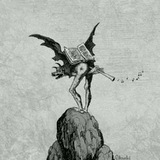
Dualism •
Dualism in Gnosticism is the belief that reality is fundamentally divided between two opposing principles: a transcendent, unknowable true God associated with spirit, light, and perfection, and an inferior or false creator deity (often called the Demiurge) responsible for the material world, which is viewed as flawed, corrupt, or imprisoning; in this framework, the human being contains a divine spark trapped within physical matter, and salvation comes not through faith alone but through gnosis—direct experiential knowledge of one’s true spiritual origin—which awakens the soul and enables it to escape the material realm and return to the higher spiritual reality.
#Gnosticism
Dualism in Gnosticism is the belief that reality is fundamentally divided between two opposing principles: a transcendent, unknowable true God associated with spirit, light, and perfection, and an inferior or false creator deity (often called the Demiurge) responsible for the material world, which is viewed as flawed, corrupt, or imprisoning; in this framework, the human being contains a divine spark trapped within physical matter, and salvation comes not through faith alone but through gnosis—direct experiential knowledge of one’s true spiritual origin—which awakens the soul and enables it to escape the material realm and return to the higher spiritual reality.
#Gnosticism
🗿1