This media is not supported in your browser
VIEW IN TELEGRAM
Pollution from fossil fuel combustion deadlier than previously thought
Backup by @MissionWillowProject
A @grttme project - Other backups: https://swiy.co/tgme
Backup by @MissionWillowProject
A @grttme project - Other backups: https://swiy.co/tgme
Media is too big
VIEW IN TELEGRAM
Climate, Pollution, and Children's Health | NEJM
Backup by @MissionWillowProject
A @grttme project - Other backups: https://swiy.co/tgme
Backup by @MissionWillowProject
A @grttme project - Other backups: https://swiy.co/tgme
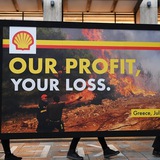
Lobbying for Profits over Planet https://perma.cc/Y5DM-GELC
This media is not supported in your browser
VIEW IN TELEGRAM
Yesterday (....), Interior gave the Willow Project a preliminary green light. Now, President Biden has the chance to make a final call. It's not too late to stop this carbon bomb.
If we don't, Willow will emit an estimated 280 million metric tons of climate pollution over the next 30 years. It's a make or break moment.
Backup by @MissionWillowProject
A @grttme project - Other backups: https://swiy.co/tgme
If we don't, Willow will emit an estimated 280 million metric tons of climate pollution over the next 30 years. It's a make or break moment.
Backup by @MissionWillowProject
A @grttme project - Other backups: https://swiy.co/tgme
Prevention of pollution from land-based sources is key. Eliminating coal combustion and banning all uses of mercury will reduce mercury pollution. Bans on single-use plastic and better management of plastic waste reduce plastic pollution. Bans on persistent organic pollutants (POPs) have reduced pol- lution by PCBs and DDT. Control of industrial discharges, treatment of sewage, and reduced applica- tions of fertilizers have mitigated coastal pollution and are reducing frequency of HABs. National, regional and international marine pollution control programs that are adequately funded and backed by strong enforcement have been shown to be e ective. Robust monitoring is essential to track progress.
Further interventions that hold great promise include wide-scale transition to renewable fuels; transi- tion to a circular economy that creates little waste and focuses on equity rather than on endless growth; embracing the principles of green chemistry; and building scienti c capacity in all countries.
Designation of Marine Protected Areas (MPAs) will safeguard critical ecosystems, protect vulnerable sh stocks, and enhance human health and well-being. Creation of MPAs is an important manifestation of national and international commitment to protecting the health of the seas.
PS: Paralytic Shellfish Poison (PSP) is a naturally occurring marine biotoxin that is produced by some species of microscopic algae. Shellfish eat these algae and can retain the toxin. People can become ill from eating shellfish contaminated with Paralytic Shellfish Poison. This biotoxin affects the nervous system and paralyzes muscles, thus the term "paralytic" shellfish poison. High levels of Paralytic Shellfish Poison can cause severe illness and death https://perma.cc/RKR5-GEYG
Further interventions that hold great promise include wide-scale transition to renewable fuels; transi- tion to a circular economy that creates little waste and focuses on equity rather than on endless growth; embracing the principles of green chemistry; and building scienti c capacity in all countries.
Designation of Marine Protected Areas (MPAs) will safeguard critical ecosystems, protect vulnerable sh stocks, and enhance human health and well-being. Creation of MPAs is an important manifestation of national and international commitment to protecting the health of the seas.
PS: Paralytic Shellfish Poison (PSP) is a naturally occurring marine biotoxin that is produced by some species of microscopic algae. Shellfish eat these algae and can retain the toxin. People can become ill from eating shellfish contaminated with Paralytic Shellfish Poison. This biotoxin affects the nervous system and paralyzes muscles, thus the term "paralytic" shellfish poison. High levels of Paralytic Shellfish Poison can cause severe illness and death https://perma.cc/RKR5-GEYG
Media is too big
VIEW IN TELEGRAM
Is protecting 30% of the world's oceans enough to save them? https://perma.cc/YXS6-J9HL
Backup by @MissionWillowProject
A @grttme project - Other backups: https://swiy.co/tgme
Backup by @MissionWillowProject
A @grttme project - Other backups: https://swiy.co/tgme
This media is not supported in your browser
VIEW IN TELEGRAM
The Amazon Rainforest Is Dying
Backup by @MissionWillowProject
A @grttme project - Other backups: https://swiy.co/tgme
Backup by @MissionWillowProject
A @grttme project - Other backups: https://swiy.co/tgme
This media is not supported in your browser
VIEW IN TELEGRAM
In contrast with Abu Dhabi, where oil contributes approximately 90 per cent of the UAE’s oil revenues and annual production and explains much of its economic development, Dubai has very little oil reserves and its oil contribution to GDP has declined from 5.48 per cent in 2000 to only 1.4 per cent in 2013 (from Dubai’s Model of Economic Diversification)
The city-state may have received substantial financial support of its oil-rich sister city, Abu Dhabi, during the 2008–2009 global financial crisis; hence, oil is still an important factor in its long-term sustainable development.
What is crucial here to stress is the misperception that oil is the driving force for Dubai’s economic development.
Petroleum and petroleum products account for about 46% of Saudi Arabia’s GDP
Being an emirate of the UAE or probably because of its geographic location, which is known as containing the second largest oil reserve in the world, most people think that all Dubai’s revenue comes from the petroleum industry. The truth, according to the Dubai Chamber of Commerce and Industry, is Dubai’s oil and gas account for less than 6% of its Gross Domestic Product (Sheikh-Miller, 2007).
With the oil and gas industry, Dubai has gained considerable amounts of money to invest in other sources of revenue.
The amount of revenue from the petroleum sector provides Saudi Arabia with 80% of their revenue, 45% of GDP and 90% of export earnings (“Middle east", 2012)
Although Dubai is ranked fifth in the world for the size of proven gas reserves it is facing an energy shortage due to excess use of energy resources. To combat this problem the government of Dubai came up with the Dubai Integrated Energy Strategy of 2030 to reduce its carbon footprint and educate its citizens.
Saudi Arabia has turned to alternatives through implementing both nuclear and solar energy. Overall they have had more projects in solar energy than nuclear, but plan to have 16 nuclear reactors in place by 2030
The city-state may have received substantial financial support of its oil-rich sister city, Abu Dhabi, during the 2008–2009 global financial crisis; hence, oil is still an important factor in its long-term sustainable development.
What is crucial here to stress is the misperception that oil is the driving force for Dubai’s economic development.
Petroleum and petroleum products account for about 46% of Saudi Arabia’s GDP
Being an emirate of the UAE or probably because of its geographic location, which is known as containing the second largest oil reserve in the world, most people think that all Dubai’s revenue comes from the petroleum industry. The truth, according to the Dubai Chamber of Commerce and Industry, is Dubai’s oil and gas account for less than 6% of its Gross Domestic Product (Sheikh-Miller, 2007).
With the oil and gas industry, Dubai has gained considerable amounts of money to invest in other sources of revenue.
The amount of revenue from the petroleum sector provides Saudi Arabia with 80% of their revenue, 45% of GDP and 90% of export earnings (“Middle east", 2012)
Although Dubai is ranked fifth in the world for the size of proven gas reserves it is facing an energy shortage due to excess use of energy resources. To combat this problem the government of Dubai came up with the Dubai Integrated Energy Strategy of 2030 to reduce its carbon footprint and educate its citizens.
Saudi Arabia has turned to alternatives through implementing both nuclear and solar energy. Overall they have had more projects in solar energy than nuclear, but plan to have 16 nuclear reactors in place by 2030
More about Saudi Arabia pollution https://t.iss.one/PollutionFacts/791
Picture 1: https://t.iss.one/PollutionFacts/731
Picture 1: https://t.iss.one/PollutionFacts/731
This media is not supported in your browser
VIEW IN TELEGRAM
Tiefseebergbau bedroht das fragile Leben im Ozean und die Lebensgrundlagen von Menschen weit über die Abbaugebiete hinaus. Wir müssen Tiefseebergbau stoppen und die Tiefsee vor denjenigen schützen, die sie auf Kosten unserer Erde und von uns allen ausbeuten wollen.
Backup by @MissionWillowProject
A @grttme project - Other backups: https://swiy.co/tgme
Backup by @MissionWillowProject
A @grttme project - Other backups: https://swiy.co/tgme
This media is not supported in your browser
VIEW IN TELEGRAM
In Azione contro una petroliera
Backup by @MissionWillowProject
A @grttme project - Other backups: https://swiy.co/tgme
Backup by @MissionWillowProject
A @grttme project - Other backups: https://swiy.co/tgme
This media is not supported in your browser
VIEW IN TELEGRAM
Willow Projekt✨🦋
Backup by @MissionWillowProject
A @grttme project - Other backups: https://swiy.co/tgme
Backup by @MissionWillowProject
A @grttme project - Other backups: https://swiy.co/tgme