Back to "oil is declining" ...
https://t.iss.one/MissionWillowProject/214
Let we check the real facts
In 2022, only 0.13% of the energy Equinor produced was renewable, while 99.87% was fossil fuels.
And the preliminary size estimate for the discovery in the Cook Formation is between 0.2 and 1.0 million standard cubic metres of recoverable oil equivalent https://archive.is/0s9SP
This week, the Norwegian government will be releasing a white paper on the future wealth creation from Norwegian energy resources (“Stortingsmelding om langsiktig verdiskaping fra norsk energiressurser”). Rather than planning for a managed decline of its oil and gas industry, the plan is expected to facilitate further expansion. The government is also expected to issue new oil licences shortly after https://perma.cc/3EG4-SHJV
Johan Sverdrup is the third largest oil field on the Norwegian continental shelf, and a major supplier of energy to Europe. The entire field is now on stream, and accounts for roughly a third of Norway's oil production. It also has some of the lowest CO2 emissions of any oil field in the world https://archive.is/ICQOE
This week a successful capacity test has been performed confirming that the field can produce up to 755,000 barrels of oil per day https://archive.is/fyOiR
Det er en myte at norsk olje er den reneste i verden. Selv om vi har god offentlig styring og gjennomfører en rekke tiltak for å begrense utslippene, finnes det flere produsenter som har lavere utslipp.
It is a myth that Norwegian oil is the cleanest in the world. Although we have good public management and implement a number of measures to limit emissions, there are several manufacturers that have lower emissions.
Noen har tatt til orde for å elektrifisere sokkelen med fornybar energi for å redusere utslippene. Ettersom utslipp fra produksjon bare utgjør to prosent av livssyklusutslippene til olje, har tiltak for å begrense den liten påvirkning i det store bildet https://archive.is/S1Hsu
https://t.iss.one/MissionWillowProject/214
Let we check the real facts
In 2022, only 0.13% of the energy Equinor produced was renewable, while 99.87% was fossil fuels.
And the preliminary size estimate for the discovery in the Cook Formation is between 0.2 and 1.0 million standard cubic metres of recoverable oil equivalent https://archive.is/0s9SP
This week, the Norwegian government will be releasing a white paper on the future wealth creation from Norwegian energy resources (“Stortingsmelding om langsiktig verdiskaping fra norsk energiressurser”). Rather than planning for a managed decline of its oil and gas industry, the plan is expected to facilitate further expansion. The government is also expected to issue new oil licences shortly after https://perma.cc/3EG4-SHJV
Johan Sverdrup is the third largest oil field on the Norwegian continental shelf, and a major supplier of energy to Europe. The entire field is now on stream, and accounts for roughly a third of Norway's oil production. It also has some of the lowest CO2 emissions of any oil field in the world https://archive.is/ICQOE
This week a successful capacity test has been performed confirming that the field can produce up to 755,000 barrels of oil per day https://archive.is/fyOiR
Det er en myte at norsk olje er den reneste i verden. Selv om vi har god offentlig styring og gjennomfører en rekke tiltak for å begrense utslippene, finnes det flere produsenter som har lavere utslipp.
It is a myth that Norwegian oil is the cleanest in the world. Although we have good public management and implement a number of measures to limit emissions, there are several manufacturers that have lower emissions.
Noen har tatt til orde for å elektrifisere sokkelen med fornybar energi for å redusere utslippene. Ettersom utslipp fra produksjon bare utgjør to prosent av livssyklusutslippene til olje, har tiltak for å begrense den liten påvirkning i det store bildet https://archive.is/S1Hsu
Media is too big
VIEW IN TELEGRAM
Behind oil, just few of many!
🇳🇴
https://t.iss.one/MissionWillowProject/174
🇮🇱
https://t.iss.one/IsraelPollution/229
https://t.iss.one/IsraelPollution/397
https://t.iss.one/IsraelPollution/398
https://t.iss.one/IsraelPollution/188
🇺🇦
https://t.iss.one/IsraelPollution/381
https://t.iss.one/IsraelPollution/367
🇷🇺
https://t.iss.one/IsraelPollution/247
🇪🇺
https://t.iss.one/IsraelPollution/4
etc.
Backup by @MissionWillowProject
A @grttme project - Other backups: https://swiy.co/tgme
🇳🇴
https://t.iss.one/MissionWillowProject/174
🇮🇱
https://t.iss.one/IsraelPollution/229
https://t.iss.one/IsraelPollution/397
https://t.iss.one/IsraelPollution/398
https://t.iss.one/IsraelPollution/188
🇺🇦
https://t.iss.one/IsraelPollution/381
https://t.iss.one/IsraelPollution/367
🇷🇺
https://t.iss.one/IsraelPollution/247
🇪🇺
https://t.iss.one/IsraelPollution/4
etc.
Backup by @MissionWillowProject
A @grttme project - Other backups: https://swiy.co/tgme
Media is too big
VIEW IN TELEGRAM
Our answer is like with him
NO THANK YOU!
https://t.iss.one/GenRevolutionOfficial/327
Backup by @MissionWillowProject
A @grttme project - Other backups: https://swiy.co/tgme
NO THANK YOU!
https://t.iss.one/GenRevolutionOfficial/327
Backup by @MissionWillowProject
A @grttme project - Other backups: https://swiy.co/tgme
Behind "oil is declining" ... Part 3
Part 1 https://t.iss.one/MissionWillowProject/214
US companies and NOCs are maximizing hydrocarbon profits and are less prepared for new market conditions.
ConocoPhillips’ climate strategy aims to limit the carbon intensity and greenhouse gas intensity of its own business operations. The company adjusted its portfolio by abandoning capital-intensive projects and projects with a higher emission intensity. ExxonMobil remains focused on global production in shale basins and offshore; Chevron is increasing production in the Permian Basin and the Gulf of Mexico. To reduce their carbon footprints, US companies plan to focus on CO2 capture and storage projects, as well as hydrogen initiatives
https://t.iss.one/NatureFreaksFacts/860
https://t.iss.one/PollutionFacts/150
https://t.iss.one/MissionWillowProject/182
https://t.iss.one/ElonMuskPollution/32
to
https://t.iss.one/ElonMuskPollution/35
So the real people behind climate change, except those who share such infos / fight for that, scientists, implement laws and similar things, ARE ENGINEERS!
https://t.iss.one/LetzteGenerationTelegram/97
Obviously everyone need to change, but important is that politicians / CEOs / engineers change priority! where CEOs and politicians are just related to laws / financial projects ...
Because if they don't change, the change of "small people" have just minimal impacts. No matter what, PEOPLE STILL NEED TO CHANGE! because everything is contributing!
https://t.iss.one/MissionPlaneta/96
Solution?
a) IMPLEMENT HUGE FINES / TAXES!
https://t.iss.one/EthicalDilemmaHumanRights/119
https://t.iss.one/AnimalFreaks/2127
and if profit from oil is done, USED FOR THE WHOLE POPULATION not rich people / CEOs / politicians = to change to new energies and help poverty, WITHOUT abusing it!
b) IMPLEMENT ECOCIDE!
https://t.iss.one/EcocideTelegram
https://t.iss.one/StopEcocideTelegram
https://t.iss.one/StopEcocidio
c) CHANGE YOUR LIFESTYLE!
https://t.iss.one/ClimateToDo
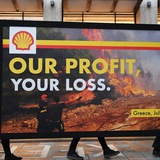
🇳🇴 we don't invest in bad companies ... SURE! STOP INVESTING IN SHELL!
https://t.iss.one/MissionWillowProject/214
Part 1 https://t.iss.one/MissionWillowProject/214
US companies and NOCs are maximizing hydrocarbon profits and are less prepared for new market conditions.
ConocoPhillips’ climate strategy aims to limit the carbon intensity and greenhouse gas intensity of its own business operations. The company adjusted its portfolio by abandoning capital-intensive projects and projects with a higher emission intensity. ExxonMobil remains focused on global production in shale basins and offshore; Chevron is increasing production in the Permian Basin and the Gulf of Mexico. To reduce their carbon footprints, US companies plan to focus on CO2 capture and storage projects, as well as hydrogen initiatives
https://t.iss.one/NatureFreaksFacts/860
https://t.iss.one/PollutionFacts/150
https://t.iss.one/MissionWillowProject/182
https://t.iss.one/ElonMuskPollution/32
to
https://t.iss.one/ElonMuskPollution/35
So the real people behind climate change, except those who share such infos / fight for that, scientists, implement laws and similar things, ARE ENGINEERS!
https://t.iss.one/LetzteGenerationTelegram/97
Obviously everyone need to change, but important is that politicians / CEOs / engineers change priority! where CEOs and politicians are just related to laws / financial projects ...
Because if they don't change, the change of "small people" have just minimal impacts. No matter what, PEOPLE STILL NEED TO CHANGE! because everything is contributing!
https://t.iss.one/MissionPlaneta/96
Solution?
a) IMPLEMENT HUGE FINES / TAXES!
https://t.iss.one/EthicalDilemmaHumanRights/119
https://t.iss.one/AnimalFreaks/2127
and if profit from oil is done, USED FOR THE WHOLE POPULATION not rich people / CEOs / politicians = to change to new energies and help poverty, WITHOUT abusing it!
b) IMPLEMENT ECOCIDE!
https://t.iss.one/EcocideTelegram
https://t.iss.one/StopEcocideTelegram
https://t.iss.one/StopEcocidio
c) CHANGE YOUR LIFESTYLE!
https://t.iss.one/ClimateToDo
🇳🇴 we don't invest in bad companies ... SURE! STOP INVESTING IN SHELL!
https://t.iss.one/MissionWillowProject/214
Oil, oil and again oil! it's only about oil!
Saudi Arabia is the largest exporter of oil, according to the Organization of the Petroleum Exporting Countries (OPEC) [21]. As of 2018, Saudi Arabia was the leading supplier of crude oil worldwide, with an export value of over USD 183 billion [22], producing 12.3 million barrels per day (bbl/d) since 2018.
It has the largest oil reserves in the Middle East. At 297.5 billion barrels, the Kingdom of Saudi Arabia makes up 17.2% of global reserves in 2020.
This puts in second place amongst the countries with the largest proven global oil reserves – right after Venezuela
Main global competitors: Russia and Venezuela
Tough the Saudi oil production in 2022 was less than that in previous years, the revenues were much greater because of the high oil prices.
In 2022 the demand for Saudi and Emirati oil increased dramatically as they could provide an alternative to Russian supplies in both Europe and Asia.
In 2011, Kuwait, Saudi Arabia, and the United Arab Emirates were amongst the ten countries with the worst air pollution in the world.
Worldwide, the average waste generated is 0.74 kg per capita per day (kg/ca/d) but it ranges widely, from 0.11 to 4.54 kg/ca/d.
In 2017, the United Arab Emirates recorded the highest waste rate per capita per day at 2.1 kg, followed by Saudi Arabia, Qatar, and Bahrain at 1.7 kg/ca/d for each, Kuwait and Oman at 1.5 and 1.2 kg/ca/d.
https://t.iss.one/FoodWasteTelegram/17
In 2020, the largest emitters of CO2 were China, the USA, India, Russia, and Japan.
https://t.iss.one/PollutionFacts/1339
Qatar: Despite its small area, Qatar has large reserves of oil (25.2 billion barrels).
Accordingly, being one of the largest producers and exporters of oil and natural gas, as well as having the highest rates of per capita GHG emissions, there is no doubt that Bahrain, Kuwait, Oman, Qatar, Saudi Arabia, and the United Arab Emirates must share the responsibility with the rest of the world to combat the climate change impacts!
Saudi Arabia is the largest exporter of oil, according to the Organization of the Petroleum Exporting Countries (OPEC) [21]. As of 2018, Saudi Arabia was the leading supplier of crude oil worldwide, with an export value of over USD 183 billion [22], producing 12.3 million barrels per day (bbl/d) since 2018.
It has the largest oil reserves in the Middle East. At 297.5 billion barrels, the Kingdom of Saudi Arabia makes up 17.2% of global reserves in 2020.
This puts in second place amongst the countries with the largest proven global oil reserves – right after Venezuela
Main global competitors: Russia and Venezuela
Tough the Saudi oil production in 2022 was less than that in previous years, the revenues were much greater because of the high oil prices.
In 2022 the demand for Saudi and Emirati oil increased dramatically as they could provide an alternative to Russian supplies in both Europe and Asia.
In 2011, Kuwait, Saudi Arabia, and the United Arab Emirates were amongst the ten countries with the worst air pollution in the world.
Worldwide, the average waste generated is 0.74 kg per capita per day (kg/ca/d) but it ranges widely, from 0.11 to 4.54 kg/ca/d.
In 2017, the United Arab Emirates recorded the highest waste rate per capita per day at 2.1 kg, followed by Saudi Arabia, Qatar, and Bahrain at 1.7 kg/ca/d for each, Kuwait and Oman at 1.5 and 1.2 kg/ca/d.
https://t.iss.one/FoodWasteTelegram/17
In 2020, the largest emitters of CO2 were China, the USA, India, Russia, and Japan.
https://t.iss.one/PollutionFacts/1339
Qatar: Despite its small area, Qatar has large reserves of oil (25.2 billion barrels).
Accordingly, being one of the largest producers and exporters of oil and natural gas, as well as having the highest rates of per capita GHG emissions, there is no doubt that Bahrain, Kuwait, Oman, Qatar, Saudi Arabia, and the United Arab Emirates must share the responsibility with the rest of the world to combat the climate change impacts!