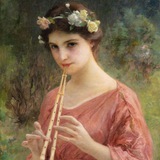
The Golden Verses of Pythagoras, pt. 4
40. Never let slumber approach thy wearied eye-lids,
41. Ere thrice you reviewed what this day you did;
42. Wherein have I sinned? What did I? What duty is neglected?
43. All, from the first to the last, review; and if you have erred, grieve in your spirit, rejoicing for all that was good.
45. With zeal and with industry, this, then repeat; and learn to repeat it with joy.
46. Thus wilt thou tread on the paths of heavenly virtue.
47. Surely, I swear it by him who into our souls has transmitted the Sacred Quaternary
48. The spring of eternal Nature.
49. Never start on your task until you have implored the blessing of the Gods.
50. If this you hold fast, soon will you recognize of Gods and mortal men
51. The true nature of existence, how everything passes and returns.
52. Then will you see what is true, how Nature in all is most equal,
53. So that you hope not for what has no hope, nor that anything should escape you.
40. Never let slumber approach thy wearied eye-lids,
41. Ere thrice you reviewed what this day you did;
42. Wherein have I sinned? What did I? What duty is neglected?
43. All, from the first to the last, review; and if you have erred, grieve in your spirit, rejoicing for all that was good.
45. With zeal and with industry, this, then repeat; and learn to repeat it with joy.
46. Thus wilt thou tread on the paths of heavenly virtue.
47. Surely, I swear it by him who into our souls has transmitted the Sacred Quaternary
48. The spring of eternal Nature.
49. Never start on your task until you have implored the blessing of the Gods.
50. If this you hold fast, soon will you recognize of Gods and mortal men
51. The true nature of existence, how everything passes and returns.
52. Then will you see what is true, how Nature in all is most equal,
53. So that you hope not for what has no hope, nor that anything should escape you.
👍15❤2
The Golden Verses of Pythagoras, pt. 5
54. Men shall you find whose sorrows themselves have created,
55. Wretches who see not the Good, that is too near, nothing they hear;
56. Few know how to help themselves in misfortune.
57. That is the Fate that blinds humanity; in circles,
58. Hither and yon they run in endless sorrows;
59. For they are followed by a grim companion, disunion within themselves;
60. Unnoticed; never rouse him, and fly from before him!
61. Father Zeus, O free them all from sufferings so great,
62. Or show unto each the Genius, who is their guide!
63. Yet, do not fear, for the mortals are divine by race,
64. To whom holy Nature everything will reveal and demonstrate;
65. Whereof if you have received, so keep what I teach you;
66. Healing your soul, you shall remain insured from manifold evil.
54. Men shall you find whose sorrows themselves have created,
55. Wretches who see not the Good, that is too near, nothing they hear;
56. Few know how to help themselves in misfortune.
57. That is the Fate that blinds humanity; in circles,
58. Hither and yon they run in endless sorrows;
59. For they are followed by a grim companion, disunion within themselves;
60. Unnoticed; never rouse him, and fly from before him!
61. Father Zeus, O free them all from sufferings so great,
62. Or show unto each the Genius, who is their guide!
63. Yet, do not fear, for the mortals are divine by race,
64. To whom holy Nature everything will reveal and demonstrate;
65. Whereof if you have received, so keep what I teach you;
66. Healing your soul, you shall remain insured from manifold evil.
👍17❤7🔥1
The Golden Verses of Pythagoras, pt. 6
67. Avoid foods forbidden, reflect that this contributes to the cleanliness
68. And redemption of your soul. Consider all things well:
69. Let reason, the gift divine, be thy highest guide;
70. Then should you be separated from the body, and soar in the aether,
71. You will you be imperishable, a divinity, a mortal no more.
67. Avoid foods forbidden, reflect that this contributes to the cleanliness
68. And redemption of your soul. Consider all things well:
69. Let reason, the gift divine, be thy highest guide;
70. Then should you be separated from the body, and soar in the aether,
71. You will you be imperishable, a divinity, a mortal no more.
👍8🔥3
This media is not supported in your browser
VIEW IN TELEGRAM
Happy New Year to everyone from Athens, Greece. May the new year bring you happiness, health, and prosperity. Wishing you a great 2022!
🎉24❤18👍6
Treasures of Troy - Sophia Schliemann née Engastromenou wearing the "Jewels of Helen" excavated by her husband, Heinrich Schliemann, in Hisarlik, then Ottoman Empire. (photograph taken ca. 1874)
Sofia Engastromenou was born in Athens to a wealthy mercantile family. Her uncle, Bishop Theokletos Vimpos, was hired by Heinrich Schliemann to tutor him in Greek and later tasked with finding a "black-haired Greek woman in the Homeric spirit" to become his wife. Presented with photos of three women, Schliemann selected the seventeen-year-old Sofia. They were married on 24 September 1869, and would go on to have two children, Andromache (1871-1962) and Agamemnon (1878-1954).
Sofia Engastromenou was born in Athens to a wealthy mercantile family. Her uncle, Bishop Theokletos Vimpos, was hired by Heinrich Schliemann to tutor him in Greek and later tasked with finding a "black-haired Greek woman in the Homeric spirit" to become his wife. Presented with photos of three women, Schliemann selected the seventeen-year-old Sofia. They were married on 24 September 1869, and would go on to have two children, Andromache (1871-1962) and Agamemnon (1878-1954).
❤31👍5😱3😢3
Forwarded from Αρυολογία☀️ (The Indo-Europeans)
Equine Pyxis with #Swastika Motif
Attic Greek, c. 760 – 750 BCE
"The most notable evidence of the use of the swastika is at Hisarlik most commonly known as the site of the city of Troy, where swastikas were found by Schliemann decorated upon ‘spindle whorls’ (Schliemann 1881: 350; D’Alviella 1894: 60). While it appears somewhat in the Classical and Hellenistic periods, we find a large amount in Archaic Greece."
— Socrates Exarchopoulos (2019)
Attic Greek, c. 760 – 750 BCE
"The most notable evidence of the use of the swastika is at Hisarlik most commonly known as the site of the city of Troy, where swastikas were found by Schliemann decorated upon ‘spindle whorls’ (Schliemann 1881: 350; D’Alviella 1894: 60). While it appears somewhat in the Classical and Hellenistic periods, we find a large amount in Archaic Greece."
— Socrates Exarchopoulos (2019)
🔥18❤12👍3😢1
“Horses of Saint Mark.” Medium: Bronze. Attributed to the Greek sculptor Lysippos, 4th century BC. Venice, Basilica of St. Mark.
They were still there in 1204, when they were looted by Venetian forces as part of the sack of the capital of the Byzantine Empire in the Fourth Crusade. The collars on the four horses were added in 1204 to obscure where the animals' heads had been severed to allow them to be transported from Constantinople to Venice.
They were still there in 1204, when they were looted by Venetian forces as part of the sack of the capital of the Byzantine Empire in the Fourth Crusade. The collars on the four horses were added in 1204 to obscure where the animals' heads had been severed to allow them to be transported from Constantinople to Venice.
❤31🤩5
Malia Bee Pendant, Minoan Civilization, 1800 BC - 1700BC
This pendant dates back to the Bronze Age, to the Protopalatial Period (1800 - 1700 BC) and it's an amazing, very detailed representation of two bees carrying a drop of honey to their honeycomb.
Bees have a symbolic and important connotation in many cultures worldwide. Bees were very important in the Minoan, matriarchal civilization. It is believed that the Great Mother of Mother Goddess was related to bees, while honey was used in rituals. As a symbol of the Mother Goddess, bees represent the mutual support and fertility.
Later on, Greek Goddess priestesses were called melissae (bees) and bees were associated with Demeter and Artemis.
This pendant dates back to the Bronze Age, to the Protopalatial Period (1800 - 1700 BC) and it's an amazing, very detailed representation of two bees carrying a drop of honey to their honeycomb.
Bees have a symbolic and important connotation in many cultures worldwide. Bees were very important in the Minoan, matriarchal civilization. It is believed that the Great Mother of Mother Goddess was related to bees, while honey was used in rituals. As a symbol of the Mother Goddess, bees represent the mutual support and fertility.
Later on, Greek Goddess priestesses were called melissae (bees) and bees were associated with Demeter and Artemis.
❤33👍14🔥5😱1
The Goat Festival, A celebration in tune with the Dionysian traditions.
The Skyros Goat Festival has its roots in the Dionysian celebrations of ancient Greece. It leaves the privileged few non-Skyrians who have the chance to be part of it spellbound and enchanted by its mystery and potency.
The celebration culminates in a heady mix of non-stop partying by day and night - a 48 hour explosion of revelry and a carnival parade. Young men wrap themselves in goatskins and 50 kg of goat bells and whirl frenetically round in order to release Persephone and bring on the Spring. Half human, half animal, they dance in the streets in an ancient, wild and primitive pagan abandon. Their street party is joined by the entire community in a frenzy of dance and good-humoured make merry.
The Festival is completely free of commercialism – the locals join it because they love it and not because of any material benefits it might bring to their community. It is also totally free of any central planning.
The Skyros Goat Festival has its roots in the Dionysian celebrations of ancient Greece. It leaves the privileged few non-Skyrians who have the chance to be part of it spellbound and enchanted by its mystery and potency.
The celebration culminates in a heady mix of non-stop partying by day and night - a 48 hour explosion of revelry and a carnival parade. Young men wrap themselves in goatskins and 50 kg of goat bells and whirl frenetically round in order to release Persephone and bring on the Spring. Half human, half animal, they dance in the streets in an ancient, wild and primitive pagan abandon. Their street party is joined by the entire community in a frenzy of dance and good-humoured make merry.
The Festival is completely free of commercialism – the locals join it because they love it and not because of any material benefits it might bring to their community. It is also totally free of any central planning.
❤39👍11🔥11🎉5😱2