Forwarded from 𝕿𝖍𝖊 𝕱𝖔𝖑𝖐 𝖂𝖆𝖞 :ᚠᛟᛚᚴ•ᚹᚨᛄ:
"𝕮𝖍𝖆𝖗𝖌𝖎𝖓𝖌 𝕽𝖎𝖉𝖊𝖗"
"𝔉𝔦𝔯𝔰𝔱 𝔦𝔫 𝔱𝔥𝔢 𝔣𝔯𝔞𝔶
𝔣𝔞𝔠𝔦𝔫𝔤 𝔱𝔥𝔢 𝔣𝔬𝔢,
𝔚𝔬𝔡𝔢𝔫 𝔯𝔦𝔡𝔢𝔰
𝔬𝔫 𝔱𝔥𝔢 𝔴𝔞𝔯𝔟𝔦𝔯𝔡𝔰 𝔯𝔬𝔞𝔡.
𝔏𝔞𝔰𝔥𝔦𝔫𝔤 𝔬𝔲𝔱 𝔟𝔬𝔩𝔡𝔩𝔶
𝔩𝔞𝔶𝔦𝔫𝔤 𝔪𝔢𝔫 𝔩𝔬𝔴,
𝔰𝔦𝔤 𝔦𝔰 𝔱𝔥𝔲𝔰 𝔰𝔬𝔴𝔫
𝔟𝔶 𝔱𝔥𝔢 𝔰𝔩𝔞𝔶𝔢𝔯 𝔬𝔣 𝔣𝔬𝔢𝔰."
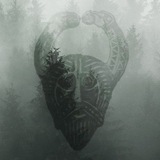
A thula I wrote in honor of Woden-Atríðr ("Charging Rider").
"𝔉𝔦𝔯𝔰𝔱 𝔦𝔫 𝔱𝔥𝔢 𝔣𝔯𝔞𝔶
𝔣𝔞𝔠𝔦𝔫𝔤 𝔱𝔥𝔢 𝔣𝔬𝔢,
𝔚𝔬𝔡𝔢𝔫 𝔯𝔦𝔡𝔢𝔰
𝔬𝔫 𝔱𝔥𝔢 𝔴𝔞𝔯𝔟𝔦𝔯𝔡𝔰 𝔯𝔬𝔞𝔡.
𝔏𝔞𝔰𝔥𝔦𝔫𝔤 𝔬𝔲𝔱 𝔟𝔬𝔩𝔡𝔩𝔶
𝔩𝔞𝔶𝔦𝔫𝔤 𝔪𝔢𝔫 𝔩𝔬𝔴,
𝔰𝔦𝔤 𝔦𝔰 𝔱𝔥𝔲𝔰 𝔰𝔬𝔴𝔫
𝔟𝔶 𝔱𝔥𝔢 𝔰𝔩𝔞𝔶𝔢𝔯 𝔬𝔣 𝔣𝔬𝔢𝔰."
A thula I wrote in honor of Woden-Atríðr ("Charging Rider").
⚡10❤🔥2
Forwarded from ᛉ Sagnamaðr Stark ᛉ
“When I was a child, we were always told not to whistle at night.
‘Otherwise Joen's (Odin’s) hunt will come,’ my parents said.”
~Collected by Evald Tang Kristensen in Vokslev, Jylland, 1893.
𐃏
Painting by Yana Kharchenko.
‘Otherwise Joen's (Odin’s) hunt will come,’ my parents said.”
~Collected by Evald Tang Kristensen in Vokslev, Jylland, 1893.
𐃏
Painting by Yana Kharchenko.
❤11
Forwarded from 𝕿𝖍𝖊 𝕱𝖔𝖑𝖐 𝖂𝖆𝖞 :ᚠᛟᛚᚴ•ᚹᚨᛄ:
A leed (poem) I wrote in Anglish playing around with skaldic speech. In it, Woden brings a man back from death to question him about what death is like for those that are tired of life, those that fear death, and those that accept and even risk death for the chance of a better life. I wrote it in a similar form to the Old Norse ljóðaháttr verseform.
¹ galed = "chanted, sang spells"
² lich = "corpse"
³ raist = "carved, scored"
⁴ embossom = "embrace"
⁵ earg = "coward, man without honor, complete outcast"
"Galder galed ¹
the gallows' Lord
as the lich ² He sung from sleep.
Runes He raist ³
to read the lips
of the man there cold as clay.
The man then moved
to meet the one
that sung him from his sleep.
'Who hails me?
Who bears me
from Hel's halfhearted care?'
'Tis Waytame, me,
that welcomes thee
to the land of living men.
For runes and rede
to raise from thee
I dragged thee from the dead.
I raised thee up
to understand
what wisdom have the dead.
Now answer me
what I ask of thee:
what awaits all wayworn men?'
'Tis bitter cold
and blinding dark
on the winding way to Hel.
No sweetness waits,
nor sleep's embossom, ⁴
in the dreary hall of Hel.'
'I raised thee up
to understand
what wisdom have the dead.
Now answer me
what I ask of thee:
what awaits those death do dread?'
'Hel's cold will
awaits all things,
this the earg ⁵ shall share.
She sees not place
nor purse's weight
but kills without a care.'
'I raised thee up
to understand
what wisdom have the dead.
Now answer me
what I ask of thee:
what awaits those death would dare?'
The dead man faltered,
meeting the eye
of the wight that 'Waytame' hight.
'Thou know it well
great on'eyed one
I see Ygg within thine eye.
Deathlessness wins
the one dares death,
for he knows what thou too know.
He lives full well
with wisdom won,
Yggs eye he gladly holds.
Deeply spake the dead,
now sink I back to sleep.' "
¹ galed = "chanted, sang spells"
² lich = "corpse"
³ raist = "carved, scored"
⁴ embossom = "embrace"
⁵ earg = "coward, man without honor, complete outcast"
❤12👌1
Forwarded from ᛉ Sagnamaðr Stark ᛉ
Folklorist Aamund Salveson recorded a folk tale from Torvastad in which St. Olaf strikes a mountain with iron gloves to draw forth spring waters for his soldiers, taking Baldr’s place.
St. Olaf was conflated with Thor post conversion; in the earlier versions, it was very likely Thor using Járngreipr to create this sacred spring.
The water from St. Olaf’s Spring in Torvastad reputedly has healing properties, and was used for baptisms. If it was historically associated with Thor, these waters could have been used for Ausa Vatni, invoking Thor’s protection.
Painting by Johannes Gehrts, 1901. ᛚ
St. Olaf was conflated with Thor post conversion; in the earlier versions, it was very likely Thor using Járngreipr to create this sacred spring.
The water from St. Olaf’s Spring in Torvastad reputedly has healing properties, and was used for baptisms. If it was historically associated with Thor, these waters could have been used for Ausa Vatni, invoking Thor’s protection.
Painting by Johannes Gehrts, 1901. ᛚ
⚡11
Forwarded from 𝕿𝖍𝖊 𝕱𝖔𝖑𝖐 𝖂𝖆𝖞 :ᚠᛟᛚᚴ•ᚹᚨᛄ:
A heathen oath formula noted by Vigfusson in his dictionary,
sé mér goð holl ef ek satt segi, gröm ef ek lýg
Gods, look graciously upon me if I speak true, and with wrath if I lie.
⚡14
Right now is a time of filtration. Dying are the days when Heathenry was a trend created by media. You now see many folks who considered themselves Heathens, Pagans, etc. switching back to Christianity, atheism, or agnoticism for the sake of comfort and familiarity. We can see a divide between those who take the time to study and ground themselves in their ancestral traditions, and those who only wore it as a counter-cultural guise. These nithings used Heathenry as a tool. To strictly go against the atheistic nature of the modern age or to go against religion/spirituality as a whole.
The Heathen of tomorrow will be intellectually, philosophically, and faithfully rooted in their traditions. There are many great organizations, wisemen, ancient sources, and philosophical works from antiquity to learn from. For a Heathen or Pagan to do otherwise is dishonest with yourself, intellectually lazy, and a dishonor to your forefathers and the Gods.
The Heathen of tomorrow will be intellectually, philosophically, and faithfully rooted in their traditions. There are many great organizations, wisemen, ancient sources, and philosophical works from antiquity to learn from. For a Heathen or Pagan to do otherwise is dishonest with yourself, intellectually lazy, and a dishonor to your forefathers and the Gods.
❤16👍5❤🔥2🤔2⚡1
In your view, what happens to the soul when it reincarnates?
Anonymous Poll
57%
The soul will transfer to another body of the same species (human to human etc.)
12%
The soul will reincarnate indescribably to a different species. (fox to human, human to horse etc)
10%
The soul does not reincarnate
16%
Im unsure
14%
Other
🤔4
I only noticed now that I made a typo in the poll above. I meant “indiscriminately” in the second option, but it seems my phone auto corrected to the wrong word.
👍9
Forwarded from Holles-Brauch
I believe it should go without saying that the Gods of our forefathers were multifaceted deities. Their governing power spanning many spheres of human life and being so the Gods are not limited to strict roles that they are solely assigned and responsible for.
An example: The God of Fire, the God of storms or the Goddess of love, The archer archetype or The striker archetype etc. These by and large are overly restrictive conditions that modern scholars and new agers have placed upon the Gods, this isn’t how our own Forefathers saw them. I’ve also noticed that many new age heathens restrict the worship of the divine purely by one’s own gender, something I’ve seen from both folkish and universalists. Concepts of the “divine feminine” or “divine masculine” are a good example in extreme cases. “Only woman can worship goddess and men, gods”
I’m not challenging traditional gender roles, of the idea that women in ancient times didn’t give offerings or bath in sacred ponds and wells to Frigg or Freya for fertility and childbirth or men in complete devotion to Odin in order to be proficient warriors or leaders of men.
However what I am arguing is that, a whole people, both men and women included. Rather it be a farmer with his wife and children or a wandering landless knight a minnesinger, there are cases where masculine and warlike men have come into the worship of a goddess. In this case I speak of the great Holda and the deeply rooted cult the people of central and southern Germany held in her worship.
When she was known as Nerthus the men of her cult drowned those that profaned her likeness by looking upon it with mortal eyes or carried weapons in her grove. The Forefathers of the Thuringians and Hessens, the North-Saxons would have fought in the Teutoburgschlact against the Romans or as recorded fought relentlessly for 80 years in constant rebellion against the Franks in the Saxon wars.
When the Christian St. Kilian arrived to the town of Wurzburg in hopes to convert the population he was told by the Farmers: "We want to serve the great Diana (Holda) , as our fathers did and, in doing so, have prospered well to this day."
Holda isn’t just a goddess of Woman, of weaving and sewing or the growing of flax. She is also a goddess of men who picked up spears and swords to defend their country against foreigners or farmers filling corrupt bishops with crossbow bolts in the peasant revolts or the Landless and chivalric knights who composed love ballads to noble women and fought for their honor in tournaments in the 13th and 14th centuries. She is a goddess of a whole and complete ethnic group, a whole and entire folk that encompasses men and woman alike.
An example: The God of Fire, the God of storms or the Goddess of love, The archer archetype or The striker archetype etc. These by and large are overly restrictive conditions that modern scholars and new agers have placed upon the Gods, this isn’t how our own Forefathers saw them. I’ve also noticed that many new age heathens restrict the worship of the divine purely by one’s own gender, something I’ve seen from both folkish and universalists. Concepts of the “divine feminine” or “divine masculine” are a good example in extreme cases. “Only woman can worship goddess and men, gods”
I’m not challenging traditional gender roles, of the idea that women in ancient times didn’t give offerings or bath in sacred ponds and wells to Frigg or Freya for fertility and childbirth or men in complete devotion to Odin in order to be proficient warriors or leaders of men.
However what I am arguing is that, a whole people, both men and women included. Rather it be a farmer with his wife and children or a wandering landless knight a minnesinger, there are cases where masculine and warlike men have come into the worship of a goddess. In this case I speak of the great Holda and the deeply rooted cult the people of central and southern Germany held in her worship.
When she was known as Nerthus the men of her cult drowned those that profaned her likeness by looking upon it with mortal eyes or carried weapons in her grove. The Forefathers of the Thuringians and Hessens, the North-Saxons would have fought in the Teutoburgschlact against the Romans or as recorded fought relentlessly for 80 years in constant rebellion against the Franks in the Saxon wars.
When the Christian St. Kilian arrived to the town of Wurzburg in hopes to convert the population he was told by the Farmers: "We want to serve the great Diana (Holda) , as our fathers did and, in doing so, have prospered well to this day."
Holda isn’t just a goddess of Woman, of weaving and sewing or the growing of flax. She is also a goddess of men who picked up spears and swords to defend their country against foreigners or farmers filling corrupt bishops with crossbow bolts in the peasant revolts or the Landless and chivalric knights who composed love ballads to noble women and fought for their honor in tournaments in the 13th and 14th centuries. She is a goddess of a whole and complete ethnic group, a whole and entire folk that encompasses men and woman alike.
❤7⚡2
Going with the theme of the post above, one will find when they submerge themselves within their siðr/tradition in complete devotion to a God or Goddess, they see that the roles of that deity become fluid.
Take Óðinn and Þórr for example. Both are associated with storms, winds, the sea, ravens, bears, etc. both can worshipped by means of a pillar or pole that represents the axismundi/the center of the cosmos, both (depending on tradition) are seen as kings of the Gods. Some traditions or cults are simply just more conservative than others.
In essence, the Gods are the same and are expressions of different fundamental aspects of reality. Like different paths on a great mountain that lead to the same summit.
Take Óðinn and Þórr for example. Both are associated with storms, winds, the sea, ravens, bears, etc. both can worshipped by means of a pillar or pole that represents the axismundi/the center of the cosmos, both (depending on tradition) are seen as kings of the Gods. Some traditions or cults are simply just more conservative than others.
In essence, the Gods are the same and are expressions of different fundamental aspects of reality. Like different paths on a great mountain that lead to the same summit.
❤12❤🔥3
Forwarded from Survive the Jive: All-feed
This media is not supported in your browser
VIEW IN TELEGRAM
⚡1
Forwarded from Survive the Jive: All-feed
“Brennus, the king of the Gauls, found no dedications of gold or silver when he entered a (Greek) temple. All that he found were images of stone and wood, he laughed at them to think that men, believing that gods have human form, should set up their images in wood and stone.”
Account of Brennus from Diodorus Siculus
Account of Brennus from Diodorus Siculus
Forwarded from Survive the Jive: All-feed
The Celtic disdain for figurative art is mirrored in an account of a German expressing similar sentiments towards Roman art.
"The painting known as 'The Old Shepherd with his Staff' was also displayed in the Roman Forum. It was said that a Teuton envoy (from a Germanic tribe) was once asked what he thought of the work and its possible value. He replied that it was worthless, and he would not even accept the living shepherd as a gift!" Pliny, Natural History, 35.8
"The painting known as 'The Old Shepherd with his Staff' was also displayed in the Roman Forum. It was said that a Teuton envoy (from a Germanic tribe) was once asked what he thought of the work and its possible value. He replied that it was worthless, and he would not even accept the living shepherd as a gift!" Pliny, Natural History, 35.8
❤7❤🔥3