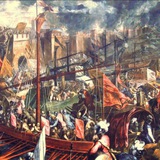
“The Greeks [Orthodox] . . . are not heretics or schismatics but the most Christian people and the best followers of the Gospel on earth.”
- Martin Luther
Source: Luther, Martin (1999). Vol. 32: Luther’s Works
- Martin Luther
Source: Luther, Martin (1999). Vol. 32: Luther’s Works
😁32❤🔥2👍2❤1
'Photius promised everything, and was accordingly consecrated, but by the very same Gregory, and took possession of the See. Six months had not yet passed over, since his consecration, and he had broken all his oaths and promises; he persecuted St. Ignatius, and all the ecclesiastics who adhered to him; he even got some of them flogged, and by promises and threats induced several to sign documents, intended for the ruin of his sainted predecessors. Not being able to accomplish his design, he laid a plot, with the assistance of Bardas, that the Emperor should send persons to take information, to prove that St. Ignatius was privately conspiring against the state.'
St. Alphonsus Maria de Liguori
St. Alphonsus Maria de Liguori
❤27👍1😁1
Eastern Orthodox Exposed
https://www.wmreview.org/p/parsons-orthodoxy-i
The great “reformer” of the Muscovite Church, and also its greatest robber, was the Czar, Ivan the Terrible; and according to him the foulest error of the “Western heretics” was the shaving of the beard. In an edict which this Head of the “Orthodox” Church issued in 1551, being unaware that another Russian Supreme Pontiff, the “great” Peter, would one day enact the contrary, he proclaimed that “the effusion of a martyr’s blood would not atone for this crime.” [Of shaving the beard.]
👍6😁5
Eastern Orthodox Exposed
https://www.wmreview.org/p/parsons-orthodoxy-i
The same author must have remembered that in the seventeenth century the ecclesiastical Academy of Kiev, speaking through Lazarus Baranowitch, Bishop of Tchernigow, regarded that doctrine as indubitably true;9 and we can scarcely imagine that the Academy could have deemed otherwise when it was accustomed to hear, among other and innumerable evidences furnished by the Russian Liturgy, that passage of the Office for the Nativity of the Virgin:
"We proclaim and celebrate thy birth, and we honor thy Immaculate Conception.”
👍3❤🔥2