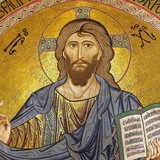
Paul says Jesus appeared to him not as a "man," not in "flesh and blood," but "through a revelation" (Galatians 1:11-12), which Paul describes as God revealing Jesus "inside me" (Galatians 1:16). He never says anyone saw Jesus in any other way. So we cannot assume he or anyone thought he had.
All we have are myths and legends a lifetime later, from no known or credible source. Paul had revelations like this all the time, complete with schizophrenic conversations with Jesus inside his mind (see 2 Corinthians 12:1-9).
-----
Full article here.
@ChristianityExposed
All we have are myths and legends a lifetime later, from no known or credible source. Paul had revelations like this all the time, complete with schizophrenic conversations with Jesus inside his mind (see 2 Corinthians 12:1-9).
-----
Full article here.
@ChristianityExposed
Before the rise of Christianity, Jews were the only worshippers of the God of Israel. But Christians also worship the God of Abraham, Isaac, and Jacob; creator of heaven and earth. While Christian worship is not a viable religious choice for Jews, as Jewish theologians we rejoice that, through Christianity, hundreds of millions of people have entered into relationship with the God of Israel.
-----
Full article here.
@ChristianityExposed
-----
Full article here.
@ChristianityExposed
"I was glad to find in your book a formal contradiction, at length, of the Judiciary usurpation of legislative powers; for such the judges have usurped in their repeated decisions that Christianity is a part of the Common law. the proof of the contrary which you have adduced is incontrovertible, to wit, that the Common law existed, while the Anglo-Saxons were yet Pagans, at a time when they had never yet heard the name of Christ pronounced, or knew that such a character had ever existed."
— Thomas Jefferson in a letter to John Cartwright
@ChristianityExposed
— Thomas Jefferson in a letter to John Cartwright
@ChristianityExposed
The Last English King To Die A Pagan
In 661, the Jutes on the Isle of Wight underwent forced baptism during King Wulfhere of Mercia's invasion. However, after Wulfhere returned to Mercia, the Islanders swiftly deconverted until 686, when Cædwalla, the Christian King of Wessex, invaded and seized control of the island.
Their King Arwald, the last English king to die a Pagan, was killed in battle, and his successors were baptized before their execution. The majority of the inhabitants were annihilated and replaced by Christian West Saxons. Those who remained were coerced into accepting baptism and adopting the West Saxon dialect, and the Isle of Wight ultimately became part of the Kingdom of Wessex.
@ChristianityExposed
In 661, the Jutes on the Isle of Wight underwent forced baptism during King Wulfhere of Mercia's invasion. However, after Wulfhere returned to Mercia, the Islanders swiftly deconverted until 686, when Cædwalla, the Christian King of Wessex, invaded and seized control of the island.
Their King Arwald, the last English king to die a Pagan, was killed in battle, and his successors were baptized before their execution. The majority of the inhabitants were annihilated and replaced by Christian West Saxons. Those who remained were coerced into accepting baptism and adopting the West Saxon dialect, and the Isle of Wight ultimately became part of the Kingdom of Wessex.
@ChristianityExposed
A Jewish Dying-And-Rising God
Long before and during the dawn of Christianity, there were many dying-and-rising savior gods. And yes, they were gods—some even half-god, half-human, being of divine or magical parentage, just like Jesus (John 1:1-18; Matthew 1:18-25; Luke 1:26-35; Philippians 2:6-8 & Romans 8:3).
The only plausible reason for why some Jews ever came up with a Jewish dying-and-rising god in precisely that region and era, is that everyone else had; it was so popular and influential, so fashionable and effective, it was inevitable the idea would seep into some Jewish consciousness, and erupt onto the scene of "inspired" revolutionizing of a perceived-to-be-corrupted faith.
They Judaized it, of course. Jesus is as different from Osiris as Osiris is from Dionysus or Inanna or Romulus or Zalmoxis. The differences are the Jewish tweaks. Resurrected savior gods were a pagan idea. All Christianity did, was invent a Jewish one.
-----
Full article here.
@ChristianityExposed
Long before and during the dawn of Christianity, there were many dying-and-rising savior gods. And yes, they were gods—some even half-god, half-human, being of divine or magical parentage, just like Jesus (John 1:1-18; Matthew 1:18-25; Luke 1:26-35; Philippians 2:6-8 & Romans 8:3).
The only plausible reason for why some Jews ever came up with a Jewish dying-and-rising god in precisely that region and era, is that everyone else had; it was so popular and influential, so fashionable and effective, it was inevitable the idea would seep into some Jewish consciousness, and erupt onto the scene of "inspired" revolutionizing of a perceived-to-be-corrupted faith.
They Judaized it, of course. Jesus is as different from Osiris as Osiris is from Dionysus or Inanna or Romulus or Zalmoxis. The differences are the Jewish tweaks. Resurrected savior gods were a pagan idea. All Christianity did, was invent a Jewish one.
-----
Full article here.
@ChristianityExposed
"I don’t believe that the Jewish State and Modern Zionism would have been possible without Christian Zionism. I think that the many Christian supporters of the rebirth of the Jewish State [1][2][3] and the ingathering of the Jewish people in the 19th century made possible the rise of Jewish Zionism—modern Jewish Zionism."
— Benjamin Netanyahu [source]
@ChristianityExposed
— Benjamin Netanyahu [source]
@ChristianityExposed
Weakness As A Virtue
Weakness as a virtue seems to be strongly linked with the coming of Christianity . . . who excuse their lack of action at times of crisis by appealing to Christian love, or Christian charity, or Christian tolerance.
Noted Christian writer Malcolm Muggeridge was expressing a many-leveled opinion when he said that "We are henceforth [since the crucifixion] to worship defeat, not victory; failure, not success; surrender, not defiance; deprivation, not satiety; weakness, not strength."
[Strength] means fulfillment of our potential, individually and collectively. Why settle for less? Let the Malcolm Muggeridges of the world worship weakness and hate all that is healthy and life-giving.
We, true to ourselves, our ancestors, and our own instincts, will respond to life's challenges and wax from strength to strength. We know that, in truth, the strong will inherit the Earth—we, and our descendants, will be strong.
-----
From: The Values of Asatru by Stephen A. McNallen.
@ChristianityExposed
Weakness as a virtue seems to be strongly linked with the coming of Christianity . . . who excuse their lack of action at times of crisis by appealing to Christian love, or Christian charity, or Christian tolerance.
Noted Christian writer Malcolm Muggeridge was expressing a many-leveled opinion when he said that "We are henceforth [since the crucifixion] to worship defeat, not victory; failure, not success; surrender, not defiance; deprivation, not satiety; weakness, not strength."
[Strength] means fulfillment of our potential, individually and collectively. Why settle for less? Let the Malcolm Muggeridges of the world worship weakness and hate all that is healthy and life-giving.
We, true to ourselves, our ancestors, and our own instincts, will respond to life's challenges and wax from strength to strength. We know that, in truth, the strong will inherit the Earth—we, and our descendants, will be strong.
-----
From: The Values of Asatru by Stephen A. McNallen.
@ChristianityExposed
The rapid development of Christianity and Islam raises a question about the prophetic status of the initiators of these religions. Judaism has given no explicit opinion on Jesus and Muhammad, but only on the movements that were founded in their names.
The Emeritus Chief Rabbi, Lord Sacks, wrote: "In the course of history, God has spoken to mankind in many languages: through Judaism to Jews, Christianity to Christians, Islam to Muslims."
This is not a radical idea but something that the Rambam himself alludes to in his corpus of Jewish law, Mishneh Torah: "Muhammad and Jesus served to clear the way for King Messiah, to prepare the whole world to worship God with one accord."
-----
Full article here.
@ChristianityExposed
The Emeritus Chief Rabbi, Lord Sacks, wrote: "In the course of history, God has spoken to mankind in many languages: through Judaism to Jews, Christianity to Christians, Islam to Muslims."
This is not a radical idea but something that the Rambam himself alludes to in his corpus of Jewish law, Mishneh Torah: "Muhammad and Jesus served to clear the way for King Messiah, to prepare the whole world to worship God with one accord."
-----
Full article here.
@ChristianityExposed
"Despite our profound respect for such great religious beliefs as Mohammedanism and Christianity, and our admiration for the service rendered to mankind by spreading the belief in the God of Israel and in the truths uttered by the Jewish prophets and teachers, we, as Jews, find no cause to abandon our own belief. We find no cause to leave the mother religion and to go to the daughter."
— Harris Weinstock (1854–1922) [source]
@ChristianityExposed
— Harris Weinstock (1854–1922) [source]
@ChristianityExposed
Prophets For Demons
Jupiter, Aphrodite, Bacchus and Isis; all of them, in the eyes of Christian writers, were demonic. In sermon after sermon, tract after tract, Christian preachers and writers reminded the faithful in violently disapproving language that the "error" of the pagan religions was demonically inspired. It was demons who first put the "delusion" of other religions into the minds of humans, these writers explained.
It was demons who had foisted the gods upon "the seduced and ensnared minds of human beings." Everything about the old religions was demonic. As Augustine thundered: "All the pagans were under the power of demons. Temples were built to demons, altars were set up to demons, priests ordained for the service of demons, sacrifices offered to demons, and ecstatic ravers were brought in as prophets for demons."
-----
From: The Darkening Age by Catherine Nixey.
@ChristianityExposed
Jupiter, Aphrodite, Bacchus and Isis; all of them, in the eyes of Christian writers, were demonic. In sermon after sermon, tract after tract, Christian preachers and writers reminded the faithful in violently disapproving language that the "error" of the pagan religions was demonically inspired. It was demons who first put the "delusion" of other religions into the minds of humans, these writers explained.
It was demons who had foisted the gods upon "the seduced and ensnared minds of human beings." Everything about the old religions was demonic. As Augustine thundered: "All the pagans were under the power of demons. Temples were built to demons, altars were set up to demons, priests ordained for the service of demons, sacrifices offered to demons, and ecstatic ravers were brought in as prophets for demons."
-----
From: The Darkening Age by Catherine Nixey.
@ChristianityExposed
Spartacus vs. Jesus
• Sallust's Histories covered Spartacus. He was born 10 years before the Spartacan war and wrote 30 years after, and shared the Senate with those who fought Spartacus.
• Cicero mentions Spartacus in Response to the Haruspices and Against Verres. He served during the Spartacan war.
• Diodorus covered Spartacus in his Library of History. He was a contemporary.
• Varro mentioned him (as quoted by Sosipater Charisius in Grammatical Arts 1.133). He actually fought Spartacus.
• Plus many later credible histories (within 100-200 years) using contemporary records and sources.
We have none of these things for Jesus.
-----
Full article here.
@ChristianityExposed
• Sallust's Histories covered Spartacus. He was born 10 years before the Spartacan war and wrote 30 years after, and shared the Senate with those who fought Spartacus.
• Cicero mentions Spartacus in Response to the Haruspices and Against Verres. He served during the Spartacan war.
• Diodorus covered Spartacus in his Library of History. He was a contemporary.
• Varro mentioned him (as quoted by Sosipater Charisius in Grammatical Arts 1.133). He actually fought Spartacus.
• Plus many later credible histories (within 100-200 years) using contemporary records and sources.
We have none of these things for Jesus.
-----
Full article here.
@ChristianityExposed
"Early Christianity was not a new non-Jewish philosophy or teaching at its core. It was a Jewish movement amidst several competing groups, also proclaiming that the great moment of Jewish history was upon their generation. The earliest followers of Jesus were Jews, just like him. The Jewish followers of Jesus saw themselves as legitimate and active members of the Jewish community."
— Dr. Juan Marcos Bejarano-Gutierrez (Forgotten Origins)
@ChristianityExposed
— Dr. Juan Marcos Bejarano-Gutierrez (Forgotten Origins)
@ChristianityExposed
Our Only Eyewitness Source
A typical con pulled by Christian apologists, is to conflate what our only eyewitness source said (Paul), with what anonymous foreign composers of legends about Jesus said a lifetime later (the Gospels).
When we look to our only actual witness, who is observing and reporting what Christians were preaching several decades before any Gospel was written, he outright says the resurrection of Jesus (the gospel) was known only through private revelation ("not with flesh and blood" but an experience of Jesus "in me," Paul says).
In fact, that is where Paul says he was getting many of the teachings of Jesus as well: private revelations, secret mystical conversations with Jesus in his head.
-----
Full article here.
@ChristianityExposed
A typical con pulled by Christian apologists, is to conflate what our only eyewitness source said (Paul), with what anonymous foreign composers of legends about Jesus said a lifetime later (the Gospels).
When we look to our only actual witness, who is observing and reporting what Christians were preaching several decades before any Gospel was written, he outright says the resurrection of Jesus (the gospel) was known only through private revelation ("not with flesh and blood" but an experience of Jesus "in me," Paul says).
In fact, that is where Paul says he was getting many of the teachings of Jesus as well: private revelations, secret mystical conversations with Jesus in his head.
-----
Full article here.
@ChristianityExposed
"Jesus Spoke Aramaic, Not Hebrew"
The reason why Jesus was often quoted in Aramaic, such as in Matthew 27:46, is because it had become the lingua franca of the Near East, gradually replacing Hebrew as the everyday spoken language among Jews after the Babylonian exile in the 6th century BCE.
Even major Jewish works, such as the Mishnah, Talmud, Zohar, and many ancient ritual recitations such as the Kaddish, are at least partially written in Aramaic, and the modern Hebrew alphabet in fact derives from the Aramaic alphabet.
To argue that Jesus was not a Jew—despite all Biblical evidence proving he most definitely was, even though he never actually existed [1][2][3]—simply because "he spoke Aramaic, not Hebrew" is therefore utterly and fundamentally flawed.
Also, "Jesus was born in Bethlehem in Judea," making him indeed a Judean, and "Judean" and "Jew" were both referred to as ioudaios, making the terms interchangeable.
@ChristianityExposed
The reason why Jesus was often quoted in Aramaic, such as in Matthew 27:46, is because it had become the lingua franca of the Near East, gradually replacing Hebrew as the everyday spoken language among Jews after the Babylonian exile in the 6th century BCE.
Even major Jewish works, such as the Mishnah, Talmud, Zohar, and many ancient ritual recitations such as the Kaddish, are at least partially written in Aramaic, and the modern Hebrew alphabet in fact derives from the Aramaic alphabet.
To argue that Jesus was not a Jew—despite all Biblical evidence proving he most definitely was, even though he never actually existed [1][2][3]—simply because "he spoke Aramaic, not Hebrew" is therefore utterly and fundamentally flawed.
Also, "Jesus was born in Bethlehem in Judea," making him indeed a Judean, and "Judean" and "Jew" were both referred to as ioudaios, making the terms interchangeable.
@ChristianityExposed
"Either you do not know or you have not the courage to charge us with those deeds for which there is at least a shadow of evidence and which an intelligent judge and jury could examine without impatience. Why bandy about unconvincing trifles when you might so easily indict us for serious and provable offences?"
"Why throw up to us a patent and a clumsy forgery such as the Protocols of the Elders Zion when you might as well confront us with the Revelation of St. John? Why talk about Marx and Trotski when you have Jesus of Nazereth and Paul of Tarsus to confound us with?"
"These plots and revolutions are as nothing compared with the great conspiracy which we engineered at the beginning of this era and which was destined to make the creed of a Jewish sect the religion of the Western world."
— Rothschild biographer Marcus Eli Ravage [source]
@ChristianityExposed
"Why throw up to us a patent and a clumsy forgery such as the Protocols of the Elders Zion when you might as well confront us with the Revelation of St. John? Why talk about Marx and Trotski when you have Jesus of Nazereth and Paul of Tarsus to confound us with?"
"These plots and revolutions are as nothing compared with the great conspiracy which we engineered at the beginning of this era and which was destined to make the creed of a Jewish sect the religion of the Western world."
— Rothschild biographer Marcus Eli Ravage [source]
@ChristianityExposed
This media is not supported in your browser
VIEW IN TELEGRAM
We indeed make the argument that "Christianity is a massive Jewish trick" [1][2][3]. However, to claim that we believe that "the Jewish people are so powerful" that "they had the foresight" to know how well it would play out for them is an obvious strawman.
The real "sign of historical illiteracy" here is believing that the only issue Christianity carries with it is the "recent phenomenon" that is Christian Zionism, which is only relatively recent due to political Zionism itself never truly taking shape until Theodor Herzl published The Jewish State in 1896.
Interestingly enough, Herzl's pamphlet was originally titled Address to the Rothschilds, to whom the Balfour Declaration was addressed only two decades later, which led to the creation of the State of Israel.
None of this would have been possible if it weren't for the "pious Christians" who have been supportive of political Zionism since its very inception in the 19th century.
Full video here.
@ChristianityExposed
The real "sign of historical illiteracy" here is believing that the only issue Christianity carries with it is the "recent phenomenon" that is Christian Zionism, which is only relatively recent due to political Zionism itself never truly taking shape until Theodor Herzl published The Jewish State in 1896.
Interestingly enough, Herzl's pamphlet was originally titled Address to the Rothschilds, to whom the Balfour Declaration was addressed only two decades later, which led to the creation of the State of Israel.
None of this would have been possible if it weren't for the "pious Christians" who have been supportive of political Zionism since its very inception in the 19th century.
Full video here.
@ChristianityExposed
Struggle As Life's Mission
The strong proclaimed fate, the proclamation was victorious. So emerged the heroic songs, which praised struggle as life's mission. What were the labours of daily life in comparison? What was the certainty of having to die in comparison? They became trifles, unimportant things that were not worth discussing.
The weight of the burden is measured by the weakness of the shoulders, which must bear it. In the revolt of the masses under the sign of the cross, the strong and their teachings were persecuted and exterminated. The grey of twilight, which laid over the last secrets of the law, of fate, became a terror for the weak and deformed.
Men no longer stepped death-defying and life-pious onto life's arena, rather 'human beings' debased to childish creatures took upon themselves the curse of life and bore it unwillingly up to the day when they were redeemed from their sinful-weak body by God.
-----
From: The SS Warrior Poet Collected Writings
@ChristianityExposed
The strong proclaimed fate, the proclamation was victorious. So emerged the heroic songs, which praised struggle as life's mission. What were the labours of daily life in comparison? What was the certainty of having to die in comparison? They became trifles, unimportant things that were not worth discussing.
The weight of the burden is measured by the weakness of the shoulders, which must bear it. In the revolt of the masses under the sign of the cross, the strong and their teachings were persecuted and exterminated. The grey of twilight, which laid over the last secrets of the law, of fate, became a terror for the weak and deformed.
Men no longer stepped death-defying and life-pious onto life's arena, rather 'human beings' debased to childish creatures took upon themselves the curse of life and bore it unwillingly up to the day when they were redeemed from their sinful-weak body by God.
-----
From: The SS Warrior Poet Collected Writings
@ChristianityExposed
It was painfully obvious to educated Christians that the intellectual achievements of the "insane" pagans were vastly superior to their own. And so, in part from self-interest, in part from actual interest, Christianity started to absorb the literature of the "heathens" into itself.
Bishop Ambrose dressed Cicero's Stoic principles in Christian clothes; while Augustine adapted Roman oratory for Christian ends. The philosophical terms of the Greeks started to make their way into Christian philosophy.
Long-dead thinkers who happened to have any resemblances to Christianity in their writings found themselves adopted as unwitting ancestors in the tradition.
The whiff of Christianity hung around Plato? Ah, that was because he had visited Egypt and, while there, he had perhaps read a copy of the first five books of the Bible that Moses had, conveniently, left behind. He was, really, one of us. Socrates was a Christian before Christ.
-----
From: The Darkening Age by Catherine Nixey.
@ChristianityExposed
Bishop Ambrose dressed Cicero's Stoic principles in Christian clothes; while Augustine adapted Roman oratory for Christian ends. The philosophical terms of the Greeks started to make their way into Christian philosophy.
Long-dead thinkers who happened to have any resemblances to Christianity in their writings found themselves adopted as unwitting ancestors in the tradition.
The whiff of Christianity hung around Plato? Ah, that was because he had visited Egypt and, while there, he had perhaps read a copy of the first five books of the Bible that Moses had, conveniently, left behind. He was, really, one of us. Socrates was a Christian before Christ.
-----
From: The Darkening Age by Catherine Nixey.
@ChristianityExposed
Socrates vs. Jesus
We know the names of numerous eyewitnesses who wrote books about Socrates, including at least sixteen of his disciples. We know of not even one such book for Jesus.
And we even have an eyewitness third-party account written during Socrates' lifetime: Aristophanes, The Clouds. We know of not even one such account for Jesus.
Indeed we have many contemporaries attesting to Socrates, spanning four modern volumes. We have none for Jesus.
We have quotations from many historians of Socrates, using written sources about Socrates from his own time: e.g. Idomeneus, On the Followers of Socrates. We have none for Jesus—only repeaters of the Gospels.
And yet Socrates wrote nothing himself and there was no global Church of Socrates to preserve records of him. And still we have vastly better evidence he existed than we have for Jesus.
-----
Full article here.
@ChristianityExposed
We know the names of numerous eyewitnesses who wrote books about Socrates, including at least sixteen of his disciples. We know of not even one such book for Jesus.
And we even have an eyewitness third-party account written during Socrates' lifetime: Aristophanes, The Clouds. We know of not even one such account for Jesus.
Indeed we have many contemporaries attesting to Socrates, spanning four modern volumes. We have none for Jesus.
We have quotations from many historians of Socrates, using written sources about Socrates from his own time: e.g. Idomeneus, On the Followers of Socrates. We have none for Jesus—only repeaters of the Gospels.
And yet Socrates wrote nothing himself and there was no global Church of Socrates to preserve records of him. And still we have vastly better evidence he existed than we have for Jesus.
-----
Full article here.
@ChristianityExposed
"The politicians of the cross know too well that first the last warrior must fall before the 'Day of Judgment' can dawn—this means the day on which those 'chosen' according to the teachings of the cross come to rule. Every World War that serves the destruction of strong life is not only tolerated by the cross, rather at times even promoted, yes, demanded."
— Kurt Eggers (The SS Warrior Poet)
@ChristianityExposed
— Kurt Eggers (The SS Warrior Poet)
@ChristianityExposed
"When you talk about Jewish conspiracies I cannot for the world understand why you do not mention the destruction of Rome and the whole civilization of antiquity concentrated under her banners, at the hands of Jewish Christianity."
"It is unbelievable, but you Christians do not seem to know where your religion came from, nor how, nor why. Your historians do not tell you. The documents in these case, which are part of your Bible, you chant over but do not read. We have done our work too thoroughly; you believe our propaganda too implicitly."
"The coming of Christianity is to you not an ordinary historical event growing out of other events of the time, it is the fulfilment of a divine Jewish prophecy. It did not, as you see it, destroy a great Gentile civilization and a great Gentile empire with which Jewry was at war; it did not plunge mankind into darkness for a thousand years; it came to bring salvation to the Gentile world!"
— Rothschild biographer Marcus Eli Ravage [source]
@ChristianityExposed
"It is unbelievable, but you Christians do not seem to know where your religion came from, nor how, nor why. Your historians do not tell you. The documents in these case, which are part of your Bible, you chant over but do not read. We have done our work too thoroughly; you believe our propaganda too implicitly."
"The coming of Christianity is to you not an ordinary historical event growing out of other events of the time, it is the fulfilment of a divine Jewish prophecy. It did not, as you see it, destroy a great Gentile civilization and a great Gentile empire with which Jewry was at war; it did not plunge mankind into darkness for a thousand years; it came to bring salvation to the Gentile world!"
— Rothschild biographer Marcus Eli Ravage [source]
@ChristianityExposed