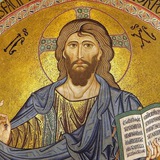
"The Jews should celebrate Christmas as a Torah victory over paganism. Because it is forbidden for the Jews to convert to Judaism those who genetically are outside the Jewish tribe, the only way to make the non-Jews to follow the Torah was the creation of another Torah-guided religion. And Rabbi Joshua, who became Jesus Christ in the minds of that time pagans, had done it, and we the Jews have to be thankful for his efforts to fulfill the Jewish mission of the Chosen."
-----
Full article here.
@ChristianityExposed
-----
Full article here.
@ChristianityExposed
It was a public holiday celebrated around December 25th in the family home. A time for feasting, goodwill, generosity to the poor, the exchange of gifts and the decoration of trees. But it wasn’t Christmas. This was Saturnalia, the pagan Roman winter solstice festival.
Gaius Valerius Catullus (c. 84 - c. 54 BC) described Saturnalia as ‘the best of times’: dress codes were relaxed, small gifts such as dolls, candles and caged birds were exchanged. The wealthy were expected to pay the month’s rent for those who couldn’t afford it, masters and slaves to swap clothes. Family households threw dice to determine who would become the temporary Saturnalian monarch.
From as early as 217 BC there were public Saturnalia banquets. The Roman state cancelled executions and refrained from declaring war during the festival. The earliest known reference to it commemorating the birth of Christ on December 25th is in the Roman Philocalian calendar of AD 354.
-----
Full article here.
@ChristianityExposed
Gaius Valerius Catullus (c. 84 - c. 54 BC) described Saturnalia as ‘the best of times’: dress codes were relaxed, small gifts such as dolls, candles and caged birds were exchanged. The wealthy were expected to pay the month’s rent for those who couldn’t afford it, masters and slaves to swap clothes. Family households threw dice to determine who would become the temporary Saturnalian monarch.
From as early as 217 BC there were public Saturnalia banquets. The Roman state cancelled executions and refrained from declaring war during the festival. The earliest known reference to it commemorating the birth of Christ on December 25th is in the Roman Philocalian calendar of AD 354.
-----
Full article here.
@ChristianityExposed
The Mists Of Prehistory
To be human is to enter into a compact with history. We do not come into this world untrammelled by its baggage, but as the next link in the great chain that stretches back all the way into the mists of prehistory. Europeans have always been acutely aware of this fact. As Caesar aped Alexander, so did Napoleon ape Caesar.
But not only the great men of history come down to us. The Romans honored their immediate ancestors, as did all venerable Europeans. The dead have influence that echoes far beyond their own lives and can aid us now in the present.
The historian who devotes himself to the study of his own people in our contemporary age is the closest to the priests and shamans of old, for by learning who we are, we strengthen the roots of our own resolve in the present. Christianity collapsed under its universalist pretensions, and now we must labor for a strand of religion particular to us.
-----
Full article here.
@ChristianityExposed
To be human is to enter into a compact with history. We do not come into this world untrammelled by its baggage, but as the next link in the great chain that stretches back all the way into the mists of prehistory. Europeans have always been acutely aware of this fact. As Caesar aped Alexander, so did Napoleon ape Caesar.
But not only the great men of history come down to us. The Romans honored their immediate ancestors, as did all venerable Europeans. The dead have influence that echoes far beyond their own lives and can aid us now in the present.
The historian who devotes himself to the study of his own people in our contemporary age is the closest to the priests and shamans of old, for by learning who we are, we strengthen the roots of our own resolve in the present. Christianity collapsed under its universalist pretensions, and now we must labor for a strand of religion particular to us.
-----
Full article here.
@ChristianityExposed
Media is too big
VIEW IN TELEGRAM
How the prisoner's dilemma (game theory) proves tit-for-tat (an eye for an eye) to be superior to the Christian "Golden Rule," which is stated in Matthew 7:12: "Do to others whatever you would like them to do to you."
Interestingly enough, the Torah (Exodus 21:23-25) does advocate for retributive justice (and so did pre-Christian Rome). However, the Early Jewish Christians thought it only appropriate to "preach to the Gentiles" (Ephesians 3:8) something else entirely:
"You have heard the law that says the punishment must match the injury: 'An eye for an eye, and a tooth for a tooth.' But I say, do not resist an evil person! If someone slaps you on the right cheek, offer the other cheek also. If you are sued in court and your shirt is taken from you, give your coat, too." (Matthew 5:38-40)
Full video here.
@ChristianityExposed
Interestingly enough, the Torah (Exodus 21:23-25) does advocate for retributive justice (and so did pre-Christian Rome). However, the Early Jewish Christians thought it only appropriate to "preach to the Gentiles" (Ephesians 3:8) something else entirely:
"You have heard the law that says the punishment must match the injury: 'An eye for an eye, and a tooth for a tooth.' But I say, do not resist an evil person! If someone slaps you on the right cheek, offer the other cheek also. If you are sued in court and your shirt is taken from you, give your coat, too." (Matthew 5:38-40)
Full video here.
@ChristianityExposed
Around 112 CE, Pliny the Younger, the Roman Empire's foremost legal authority, conveyed in a letter to Emperor Trajan that he had never attended any trials of Christians and noted that many individuals who previously identified as Christians in his province had long abandoned the faith.
This—yet again—disproves the common misconception of Christianity's rapid organic spread across the Empire. Instead, it shows that even after nearly eighty years of evangelizing across three continents, the recruitment efforts were so ineffective that the presence of Christians was still nearly nonexistent.
@ChristianityExposed
This—yet again—disproves the common misconception of Christianity's rapid organic spread across the Empire. Instead, it shows that even after nearly eighty years of evangelizing across three continents, the recruitment efforts were so ineffective that the presence of Christians was still nearly nonexistent.
@ChristianityExposed
We should remember that we are but Gentiles, while the Jews are of the lineage of Christ. We are aliens and in-laws; they are blood relatives, cousins, and brothers of our Lord. Therefore, if one is to boast of flesh and blood, the Jews are actually nearer to Christ than we are, as St. Paul says in Romans 9:5.
God has also demonstrated this by his acts, for to no nation among the Gentiles has he granted so high an honor as he has to the Jews. And although the gospel has been proclaimed to all the world, yet He committed the Holy Scriptures, that is, the law and the prophets, to no nation except the Jews.
— Martin Luther [source]
@ChristianityExposed
God has also demonstrated this by his acts, for to no nation among the Gentiles has he granted so high an honor as he has to the Jews. And although the gospel has been proclaimed to all the world, yet He committed the Holy Scriptures, that is, the law and the prophets, to no nation except the Jews.
— Martin Luther [source]
@ChristianityExposed
This media is not supported in your browser
VIEW IN TELEGRAM
"The Jews were the original anti-Pagans. They had a Pagan problem, and Christianity and Islam were the solution to that problem."
Adam Green on how these Abrahamic religions were meant to fulfill Jewish prophecy, as also stated by highly influential Jewish philosopher Maimonides in 1170 CE.
Full video here.
@ChristianityExposed
Adam Green on how these Abrahamic religions were meant to fulfill Jewish prophecy, as also stated by highly influential Jewish philosopher Maimonides in 1170 CE.
Full video here.
@ChristianityExposed
Paul says Jesus appeared to him not as a "man," not in "flesh and blood," but "through a revelation" (Galatians 1:11-12), which Paul describes as God revealing Jesus "inside me" (Galatians 1:16). He never says anyone saw Jesus in any other way. So we cannot assume he or anyone thought he had.
All we have are myths and legends a lifetime later, from no known or credible source. Paul had revelations like this all the time, complete with schizophrenic conversations with Jesus inside his mind (see 2 Corinthians 12:1-9).
-----
Full article here.
@ChristianityExposed
All we have are myths and legends a lifetime later, from no known or credible source. Paul had revelations like this all the time, complete with schizophrenic conversations with Jesus inside his mind (see 2 Corinthians 12:1-9).
-----
Full article here.
@ChristianityExposed
Before the rise of Christianity, Jews were the only worshippers of the God of Israel. But Christians also worship the God of Abraham, Isaac, and Jacob; creator of heaven and earth. While Christian worship is not a viable religious choice for Jews, as Jewish theologians we rejoice that, through Christianity, hundreds of millions of people have entered into relationship with the God of Israel.
-----
Full article here.
@ChristianityExposed
-----
Full article here.
@ChristianityExposed
"I was glad to find in your book a formal contradiction, at length, of the Judiciary usurpation of legislative powers; for such the judges have usurped in their repeated decisions that Christianity is a part of the Common law. the proof of the contrary which you have adduced is incontrovertible, to wit, that the Common law existed, while the Anglo-Saxons were yet Pagans, at a time when they had never yet heard the name of Christ pronounced, or knew that such a character had ever existed."
— Thomas Jefferson in a letter to John Cartwright
@ChristianityExposed
— Thomas Jefferson in a letter to John Cartwright
@ChristianityExposed
The Last English King To Die A Pagan
In 661, the Jutes on the Isle of Wight underwent forced baptism during King Wulfhere of Mercia's invasion. However, after Wulfhere returned to Mercia, the Islanders swiftly deconverted until 686, when Cædwalla, the Christian King of Wessex, invaded and seized control of the island.
Their King Arwald, the last English king to die a Pagan, was killed in battle, and his successors were baptized before their execution. The majority of the inhabitants were annihilated and replaced by Christian West Saxons. Those who remained were coerced into accepting baptism and adopting the West Saxon dialect, and the Isle of Wight ultimately became part of the Kingdom of Wessex.
@ChristianityExposed
In 661, the Jutes on the Isle of Wight underwent forced baptism during King Wulfhere of Mercia's invasion. However, after Wulfhere returned to Mercia, the Islanders swiftly deconverted until 686, when Cædwalla, the Christian King of Wessex, invaded and seized control of the island.
Their King Arwald, the last English king to die a Pagan, was killed in battle, and his successors were baptized before their execution. The majority of the inhabitants were annihilated and replaced by Christian West Saxons. Those who remained were coerced into accepting baptism and adopting the West Saxon dialect, and the Isle of Wight ultimately became part of the Kingdom of Wessex.
@ChristianityExposed
A Jewish Dying-And-Rising God
Long before and during the dawn of Christianity, there were many dying-and-rising savior gods. And yes, they were gods—some even half-god, half-human, being of divine or magical parentage, just like Jesus (John 1:1-18; Matthew 1:18-25; Luke 1:26-35; Philippians 2:6-8 & Romans 8:3).
The only plausible reason for why some Jews ever came up with a Jewish dying-and-rising god in precisely that region and era, is that everyone else had; it was so popular and influential, so fashionable and effective, it was inevitable the idea would seep into some Jewish consciousness, and erupt onto the scene of "inspired" revolutionizing of a perceived-to-be-corrupted faith.
They Judaized it, of course. Jesus is as different from Osiris as Osiris is from Dionysus or Inanna or Romulus or Zalmoxis. The differences are the Jewish tweaks. Resurrected savior gods were a pagan idea. All Christianity did, was invent a Jewish one.
-----
Full article here.
@ChristianityExposed
Long before and during the dawn of Christianity, there were many dying-and-rising savior gods. And yes, they were gods—some even half-god, half-human, being of divine or magical parentage, just like Jesus (John 1:1-18; Matthew 1:18-25; Luke 1:26-35; Philippians 2:6-8 & Romans 8:3).
The only plausible reason for why some Jews ever came up with a Jewish dying-and-rising god in precisely that region and era, is that everyone else had; it was so popular and influential, so fashionable and effective, it was inevitable the idea would seep into some Jewish consciousness, and erupt onto the scene of "inspired" revolutionizing of a perceived-to-be-corrupted faith.
They Judaized it, of course. Jesus is as different from Osiris as Osiris is from Dionysus or Inanna or Romulus or Zalmoxis. The differences are the Jewish tweaks. Resurrected savior gods were a pagan idea. All Christianity did, was invent a Jewish one.
-----
Full article here.
@ChristianityExposed
"I don’t believe that the Jewish State and Modern Zionism would have been possible without Christian Zionism. I think that the many Christian supporters of the rebirth of the Jewish State [1][2][3] and the ingathering of the Jewish people in the 19th century made possible the rise of Jewish Zionism—modern Jewish Zionism."
— Benjamin Netanyahu [source]
@ChristianityExposed
— Benjamin Netanyahu [source]
@ChristianityExposed
Weakness As A Virtue
Weakness as a virtue seems to be strongly linked with the coming of Christianity . . . who excuse their lack of action at times of crisis by appealing to Christian love, or Christian charity, or Christian tolerance.
Noted Christian writer Malcolm Muggeridge was expressing a many-leveled opinion when he said that "We are henceforth [since the crucifixion] to worship defeat, not victory; failure, not success; surrender, not defiance; deprivation, not satiety; weakness, not strength."
[Strength] means fulfillment of our potential, individually and collectively. Why settle for less? Let the Malcolm Muggeridges of the world worship weakness and hate all that is healthy and life-giving.
We, true to ourselves, our ancestors, and our own instincts, will respond to life's challenges and wax from strength to strength. We know that, in truth, the strong will inherit the Earth—we, and our descendants, will be strong.
-----
From: The Values of Asatru by Stephen A. McNallen.
@ChristianityExposed
Weakness as a virtue seems to be strongly linked with the coming of Christianity . . . who excuse their lack of action at times of crisis by appealing to Christian love, or Christian charity, or Christian tolerance.
Noted Christian writer Malcolm Muggeridge was expressing a many-leveled opinion when he said that "We are henceforth [since the crucifixion] to worship defeat, not victory; failure, not success; surrender, not defiance; deprivation, not satiety; weakness, not strength."
[Strength] means fulfillment of our potential, individually and collectively. Why settle for less? Let the Malcolm Muggeridges of the world worship weakness and hate all that is healthy and life-giving.
We, true to ourselves, our ancestors, and our own instincts, will respond to life's challenges and wax from strength to strength. We know that, in truth, the strong will inherit the Earth—we, and our descendants, will be strong.
-----
From: The Values of Asatru by Stephen A. McNallen.
@ChristianityExposed
The rapid development of Christianity and Islam raises a question about the prophetic status of the initiators of these religions. Judaism has given no explicit opinion on Jesus and Muhammad, but only on the movements that were founded in their names.
The Emeritus Chief Rabbi, Lord Sacks, wrote: "In the course of history, God has spoken to mankind in many languages: through Judaism to Jews, Christianity to Christians, Islam to Muslims."
This is not a radical idea but something that the Rambam himself alludes to in his corpus of Jewish law, Mishneh Torah: "Muhammad and Jesus served to clear the way for King Messiah, to prepare the whole world to worship God with one accord."
-----
Full article here.
@ChristianityExposed
The Emeritus Chief Rabbi, Lord Sacks, wrote: "In the course of history, God has spoken to mankind in many languages: through Judaism to Jews, Christianity to Christians, Islam to Muslims."
This is not a radical idea but something that the Rambam himself alludes to in his corpus of Jewish law, Mishneh Torah: "Muhammad and Jesus served to clear the way for King Messiah, to prepare the whole world to worship God with one accord."
-----
Full article here.
@ChristianityExposed
"Despite our profound respect for such great religious beliefs as Mohammedanism and Christianity, and our admiration for the service rendered to mankind by spreading the belief in the God of Israel and in the truths uttered by the Jewish prophets and teachers, we, as Jews, find no cause to abandon our own belief. We find no cause to leave the mother religion and to go to the daughter."
— Harris Weinstock (1854–1922) [source]
@ChristianityExposed
— Harris Weinstock (1854–1922) [source]
@ChristianityExposed
Prophets For Demons
Jupiter, Aphrodite, Bacchus and Isis; all of them, in the eyes of Christian writers, were demonic. In sermon after sermon, tract after tract, Christian preachers and writers reminded the faithful in violently disapproving language that the "error" of the pagan religions was demonically inspired. It was demons who first put the "delusion" of other religions into the minds of humans, these writers explained.
It was demons who had foisted the gods upon "the seduced and ensnared minds of human beings." Everything about the old religions was demonic. As Augustine thundered: "All the pagans were under the power of demons. Temples were built to demons, altars were set up to demons, priests ordained for the service of demons, sacrifices offered to demons, and ecstatic ravers were brought in as prophets for demons."
-----
From: The Darkening Age by Catherine Nixey.
@ChristianityExposed
Jupiter, Aphrodite, Bacchus and Isis; all of them, in the eyes of Christian writers, were demonic. In sermon after sermon, tract after tract, Christian preachers and writers reminded the faithful in violently disapproving language that the "error" of the pagan religions was demonically inspired. It was demons who first put the "delusion" of other religions into the minds of humans, these writers explained.
It was demons who had foisted the gods upon "the seduced and ensnared minds of human beings." Everything about the old religions was demonic. As Augustine thundered: "All the pagans were under the power of demons. Temples were built to demons, altars were set up to demons, priests ordained for the service of demons, sacrifices offered to demons, and ecstatic ravers were brought in as prophets for demons."
-----
From: The Darkening Age by Catherine Nixey.
@ChristianityExposed
Spartacus vs. Jesus
• Sallust's Histories covered Spartacus. He was born 10 years before the Spartacan war and wrote 30 years after, and shared the Senate with those who fought Spartacus.
• Cicero mentions Spartacus in Response to the Haruspices and Against Verres. He served during the Spartacan war.
• Diodorus covered Spartacus in his Library of History. He was a contemporary.
• Varro mentioned him (as quoted by Sosipater Charisius in Grammatical Arts 1.133). He actually fought Spartacus.
• Plus many later credible histories (within 100-200 years) using contemporary records and sources.
We have none of these things for Jesus.
-----
Full article here.
@ChristianityExposed
• Sallust's Histories covered Spartacus. He was born 10 years before the Spartacan war and wrote 30 years after, and shared the Senate with those who fought Spartacus.
• Cicero mentions Spartacus in Response to the Haruspices and Against Verres. He served during the Spartacan war.
• Diodorus covered Spartacus in his Library of History. He was a contemporary.
• Varro mentioned him (as quoted by Sosipater Charisius in Grammatical Arts 1.133). He actually fought Spartacus.
• Plus many later credible histories (within 100-200 years) using contemporary records and sources.
We have none of these things for Jesus.
-----
Full article here.
@ChristianityExposed
"Early Christianity was not a new non-Jewish philosophy or teaching at its core. It was a Jewish movement amidst several competing groups, also proclaiming that the great moment of Jewish history was upon their generation. The earliest followers of Jesus were Jews, just like him. The Jewish followers of Jesus saw themselves as legitimate and active members of the Jewish community."
— Dr. Juan Marcos Bejarano-Gutierrez (Forgotten Origins)
@ChristianityExposed
— Dr. Juan Marcos Bejarano-Gutierrez (Forgotten Origins)
@ChristianityExposed
Our Only Eyewitness Source
A typical con pulled by Christian apologists, is to conflate what our only eyewitness source said (Paul), with what anonymous foreign composers of legends about Jesus said a lifetime later (the Gospels).
When we look to our only actual witness, who is observing and reporting what Christians were preaching several decades before any Gospel was written, he outright says the resurrection of Jesus (the gospel) was known only through private revelation ("not with flesh and blood" but an experience of Jesus "in me," Paul says).
In fact, that is where Paul says he was getting many of the teachings of Jesus as well: private revelations, secret mystical conversations with Jesus in his head.
-----
Full article here.
@ChristianityExposed
A typical con pulled by Christian apologists, is to conflate what our only eyewitness source said (Paul), with what anonymous foreign composers of legends about Jesus said a lifetime later (the Gospels).
When we look to our only actual witness, who is observing and reporting what Christians were preaching several decades before any Gospel was written, he outright says the resurrection of Jesus (the gospel) was known only through private revelation ("not with flesh and blood" but an experience of Jesus "in me," Paul says).
In fact, that is where Paul says he was getting many of the teachings of Jesus as well: private revelations, secret mystical conversations with Jesus in his head.
-----
Full article here.
@ChristianityExposed
"Jesus Spoke Aramaic, Not Hebrew"
The reason why Jesus was often quoted in Aramaic, such as in Matthew 27:46, is because it had become the lingua franca of the Near East, gradually replacing Hebrew as the everyday spoken language among Jews after the Babylonian exile in the 6th century BCE.
Even major Jewish works, such as the Mishnah, Talmud, Zohar, and many ancient ritual recitations such as the Kaddish, are at least partially written in Aramaic, and the modern Hebrew alphabet in fact derives from the Aramaic alphabet.
To argue that Jesus was not a Jew—despite all Biblical evidence proving he most definitely was, even though he never actually existed [1][2][3]—simply because "he spoke Aramaic, not Hebrew" is therefore utterly and fundamentally flawed.
Also, "Jesus was born in Bethlehem in Judea," making him indeed a Judean, and "Judean" and "Jew" were both referred to as ioudaios, making the terms interchangeable.
@ChristianityExposed
The reason why Jesus was often quoted in Aramaic, such as in Matthew 27:46, is because it had become the lingua franca of the Near East, gradually replacing Hebrew as the everyday spoken language among Jews after the Babylonian exile in the 6th century BCE.
Even major Jewish works, such as the Mishnah, Talmud, Zohar, and many ancient ritual recitations such as the Kaddish, are at least partially written in Aramaic, and the modern Hebrew alphabet in fact derives from the Aramaic alphabet.
To argue that Jesus was not a Jew—despite all Biblical evidence proving he most definitely was, even though he never actually existed [1][2][3]—simply because "he spoke Aramaic, not Hebrew" is therefore utterly and fundamentally flawed.
Also, "Jesus was born in Bethlehem in Judea," making him indeed a Judean, and "Judean" and "Jew" were both referred to as ioudaios, making the terms interchangeable.
@ChristianityExposed