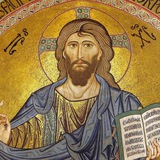
"Christianity has emptied Valhalla, felled the sacred groves, extirpated the national imagery as a shameful superstition, as a devilish poison, and given us instead the imagery of a nation whose climate, laws, culture, and interests are strange to us and whose history has no connection whatever with our own."
— German philosopher Georg Wilhelm Friedrich Hegel (1795)
@ChristianityExposed
— German philosopher Georg Wilhelm Friedrich Hegel (1795)
@ChristianityExposed
The Three Marys
Three incarnations of Mary stood at the foot of Jesus' cross, like the Moirai of Greece and the three Norns at the foot of Odin’s sacrificial tree.
Up to Hadrian's time, victims offered to Zeus at Salamis were anointed with sacred ointments—thus becoming "Anointed Ones" or "Christs"—then hung up and stabbed through the side with a spear.
Nothing in Jesus' myth occurred at random; every detail was part of a formal sacrificial tradition, even to the procession of palms, which glorified sacred kings in ancient Babylon.
-----
From Varieties of Jesus Mythicism by John W. Loftus.
@ChristianityExposed
Three incarnations of Mary stood at the foot of Jesus' cross, like the Moirai of Greece and the three Norns at the foot of Odin’s sacrificial tree.
Up to Hadrian's time, victims offered to Zeus at Salamis were anointed with sacred ointments—thus becoming "Anointed Ones" or "Christs"—then hung up and stabbed through the side with a spear.
Nothing in Jesus' myth occurred at random; every detail was part of a formal sacrificial tradition, even to the procession of palms, which glorified sacred kings in ancient Babylon.
-----
From Varieties of Jesus Mythicism by John W. Loftus.
@ChristianityExposed
"I will bless those who bless you, and I will curse him who curses you." — Genesis 12:3
@ChristianityExposed
@ChristianityExposed
"'If we only lived as Christ lived, what a beautiful world this would be,' saith all thoughtless ones. If we lived as Christ lived, there would be none of us left to live. He begat no children; he labored not for his bread; he possessed neither house nor home; he merely talked. Consequently, he must have existed on charity or have stolen bread. 'If we all lived like Christ,' would there have been anyone left to labor, to be begged from, to be stolen from? 'If we all lived like Christ' is, thus a self-evident absurdity."
— Ragnar Redbeard (Might is Right)
@ChristianityExposed
— Ragnar Redbeard (Might is Right)
@ChristianityExposed
Jesus Never Existed
None of the supposed eyewitnesses ever met Jesus. Not even Paul—whose letters formed the foundation of the Christian movement—who "did not receive [the gospel] from any man, nor was [he] taught it; rather, [he] received it by revelation from Jesus Christ" (Gal 1:12), as further explained in Acts 9.
During Jesus' entire lifetime, not one person wrote anything about the miracles, what Jesus said, or what his followers did. There were many first century writers, philosophers, historians, and other commentators—such as Petronius, Seneca, Martial, and Quintillian—who had good reason to notice Jesus, but did not. We have no bodies, no tombs, no physical remains, no letters, no engravings—nothing that counts as evidence.
Even esteemed Jewish writer Philo of Alexandria—alive at the purported time of Jesus and one of the wealthiest and best connected citizens of the Empire—makes no mention of Christ, Christians, or Christianity in any of his voluminous writings.
@ChristianityExposed
None of the supposed eyewitnesses ever met Jesus. Not even Paul—whose letters formed the foundation of the Christian movement—who "did not receive [the gospel] from any man, nor was [he] taught it; rather, [he] received it by revelation from Jesus Christ" (Gal 1:12), as further explained in Acts 9.
During Jesus' entire lifetime, not one person wrote anything about the miracles, what Jesus said, or what his followers did. There were many first century writers, philosophers, historians, and other commentators—such as Petronius, Seneca, Martial, and Quintillian—who had good reason to notice Jesus, but did not. We have no bodies, no tombs, no physical remains, no letters, no engravings—nothing that counts as evidence.
Even esteemed Jewish writer Philo of Alexandria—alive at the purported time of Jesus and one of the wealthiest and best connected citizens of the Empire—makes no mention of Christ, Christians, or Christianity in any of his voluminous writings.
@ChristianityExposed
The Son Of God
Christ's biographical account in the gospels shares many similarities with other religious figures. One was Dionysus, who was believed by the Greeks to be the son of Zeus—the "father of the gods."
In other words, Dionysus was considered to be the "son of god," or the "son of the father." His mother was a mortal named Semele, who was supernaturally impregnated by Zeus. And—get this—the followers of Dionysus were claimed to have been "born again."
Dionysus, like Christ, was a traveling teacher and he was alleged to be the god of wine. This wine attachment is also observed with Christ, who placed a considerable emphasis on wine in the ceremonial "Lord's Supper" and, of course, wine was the theme behind the "miracle" of turning water into wine at the Cana wedding feast.
-----
From: What Is Wrong With the Bible? by Charles Giuliani.
@ChristianityExposed
Christ's biographical account in the gospels shares many similarities with other religious figures. One was Dionysus, who was believed by the Greeks to be the son of Zeus—the "father of the gods."
In other words, Dionysus was considered to be the "son of god," or the "son of the father." His mother was a mortal named Semele, who was supernaturally impregnated by Zeus. And—get this—the followers of Dionysus were claimed to have been "born again."
Dionysus, like Christ, was a traveling teacher and he was alleged to be the god of wine. This wine attachment is also observed with Christ, who placed a considerable emphasis on wine in the ceremonial "Lord's Supper" and, of course, wine was the theme behind the "miracle" of turning water into wine at the Cana wedding feast.
-----
From: What Is Wrong With the Bible? by Charles Giuliani.
@ChristianityExposed
Christianity Is Not European
The foundations of Christianity are: The God of Israel (Matt 15:31), his mythological son—Jesus Christ, the King of the Jews (Mark 15:12)—the Jewish scriptures (Luke 24:44), and the letters of Paul the Jewish Pharisee (Phil 3:5).
Jesus celebrated Jewish festivals (John 5:1)—including Hanukkah (John 10:22) and Passover (John 2:13)—regularly attended the synagogue (Luke 4:16), came to fulfill the Jewish Mosaic law (Matt 5:17), was sent only "to the lost sheep of the house of Israel" (Matt 15:24), and clearly stated that "salvation is from the Jews" (John 4:22).
The first followers of Christianity were Jewish Christians and all four Gospels contain numerous references to the Old Testament, something that would only be expected of educated Jews. To claim that Christianity's roots are European is even more absurd than to claim that modern Jews are not the real Jews.
@ChristianityExposed
The foundations of Christianity are: The God of Israel (Matt 15:31), his mythological son—Jesus Christ, the King of the Jews (Mark 15:12)—the Jewish scriptures (Luke 24:44), and the letters of Paul the Jewish Pharisee (Phil 3:5).
Jesus celebrated Jewish festivals (John 5:1)—including Hanukkah (John 10:22) and Passover (John 2:13)—regularly attended the synagogue (Luke 4:16), came to fulfill the Jewish Mosaic law (Matt 5:17), was sent only "to the lost sheep of the house of Israel" (Matt 15:24), and clearly stated that "salvation is from the Jews" (John 4:22).
The first followers of Christianity were Jewish Christians and all four Gospels contain numerous references to the Old Testament, something that would only be expected of educated Jews. To claim that Christianity's roots are European is even more absurd than to claim that modern Jews are not the real Jews.
@ChristianityExposed
Awaiting a savior breeds a dangerous complacency. It allows us to abdicate our own responsibility for our actions and to neglect the duty we have to ourselves and others. True virtue lies not in looking to someone to deliver us from our troubles, but in facing them with courage and a steadfast determination to do what is right. Seize control of your own destiny, for he who awaits a savior will forever remain in captivity.
@ChristianityExposed
@ChristianityExposed
Christianity Did Not Spread Rapidly
Like so much else about Christianity, the claims of its rapid spread are largely mythical. In reality, in some places it took many blood-soaked centuries before its opponents and their lineage had been sufficiently slaughtered so that Christianity could usurp the reigning ideology.
According to noted historian Gibbon, by the middle of the 3rd century, there were at Rome—the hotbed of Christianity—only "one bishop, forty-six presbyters, fourteen deacons, forty-two acolytes and fifty readers, exorcists and porters. We may venture to estimate the Christians at Rome at about fifty thousand, when the total number of inhabitants cannot be taken at less than a million."
-----
From: The Christ Conspiracy by D.M. Murdock.
@ChristianityExposed
Like so much else about Christianity, the claims of its rapid spread are largely mythical. In reality, in some places it took many blood-soaked centuries before its opponents and their lineage had been sufficiently slaughtered so that Christianity could usurp the reigning ideology.
According to noted historian Gibbon, by the middle of the 3rd century, there were at Rome—the hotbed of Christianity—only "one bishop, forty-six presbyters, fourteen deacons, forty-two acolytes and fifty readers, exorcists and porters. We may venture to estimate the Christians at Rome at about fifty thousand, when the total number of inhabitants cannot be taken at less than a million."
-----
From: The Christ Conspiracy by D.M. Murdock.
@ChristianityExposed
Christianity Does Not Oppose Judaism
Christians often cite verses such as Revelation 3:9 as supposed evidence that Christianity is anti-Semitic in nature, which could not be further from the truth.
The Book of Revelation was written by "John" towards the end of the first century, when the Jewish Christians failed to convince other Jewish sects that their prophesied Messiah—a concept foreign to Europeans at the time—had arrived in the flesh.
Those who rejected Jesus as the Jewish Messiah were thus referred to as being "of the synagogue of Satan" and as those who "say they are Jews, and are not," just like how many Christians refer to followers of other denominations as not being true Christians.
And accusing the Jews of having committed deicide by allegedly killing Jesus, while Christianity led to the elimination of our native Gods and to the destruction of our ethnic customs in the name of the God of Israel, is beyond hypocritical. They couldn't have asked for a better outcome.
@ChristianityExposed
Christians often cite verses such as Revelation 3:9 as supposed evidence that Christianity is anti-Semitic in nature, which could not be further from the truth.
The Book of Revelation was written by "John" towards the end of the first century, when the Jewish Christians failed to convince other Jewish sects that their prophesied Messiah—a concept foreign to Europeans at the time—had arrived in the flesh.
Those who rejected Jesus as the Jewish Messiah were thus referred to as being "of the synagogue of Satan" and as those who "say they are Jews, and are not," just like how many Christians refer to followers of other denominations as not being true Christians.
And accusing the Jews of having committed deicide by allegedly killing Jesus, while Christianity led to the elimination of our native Gods and to the destruction of our ethnic customs in the name of the God of Israel, is beyond hypocritical. They couldn't have asked for a better outcome.
@ChristianityExposed
"Nietzsche says that Christianity was the woke movement for the Roman Empire, and Western civilization will not have a future unless we finally defeat this spirit by realizing what it actually is."
https://youtu.be/NjVXNm7ByMQ
@ChristianityExposed
https://youtu.be/NjVXNm7ByMQ
@ChristianityExposed
YouTube
What if Christianity was Rome's Woke Movement?
What if Christianity wasn't what Jordan Peterson said it is: a based vanguard against the crazy Woke movement. What if Christianity WAS the Woke Movement of ancient Rome... what does this mean?
---
Apply to Develop Your Skills | https://uberboyo.com/program/…
---
Apply to Develop Your Skills | https://uberboyo.com/program/…
Why Don't We Know Any Actual Dates?
We know what day Cleopatra put an asp to her breast (August 12th, 30 B.C.E.). We know what time Mt. Vesuvius erupted and destroyed Pompeii (August 24th, 79 C.E., between 2 and 3 in the afternoon). We know what day Julius Caesar forgot to beware the ides of March and bumped into Brutus (March 15th, 44 B.C.E.).
So why don’t we know the actual date that Jesus died? Or entered triumphantly into Jerusalem? Or drove the moneychangers from the Temple? Or raised Lazarus from the dead? Or any of the other spectacular events we find in the Gospels and Acts: earthquakes; mass conversions; mass resurrections; trials before governors, kings and emperors; hours of worldwide darkness, etc.?
Why don’t we know the day (or even the year!) of any event in Jesus' life? If you were there the day the sky opened and the angels received Jesus as he ascended up into Heaven, wouldn’t you remember it for the rest of your life?
-----
From: Nailed by David Fitzgerald.
@ChristianityExposed
We know what day Cleopatra put an asp to her breast (August 12th, 30 B.C.E.). We know what time Mt. Vesuvius erupted and destroyed Pompeii (August 24th, 79 C.E., between 2 and 3 in the afternoon). We know what day Julius Caesar forgot to beware the ides of March and bumped into Brutus (March 15th, 44 B.C.E.).
So why don’t we know the actual date that Jesus died? Or entered triumphantly into Jerusalem? Or drove the moneychangers from the Temple? Or raised Lazarus from the dead? Or any of the other spectacular events we find in the Gospels and Acts: earthquakes; mass conversions; mass resurrections; trials before governors, kings and emperors; hours of worldwide darkness, etc.?
Why don’t we know the day (or even the year!) of any event in Jesus' life? If you were there the day the sky opened and the angels received Jesus as he ascended up into Heaven, wouldn’t you remember it for the rest of your life?
-----
From: Nailed by David Fitzgerald.
@ChristianityExposed
Christianity Uplifted Rome?
Rome was founded in 754 BCE. In the year 315 CE, the Emperor himself, Constantine, converted to Christianity, and in 380 CE, Emperor Theodosius declared it the official state religion. A mere 15 years later, in 395 CE, the Empire fractured and the Western half utterly collapsed.
Some may argue that Christianity was responsible for the Roman Imperial Period, which started in 27 BCE, but by the middle of the 3rd century, Christians made up only 5% of the entire Roman population, according to English historian Edward Gibbon.
Christianity did not uplift Rome, it destroyed it. Over a millennium of Roman greatness vanquished within only a few decades. Our competence derives from our European blood, not from Jewish scriptures.
-----
Featured comment can be found below this video.
@ChristianityExposed
Rome was founded in 754 BCE. In the year 315 CE, the Emperor himself, Constantine, converted to Christianity, and in 380 CE, Emperor Theodosius declared it the official state religion. A mere 15 years later, in 395 CE, the Empire fractured and the Western half utterly collapsed.
Some may argue that Christianity was responsible for the Roman Imperial Period, which started in 27 BCE, but by the middle of the 3rd century, Christians made up only 5% of the entire Roman population, according to English historian Edward Gibbon.
Christianity did not uplift Rome, it destroyed it. Over a millennium of Roman greatness vanquished within only a few decades. Our competence derives from our European blood, not from Jewish scriptures.
-----
Featured comment can be found below this video.
@ChristianityExposed
A Criminal Disregard For The Public Welfare
The eighteenth-century English historian Edward Gibbon would lay part of the blame for the fall of the Roman Empire firmly at the door of the Christians. The Christians' belief in their forthcoming heavenly realm made them dangerously indifferent to the needs of their earthly one.
Christians shirked military service, the clergy actively preached pusillanimity, and vast amounts of public money were spent not on protecting armies, but squandered instead on the "useless multitudes" of the Church's monks and nuns. They showed, Gibbon felt, an "indolent, or even criminal, disregard for the public welfare."
-----
From: The Darkening Age by Catherine Nixey.
@ChristianityExposed
The eighteenth-century English historian Edward Gibbon would lay part of the blame for the fall of the Roman Empire firmly at the door of the Christians. The Christians' belief in their forthcoming heavenly realm made them dangerously indifferent to the needs of their earthly one.
Christians shirked military service, the clergy actively preached pusillanimity, and vast amounts of public money were spent not on protecting armies, but squandered instead on the "useless multitudes" of the Church's monks and nuns. They showed, Gibbon felt, an "indolent, or even criminal, disregard for the public welfare."
-----
From: The Darkening Age by Catherine Nixey.
@ChristianityExposed
The Spiritual Pre-History Of A Society
All races, without exception, establish an ethnic mythology upon which strength, action, culture and identity are built. Myth builds the spiritual pre-history of a society that speaks to us from a very ancient past. The heroes one most admires give forth myths spontaneously.
For we know that without Achilles and without the Iliad, Alexander [the Great] would not have undertaken the conquest of the East. And without the example of Alexander, many other great men of history would have fallen short of their untapped higher potential.
-----
From: Temple of Wotan by Ron McVan.
@ChristianityExposed
All races, without exception, establish an ethnic mythology upon which strength, action, culture and identity are built. Myth builds the spiritual pre-history of a society that speaks to us from a very ancient past. The heroes one most admires give forth myths spontaneously.
For we know that without Achilles and without the Iliad, Alexander [the Great] would not have undertaken the conquest of the East. And without the example of Alexander, many other great men of history would have fallen short of their untapped higher potential.
-----
From: Temple of Wotan by Ron McVan.
@ChristianityExposed
Strength And Purpose
Christian churches are full of our folk who mouth an alien religious doctrine which they scarcely understand—and in their hearts they do not believe—praising gods and heroes who are not their own. They repeat the outdated passages and the worn out prayers that have long lost their meaning and which deny all reason, logic and natural instinct.
We have created our own hell by impeding the indigenous spirituality and biological determination, which is the most fortifying element for race survival. Without this there is no heritage; there is no culture, race or nation. But, worst of all, there is no blood bound unity and collective consciousness upon which a healthy people draws its strength and purpose.
-----
From: Temple of Wotan by Ron McVan.
If you wish to support the author, you can contact him directly to purchase his books: [email protected]
@ChristianityExposed
Christian churches are full of our folk who mouth an alien religious doctrine which they scarcely understand—and in their hearts they do not believe—praising gods and heroes who are not their own. They repeat the outdated passages and the worn out prayers that have long lost their meaning and which deny all reason, logic and natural instinct.
We have created our own hell by impeding the indigenous spirituality and biological determination, which is the most fortifying element for race survival. Without this there is no heritage; there is no culture, race or nation. But, worst of all, there is no blood bound unity and collective consciousness upon which a healthy people draws its strength and purpose.
-----
From: Temple of Wotan by Ron McVan.
If you wish to support the author, you can contact him directly to purchase his books: [email protected]
@ChristianityExposed
"Characterized by a deistic denial of the divinity of nature and the corresponding spiritualist negation of the body, Christianity is hostile to human nature on two scores: it provides the basis for political despotism insofar as it grants a special authority on what is right and just to a few who are said to be nearer the divine, and it represses the healthy expression of the body and the sensuous admiration of beauty. Priests are then a ready ally of political authority, while all people are alienated from their original nature."
— Heinrich Heine (Religion and Philosophy in Germany)
@ChristianityExposed
— Heinrich Heine (Religion and Philosophy in Germany)
@ChristianityExposed
"Christian defenders like to hold up the passage in Suetonius [c. 69 CE – c. 122 CE] concerning someone named 'Chrestus' as reference to their Savior; however, while some have speculated that there was a Roman man of that name at that time, the name 'Chrestus,' meaning 'useful,' was frequently held by freed slaves."
— D.M. Murdock (The Origins of Christianity)
@ChristianityExposed
— D.M. Murdock (The Origins of Christianity)
@ChristianityExposed
This media is not supported in your browser
VIEW IN TELEGRAM
Built Upon Judeo-Christian Values?
The United States was not built upon Judeo-Christian values, as some would have you believe. Most of the Founding Fathers were highly skeptical of organized religion and its influence on society.
Thomas Jefferson, for example, was a deist who rejected the dogmas of Christianity and believed in the separation of church and state. Benjamin Franklin similarly had doubts about traditional Christian beliefs and wrote plentiful on the importance of reason and science. Even George Washington, while a devout Anglican, emphasized the need for religious tolerance and freedom in his writings.
The founding principles of the United States can be traced back to the Enlightenment thinkers, whose ideas were in direct opposition to the dogmatic teachings of organized religion. The United States was built upon the values of reason and liberty, not any particular religious tradition.
@ChristianityExposed
The United States was not built upon Judeo-Christian values, as some would have you believe. Most of the Founding Fathers were highly skeptical of organized religion and its influence on society.
Thomas Jefferson, for example, was a deist who rejected the dogmas of Christianity and believed in the separation of church and state. Benjamin Franklin similarly had doubts about traditional Christian beliefs and wrote plentiful on the importance of reason and science. Even George Washington, while a devout Anglican, emphasized the need for religious tolerance and freedom in his writings.
The founding principles of the United States can be traced back to the Enlightenment thinkers, whose ideas were in direct opposition to the dogmatic teachings of organized religion. The United States was built upon the values of reason and liberty, not any particular religious tradition.
@ChristianityExposed
All of human knowledge is built upon the shared experiences and wisdom of those who came before us. Mythology is no different. The tales of the Gods are not merely a collection of fanciful stories, but a profound repository of wisdom and insight. Within them, we find timeless truths about the human condition, the nature of the divine, and the workings of the universe. They reveal to us the deepest aspirations of our ancestors and offer us a glimpse into the mysteries that still elude us today.
@ChristianityExposed
@ChristianityExposed