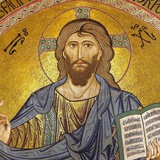
"Christianity, sprung from Jewish roots and comprehensible only as a growth on this soil, represents the counter-movement to any morality of breeding, of race, privilege; it is the anti-Aryan religion par excellence. Christianity; the revaluation of all Aryan values, the victory of chandala values, the gospel preached to the poor and base, the general revolt of all the downtrodden, the wretched, the failures, the less favored, against race; the undying chandala hatred disguised as a religion of love."
— Friedrich Nietzsche (Twilight of the Idols)
@ChristianityExposed
— Friedrich Nietzsche (Twilight of the Idols)
@ChristianityExposed
This media is not supported in your browser
VIEW IN TELEGRAM
The Spiritual Battle
Rabbi Jesus Christ (Matt 26:25), King of the Jews (Matt 27:11) and the son of King David (Matt 1:1), celebrated Jewish festivals (John 5:1)—including Hanukkah (John 10:22) and Passover (John 2:13)—regularly attended the synagogue (Luke 4:16), came to fulfill the Jewish Mosaic law (Matt 5:17), was sent only to the lost sheep of the house of Israel (Matt 15:24), and clearly stated that "salvation is from the Jews" (John 4:22).
His followers have replaced our Gods with the God of Israel, our natural law with Mosaic law, our history with Jewish mythology, our philosophy with Christian dogma, our ethnikos with katholikos, and yet, many "proud Europeans" see their destroyer as their savior. It is indeed a "spiritual battle", as Christians often say (Eph 6:12), except that it can only be won by returning to our native spirituality; the worship of our folk, our ancestors, and our Gods. Without Christian support, "globalism" (Noahidism) will never succeed.
@ChristianityExposed
Rabbi Jesus Christ (Matt 26:25), King of the Jews (Matt 27:11) and the son of King David (Matt 1:1), celebrated Jewish festivals (John 5:1)—including Hanukkah (John 10:22) and Passover (John 2:13)—regularly attended the synagogue (Luke 4:16), came to fulfill the Jewish Mosaic law (Matt 5:17), was sent only to the lost sheep of the house of Israel (Matt 15:24), and clearly stated that "salvation is from the Jews" (John 4:22).
His followers have replaced our Gods with the God of Israel, our natural law with Mosaic law, our history with Jewish mythology, our philosophy with Christian dogma, our ethnikos with katholikos, and yet, many "proud Europeans" see their destroyer as their savior. It is indeed a "spiritual battle", as Christians often say (Eph 6:12), except that it can only be won by returning to our native spirituality; the worship of our folk, our ancestors, and our Gods. Without Christian support, "globalism" (Noahidism) will never succeed.
@ChristianityExposed
"Witches were perceived as evil beings by early Christians in Europe, inspiring the iconic Halloween figure. Most witches were thought to be pagans doing the Devil's work. Many, however, were simply natural healers or so-called 'wise women' whose choice of profession was misunderstood. Witch hysteria really took hold in Europe during the mid-1400s. Between the years 1500 and 1660, up to 80,000 suspected witches were put to death in Europe."
-----
Full article here.
@ChristianityExposed
-----
Full article here.
@ChristianityExposed
Wisdom From The Jews?
Hellenized Jews, who later became Early Christians, began to claim that Pagan philosophy was originally Jewish!
Hermippus asserted that Pythagoras had received his wisdom from the Jews. Aristobulus developed this ludicrous idea, announcing that Plato and Aristotle had borrowed from Moses. Artapanus wrote a historical fantasy in which he equated Moses with Hermes and with Musaeus.
Although absurd, such ideas made it easier for Jews to retain their national dignity whilst at the same time adopting the philosophy of their Pagan neighbors and participating in cosmopolitan society.
-----
From: The Jesus Mysteries by Tim Freke.
@ChristianityExposed
Hellenized Jews, who later became Early Christians, began to claim that Pagan philosophy was originally Jewish!
Hermippus asserted that Pythagoras had received his wisdom from the Jews. Aristobulus developed this ludicrous idea, announcing that Plato and Aristotle had borrowed from Moses. Artapanus wrote a historical fantasy in which he equated Moses with Hermes and with Musaeus.
Although absurd, such ideas made it easier for Jews to retain their national dignity whilst at the same time adopting the philosophy of their Pagan neighbors and participating in cosmopolitan society.
-----
From: The Jesus Mysteries by Tim Freke.
@ChristianityExposed
Obvious Parallels
Despite the disparagement and dismissal, the reality remains that the many Egyptian myths and rituals, including numerous gods and goddesses, prayers and hymns, were not obscure and ignored but were known by millions of people over a long period of time.
These hallowed Egyptian motifs included the sacredness of the cross, the virgin mother who gave birth to the divine son, a godman who taught on Earth, led 12 followers, healed the sick, raised the dead, and who was murdered, buried and resurrected, etc.
Noting the obvious parallels between the Egyptian religion and Christianity, it would seem disingenuous to suggest that Christianity represents a "unique, divine revelation" to a small group of people in the tiny area of Judea.
-----
From: Christ in Egypt by Acharya S.
@ChristianityExposed
Despite the disparagement and dismissal, the reality remains that the many Egyptian myths and rituals, including numerous gods and goddesses, prayers and hymns, were not obscure and ignored but were known by millions of people over a long period of time.
These hallowed Egyptian motifs included the sacredness of the cross, the virgin mother who gave birth to the divine son, a godman who taught on Earth, led 12 followers, healed the sick, raised the dead, and who was murdered, buried and resurrected, etc.
Noting the obvious parallels between the Egyptian religion and Christianity, it would seem disingenuous to suggest that Christianity represents a "unique, divine revelation" to a small group of people in the tiny area of Judea.
-----
From: Christ in Egypt by Acharya S.
@ChristianityExposed
The Winter Solstice
Saturnalia, held in mid-December, is an ancient Roman pagan festival honoring the agricultural god Saturn. Because of when the holiday occurred—near the winter solstice—Saturnalia celebrations are the source of many of the traditions we now associate with Christmas, such as wreaths, candles, feasting and gift-giving, including the time of year Christmas is celebrated.
The Bible does not give a date for Jesus' birth, but by the fourth century, Christian churches settled on celebrating Christmas on December 25, which allowed them to incorporate the holiday with Saturnalia and other popular pagan midwinter traditions. That way, it became easier to convince Rome's pagan subjects to accept Christianity as the empire’s official religion.
-----
Full article here.
@ChristianityExposed
Saturnalia, held in mid-December, is an ancient Roman pagan festival honoring the agricultural god Saturn. Because of when the holiday occurred—near the winter solstice—Saturnalia celebrations are the source of many of the traditions we now associate with Christmas, such as wreaths, candles, feasting and gift-giving, including the time of year Christmas is celebrated.
The Bible does not give a date for Jesus' birth, but by the fourth century, Christian churches settled on celebrating Christmas on December 25, which allowed them to incorporate the holiday with Saturnalia and other popular pagan midwinter traditions. That way, it became easier to convince Rome's pagan subjects to accept Christianity as the empire’s official religion.
-----
Full article here.
@ChristianityExposed
A Lack Of Christian Influence?
You've probably heard it said before that, in ancient Greece, homosexuality was commonplace, even celebrated. People tend to argue that the freedom of Greek homosexuality came from a lack of Christian influence on Western thought. It's implied that, were we not suppressed by Christian thought, most or all men today would engage in such relationships.
But for every one tepid endorsement of homosexual pederasty that academics attempt to tease out of ancient literature, we have 10 sources that explicitly denounce it as degenerate. Of the hundreds of tales from Greek mythology in popular culture, not one mentions an explicitly gay couple. As low as 0.04 percent of all pottery found depict scenes that are in any way homosexual. Greek law never allowed for gay marriage and men who were found guilty of sodomy were sometimes publicly sodomized with a radish as punishment.
-----
Full video here.
@ChristianityExposed
You've probably heard it said before that, in ancient Greece, homosexuality was commonplace, even celebrated. People tend to argue that the freedom of Greek homosexuality came from a lack of Christian influence on Western thought. It's implied that, were we not suppressed by Christian thought, most or all men today would engage in such relationships.
But for every one tepid endorsement of homosexual pederasty that academics attempt to tease out of ancient literature, we have 10 sources that explicitly denounce it as degenerate. Of the hundreds of tales from Greek mythology in popular culture, not one mentions an explicitly gay couple. As low as 0.04 percent of all pottery found depict scenes that are in any way homosexual. Greek law never allowed for gay marriage and men who were found guilty of sodomy were sometimes publicly sodomized with a radish as punishment.
-----
Full video here.
@ChristianityExposed
The Most Profound Instinct Of Life
In the doctrine of the mysteries, pain is pronounced holy. The pangs of the woman giving birth consecrate all pain; and conversely all becoming and growing—all that guarantees a future—involves pain. That there may be the eternal joy of creating, that the will to life may eternally affirm itself, the agony of the woman giving birth must also be there eternally.
All this is meant by the word Dionysus: I know no higher symbolism than this Greek symbolism of the Dionysian festivals. Here the most profound instinct of life, that directed towards the future of life, the eternity of life, is experienced religiously—and the way to life, procreation, as the holy way. It was Christianity, with its heartfelt resentment against life, that first made something unclean of sexuality. It threw filth on the origin, on the essential fact, of our life.
-----
From: Twilight of the Idols by Friedrich Nietzsche.
@ChristianityExposed
In the doctrine of the mysteries, pain is pronounced holy. The pangs of the woman giving birth consecrate all pain; and conversely all becoming and growing—all that guarantees a future—involves pain. That there may be the eternal joy of creating, that the will to life may eternally affirm itself, the agony of the woman giving birth must also be there eternally.
All this is meant by the word Dionysus: I know no higher symbolism than this Greek symbolism of the Dionysian festivals. Here the most profound instinct of life, that directed towards the future of life, the eternity of life, is experienced religiously—and the way to life, procreation, as the holy way. It was Christianity, with its heartfelt resentment against life, that first made something unclean of sexuality. It threw filth on the origin, on the essential fact, of our life.
-----
From: Twilight of the Idols by Friedrich Nietzsche.
@ChristianityExposed
"That the temples of the idols in that nation ought not to be destroyed; but let the [Anglo-Saxon] idols that are in them be destroyed; let water be consecrated and sprinkled in the said temples, let altars be erected, and relics placed there. For if those temples are well built, it is requisite that they be converted from the worship of devils to the service of the true God [of Israel]; that the nation, seeing that their temples are not destroyed, may remove error from their hearts, and knowing and adoring the true God, may the more freely resort to the places to which they have been accustomed."
— Pope Gregory I in a letter to Mellitus
@ChristianityExposed
— Pope Gregory I in a letter to Mellitus
@ChristianityExposed
"The Jewish religion is not 'extrinsic' to us, but in a certain way is 'intrinsic' to our own religion. With Judaism, therefore, we have a relationship which we do not have with any other religion. You are our dearly beloved brothers, and, in a certain way, it could be said that you are our elder brothers."
— Pope John Paul II in his address to the Roman Synagogue on April 13, 1986 [Source]
@ChristianityExposed
— Pope John Paul II in his address to the Roman Synagogue on April 13, 1986 [Source]
@ChristianityExposed
The Four Cardinal Virtues
In some Christian traditions, there are four cardinal virtues: prudence, temperance, fortitude, and justice. These were derived initially from Plato's scheme and adapted by Saint Ambrose, Augustine of Hippo, and Thomas Aquinas. Plato identified them with the classes of the city described in the Republic, and with the faculties of man.
Temperance was associated with the producing classes, the farmers and craftsmen, and with the animal appetites; fortitude with the warrior class and with the spirited element in man; prudence with the rulers and with reason. Justice stands outside the class system and divisions of man, and rules the proper relationship among the three of them.
----
Full article here.
@ChristianityExposed
In some Christian traditions, there are four cardinal virtues: prudence, temperance, fortitude, and justice. These were derived initially from Plato's scheme and adapted by Saint Ambrose, Augustine of Hippo, and Thomas Aquinas. Plato identified them with the classes of the city described in the Republic, and with the faculties of man.
Temperance was associated with the producing classes, the farmers and craftsmen, and with the animal appetites; fortitude with the warrior class and with the spirited element in man; prudence with the rulers and with reason. Justice stands outside the class system and divisions of man, and rules the proper relationship among the three of them.
----
Full article here.
@ChristianityExposed
The Adopted Goddess
Imbolc is a pagan holiday celebrated from February 1 through sundown February 2. Based on a Celtic tradition, Imbolc was meant to mark the halfway point between the winter solstice and the spring equinox in Neolithic Ireland and Scotland.
Imbolc celebrations took the form of a festival in honor of the pagan goddess Brigid. Over the centuries, Brigid was adopted into Christianity as St. Brigid. Like the goddess, St. Brigid is associated with milk and fire.
The celebration of St. Brigid's Day on February 1 was put in place by the church to replace Imbolc. On her feast day, an effigy of St. Brigid of Kildare is traditionally washed in the ocean and surrounded by candles to dry, and stalks of wheat are transformed into cross talismans known as Brigid's crosses.
-----
Full article here.
@ChristianityExposed
Imbolc is a pagan holiday celebrated from February 1 through sundown February 2. Based on a Celtic tradition, Imbolc was meant to mark the halfway point between the winter solstice and the spring equinox in Neolithic Ireland and Scotland.
Imbolc celebrations took the form of a festival in honor of the pagan goddess Brigid. Over the centuries, Brigid was adopted into Christianity as St. Brigid. Like the goddess, St. Brigid is associated with milk and fire.
The celebration of St. Brigid's Day on February 1 was put in place by the church to replace Imbolc. On her feast day, an effigy of St. Brigid of Kildare is traditionally washed in the ocean and surrounded by candles to dry, and stalks of wheat are transformed into cross talismans known as Brigid's crosses.
-----
Full article here.
@ChristianityExposed
"Christianity is and will always be Judaism! All your attempts to deny the Jewish origin and substance of Christianity will be in vain. We will not rest until the Jewish element and its teachings have been pushed out of the religious life of our folk."
— Rudolf Hammer (Christentum doch Judentum, 1939)
@ChristianityExposed
— Rudolf Hammer (Christentum doch Judentum, 1939)
@ChristianityExposed
This media is not supported in your browser
VIEW IN TELEGRAM
"On that day the Lord made a covenant with Abram and said, 'To your descendants I give this land, from the Wadi of Egypt to the great river, the Euphrates.'" — Genesis 15:18
If you believe in the Bible, you believe in the Old Testament. If you believe in the Old Testament, you are a Zionist.
@ChristianityExposed
If you believe in the Bible, you believe in the Old Testament. If you believe in the Old Testament, you are a Zionist.
@ChristianityExposed
This media is not supported in your browser
VIEW IN TELEGRAM
The Word Of God
As a Catholic, E. Michael Jones believes the Torah to be the word of God and therefore has no choice but to believe that the Jews were chosen by his God, as it is stated in Deuteronomy 14:2.
He then claims that "if the Jews followed the Torah, there would be no problem"—likely implying that they are following the Talmud instead, while the Talmud is simply a Rabbinic interpretation of the Torah and hardly more vile to begin with.
Christians often argue this to try to whitewash their God's word, despite many Torah verses—such as Deuteronomy 15:6 and Genesis 27:29—clearly justifying Jewish behavior.
@ChristianityExposed
As a Catholic, E. Michael Jones believes the Torah to be the word of God and therefore has no choice but to believe that the Jews were chosen by his God, as it is stated in Deuteronomy 14:2.
He then claims that "if the Jews followed the Torah, there would be no problem"—likely implying that they are following the Talmud instead, while the Talmud is simply a Rabbinic interpretation of the Torah and hardly more vile to begin with.
Christians often argue this to try to whitewash their God's word, despite many Torah verses—such as Deuteronomy 15:6 and Genesis 27:29—clearly justifying Jewish behavior.
@ChristianityExposed
"It is decisive for the lot of a people and of humanity that culture should begin in the right place. Not in the "soul"—as was the fateful superstition of the priests and half-priests—the right place is the body, the gesture, the diet, physiology; the rest follows from that. Therefore, the Greeks remain the first cultural event in history: they knew, they did, what was needed; and Christianity—which despised the body—has been the greatest misfortune of humanity so far."
— Friedrich Nietzsche (Twilight of the Idols)
@ChristianityExposed
— Friedrich Nietzsche (Twilight of the Idols)
@ChristianityExposed
"Paul was the real founder of Christianity. He went about like Trotsky to find adherents to his teachings among all peoples. He was the role model for modern Jewish radicals. And so one can and must say today, no matter how difficult and bitter these words may be for some: Real Christianity is nothing but tamed Bolshevism."
— Rudolf Hammer (Christentum doch Judentum, 1939)
@ChristianityExposed
— Rudolf Hammer (Christentum doch Judentum, 1939)
@ChristianityExposed
Venerating A Rabbi As A Saint
Gamaliel the Elder, or Rabban Gamaliel I, was a leading authority in the Sanhedrin in the early first century CE. He was the grandson of the great Jewish teacher Hillel the Elder.
Paul the Apostle was brought up in Jerusalem "at the feet of Gamaliel, and taught according to the perfect manner of the law of the fathers" (Acts 22:3).
No details are given about which teachings Paul adopted from Gamaliel, as it is assumed that as a Pharisee, Paul was already recognized in the community at that time as a devout Jew.
The Eastern Orthodox Church venerates Gamaliel as a saint, and he is commemorated on August 2.
-----
Full article here.
@ChristianityExposed
Gamaliel the Elder, or Rabban Gamaliel I, was a leading authority in the Sanhedrin in the early first century CE. He was the grandson of the great Jewish teacher Hillel the Elder.
Paul the Apostle was brought up in Jerusalem "at the feet of Gamaliel, and taught according to the perfect manner of the law of the fathers" (Acts 22:3).
No details are given about which teachings Paul adopted from Gamaliel, as it is assumed that as a Pharisee, Paul was already recognized in the community at that time as a devout Jew.
The Eastern Orthodox Church venerates Gamaliel as a saint, and he is commemorated on August 2.
-----
Full article here.
@ChristianityExposed
No One Personally Knew Jesus
It’s important to note that we have no authentic writings from the leaders of the Jerusalem Church, or from anyone who claimed to be a personal disciple of Jesus.
Everything we know about the three "Jerusalem Pillars," James, Peter/Cephas and John, comes from Paul—and Paul say nothing about Peter, John or anyone else traveling around with Jesus.
Apart from one suspicious and highly uncharacteristic partial line, he says nothing that would make us think he believed James had any special relationship to Jesus.
The implication here can’t be emphasized enough: there is nothing in the New Testament that was actually written by anyone who could claim to have personally known Jesus.
-----
From: Nailed by David Fitzgerald.
@ChristianityExposed
It’s important to note that we have no authentic writings from the leaders of the Jerusalem Church, or from anyone who claimed to be a personal disciple of Jesus.
Everything we know about the three "Jerusalem Pillars," James, Peter/Cephas and John, comes from Paul—and Paul say nothing about Peter, John or anyone else traveling around with Jesus.
Apart from one suspicious and highly uncharacteristic partial line, he says nothing that would make us think he believed James had any special relationship to Jesus.
The implication here can’t be emphasized enough: there is nothing in the New Testament that was actually written by anyone who could claim to have personally known Jesus.
-----
From: Nailed by David Fitzgerald.
@ChristianityExposed
Cannibalistic Sacraments
If there was a Jesus cult in Jerusalem after 30 CE, it completely disappeared forty years later when Titus conquered the city and outlawed many local customs, including human sacrifice. Tacitus described the siege of Jerusalem, but his writing is abruptly cut off at the moment when Roman forces entered the city as if the final chapters were deliberately destroyed—so no one knows what the Romans found there.
However, Romans did express disapproval of the Jews' or Christians' cannibalistic sacraments. Porphyry called it "absurd beyond all absurdity, and bestial beyond every sort of bestiality, that a man should taste human flesh and drink the blood of men of his own genus and species, and by doing should have eternal life."
-----
From Varieties of Jesus Mythicism by John W. Loftus.
@ChristianityExposed
If there was a Jesus cult in Jerusalem after 30 CE, it completely disappeared forty years later when Titus conquered the city and outlawed many local customs, including human sacrifice. Tacitus described the siege of Jerusalem, but his writing is abruptly cut off at the moment when Roman forces entered the city as if the final chapters were deliberately destroyed—so no one knows what the Romans found there.
However, Romans did express disapproval of the Jews' or Christians' cannibalistic sacraments. Porphyry called it "absurd beyond all absurdity, and bestial beyond every sort of bestiality, that a man should taste human flesh and drink the blood of men of his own genus and species, and by doing should have eternal life."
-----
From Varieties of Jesus Mythicism by John W. Loftus.
@ChristianityExposed
"A patriotic Jew named Paul or Saul conceived the idea of humbling the Roman power by destroying the morale of its soldiery with the doctrines of love and non-resistance preached by the little sect of Jewish Christians."
"Our tribal customs have become the core of your moral code. Our legends and our folk-tales are the sacred lore which you croon to your infants. Our national history has become an indispensable part of the learning of your pastors and priests and scholars. Our Kings, our statesmen, our prophets, our warriors are your heroes. Our ancient little country is your Holy Land. Our national literature is your Holy Bible."
"We have pulled down your idols, cast aside your racial inheritance, and substituted for them our God and our traditions. No conquest in history can even remotely compare with this clean sweep of our conquest over you."
-----
From: A Real Case Against The Jews by Rothschild biographer Marcus Eli Ravage.
@ChristianityExposed
"Our tribal customs have become the core of your moral code. Our legends and our folk-tales are the sacred lore which you croon to your infants. Our national history has become an indispensable part of the learning of your pastors and priests and scholars. Our Kings, our statesmen, our prophets, our warriors are your heroes. Our ancient little country is your Holy Land. Our national literature is your Holy Bible."
"We have pulled down your idols, cast aside your racial inheritance, and substituted for them our God and our traditions. No conquest in history can even remotely compare with this clean sweep of our conquest over you."
-----
From: A Real Case Against The Jews by Rothschild biographer Marcus Eli Ravage.
@ChristianityExposed