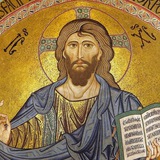
"Love your enemies, do good to those who hate you, bless those who curse you, pray for those who mistreat you." — Luke 6:27-28
"If anyone comes to me and does not hate father and mother, wife and children, brothers and sisters—yes, even their own life—such a person cannot be my disciple." — Luke 14:26
"Do not resist an evil person. If anyone slaps you on the right cheek, turn to them the other cheek also." — Matthew 5:39
@ChristianityExposed
"If anyone comes to me and does not hate father and mother, wife and children, brothers and sisters—yes, even their own life—such a person cannot be my disciple." — Luke 14:26
"Do not resist an evil person. If anyone slaps you on the right cheek, turn to them the other cheek also." — Matthew 5:39
@ChristianityExposed
Smuggling In The Christian Faith
According to one of the best-known Viking sagas, Haakon the Good, the 10th Century King of Norway, deliberately used the Yule celebrations to smuggle in the Christian faith. Having been raised as a Christian in England, Haakon practiced his religion in secret because 'the land was altogether heathen and much idolatry prevailed.'
However, he 'established in the laws that the Yule celebration was to take place at the same time as is the custom with the Christians.' In other words, turning it from a solstice festival into a celebration of Jesus. The saga goes on to to say that; 'Before that, Yule was celebrated on midwinter night,' and that the king 'coaxed those who were dearest to him into becoming Christians.'
-----
Full article here.
@ChristianityExposed
According to one of the best-known Viking sagas, Haakon the Good, the 10th Century King of Norway, deliberately used the Yule celebrations to smuggle in the Christian faith. Having been raised as a Christian in England, Haakon practiced his religion in secret because 'the land was altogether heathen and much idolatry prevailed.'
However, he 'established in the laws that the Yule celebration was to take place at the same time as is the custom with the Christians.' In other words, turning it from a solstice festival into a celebration of Jesus. The saga goes on to to say that; 'Before that, Yule was celebrated on midwinter night,' and that the king 'coaxed those who were dearest to him into becoming Christians.'
-----
Full article here.
@ChristianityExposed
"Do not suppose that I have come to bring peace to the earth. I did not come to bring peace, but a sword. For I have come to turn a man against his father, a daughter against her mother, a daughter-in-law against her mother-in-law—a man’s enemies will be the members of his own household. Anyone who loves their father or mother more than me is not worthy of me; anyone who loves their son or daughter more than me is not worthy of me." — Matthew 10:34-37
@ChristianityExposed
@ChristianityExposed
Jesus' Unoriginal Teachings
Celsus is right to be critical of Christian claims that Jesus' teachings are original and distinctive.
Jesus teaches, 'Lay up your treasure in heaven where no thief can get near it, no moth destroy it.' Sextus likewise exhorts, 'Possess those things that no one can take away from you.'
Jesus is the king of the world because he is wise, not because he is powerful. A popular Stoic maxim was 'The only true king is the wise man'.
Jesus teaches, 'Keep awake, for you do not know when the master of the house will come. If he comes suddenly, do not let him find you asleep.' Epictetus writes, 'Go not far from the ship at any time, lest the master should call and thou not be ready.'
Jesus teaches, 'I assure you, anyone who doesn't receive the Kingdom of God like a little child, will never get into it.' Heraclitus writes, 'The Kingdom belongs to the child.'
Jesus teaches, 'Why do you call me good? No one is good, only God.' Four centuries previously, Plato had defined God as 'the Good', a quality which, by definition, only God could fully manifest.
In similar fashion to Jesus, Pythagoras had refused to be called wise, explaining that no one is wise except God; Pythagoras preferred to call himself a 'lover of wisdom' or 'philosopher'—a term he was the first person to use.
-----
From: The Jesus Mysteries by Tim Freke.
@ChristianityExposed
Celsus is right to be critical of Christian claims that Jesus' teachings are original and distinctive.
Jesus teaches, 'Lay up your treasure in heaven where no thief can get near it, no moth destroy it.' Sextus likewise exhorts, 'Possess those things that no one can take away from you.'
Jesus is the king of the world because he is wise, not because he is powerful. A popular Stoic maxim was 'The only true king is the wise man'.
Jesus teaches, 'Keep awake, for you do not know when the master of the house will come. If he comes suddenly, do not let him find you asleep.' Epictetus writes, 'Go not far from the ship at any time, lest the master should call and thou not be ready.'
Jesus teaches, 'I assure you, anyone who doesn't receive the Kingdom of God like a little child, will never get into it.' Heraclitus writes, 'The Kingdom belongs to the child.'
Jesus teaches, 'Why do you call me good? No one is good, only God.' Four centuries previously, Plato had defined God as 'the Good', a quality which, by definition, only God could fully manifest.
In similar fashion to Jesus, Pythagoras had refused to be called wise, explaining that no one is wise except God; Pythagoras preferred to call himself a 'lover of wisdom' or 'philosopher'—a term he was the first person to use.
-----
From: The Jesus Mysteries by Tim Freke.
@ChristianityExposed
Wikipedia
Celsus
2nd-century Greek philosopher
Plots Of The Devil
Pre-Christian sources and myths were subject to Christian reinterpretation during their transmission or placed in Christian settings. A number of early Christian writers noted similarities between elements of Christianity and some pagan traditions, such as the cults of Dionysus or Mithras. However, in order to defend Christianity, they insisted that these are plots of the devil to corrupt Christianity.
When translating pagan notions into a Christian worldview, pagan deities themselves were reinterpreted as demons. An example is the Finnish name of the Devil, Perkele, likely derived from the Proto-Indo-European god of thunder Perkwunos.
-----
Full article here.
@ChristianityExposed
Pre-Christian sources and myths were subject to Christian reinterpretation during their transmission or placed in Christian settings. A number of early Christian writers noted similarities between elements of Christianity and some pagan traditions, such as the cults of Dionysus or Mithras. However, in order to defend Christianity, they insisted that these are plots of the devil to corrupt Christianity.
When translating pagan notions into a Christian worldview, pagan deities themselves were reinterpreted as demons. An example is the Finnish name of the Devil, Perkele, likely derived from the Proto-Indo-European god of thunder Perkwunos.
-----
Full article here.
@ChristianityExposed
"Jewish Christians were the followers of a Jewish religious sect that emerged in Judea during the late Second Temple period. The Nazarene Jews integrated the belief of Jesus as the prophesied Messiah and his teachings into the Jewish faith, including the observance of the Jewish law. Jewish Christianity is the foundation of Early Christianity, which later developed into Christianity."
-----
Full article here.
@ChristianityExposed
-----
Full article here.
@ChristianityExposed
No Proof Of Any Kind
Discussing all of the non-Christian evidence, historian Dr. H.E. Barnes remarks that "next to nothing exists" and concludes: "In all, this evidence mounts up to twenty-four lines, not a single one of which is of admitted authenticity."
Of these "references," Edouard Dujardin says: "But even if they are authentic, and were derived from earlier sources, they would not carry us back earlier than the period in which the gospel legend took form, and so could attest only the legend of Jesus, and not his historicity."
In any case, these scarce and brief "references" to a man who supposedly shook up the world can hardly be held up as proof of his existence, and it is absurd that the purported historicity of the entire Christian religion is founded upon them. As it is said, extraordinary claims require extraordinary proof; yet, no proof of any kind for the historicity of Jesus has ever existed or is forthcoming.
-----
From: The Origins of Christianity by D.M. Murdock.
@ChristianityExposed
Discussing all of the non-Christian evidence, historian Dr. H.E. Barnes remarks that "next to nothing exists" and concludes: "In all, this evidence mounts up to twenty-four lines, not a single one of which is of admitted authenticity."
Of these "references," Edouard Dujardin says: "But even if they are authentic, and were derived from earlier sources, they would not carry us back earlier than the period in which the gospel legend took form, and so could attest only the legend of Jesus, and not his historicity."
In any case, these scarce and brief "references" to a man who supposedly shook up the world can hardly be held up as proof of his existence, and it is absurd that the purported historicity of the entire Christian religion is founded upon them. As it is said, extraordinary claims require extraordinary proof; yet, no proof of any kind for the historicity of Jesus has ever existed or is forthcoming.
-----
From: The Origins of Christianity by D.M. Murdock.
@ChristianityExposed
Make The Gentiles Obedient
"Esaias [11:1] saith, 'There shall be a root of Jesse, and he that shall rise to reign over the Gentiles; in him shall the Gentiles trust.' That I should be the minister of Jesus Christ to the Gentiles, ministering the gospel of God. To make the Gentiles obedient, by word and deed; so that from Jerusalem, and round about unto Illyricum, I have fully preached the gospel of Christ." — Romans 15:12,16,18,19
This can hardly be interpreted any differently than the Jewish scriptures predicting the coming of a Jewish Messiah who shall gain the trust of the non-Jews, reign over them, and make them obedient to the God of Israel; who is nothing but a manifestation of the Jewish will. And Paul—the Jew [Acts 22:3] who wrote the Epistle to the Romans—fulfilled the prophecy through preaching the gospel of Christ.
The image shows one of many Christian depictions of the Tree of Jesse with Jesus at the apex, proving their belief in the prophecy.
@ChristianityExposed
"Esaias [11:1] saith, 'There shall be a root of Jesse, and he that shall rise to reign over the Gentiles; in him shall the Gentiles trust.' That I should be the minister of Jesus Christ to the Gentiles, ministering the gospel of God. To make the Gentiles obedient, by word and deed; so that from Jerusalem, and round about unto Illyricum, I have fully preached the gospel of Christ." — Romans 15:12,16,18,19
This can hardly be interpreted any differently than the Jewish scriptures predicting the coming of a Jewish Messiah who shall gain the trust of the non-Jews, reign over them, and make them obedient to the God of Israel; who is nothing but a manifestation of the Jewish will. And Paul—the Jew [Acts 22:3] who wrote the Epistle to the Romans—fulfilled the prophecy through preaching the gospel of Christ.
The image shows one of many Christian depictions of the Tree of Jesse with Jesus at the apex, proving their belief in the prophecy.
@ChristianityExposed
The Morning Star
Although much is made of Lucifer, the "fallen angel," his name only appears translated as such in one verse in the King James bible [Isa 14:12], where he is called "son of the morning."
Despite all the political intrigue, Lucifer simply means "Light Bearer," and he was in earliest times a solar deity, which is why he is called "Day Star, son of morning/dawn." The sun god Lucifer is "cast out of heaven" by the other angels, or stars, as night descends. This god/angel Lucifer is pre-Hebraic, found in Canaan, Egypt and Mesopotamia, and was not originally considered evil.
In Dutch, a Lucifer is a match, a purely utilitarian object that brings light and fire. Like the many gods of other cultures, Lucifer was vilified by the Christians so they could raise their own god above him. Ironically, since both are the day or morning star [Rev 22:16], Jesus and Lucifer are in fact one and the same.
-----
From: The Christ Conspiracy by D.M. Murdock.
@ChristianityExposed
Although much is made of Lucifer, the "fallen angel," his name only appears translated as such in one verse in the King James bible [Isa 14:12], where he is called "son of the morning."
Despite all the political intrigue, Lucifer simply means "Light Bearer," and he was in earliest times a solar deity, which is why he is called "Day Star, son of morning/dawn." The sun god Lucifer is "cast out of heaven" by the other angels, or stars, as night descends. This god/angel Lucifer is pre-Hebraic, found in Canaan, Egypt and Mesopotamia, and was not originally considered evil.
In Dutch, a Lucifer is a match, a purely utilitarian object that brings light and fire. Like the many gods of other cultures, Lucifer was vilified by the Christians so they could raise their own god above him. Ironically, since both are the day or morning star [Rev 22:16], Jesus and Lucifer are in fact one and the same.
-----
From: The Christ Conspiracy by D.M. Murdock.
@ChristianityExposed
"The spiritualization of sensuality is called love; it represents a great triumph over Christianity. Another triumph is our spiritualization of hostility. It consists in a profound appreciation of the value of having enemies; in short, it means acting and thinking in the opposite way from that which has been the rule. In the political realm too, hostility has now become more spiritual, much more sensible, much more thoughtful, much more considerate. A new creation in particular—the new Reich, for example—needs enemies more than friends; in opposition alone does it feel itself necessary, in opposition alone does it become necessary."
— Friedrich Nietzsche (Twilight of the Idols)
@ChristianityExposed
— Friedrich Nietzsche (Twilight of the Idols)
@ChristianityExposed
"Christian communists typically regard biblical texts in Acts 2:44-45 and Acts 4:32-35 as evidence that the first Christians lived in a communist society. This was likely based on an understanding of Luke 12:33 (where Christ commands his disciples to sell what they have and give alms) and Luke 14:33 (where he says that no one can be his disciple who has not forsaken all his possessions). This conclusion is bolstered by the fact that Acts was also written by Luke [ca. 80-90 CE]."
-----
Full article here.
@ChristianityExposed
-----
Full article here.
@ChristianityExposed
The Darkest Days Of Winter
The middle of winter has long been a time of celebration around the world. Centuries before the arrival of the man called Jesus, early Europeans celebrated light and birth in the darkest days of winter.
Many peoples rejoiced during the winter solstice, when the worst of the winter was behind them and they could look forward to longer days and extended hours of sunlight.
In Scandinavia, the Norse celebrated Yule from December 21, the winter solstice, through January. In recognition of the return of the sun, fathers and sons would bring home large logs, which they would set on fire.
The people would feast until the log burned out, which could take as many as 12 days. The Norse believed that each spark from the fire represented a new pig or calf that would be born during the coming year.
-----
Full article here.
@ChristianityExposed
The middle of winter has long been a time of celebration around the world. Centuries before the arrival of the man called Jesus, early Europeans celebrated light and birth in the darkest days of winter.
Many peoples rejoiced during the winter solstice, when the worst of the winter was behind them and they could look forward to longer days and extended hours of sunlight.
In Scandinavia, the Norse celebrated Yule from December 21, the winter solstice, through January. In recognition of the return of the sun, fathers and sons would bring home large logs, which they would set on fire.
The people would feast until the log burned out, which could take as many as 12 days. The Norse believed that each spark from the fire represented a new pig or calf that would be born during the coming year.
-----
Full article here.
@ChristianityExposed
Paul Never Mentions A Historical Jesus
Why does Paul never mention a historical Jesus in his letters? Although scholars have now dismissed almost half of Paul's letters as forgeries, his authentic letters are the earliest Christian documents we possess [ca. 48-62 CE] and predate the gospels by many decades [ca. 66-110 CE]. They should be full of stories about the life of Jesus. But they aren't.
Paul never quotes Jesus and never mentions any details about his life. He never refers to Jesus' miraculous birth. He doesn't tell any anecdotes about Mary and Joseph. There is no mention of any miracles. No water into wine, no walking on water, no miraculous meals or extra-ordinary catches of fish.
There is no Sermon on the Mount or Lord's Prayer. There is no agony in Gethsemane, no trial, no flogging, no crown of thorns, no thieves crucified with Jesus, no weeping women, nothing about the place or time of execution and no Judas or Pilate.
-----
From: The Laughing Jesus by Tim Freke.
@ChristianityExposed
Why does Paul never mention a historical Jesus in his letters? Although scholars have now dismissed almost half of Paul's letters as forgeries, his authentic letters are the earliest Christian documents we possess [ca. 48-62 CE] and predate the gospels by many decades [ca. 66-110 CE]. They should be full of stories about the life of Jesus. But they aren't.
Paul never quotes Jesus and never mentions any details about his life. He never refers to Jesus' miraculous birth. He doesn't tell any anecdotes about Mary and Joseph. There is no mention of any miracles. No water into wine, no walking on water, no miraculous meals or extra-ordinary catches of fish.
There is no Sermon on the Mount or Lord's Prayer. There is no agony in Gethsemane, no trial, no flogging, no crown of thorns, no thieves crucified with Jesus, no weeping women, nothing about the place or time of execution and no Judas or Pilate.
-----
From: The Laughing Jesus by Tim Freke.
@ChristianityExposed
"Bible plagiarism begins right in its first book, Genesis, with the story of creation, which borrowed heavily from the Sumerians. In their creation myth, preserved as a seven-tablet epos known as 'Enūma Eliš,' we are told that man was created from dirt and brought to life through a divine breath of air breathed into his nostrils. This legend even contains the Biblically-familiar phrase 'In the beginning.' And rest assured that the argument cannot be made that the Sumerians were copying from the book of Genesis, because the Sumerian culture, along with its creation myth, existed long before any part of the Bible was ever written."
-----
From: What Is Wrong With the Bible? by Charles Giuliani.
@ChristianityExposed
-----
From: What Is Wrong With the Bible? by Charles Giuliani.
@ChristianityExposed
"Christianity, sprung from Jewish roots and comprehensible only as a growth on this soil, represents the counter-movement to any morality of breeding, of race, privilege; it is the anti-Aryan religion par excellence. Christianity; the revaluation of all Aryan values, the victory of chandala values, the gospel preached to the poor and base, the general revolt of all the downtrodden, the wretched, the failures, the less favored, against race; the undying chandala hatred disguised as a religion of love."
— Friedrich Nietzsche (Twilight of the Idols)
@ChristianityExposed
— Friedrich Nietzsche (Twilight of the Idols)
@ChristianityExposed
This media is not supported in your browser
VIEW IN TELEGRAM
The Spiritual Battle
Rabbi Jesus Christ (Matt 26:25), King of the Jews (Matt 27:11) and the son of King David (Matt 1:1), celebrated Jewish festivals (John 5:1)—including Hanukkah (John 10:22) and Passover (John 2:13)—regularly attended the synagogue (Luke 4:16), came to fulfill the Jewish Mosaic law (Matt 5:17), was sent only to the lost sheep of the house of Israel (Matt 15:24), and clearly stated that "salvation is from the Jews" (John 4:22).
His followers have replaced our Gods with the God of Israel, our natural law with Mosaic law, our history with Jewish mythology, our philosophy with Christian dogma, our ethnikos with katholikos, and yet, many "proud Europeans" see their destroyer as their savior. It is indeed a "spiritual battle", as Christians often say (Eph 6:12), except that it can only be won by returning to our native spirituality; the worship of our folk, our ancestors, and our Gods. Without Christian support, "globalism" (Noahidism) will never succeed.
@ChristianityExposed
Rabbi Jesus Christ (Matt 26:25), King of the Jews (Matt 27:11) and the son of King David (Matt 1:1), celebrated Jewish festivals (John 5:1)—including Hanukkah (John 10:22) and Passover (John 2:13)—regularly attended the synagogue (Luke 4:16), came to fulfill the Jewish Mosaic law (Matt 5:17), was sent only to the lost sheep of the house of Israel (Matt 15:24), and clearly stated that "salvation is from the Jews" (John 4:22).
His followers have replaced our Gods with the God of Israel, our natural law with Mosaic law, our history with Jewish mythology, our philosophy with Christian dogma, our ethnikos with katholikos, and yet, many "proud Europeans" see their destroyer as their savior. It is indeed a "spiritual battle", as Christians often say (Eph 6:12), except that it can only be won by returning to our native spirituality; the worship of our folk, our ancestors, and our Gods. Without Christian support, "globalism" (Noahidism) will never succeed.
@ChristianityExposed
"Witches were perceived as evil beings by early Christians in Europe, inspiring the iconic Halloween figure. Most witches were thought to be pagans doing the Devil's work. Many, however, were simply natural healers or so-called 'wise women' whose choice of profession was misunderstood. Witch hysteria really took hold in Europe during the mid-1400s. Between the years 1500 and 1660, up to 80,000 suspected witches were put to death in Europe."
-----
Full article here.
@ChristianityExposed
-----
Full article here.
@ChristianityExposed
Wisdom From The Jews?
Hellenized Jews, who later became Early Christians, began to claim that Pagan philosophy was originally Jewish!
Hermippus asserted that Pythagoras had received his wisdom from the Jews. Aristobulus developed this ludicrous idea, announcing that Plato and Aristotle had borrowed from Moses. Artapanus wrote a historical fantasy in which he equated Moses with Hermes and with Musaeus.
Although absurd, such ideas made it easier for Jews to retain their national dignity whilst at the same time adopting the philosophy of their Pagan neighbors and participating in cosmopolitan society.
-----
From: The Jesus Mysteries by Tim Freke.
@ChristianityExposed
Hellenized Jews, who later became Early Christians, began to claim that Pagan philosophy was originally Jewish!
Hermippus asserted that Pythagoras had received his wisdom from the Jews. Aristobulus developed this ludicrous idea, announcing that Plato and Aristotle had borrowed from Moses. Artapanus wrote a historical fantasy in which he equated Moses with Hermes and with Musaeus.
Although absurd, such ideas made it easier for Jews to retain their national dignity whilst at the same time adopting the philosophy of their Pagan neighbors and participating in cosmopolitan society.
-----
From: The Jesus Mysteries by Tim Freke.
@ChristianityExposed
Obvious Parallels
Despite the disparagement and dismissal, the reality remains that the many Egyptian myths and rituals, including numerous gods and goddesses, prayers and hymns, were not obscure and ignored but were known by millions of people over a long period of time.
These hallowed Egyptian motifs included the sacredness of the cross, the virgin mother who gave birth to the divine son, a godman who taught on Earth, led 12 followers, healed the sick, raised the dead, and who was murdered, buried and resurrected, etc.
Noting the obvious parallels between the Egyptian religion and Christianity, it would seem disingenuous to suggest that Christianity represents a "unique, divine revelation" to a small group of people in the tiny area of Judea.
-----
From: Christ in Egypt by Acharya S.
@ChristianityExposed
Despite the disparagement and dismissal, the reality remains that the many Egyptian myths and rituals, including numerous gods and goddesses, prayers and hymns, were not obscure and ignored but were known by millions of people over a long period of time.
These hallowed Egyptian motifs included the sacredness of the cross, the virgin mother who gave birth to the divine son, a godman who taught on Earth, led 12 followers, healed the sick, raised the dead, and who was murdered, buried and resurrected, etc.
Noting the obvious parallels between the Egyptian religion and Christianity, it would seem disingenuous to suggest that Christianity represents a "unique, divine revelation" to a small group of people in the tiny area of Judea.
-----
From: Christ in Egypt by Acharya S.
@ChristianityExposed
The Winter Solstice
Saturnalia, held in mid-December, is an ancient Roman pagan festival honoring the agricultural god Saturn. Because of when the holiday occurred—near the winter solstice—Saturnalia celebrations are the source of many of the traditions we now associate with Christmas, such as wreaths, candles, feasting and gift-giving, including the time of year Christmas is celebrated.
The Bible does not give a date for Jesus' birth, but by the fourth century, Christian churches settled on celebrating Christmas on December 25, which allowed them to incorporate the holiday with Saturnalia and other popular pagan midwinter traditions. That way, it became easier to convince Rome's pagan subjects to accept Christianity as the empire’s official religion.
-----
Full article here.
@ChristianityExposed
Saturnalia, held in mid-December, is an ancient Roman pagan festival honoring the agricultural god Saturn. Because of when the holiday occurred—near the winter solstice—Saturnalia celebrations are the source of many of the traditions we now associate with Christmas, such as wreaths, candles, feasting and gift-giving, including the time of year Christmas is celebrated.
The Bible does not give a date for Jesus' birth, but by the fourth century, Christian churches settled on celebrating Christmas on December 25, which allowed them to incorporate the holiday with Saturnalia and other popular pagan midwinter traditions. That way, it became easier to convince Rome's pagan subjects to accept Christianity as the empire’s official religion.
-----
Full article here.
@ChristianityExposed
A Lack Of Christian Influence?
You've probably heard it said before that, in ancient Greece, homosexuality was commonplace, even celebrated. People tend to argue that the freedom of Greek homosexuality came from a lack of Christian influence on Western thought. It's implied that, were we not suppressed by Christian thought, most or all men today would engage in such relationships.
But for every one tepid endorsement of homosexual pederasty that academics attempt to tease out of ancient literature, we have 10 sources that explicitly denounce it as degenerate. Of the hundreds of tales from Greek mythology in popular culture, not one mentions an explicitly gay couple. As low as 0.04 percent of all pottery found depict scenes that are in any way homosexual. Greek law never allowed for gay marriage and men who were found guilty of sodomy were sometimes publicly sodomized with a radish as punishment.
-----
Full video here.
@ChristianityExposed
You've probably heard it said before that, in ancient Greece, homosexuality was commonplace, even celebrated. People tend to argue that the freedom of Greek homosexuality came from a lack of Christian influence on Western thought. It's implied that, were we not suppressed by Christian thought, most or all men today would engage in such relationships.
But for every one tepid endorsement of homosexual pederasty that academics attempt to tease out of ancient literature, we have 10 sources that explicitly denounce it as degenerate. Of the hundreds of tales from Greek mythology in popular culture, not one mentions an explicitly gay couple. As low as 0.04 percent of all pottery found depict scenes that are in any way homosexual. Greek law never allowed for gay marriage and men who were found guilty of sodomy were sometimes publicly sodomized with a radish as punishment.
-----
Full video here.
@ChristianityExposed