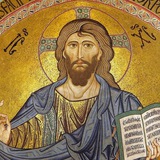
A Quasi-Historical Narrative
The earliest Christian texts we possess are the genuine letters of Paul written in the first half of the first century. Paul quotes older hymns to Christ, which suggests that he is developing a Joshua/Jesus cult that may have already been in existence, perhaps for centuries. Unlike the New Testament gospels, written some 50-100 years later.
Paul's Jesus is a clearly mythical figure who does not inhabit any particular time or place. Paul never quotes Jesus and does not portray him as a recently deceased Jewish master. Indeed, he doesn't treat him as someone who had actually lived at all. He writes, 'If Jesus had been on Earth, he wouldn't have been a priest' [Hebrews 8:4], not, 'When Jesus was on Earth, he wasn't a priest.'
-----
From: Jesus and the Lost Goddess by Tim Freke.
@ChristianityExposed
The earliest Christian texts we possess are the genuine letters of Paul written in the first half of the first century. Paul quotes older hymns to Christ, which suggests that he is developing a Joshua/Jesus cult that may have already been in existence, perhaps for centuries. Unlike the New Testament gospels, written some 50-100 years later.
Paul's Jesus is a clearly mythical figure who does not inhabit any particular time or place. Paul never quotes Jesus and does not portray him as a recently deceased Jewish master. Indeed, he doesn't treat him as someone who had actually lived at all. He writes, 'If Jesus had been on Earth, he wouldn't have been a priest' [Hebrews 8:4], not, 'When Jesus was on Earth, he wasn't a priest.'
-----
From: Jesus and the Lost Goddess by Tim Freke.
@ChristianityExposed
"Jesus was a Jew, was at home in the Jewish tradition of his time, and was decisively shaped by this religious milieu. His first disciples gathered around him had the same heritage and were defined by the same Jewish tradition in their everyday life. Given Jesus’ Jewish origins, coming to terms with Judaism in one way or another is indispensable for Christians."
— The Vatican (Source)
@ChristianityExposed
— The Vatican (Source)
@ChristianityExposed
The Pagan Origins Of Easter
While Christmas was a celebration of the winter solstice, Easter was a celebration of the spring equinox for the Pagans. Pagans lived their lives in strong accordance with nature’s rhythms and patterns, and solstices and equinoxes were considered to be sacred times.
Easter took its name from the Pagan goddess Ēostre—the goddess of spring and fertility. The sacred symbol of the goddess Ēostre was a hare, and rabbits have long been considered a symbol of fertility due to their ability to reproduce quickly and in large numbers. Eggs are a symbol of new life and rebirth, just as nature returns to life after the cold of winter.
In 325 AD, the Council of Nicaea first decided that Easter’s celebration should fall on the Sunday after the first full moon of the spring equinox. And thus Easter Sunday was born, and symbols associated with nature’s rebirth and renewal came to be associated with the rebirth or resurrection of Christ.
-----
Full article here.
@ChristianityExposed
While Christmas was a celebration of the winter solstice, Easter was a celebration of the spring equinox for the Pagans. Pagans lived their lives in strong accordance with nature’s rhythms and patterns, and solstices and equinoxes were considered to be sacred times.
Easter took its name from the Pagan goddess Ēostre—the goddess of spring and fertility. The sacred symbol of the goddess Ēostre was a hare, and rabbits have long been considered a symbol of fertility due to their ability to reproduce quickly and in large numbers. Eggs are a symbol of new life and rebirth, just as nature returns to life after the cold of winter.
In 325 AD, the Council of Nicaea first decided that Easter’s celebration should fall on the Sunday after the first full moon of the spring equinox. And thus Easter Sunday was born, and symbols associated with nature’s rebirth and renewal came to be associated with the rebirth or resurrection of Christ.
-----
Full article here.
@ChristianityExposed
The One Immortal Blemish Upon The Human Race
"I condemn Christianity; I bring against the Christian church the most terrible of all the accusations that an accuser has ever had in his mouth. It is, to me, the greatest of all imaginable corruptions; it seeks to work the ultimate corruption, the worst possible corruption.
The Christian church has left nothing untouched by its depravity; it has turned every value into worthlessness, and every truth into a lie, and every integrity into baseness of soul. Let any one dare to speak to me of its "humanitarian" blessings! Its deepest necessities range it against any effort to abolish distress; it lives by distress; it creates distress to make itself immortal.
For example, the worm of sin: it was the church that first enriched mankind with this misery!—The "equality of souls before God"—this fraud, this pretext for the rancunes of all the base-minded—this explosive concept, ending in revolution, the modern idea, and the notion of overthrowing the whole social order—this is Christian dynamite.
The "humanitarian" blessings of Christianity forsooth! To breed out of humanitas a self-contradiction, an art of self-pollution, a will to lie at any price, an aversion and contempt for all good and honest instincts! All this, to me, is the "humanitarianism" of Christianity!—Parasitism as the only practice of the church; with its anaemic and "holy" ideals, sucking all the blood, all the love, all the hope out of life; the beyond as the will to deny all reality; the cross as the distinguishing mark of the most subterranean conspiracy ever heard of,—against health, beauty, well-being, intellect, kindness of soul—against life itself.
This eternal accusation against Christianity I shall write upon all walls, wherever walls are to be found—I have letters that even the blind will be able to see. I call Christianity the one great curse, the one great intrinsic depravity, the one great instinct of revenge, for which no means are venomous enough, or secret, subterranean and small enough,—I call it the one immortal blemish upon the human race."
-----
From: The Anti-Christ by Friedrich Nietzsche.
@ChristianityExposed
"I condemn Christianity; I bring against the Christian church the most terrible of all the accusations that an accuser has ever had in his mouth. It is, to me, the greatest of all imaginable corruptions; it seeks to work the ultimate corruption, the worst possible corruption.
The Christian church has left nothing untouched by its depravity; it has turned every value into worthlessness, and every truth into a lie, and every integrity into baseness of soul. Let any one dare to speak to me of its "humanitarian" blessings! Its deepest necessities range it against any effort to abolish distress; it lives by distress; it creates distress to make itself immortal.
For example, the worm of sin: it was the church that first enriched mankind with this misery!—The "equality of souls before God"—this fraud, this pretext for the rancunes of all the base-minded—this explosive concept, ending in revolution, the modern idea, and the notion of overthrowing the whole social order—this is Christian dynamite.
The "humanitarian" blessings of Christianity forsooth! To breed out of humanitas a self-contradiction, an art of self-pollution, a will to lie at any price, an aversion and contempt for all good and honest instincts! All this, to me, is the "humanitarianism" of Christianity!—Parasitism as the only practice of the church; with its anaemic and "holy" ideals, sucking all the blood, all the love, all the hope out of life; the beyond as the will to deny all reality; the cross as the distinguishing mark of the most subterranean conspiracy ever heard of,—against health, beauty, well-being, intellect, kindness of soul—against life itself.
This eternal accusation against Christianity I shall write upon all walls, wherever walls are to be found—I have letters that even the blind will be able to see. I call Christianity the one great curse, the one great intrinsic depravity, the one great instinct of revenge, for which no means are venomous enough, or secret, subterranean and small enough,—I call it the one immortal blemish upon the human race."
-----
From: The Anti-Christ by Friedrich Nietzsche.
@ChristianityExposed
"Confessing the universal and therefore also exclusive mediation of salvation through Jesus Christ belongs to the core of Christian faith. So too does the confession of the one God, the God of Israel, who through his revelation in Jesus Christ has become totally manifest as the God of all peoples, insofar as in him the promise has been fulfilled that all peoples will pray to the God of Israel as the one God."
— The Vatican (Source)
@ChristianityExposed
— The Vatican (Source)
@ChristianityExposed
The Khazar Myth
The Khazar hypothesis of Ashkenazi ancestry was primarily launched and driven by three Jews. Arthur Koestler, the Jew who popularized the theory, stated (page 546) that "he was convinced that if he could prove that the bulk of Eastern European Jews were descended from the Khazars, the racial basis for anti-Semitism would be removed and anti-Semitism itself could disappear," despite overwhelming evidence disproving his case.
The theory is nothing but a Jewish distraction to scapegoat a non-existent group for Jewish crimes, which the Christian Identitarians are willfully forwarding, simply because they want to be Jews themselves.
@ChristianityExposed
The Khazar hypothesis of Ashkenazi ancestry was primarily launched and driven by three Jews. Arthur Koestler, the Jew who popularized the theory, stated (page 546) that "he was convinced that if he could prove that the bulk of Eastern European Jews were descended from the Khazars, the racial basis for anti-Semitism would be removed and anti-Semitism itself could disappear," despite overwhelming evidence disproving his case.
The theory is nothing but a Jewish distraction to scapegoat a non-existent group for Jewish crimes, which the Christian Identitarians are willfully forwarding, simply because they want to be Jews themselves.
@ChristianityExposed
"This is the state of the Gospels: four contradictory, convoluted and reworked writings set down decades after the supposed events by unknown authors falsely being passed off as eyewitnesses, and all primarily derived from a single source, which appears to be entirely literary fiction."
— David Fitzgerald (Nailed)
@ChristianityExposed
— David Fitzgerald (Nailed)
@ChristianityExposed
"Christmas Carolling"
The tradition of going door-to-door singing to your neighbors comes from a pagan tradition called wassailing. The word comes from the Anglo-Saxon phrase of 'waes hael', translating to 'good health'. Every year, wassailers would roam through their villages in small groups, singing loudly with the aim of banishing evil spirits and wishing good health to those around them.
No wassailing group was complete without their traditional drink on hand—made from mulled ale, curdled cream, roasted apples, eggs, spices, and sugar. In the 13th century, St. Francis took inspiration from these happy choirs and started the tradition of Christmas carolling.
-----
Full article here.
@ChristianityExposed
The tradition of going door-to-door singing to your neighbors comes from a pagan tradition called wassailing. The word comes from the Anglo-Saxon phrase of 'waes hael', translating to 'good health'. Every year, wassailers would roam through their villages in small groups, singing loudly with the aim of banishing evil spirits and wishing good health to those around them.
No wassailing group was complete without their traditional drink on hand—made from mulled ale, curdled cream, roasted apples, eggs, spices, and sugar. In the 13th century, St. Francis took inspiration from these happy choirs and started the tradition of Christmas carolling.
-----
Full article here.
@ChristianityExposed
"We have no original New Testament texts. What we have are copies of copies of copies of copies. It’s not until the late second/early third century that we begin to get the complete texts of some of the individual books of the New Testament, and not until the early-to-mid fourth century that we have our first two complete New Testaments, the Codex Vaticanus and the Codex Siniaticus."
— John Loftus (Varieties of Jesus Mythicism)
@ChristianityExposed
— John Loftus (Varieties of Jesus Mythicism)
@ChristianityExposed
Belief Of The Blood
The key ingredient which ensures the survival of a race is its will to self-preservation and the persistent and unshakable folk consciousness that stems from a mutual indigenous belief. A cohesive belief MUST be established before an iron will and a collective consciousness of the folk can begin to develop.
Any form of religion or belief system that does not spring naturally from the soul of the race—that is not born of the blood—will ultimately destroy the threads which link men with nature and kinsmen with kinsmen. А race without a mythos and belief of the blood drifts aimlessly throughout history.
-----
From: Creed of Iron by Ron McVan.
@ChristianityExposed
The key ingredient which ensures the survival of a race is its will to self-preservation and the persistent and unshakable folk consciousness that stems from a mutual indigenous belief. A cohesive belief MUST be established before an iron will and a collective consciousness of the folk can begin to develop.
Any form of religion or belief system that does not spring naturally from the soul of the race—that is not born of the blood—will ultimately destroy the threads which link men with nature and kinsmen with kinsmen. А race without a mythos and belief of the blood drifts aimlessly throughout history.
-----
From: Creed of Iron by Ron McVan.
@ChristianityExposed
Too many of our folk are falling for yet another Messianic deception. Our people will not be saved until we stop waiting for a savior and start saving ourselves instead.
@ChristianityExposed
@ChristianityExposed
A Symbol Of Love
Kissing under sprigs of mistletoe is a well-known Christmas tradition, but this little plant's history as a symbolic herb dates back thousands of years. When the god Odin's son Baldur was prophesied to die, his mother Frigg, the goddess of love, went to all the animals and plants of the natural world to secure an oath that they would not harm him.
But Frigg neglected to consult with the unassuming mistletoe, so the scheming god Loki made an arrow from the plant and saw that it was used to kill the otherwise invincible Baldur. According to one sunnier version of the myth, the gods were able to resurrect Baldur from the dead. Delighted, Frigg then declared mistletoe a symbol of love and vowed to plant a kiss on all those who passed beneath it.
-----
Full article here.
@ChristianityExposed
Kissing under sprigs of mistletoe is a well-known Christmas tradition, but this little plant's history as a symbolic herb dates back thousands of years. When the god Odin's son Baldur was prophesied to die, his mother Frigg, the goddess of love, went to all the animals and plants of the natural world to secure an oath that they would not harm him.
But Frigg neglected to consult with the unassuming mistletoe, so the scheming god Loki made an arrow from the plant and saw that it was used to kill the otherwise invincible Baldur. According to one sunnier version of the myth, the gods were able to resurrect Baldur from the dead. Delighted, Frigg then declared mistletoe a symbol of love and vowed to plant a kiss on all those who passed beneath it.
-----
Full article here.
@ChristianityExposed
"All four [Gospels] contain numerous references to the Old Testament, something that would only be expected of elite and educated Jews. Matthew has the most references—something like 43 direct citations. Mark and Luke have about 20 each, John around 15. But if we include indirect references, parallel wording, and other allusions, the numbers double or triple. Even if the Gospels underwent later modification by Gentiles, this does not change their essentially Jewish nature."
-----
From: The Jesus Hoax by David Skrbina.
@ChristianityExposed
-----
From: The Jesus Hoax by David Skrbina.
@ChristianityExposed
"From all the Roman authors there are three small passages in Pliny, Suetonius and Tacitus, which Christian apologists claim as proof of the existence of Jesus. But these authors were writing in the second century, long after the supposed life of Jesus, and all they actually tell us is that a few Christians existed in the Roman world at this time, which has never been in doubt."
-----
From: The Laughing Jesus by Tim Freke.
@ChristianityExposed
-----
From: The Laughing Jesus by Tim Freke.
@ChristianityExposed
"Love your enemies, do good to those who hate you, bless those who curse you, pray for those who mistreat you." — Luke 6:27-28
"If anyone comes to me and does not hate father and mother, wife and children, brothers and sisters—yes, even their own life—such a person cannot be my disciple." — Luke 14:26
"Do not resist an evil person. If anyone slaps you on the right cheek, turn to them the other cheek also." — Matthew 5:39
@ChristianityExposed
"If anyone comes to me and does not hate father and mother, wife and children, brothers and sisters—yes, even their own life—such a person cannot be my disciple." — Luke 14:26
"Do not resist an evil person. If anyone slaps you on the right cheek, turn to them the other cheek also." — Matthew 5:39
@ChristianityExposed
Smuggling In The Christian Faith
According to one of the best-known Viking sagas, Haakon the Good, the 10th Century King of Norway, deliberately used the Yule celebrations to smuggle in the Christian faith. Having been raised as a Christian in England, Haakon practiced his religion in secret because 'the land was altogether heathen and much idolatry prevailed.'
However, he 'established in the laws that the Yule celebration was to take place at the same time as is the custom with the Christians.' In other words, turning it from a solstice festival into a celebration of Jesus. The saga goes on to to say that; 'Before that, Yule was celebrated on midwinter night,' and that the king 'coaxed those who were dearest to him into becoming Christians.'
-----
Full article here.
@ChristianityExposed
According to one of the best-known Viking sagas, Haakon the Good, the 10th Century King of Norway, deliberately used the Yule celebrations to smuggle in the Christian faith. Having been raised as a Christian in England, Haakon practiced his religion in secret because 'the land was altogether heathen and much idolatry prevailed.'
However, he 'established in the laws that the Yule celebration was to take place at the same time as is the custom with the Christians.' In other words, turning it from a solstice festival into a celebration of Jesus. The saga goes on to to say that; 'Before that, Yule was celebrated on midwinter night,' and that the king 'coaxed those who were dearest to him into becoming Christians.'
-----
Full article here.
@ChristianityExposed
"Do not suppose that I have come to bring peace to the earth. I did not come to bring peace, but a sword. For I have come to turn a man against his father, a daughter against her mother, a daughter-in-law against her mother-in-law—a man’s enemies will be the members of his own household. Anyone who loves their father or mother more than me is not worthy of me; anyone who loves their son or daughter more than me is not worthy of me." — Matthew 10:34-37
@ChristianityExposed
@ChristianityExposed
Jesus' Unoriginal Teachings
Celsus is right to be critical of Christian claims that Jesus' teachings are original and distinctive.
Jesus teaches, 'Lay up your treasure in heaven where no thief can get near it, no moth destroy it.' Sextus likewise exhorts, 'Possess those things that no one can take away from you.'
Jesus is the king of the world because he is wise, not because he is powerful. A popular Stoic maxim was 'The only true king is the wise man'.
Jesus teaches, 'Keep awake, for you do not know when the master of the house will come. If he comes suddenly, do not let him find you asleep.' Epictetus writes, 'Go not far from the ship at any time, lest the master should call and thou not be ready.'
Jesus teaches, 'I assure you, anyone who doesn't receive the Kingdom of God like a little child, will never get into it.' Heraclitus writes, 'The Kingdom belongs to the child.'
Jesus teaches, 'Why do you call me good? No one is good, only God.' Four centuries previously, Plato had defined God as 'the Good', a quality which, by definition, only God could fully manifest.
In similar fashion to Jesus, Pythagoras had refused to be called wise, explaining that no one is wise except God; Pythagoras preferred to call himself a 'lover of wisdom' or 'philosopher'—a term he was the first person to use.
-----
From: The Jesus Mysteries by Tim Freke.
@ChristianityExposed
Celsus is right to be critical of Christian claims that Jesus' teachings are original and distinctive.
Jesus teaches, 'Lay up your treasure in heaven where no thief can get near it, no moth destroy it.' Sextus likewise exhorts, 'Possess those things that no one can take away from you.'
Jesus is the king of the world because he is wise, not because he is powerful. A popular Stoic maxim was 'The only true king is the wise man'.
Jesus teaches, 'Keep awake, for you do not know when the master of the house will come. If he comes suddenly, do not let him find you asleep.' Epictetus writes, 'Go not far from the ship at any time, lest the master should call and thou not be ready.'
Jesus teaches, 'I assure you, anyone who doesn't receive the Kingdom of God like a little child, will never get into it.' Heraclitus writes, 'The Kingdom belongs to the child.'
Jesus teaches, 'Why do you call me good? No one is good, only God.' Four centuries previously, Plato had defined God as 'the Good', a quality which, by definition, only God could fully manifest.
In similar fashion to Jesus, Pythagoras had refused to be called wise, explaining that no one is wise except God; Pythagoras preferred to call himself a 'lover of wisdom' or 'philosopher'—a term he was the first person to use.
-----
From: The Jesus Mysteries by Tim Freke.
@ChristianityExposed
Wikipedia
Celsus
2nd-century Greek philosopher
Plots Of The Devil
Pre-Christian sources and myths were subject to Christian reinterpretation during their transmission or placed in Christian settings. A number of early Christian writers noted similarities between elements of Christianity and some pagan traditions, such as the cults of Dionysus or Mithras. However, in order to defend Christianity, they insisted that these are plots of the devil to corrupt Christianity.
When translating pagan notions into a Christian worldview, pagan deities themselves were reinterpreted as demons. An example is the Finnish name of the Devil, Perkele, likely derived from the Proto-Indo-European god of thunder Perkwunos.
-----
Full article here.
@ChristianityExposed
Pre-Christian sources and myths were subject to Christian reinterpretation during their transmission or placed in Christian settings. A number of early Christian writers noted similarities between elements of Christianity and some pagan traditions, such as the cults of Dionysus or Mithras. However, in order to defend Christianity, they insisted that these are plots of the devil to corrupt Christianity.
When translating pagan notions into a Christian worldview, pagan deities themselves were reinterpreted as demons. An example is the Finnish name of the Devil, Perkele, likely derived from the Proto-Indo-European god of thunder Perkwunos.
-----
Full article here.
@ChristianityExposed
"Jewish Christians were the followers of a Jewish religious sect that emerged in Judea during the late Second Temple period. The Nazarene Jews integrated the belief of Jesus as the prophesied Messiah and his teachings into the Jewish faith, including the observance of the Jewish law. Jewish Christianity is the foundation of Early Christianity, which later developed into Christianity."
-----
Full article here.
@ChristianityExposed
-----
Full article here.
@ChristianityExposed
No Proof Of Any Kind
Discussing all of the non-Christian evidence, historian Dr. H.E. Barnes remarks that "next to nothing exists" and concludes: "In all, this evidence mounts up to twenty-four lines, not a single one of which is of admitted authenticity."
Of these "references," Edouard Dujardin says: "But even if they are authentic, and were derived from earlier sources, they would not carry us back earlier than the period in which the gospel legend took form, and so could attest only the legend of Jesus, and not his historicity."
In any case, these scarce and brief "references" to a man who supposedly shook up the world can hardly be held up as proof of his existence, and it is absurd that the purported historicity of the entire Christian religion is founded upon them. As it is said, extraordinary claims require extraordinary proof; yet, no proof of any kind for the historicity of Jesus has ever existed or is forthcoming.
-----
From: The Origins of Christianity by D.M. Murdock.
@ChristianityExposed
Discussing all of the non-Christian evidence, historian Dr. H.E. Barnes remarks that "next to nothing exists" and concludes: "In all, this evidence mounts up to twenty-four lines, not a single one of which is of admitted authenticity."
Of these "references," Edouard Dujardin says: "But even if they are authentic, and were derived from earlier sources, they would not carry us back earlier than the period in which the gospel legend took form, and so could attest only the legend of Jesus, and not his historicity."
In any case, these scarce and brief "references" to a man who supposedly shook up the world can hardly be held up as proof of his existence, and it is absurd that the purported historicity of the entire Christian religion is founded upon them. As it is said, extraordinary claims require extraordinary proof; yet, no proof of any kind for the historicity of Jesus has ever existed or is forthcoming.
-----
From: The Origins of Christianity by D.M. Murdock.
@ChristianityExposed