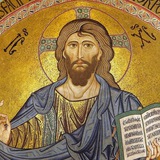
The Abrahamic Struggle Against Paganism
"In most of the last two thousand years, the Jews have had little time, possibility, or desire to propagate monotheism to humanity. With the penetration into many pagan societies of two monotheistic religions, Christianity and Islam, the Jews became minor actors in the historical struggle against paganism."
"Like its predecessors, neo-paganism merits Jewish concern. Nothing good for the Jews—nor for society at large—can come out of a worldwide strengthening of paganism. The same goes for a distorted emphasis on the importance of nature."
"Nature's laws represent the world of the savage and barbarian; the Noahide laws represent civil society. Civilization must be intolerant toward barbarity. No compromise is possible between the monotheist God and the polytheist deities."
-----
Full article here.
@ChristianityExposed
"In most of the last two thousand years, the Jews have had little time, possibility, or desire to propagate monotheism to humanity. With the penetration into many pagan societies of two monotheistic religions, Christianity and Islam, the Jews became minor actors in the historical struggle against paganism."
"Like its predecessors, neo-paganism merits Jewish concern. Nothing good for the Jews—nor for society at large—can come out of a worldwide strengthening of paganism. The same goes for a distorted emphasis on the importance of nature."
"Nature's laws represent the world of the savage and barbarian; the Noahide laws represent civil society. Civilization must be intolerant toward barbarity. No compromise is possible between the monotheist God and the polytheist deities."
-----
Full article here.
@ChristianityExposed
"The idea of some sect 'making up' the Jesus myth may seem strange today, but this is because we no longer think of myths in the same way as our ancestors did. To us myths are irrelevant fantasies, but the ancients regarded them as profound allegories encoding mystical teachings. Mythical motifs represented philosophical principles. Creating new myths was a way of exploring new ideas."
-----
From: Jesus and the Lost Goddess by Tim Freke.
@ChristianityExposed
-----
From: Jesus and the Lost Goddess by Tim Freke.
@ChristianityExposed
"There are no known non-biblical references to a historical Jesus by any historian or other writer of the time during and shortly after Jesus's purported advent. Even Hellenistic Jewish philosopher Philo Judaeus of Alexandria—alive at the purported time of Jesus, and one of the wealthiest and best connected citizens of the Empire—makes no mention of Christ, Christians or Christianity in his voluminous writings. Nor do any of the dozens of other historians and writers who flourished during the first one to two centuries of the common era."
-----
From: The Origins of Christianity by D.M. Murdock.
@ChristianityExposed
-----
From: The Origins of Christianity by D.M. Murdock.
@ChristianityExposed
Witch-Hunting As A Cultural Phenomenon
Condemnations of witchcraft are found in the writings of Augustine of Hippo and early theologians, who made little distinction between witchcraft and the practices of pagan religions. Whatever the position of individual clerics, witch-hunting seems to have persisted as a cultural phenomenon.
Throughout the early medieval period, notable rulers prohibited both witchcraft and pagan religions, often on pain of death. Under Charlemagne, for example, Christians who practiced witchcraft were enslaved by the Church, while those who worshiped the Devil (Germanic gods) were killed outright.
Witch-hunting also appears in period literature. According to Snorri Sturluson, King Olaf Tryggvason furthered the Christian conversion of Norway by luring pagan magicians to his hall under false pretenses, barring the doors and burning them alive. Some who escaped were later captured and drowned.
-----
Full article here.
@ChristianityExposed
Condemnations of witchcraft are found in the writings of Augustine of Hippo and early theologians, who made little distinction between witchcraft and the practices of pagan religions. Whatever the position of individual clerics, witch-hunting seems to have persisted as a cultural phenomenon.
Throughout the early medieval period, notable rulers prohibited both witchcraft and pagan religions, often on pain of death. Under Charlemagne, for example, Christians who practiced witchcraft were enslaved by the Church, while those who worshiped the Devil (Germanic gods) were killed outright.
Witch-hunting also appears in period literature. According to Snorri Sturluson, King Olaf Tryggvason furthered the Christian conversion of Norway by luring pagan magicians to his hall under false pretenses, barring the doors and burning them alive. Some who escaped were later captured and drowned.
-----
Full article here.
@ChristianityExposed
The First Followers Of Jesus
The first followers of Jesus founded the Jerusalem Church. They were called the Nazarenes, and in all their beliefs they were indistinguishable from the Pharisees, except that they believed in the resurrection of Jesus, and that Jesus was still the promised Messiah. The Nazarenes did not believe that Jesus had abrogated the Jewish religion, or Torah.
They were aware that he had observed the Jewish religious law all his life and had never rebelled against it. The Nazarenes were themselves very observant of Jewish religious law. They practiced circumcision, did not eat the forbidden foods and showed great respect to the Temple. The Nazarenes did not regard themselves as belonging to a new religion; their religion was Judaism.
-----
From: The Mythmaker by Hyam Maccoby.
@ChristianityExposed
The first followers of Jesus founded the Jerusalem Church. They were called the Nazarenes, and in all their beliefs they were indistinguishable from the Pharisees, except that they believed in the resurrection of Jesus, and that Jesus was still the promised Messiah. The Nazarenes did not believe that Jesus had abrogated the Jewish religion, or Torah.
They were aware that he had observed the Jewish religious law all his life and had never rebelled against it. The Nazarenes were themselves very observant of Jewish religious law. They practiced circumcision, did not eat the forbidden foods and showed great respect to the Temple. The Nazarenes did not regard themselves as belonging to a new religion; their religion was Judaism.
-----
From: The Mythmaker by Hyam Maccoby.
@ChristianityExposed
"Christian morality (so called) has all the characters of a reaction; it is, in great part, a protest against Paganism. Its ideal is negative rather than positive; passive rather than action; innocence rather than nobleness; abstinence from evil, rather than energetic pursuit of good: in its precepts (as has been well said) 'thou shalt not' predominates unduly over 'thou shalt.'"
— John Stuart Mill (On Liberty)
@ChristianityExposed
— John Stuart Mill (On Liberty)
@ChristianityExposed
The Completely Incompatible Gospels
Readers who are impressed by the level of detail in the Gospel accounts of Jesus’ execution should take a few moments to actually compare them. Jesus is portrayed dramatically differently in each: anguished and miserable in Mark, surrounded by special effects in Matthew, serene in Luke, large and in charge in John. The details only make matters worse when you compare the timelines of the three Synoptic Gospels with John’s; they are completely incompatible.
According to Mark, Jesus dies “at the ninth hour” (3 pm) on the afternoon of Passover, the 15th of Nisan by the Jewish calendar. But John does not even have Jesus die on the same day. Instead, John tells us that Jesus is tried and executed the day before, on the Preparation Day for the Passover, the 14th of Nisan. To make matters still worse, all four Gospels insist this happened on a Friday. But was it Friday the 14th or Friday the 15th?
-----
From: Nailed by David Fitzgerald.
@ChristianityExposed
Readers who are impressed by the level of detail in the Gospel accounts of Jesus’ execution should take a few moments to actually compare them. Jesus is portrayed dramatically differently in each: anguished and miserable in Mark, surrounded by special effects in Matthew, serene in Luke, large and in charge in John. The details only make matters worse when you compare the timelines of the three Synoptic Gospels with John’s; they are completely incompatible.
According to Mark, Jesus dies “at the ninth hour” (3 pm) on the afternoon of Passover, the 15th of Nisan by the Jewish calendar. But John does not even have Jesus die on the same day. Instead, John tells us that Jesus is tried and executed the day before, on the Preparation Day for the Passover, the 14th of Nisan. To make matters still worse, all four Gospels insist this happened on a Friday. But was it Friday the 14th or Friday the 15th?
-----
From: Nailed by David Fitzgerald.
@ChristianityExposed
The Jewish Savior
Jesus is repeatedly called "Rabbi" (Mark 9:5; 11:21; 14:45; Matt 26:25; John 1:38, 49; 3:2; 4:31). He celebrated Passover (John 2:13). The Gospel of Matthew opens with these words: "The book of the genealogy of Jesus Christ, son of David, son of Abraham (1:1). We read in Hebrews that "it is evident that our Lord was descended from Judah" (7:14).
He regularly attended the local synagogue (Luke 4:16). He even claimed to be the Messiah, the Jewish savior (John 4:26). And of course everyone thought of him as "King of the Jews" (Matt 2:2; John 19:3).
-----
From: The Jesus Hoax by David Skrbina.
@ChristianityExposed
Jesus is repeatedly called "Rabbi" (Mark 9:5; 11:21; 14:45; Matt 26:25; John 1:38, 49; 3:2; 4:31). He celebrated Passover (John 2:13). The Gospel of Matthew opens with these words: "The book of the genealogy of Jesus Christ, son of David, son of Abraham (1:1). We read in Hebrews that "it is evident that our Lord was descended from Judah" (7:14).
He regularly attended the local synagogue (Luke 4:16). He even claimed to be the Messiah, the Jewish savior (John 4:26). And of course everyone thought of him as "King of the Jews" (Matt 2:2; John 19:3).
-----
From: The Jesus Hoax by David Skrbina.
@ChristianityExposed
"Has it never occurred to Christians that Jesus is not their friend? Christians have burned Pagans and blasphemers at the stake as human sacrifices to [the Jewish God] Yahweh and [the Jewish messiah] Jesus. They have also set fire to the beautiful Pagan temples of their ancestors. They eat and drink the body and blood of Christ like vampires. They curse and kill any and all who do not embrace their patently absurd Christian mythologies. How have they convinced themselves that they are the good guys?"
-----
From: Jesus Is Satan by Christopher Bjerknes.
@ChristianityExposed
-----
From: Jesus Is Satan by Christopher Bjerknes.
@ChristianityExposed
“'If we only lived as Christ lived, what a beautiful world this would be,' saith all thoughtless ones. If we lived as Christ lived, there would be none of us left to live. He begat no children; he labored not for his bread; he possessed neither house nor home; he merely talked. Consequently, he must have existed on charity or have stolen bread. 'If we all lived like Christ,' would there have been anyone left to labor, to be begged from, to be stolen from? 'If we all lived like Christ' is, thus a self-evident absurdity."
— Ragnar Redbeard (Might Is Right)
@ChristianityExposed
— Ragnar Redbeard (Might Is Right)
@ChristianityExposed
No Trace Or Mention Of Jesus' Exploits Anywhere
The first century is actually considered one of the best-documented periods in ancient history, and Judea, far from being a forgotten backwater, was a turbulent province of vital strategic importance to the Romans. There were plenty of writers, both Roman and Jewish, who had great interest in and much to say about the region and its happenings during Jesus’ time.
With all his incredible achievements from cradle to grave, how is it that we have no contemporary record of any of this? We have no trace or mention of Jesus’ exploits anywhere until the New Testament Gospels are written decades later. And outside of them, there is no mention of Jesus whatsoever for nearly a century after Jesus’ alleged death. This is a staggering omission, and totally at odds with the picture given to us by the Gospels.
-----
From: Nailed by David Fitzgerald.
@ChristianityExposed
The first century is actually considered one of the best-documented periods in ancient history, and Judea, far from being a forgotten backwater, was a turbulent province of vital strategic importance to the Romans. There were plenty of writers, both Roman and Jewish, who had great interest in and much to say about the region and its happenings during Jesus’ time.
With all his incredible achievements from cradle to grave, how is it that we have no contemporary record of any of this? We have no trace or mention of Jesus’ exploits anywhere until the New Testament Gospels are written decades later. And outside of them, there is no mention of Jesus whatsoever for nearly a century after Jesus’ alleged death. This is a staggering omission, and totally at odds with the picture given to us by the Gospels.
-----
From: Nailed by David Fitzgerald.
@ChristianityExposed
"The dialogue with Judaism is for Christians something quite special, since Christianity possesses Jewish roots which determine relations between the two in a unique way. Judaism is not to be considered simply as another religion; the Jews are instead our elder brothers, our fathers in faith."
— The Vatican (Source)
@ChristianityExposed
— The Vatican (Source)
@ChristianityExposed
"If anyone comes to Me and does not hate his father and mother, wife and children, brothers and sisters, yes, and his own life also, he cannot be My disciple." (Luke 14:26)
@ChristianityExposed
@ChristianityExposed
"Paganism is that view of life which finds the highest goal of human existence in the healthy and harmonious and joyous development of existing human faculties. Very different is the Christian ideal. Paganism is optimistic with regard to unaided human nature, whereas Christianity is the religion of the broken heart."
— John Gresham Machen (Christianity and Liberalism)
@ChristianityExposed
— John Gresham Machen (Christianity and Liberalism)
@ChristianityExposed
Reconciling Non-Jews To God
While Christians of virtually every stripe, Catholic and Protestant, mainline and evangelical, now willingly accept that Jesus was a Jew, Paul is typically viewed as the first true Christian.
Paul was called by God to fulfill a particular mission, one that was foretold in the Hebrew prophets: to bring knowledge of the one God—the God of Israel—to all the nations of the world.
He was a Jew who understood himself to be on a divine mission. As a Jew, Paul believed himself to be entrusted with the special knowledge God had given only to Jews. Reconciling non-Jews to God also meant reconciling non-Jews to Jews.
-----
From: Paul Was Not a Christian by Pamela Eisenbaum.
@ChristianityExposed
While Christians of virtually every stripe, Catholic and Protestant, mainline and evangelical, now willingly accept that Jesus was a Jew, Paul is typically viewed as the first true Christian.
Paul was called by God to fulfill a particular mission, one that was foretold in the Hebrew prophets: to bring knowledge of the one God—the God of Israel—to all the nations of the world.
He was a Jew who understood himself to be on a divine mission. As a Jew, Paul believed himself to be entrusted with the special knowledge God had given only to Jews. Reconciling non-Jews to God also meant reconciling non-Jews to Jews.
-----
From: Paul Was Not a Christian by Pamela Eisenbaum.
@ChristianityExposed
Christian Bloodlust
The Jews have often been accused of Deicide for killing the God Jesus Christ, but it is actually Jesus Christ and the Christians who commit Deicide by eradicating the Pagan Gods.
Christians have mass murdered tens of millions of fellow Christians, as for example in the Thirty Years' War. They have left dead the entire Pantheons of Egyptian, Babylonian, Greek and Roman Gods, among the many other Gods of their Pagan ancestors.
Christian bloodlust will not be sated until all of humanity has departed the Earth for the heavens in plumes of smoke and ash.
-----
From: Jesus Is Satan by Christopher Bjerknes.
@ChristianityExposed
The Jews have often been accused of Deicide for killing the God Jesus Christ, but it is actually Jesus Christ and the Christians who commit Deicide by eradicating the Pagan Gods.
Christians have mass murdered tens of millions of fellow Christians, as for example in the Thirty Years' War. They have left dead the entire Pantheons of Egyptian, Babylonian, Greek and Roman Gods, among the many other Gods of their Pagan ancestors.
Christian bloodlust will not be sated until all of humanity has departed the Earth for the heavens in plumes of smoke and ash.
-----
From: Jesus Is Satan by Christopher Bjerknes.
@ChristianityExposed
"Rather than serving as that of a historical Hebrew prophet, the legend of the divine lawgiver is found in germ around Europe and Africa, as well as the Near, Middle and Far East, as are other biblical tales. In this archetype, the main character possesses different names, races and ethnicities, depending on the locale: 'Menu' is the Indian legislator; 'Mises' appears in Syria and Egypt, where also the first king, 'Menes the lawgiver', takes the stage; 'Minos' is the Cretan reformer; and 'Mannus' the Teutonic lawgiver."
-----
From: Did Moses Exist? by D.M. Murdock.
@ChristianityExposed
-----
From: Did Moses Exist? by D.M. Murdock.
@ChristianityExposed
This media is not supported in your browser
VIEW IN TELEGRAM
Jordan Peterson exhibiting the Christian belief that the fate of the world depends on the people of their "holy city" (Isaiah 48:2) to be "a shining light on the hill." An obvious paraphrase of Isaiah 42:6, which teaches Bible believers that their God, "the God of Israel" (Isaiah 48:2), chose the Jews to be "a light to the nations."
Perhaps the former United Nations employee is alluding to a quote by the first Prime Minister of Israel, David Ben-Gurion, who said in 1962:
"With the exception of the USSR as a federated Eurasian state, all other continents will become united in a world alliance, at whose disposal will be an international police force. All armies will be abolished, and there will be no more wars."
"In Jerusalem, the United Nations will build a Shrine of the Prophets to serve the federated union of all continents; this will be the seat of the Supreme Court of Mankind, to settle all controversies among the federated continents, as prophesied by Isaiah." (Source)
@ChristianityExposed
Perhaps the former United Nations employee is alluding to a quote by the first Prime Minister of Israel, David Ben-Gurion, who said in 1962:
"With the exception of the USSR as a federated Eurasian state, all other continents will become united in a world alliance, at whose disposal will be an international police force. All armies will be abolished, and there will be no more wars."
"In Jerusalem, the United Nations will build a Shrine of the Prophets to serve the federated union of all continents; this will be the seat of the Supreme Court of Mankind, to settle all controversies among the federated continents, as prophesied by Isaiah." (Source)
@ChristianityExposed
The Spiritual Pre-History Of A Society
All races, without exception, establish an ethnic mythology upon which strength, action, culture and identity are built. Myth builds the spiritual pre-history of a society that speaks to us from a very ancient past. The heroes one most admires give forth myths spontaneously.
For we know that without Achilles and without the Iliad, Alexander [the Great] would not have undertaken the conquest of the East. And without the example of Alexander, many other great men of history would have fallen short of their untapped higher potential.
-----
From: Temple of Wotan by Ron McVan.
@ChristianityExposed
All races, without exception, establish an ethnic mythology upon which strength, action, culture and identity are built. Myth builds the spiritual pre-history of a society that speaks to us from a very ancient past. The heroes one most admires give forth myths spontaneously.
For we know that without Achilles and without the Iliad, Alexander [the Great] would not have undertaken the conquest of the East. And without the example of Alexander, many other great men of history would have fallen short of their untapped higher potential.
-----
From: Temple of Wotan by Ron McVan.
@ChristianityExposed
A Jew From Birth
If the Gospels tell us anything of certainty, it’s that Jesus was a Jew. In fact, he was a Jew from birth, because both his father Joseph and his mother Mary were Jews.
Joseph, we read, was "of the house of David" (Luke 1:27), and the Gospel of Matthew opens with a lengthy genealogy leading to him from Abraham (1:1).
Mary was a woman "born under the [Mosaic] law" (Gal 4:4), and she was a blood relative of Elizabeth, of the tribe of Levi (Luke 1:5, 36).
Both parents attended Passover every year (Luke 2:41) and both "performed everything according to the law of the Lord" (Luke 2:39).
-----
From: The Jesus Hoax by David Skrbina.
@ChristianityExposed
If the Gospels tell us anything of certainty, it’s that Jesus was a Jew. In fact, he was a Jew from birth, because both his father Joseph and his mother Mary were Jews.
Joseph, we read, was "of the house of David" (Luke 1:27), and the Gospel of Matthew opens with a lengthy genealogy leading to him from Abraham (1:1).
Mary was a woman "born under the [Mosaic] law" (Gal 4:4), and she was a blood relative of Elizabeth, of the tribe of Levi (Luke 1:5, 36).
Both parents attended Passover every year (Luke 2:41) and both "performed everything according to the law of the Lord" (Luke 2:39).
-----
From: The Jesus Hoax by David Skrbina.
@ChristianityExposed
The Talmud Does Not Prove Jesus' Historicity
There are several passages in the Talmud [completed c. 500 CE] which are believed by some to be references to Jesus. The name used in the Talmud is "Yeshu", the Aramaic vocalization (although not spelling) of the Hebrew name Yeshua. The identification of Jesus with any number of individuals named Yeshu has numerous problems, as most of the individuals are said to have lived in time periods far detached from that of Jesus.
Yeshu the sorcerer is noted for being executed by the Hasmonean government which lost legal authority in 63 BCE, Yeshu the student is described being among the Pharisees who returned to Israel from Egypt in 74 BCE, and Yeshu ben Pandera/ben Stada's stepfather is noted as speaking with Rabbi Akiva shortly before the rabbi's execution, an event which occurred in c. 134 CE. These events would place the lifetime of any Yeshu decades before or after the alleged birth and death of Jesus.
-----
Full article here.
@ChristianityExposed
There are several passages in the Talmud [completed c. 500 CE] which are believed by some to be references to Jesus. The name used in the Talmud is "Yeshu", the Aramaic vocalization (although not spelling) of the Hebrew name Yeshua. The identification of Jesus with any number of individuals named Yeshu has numerous problems, as most of the individuals are said to have lived in time periods far detached from that of Jesus.
Yeshu the sorcerer is noted for being executed by the Hasmonean government which lost legal authority in 63 BCE, Yeshu the student is described being among the Pharisees who returned to Israel from Egypt in 74 BCE, and Yeshu ben Pandera/ben Stada's stepfather is noted as speaking with Rabbi Akiva shortly before the rabbi's execution, an event which occurred in c. 134 CE. These events would place the lifetime of any Yeshu decades before or after the alleged birth and death of Jesus.
-----
Full article here.
@ChristianityExposed