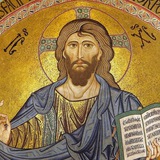
Women As Common Property
The prominent early Christians Carpocrates of Alexandria and his son Epiphanes created the doctrine that women should be kept as common property, which Karl Marx adopted and incorporated into the Communist Manifesto. This degenerate practice promoted miscegenation in multiracial societies and enabled the worst males to mingle their genes with the best females, and most deficient females to breed with the best males, which produced the dysgenic degeneration of the Gentile races.
Despite their sexual degeneracy, the early Christians forbade having children, which would obviously and predictably cause them to exterminate themselves. That was what the Jews wanted for the Gentiles and it is no coincidence that the Jews taught the Gentiles these self-destructive doctrines.
-----
From “Satanic Secrets of Jesus Christ Volume II” by Christopher Jon Bjerknes.
@ChristianityExposed
The prominent early Christians Carpocrates of Alexandria and his son Epiphanes created the doctrine that women should be kept as common property, which Karl Marx adopted and incorporated into the Communist Manifesto. This degenerate practice promoted miscegenation in multiracial societies and enabled the worst males to mingle their genes with the best females, and most deficient females to breed with the best males, which produced the dysgenic degeneration of the Gentile races.
Despite their sexual degeneracy, the early Christians forbade having children, which would obviously and predictably cause them to exterminate themselves. That was what the Jews wanted for the Gentiles and it is no coincidence that the Jews taught the Gentiles these self-destructive doctrines.
-----
From “Satanic Secrets of Jesus Christ Volume II” by Christopher Jon Bjerknes.
@ChristianityExposed
All four [Gospels] contain numerous references to the Old Testament, something that would only be expected of elite and educated Jews. Matthew has the most references—something like 43 direct citations. Mark and Luke have about 20 each, John around 15. But if we include indirect references, parallel wording, and other allusions, the numbers double or triple. Even if the Gospels underwent later modification by Gentiles, this does not change their essentially Jewish nature.
The remainder of the New Testament also seems very likely to have had Jewish authors. The lengthy Hebrews—which is claimed by some to have been written by Paul—is addressed to Jews and contains at least 36 direct references to the OT. James is addressed to "the twelve tribes in the Dispersion", and so is 1 Peter. It’s clear that Gentiles would not be lecturing to Jews about God. The other short letters are ambiguous but contain nothing to indicate Gentile authorship.
-----
From "The Jesus Hoax" by David Skrbina.
@ChristianityExposed
The remainder of the New Testament also seems very likely to have had Jewish authors. The lengthy Hebrews—which is claimed by some to have been written by Paul—is addressed to Jews and contains at least 36 direct references to the OT. James is addressed to "the twelve tribes in the Dispersion", and so is 1 Peter. It’s clear that Gentiles would not be lecturing to Jews about God. The other short letters are ambiguous but contain nothing to indicate Gentile authorship.
-----
From "The Jesus Hoax" by David Skrbina.
@ChristianityExposed
None Of The Gospels Actually Knew Jesus
If Paul was dead by the year 70, then he just missed the destruction of the Temple that dealt a shattering blow to the Jewish community. But something else happened around that time, something equally significant: the appearance of the first Gospel, Mark.
It’s an astonishing fact that, in all of Paul’s letters, nothing indicates any knowledge of any of the four Gospels. Surely, in 13 letters, Paul would have wanted to quote his savior or to cite a fact from his biography. But we find nothing like this; no quotes from Jesus, no facts about his past, no virgin birth, no miracle stories. All these are found only in the Gospels.
So why didn’t Paul cite the Gospels? The conclusion is obvious: They did not yet exist. And indeed, this is what modern scholarship confirms.
-----
From "The Jesus Hoax" by David Skrbina.
@ChristianityExposed
If Paul was dead by the year 70, then he just missed the destruction of the Temple that dealt a shattering blow to the Jewish community. But something else happened around that time, something equally significant: the appearance of the first Gospel, Mark.
It’s an astonishing fact that, in all of Paul’s letters, nothing indicates any knowledge of any of the four Gospels. Surely, in 13 letters, Paul would have wanted to quote his savior or to cite a fact from his biography. But we find nothing like this; no quotes from Jesus, no facts about his past, no virgin birth, no miracle stories. All these are found only in the Gospels.
So why didn’t Paul cite the Gospels? The conclusion is obvious: They did not yet exist. And indeed, this is what modern scholarship confirms.
-----
From "The Jesus Hoax" by David Skrbina.
@ChristianityExposed
The Shroud Of Turin Hoax
Christians often claim that the Shroud of Turin proves Jesus' historicity, despite the fact that there are many reasons to believe that it's an obvious hoax.
The main one being that the earliest definitive mention of the Shroud of Turin in any written document is a letter written in 1389 by Pierre d’Arcis, the bishop of the city of Troyes to the Avignon Antipope Clement VII, in which he describes how his predecessor, Bishop Henri de Poitiers, set out on a mission to find out where the shroud had come from.
Bishop Henri managed to track down the original forger who had made the shroud, who then confessed to him that he had created the shroud as a deliberate hoax:
"This story was put about not only in the kingdom of France, but, so to speak, throughout the world, so that from all parts people came together to view it. And further to attract the multitude so that money might cunningly be wrung from them, pretended miracles were worked, certain men being hired to represent themselves as healed at the moment of the exhibition of the shroud, which all believed to the shroud of our Lord. The Lord Henry of Poitiers, of pious memory, then Bishop of Troyes, becoming aware of this, and urged by many prudent persons to take action, as indeed was his duty in the exercise of his ordinary jurisdiction, set himself earnestly to work to fathom the truth of this matter."
"For many theologians and other wise persons declared that this could not be the real shroud of our Lord having the Saviour’s likeness thus imprinted upon it, since the holy Gospel made no mention of any such imprint, while, if it had been true, it was quite unlikely that the holy Evangelists would have omitted to record it, or that the fact should have remained hidden until the present time."
"Eventually, after diligent inquiry and examination, he discovered the fraud and how the said cloth had been cunningly painted, the truth being attested by the artist who had painted it, to wit, that it was a work of human skill and not miraculously wrought or bestowed."
@ChristianityExposed
Christians often claim that the Shroud of Turin proves Jesus' historicity, despite the fact that there are many reasons to believe that it's an obvious hoax.
The main one being that the earliest definitive mention of the Shroud of Turin in any written document is a letter written in 1389 by Pierre d’Arcis, the bishop of the city of Troyes to the Avignon Antipope Clement VII, in which he describes how his predecessor, Bishop Henri de Poitiers, set out on a mission to find out where the shroud had come from.
Bishop Henri managed to track down the original forger who had made the shroud, who then confessed to him that he had created the shroud as a deliberate hoax:
"This story was put about not only in the kingdom of France, but, so to speak, throughout the world, so that from all parts people came together to view it. And further to attract the multitude so that money might cunningly be wrung from them, pretended miracles were worked, certain men being hired to represent themselves as healed at the moment of the exhibition of the shroud, which all believed to the shroud of our Lord. The Lord Henry of Poitiers, of pious memory, then Bishop of Troyes, becoming aware of this, and urged by many prudent persons to take action, as indeed was his duty in the exercise of his ordinary jurisdiction, set himself earnestly to work to fathom the truth of this matter."
"For many theologians and other wise persons declared that this could not be the real shroud of our Lord having the Saviour’s likeness thus imprinted upon it, since the holy Gospel made no mention of any such imprint, while, if it had been true, it was quite unlikely that the holy Evangelists would have omitted to record it, or that the fact should have remained hidden until the present time."
"Eventually, after diligent inquiry and examination, he discovered the fraud and how the said cloth had been cunningly painted, the truth being attested by the artist who had painted it, to wit, that it was a work of human skill and not miraculously wrought or bestowed."
@ChristianityExposed
Why does Seneca the Younger record all kinds of unusual natural phenomena in the seven books of his Quaestiones Naturales, including eclipses and earthquakes, but not mention the Star of Bethlehem, the pair of earthquakes in Jerusalem that were strong enough to split stones, or the three hours of supernatural darkness that covered “all the land” – an event he would have witnessed firsthand?
Why didn’t every astronomer in the whole world, or indeed, any other astronomer in the world, take notice at the time?
-----
From: Jesus: Mything in Action, Vol. I by David Fitzgerald.
@ChristianityExposed
Why didn’t every astronomer in the whole world, or indeed, any other astronomer in the world, take notice at the time?
-----
From: Jesus: Mything in Action, Vol. I by David Fitzgerald.
@ChristianityExposed
"The natural world is a world of war; the natural man is a warrior; the natural law is tooth and claw. All else is error. A condition of combat everywhere exists. We are born into perpetual conflict. It is our inheritance, even as it was the heritage of previous generations."
— Ragnar Redbeard
@ChristianityExposed
— Ragnar Redbeard
@ChristianityExposed
A Mish-Mash Of Mythology And Absurdity
Finally we have Celsus, a Greek philosopher who composed a text, The True Word, sometime around 178 AD. The piece is striking as an extended and scathing critique of the increasingly prominent Christian sect. Celsus' main target is clearly Christianity, but in the process he makes a number of remarks on the Jews—all negative. Judeo-Christian theology, says Celsus, is a mish-mash of mythology and absurdity.
To say that the Jews were disliked [in the ancient world] is an understatement. The critiques come from all around the Mediterranean region, and from a wide variety of cultural perspectives. And they are uniformly negative. I note here that it’s not a case of ‘cherry-picking’ the worst comments and ignoring the good ones. The remarks are all negative; there simply are no positive opinions on the Jews or early [Jewish] Christians.
-----
From "The Jesus Hoax" by David Skrbina.
@ChristianityExposed
Finally we have Celsus, a Greek philosopher who composed a text, The True Word, sometime around 178 AD. The piece is striking as an extended and scathing critique of the increasingly prominent Christian sect. Celsus' main target is clearly Christianity, but in the process he makes a number of remarks on the Jews—all negative. Judeo-Christian theology, says Celsus, is a mish-mash of mythology and absurdity.
To say that the Jews were disliked [in the ancient world] is an understatement. The critiques come from all around the Mediterranean region, and from a wide variety of cultural perspectives. And they are uniformly negative. I note here that it’s not a case of ‘cherry-picking’ the worst comments and ignoring the good ones. The remarks are all negative; there simply are no positive opinions on the Jews or early [Jewish] Christians.
-----
From "The Jesus Hoax" by David Skrbina.
@ChristianityExposed
Why does Philo of Alexandria, a Jewish aristocrat and leading scholar with close ties to Jerusalem (and who made pilgrimages there), discuss the contemporary state of various first century Jewish sects in his writings, but not a word on the multitudes who followed the miracle-worker and bold, radical new teacher Jesus throughout the Galilee and Judea?
Why does he have nothing to say about the spectacular events that rocked Jerusalem (literally, as they include a pair of major earthquakes), including all the long-dead Jewish saints who emerged from their freshly opened graves and wandered the streets of Jerusalem, appearing to many (Matt. 27:50-54; 28:2)
For that matter, why doesn’t any other contemporary Jewish historian, like Justus of Tiberias, or Herod’s court historian Nicholas of Damascus?
-----
From "Jesus: Mything in Action, Vol. I" by David Fitzgerald.
@ChristianityExposed
Why does he have nothing to say about the spectacular events that rocked Jerusalem (literally, as they include a pair of major earthquakes), including all the long-dead Jewish saints who emerged from their freshly opened graves and wandered the streets of Jerusalem, appearing to many (Matt. 27:50-54; 28:2)
For that matter, why doesn’t any other contemporary Jewish historian, like Justus of Tiberias, or Herod’s court historian Nicholas of Damascus?
-----
From "Jesus: Mything in Action, Vol. I" by David Fitzgerald.
@ChristianityExposed
The earliest documents we have from Christians are the authentic letters of Paul (only seven; the rest are now known to be later forgeries), and perhaps a few other letters in the New Testament, like 1 Peter, James, Jude, and Hebrews, and possibly the first letter from Clement of Rome.
Though some scholars date these later, a reasonable case can be made that they all likely date to the 50s and 60s A.D., two to three decades after Jesus is supposed to have died in the 30s A.D. Yet they curiously lack any references to Jesus having ever ministered on Earth, or communicating with anyone in any other way than by mystical revelation from on high—whether to the apostles or the Prophets of old.
-----
From "Jesus From Outer Space" by Richard Carrier.
@ChristianityExposed
Though some scholars date these later, a reasonable case can be made that they all likely date to the 50s and 60s A.D., two to three decades after Jesus is supposed to have died in the 30s A.D. Yet they curiously lack any references to Jesus having ever ministered on Earth, or communicating with anyone in any other way than by mystical revelation from on high—whether to the apostles or the Prophets of old.
-----
From "Jesus From Outer Space" by Richard Carrier.
@ChristianityExposed
The Prophet Of Unreason
As far as Sociology is concerned, we must either abandon our reason, or abandon Christ. He is pre-eminently, the prophet of unreason — the preacher of rabble-rabies. All that is enervating and destructive of manhood, he glorifies, — all that is self-reliant and heroic, he denounces. Lazarus, the filthy and diseased vagrant, is his hero of heroes; and Dives, the sane, energetic citizen, is his 'awful' example of baseness and criminality.
He praises "the humble" and he curses the proud. He blesses the failures, and damns the successful. All that is noble, he perverts — all that is atrocious he upholds. He inverts all the natural instincts of mankind, and urges us to live artificial lives. He commands the demonization of virtues that aggrandize a people, and advises his admirers to submit in quietness to every insult, contumely, indignity; to be slaves, de-facto. Indeed, there is scarce one thought in the whole of his Dicta that is practically true.
-----
From "Might Is Right" by Ragnar Redbeard.
@ChristianityExposed
As far as Sociology is concerned, we must either abandon our reason, or abandon Christ. He is pre-eminently, the prophet of unreason — the preacher of rabble-rabies. All that is enervating and destructive of manhood, he glorifies, — all that is self-reliant and heroic, he denounces. Lazarus, the filthy and diseased vagrant, is his hero of heroes; and Dives, the sane, energetic citizen, is his 'awful' example of baseness and criminality.
He praises "the humble" and he curses the proud. He blesses the failures, and damns the successful. All that is noble, he perverts — all that is atrocious he upholds. He inverts all the natural instincts of mankind, and urges us to live artificial lives. He commands the demonization of virtues that aggrandize a people, and advises his admirers to submit in quietness to every insult, contumely, indignity; to be slaves, de-facto. Indeed, there is scarce one thought in the whole of his Dicta that is practically true.
-----
From "Might Is Right" by Ragnar Redbeard.
@ChristianityExposed
The Universal Worship Of The Jewish God
Twelfth century scholar, philosopher and religious commentator Moses ben Maimon, known in the west as Maimonides, is considered one of the main foundations of modern Jewish law, and the most widely accepted authority on Jewish philosophy.
Maimonides views the two major religions, Christianity and Islam, as necessary preparations for the coming of the Messiah and the universal worship of God that will follow in the future.
In his legal opus, the Mishneh Torah, Maimonides states thanks to both these religions: "The world has become full of the ideas of the Messiah, the ideas of the Torah and the ideas of the commandments, so that these have spread to faraway islands and to many dim hearted nations, and they now discuss these ideas and the commandments of the Torah."
-----
Full article here.
@ChristianityExposed
Twelfth century scholar, philosopher and religious commentator Moses ben Maimon, known in the west as Maimonides, is considered one of the main foundations of modern Jewish law, and the most widely accepted authority on Jewish philosophy.
Maimonides views the two major religions, Christianity and Islam, as necessary preparations for the coming of the Messiah and the universal worship of God that will follow in the future.
In his legal opus, the Mishneh Torah, Maimonides states thanks to both these religions: "The world has become full of the ideas of the Messiah, the ideas of the Torah and the ideas of the commandments, so that these have spread to faraway islands and to many dim hearted nations, and they now discuss these ideas and the commandments of the Torah."
-----
Full article here.
@ChristianityExposed
The Jews Fear The Pagan
"In today's fragmented society a large number of religious and secular neo-pagan expressions have emerged and are gathering strength. An increased interest in nature is a central element in many of its manifestations."
"While history seldom repeats itself, many of its major motifs recur over the centuries. This repetition of motifs is frequently stressed by a variety of contemporary manifestations of idolatry, both in and outside of the public square. None of these are entirely identical to the pagan rituals mentioned in the Bible. Nonetheless, like its predecessors, neo-paganism merits Jewish concern."
"Many of these sects rightly see the worlds of both Jewish and Christian thought as their enemies. There is no place in monotheism for the divinity of nature to which humanity must bow. In it nature may be valued as a manifestation of God's majesty, but it is not sacred. The adherents of the single God, Creator of the world, have a long record of destroying pagan idols and desecrating their holy places. While one may claim that a variety of the present forms of nature adoration are un-Jewish, many neo-pagan reconstructionists can be considered anti-Jewish."
"In most of the last two thousand years, the Jews have had little time, possibility, or desire to propagate monotheism to humanity. With the penetration into many pagan societies of two monotheistic religions, Christianity and Islam, the outside challenges to Judaism changed. The Jews became minor actors in the historical struggle against paganism."
"In the Torah, God tells not only the Jews but also humanity in general that they should not live according to the laws of nature. Judaism totally rejects the "animal in man" and attempts to suppress it. Among the 613 commandments given to the Jews, there are seven which Judaism considers binding for all humanity. Non-Jews are expected to practice these Noahide laws at the very least: they prohibit idolatry, the vain use of God's name, murder, sexual transgressions, theft, and eating the flesh of live animals, and require all people to establish courts of law to govern themselves."
"So what does the return of paganism mean for Judaism? It forces us to focus on the importance of Jewish law and tradition, which proclaims that nature is not the dominant force in the world, nor is it sacred. There is a unique divine force above nature. Nature's laws represent the world of the savage and barbarian; the Noahide laws represent civil society. Civilization must be intolerant toward barbarity. No compromise is possible between the monotheist God and the polytheist deities."
"It is not very clear where we are going. We live in a rapidly changing world where we must continuously catch weak signals and watch whether they get stronger. Nothing good for the Jews — nor for society at large — can come out of a worldwide strengthening of paganism. The same goes for a distorted emphasis on the importance of nature."
-----
Full article here.
@ChristianityExposed
"In today's fragmented society a large number of religious and secular neo-pagan expressions have emerged and are gathering strength. An increased interest in nature is a central element in many of its manifestations."
"While history seldom repeats itself, many of its major motifs recur over the centuries. This repetition of motifs is frequently stressed by a variety of contemporary manifestations of idolatry, both in and outside of the public square. None of these are entirely identical to the pagan rituals mentioned in the Bible. Nonetheless, like its predecessors, neo-paganism merits Jewish concern."
"Many of these sects rightly see the worlds of both Jewish and Christian thought as their enemies. There is no place in monotheism for the divinity of nature to which humanity must bow. In it nature may be valued as a manifestation of God's majesty, but it is not sacred. The adherents of the single God, Creator of the world, have a long record of destroying pagan idols and desecrating their holy places. While one may claim that a variety of the present forms of nature adoration are un-Jewish, many neo-pagan reconstructionists can be considered anti-Jewish."
"In most of the last two thousand years, the Jews have had little time, possibility, or desire to propagate monotheism to humanity. With the penetration into many pagan societies of two monotheistic religions, Christianity and Islam, the outside challenges to Judaism changed. The Jews became minor actors in the historical struggle against paganism."
"In the Torah, God tells not only the Jews but also humanity in general that they should not live according to the laws of nature. Judaism totally rejects the "animal in man" and attempts to suppress it. Among the 613 commandments given to the Jews, there are seven which Judaism considers binding for all humanity. Non-Jews are expected to practice these Noahide laws at the very least: they prohibit idolatry, the vain use of God's name, murder, sexual transgressions, theft, and eating the flesh of live animals, and require all people to establish courts of law to govern themselves."
"So what does the return of paganism mean for Judaism? It forces us to focus on the importance of Jewish law and tradition, which proclaims that nature is not the dominant force in the world, nor is it sacred. There is a unique divine force above nature. Nature's laws represent the world of the savage and barbarian; the Noahide laws represent civil society. Civilization must be intolerant toward barbarity. No compromise is possible between the monotheist God and the polytheist deities."
"It is not very clear where we are going. We live in a rapidly changing world where we must continuously catch weak signals and watch whether they get stronger. Nothing good for the Jews — nor for society at large — can come out of a worldwide strengthening of paganism. The same goes for a distorted emphasis on the importance of nature."
-----
Full article here.
@ChristianityExposed
The Jesus Controversy
Sometimes, of course, we do hear about the Jesus controversy in our media. But always in carefully crafted ways. A good example came during Easter 2017, in an article on the British website Guardian.com, written by Cambridge University professor Simon Gathercole.
The subtitle notes that “some claim that Jesus is just an idea, rather than a real historical figure.” “But,” it adds, “there is a good deal of written evidence for his existence.” Gathercole says that evidence for an historical Jesus is “long-established and widespread.” “Within a few decades”—if 60 to 80 years counts as “a few decades”—Jesus is “mentioned by Jewish and Roman historians”—actually, one Jewish (Josephus) and one Roman (Tacitus), for a total of about ten sentences.
The evidence, says Gathercole, “is early and detailed,” citing Paul’s letters and the Gospels. But we have seen the many problems with those, and in any case they don’t count as independent evidence. “It is also difficult to imagine why Christian writers would invent such a thoroughly Jewish savior in a time and place where there was strong suspicion of Judaism.” Actually, not difficult at all: the “Christian” writers were Jews who were trying to build an anti-Roman church based on a Jewish God and a Jewish savior. They just had to make sure that the enemy was “the devil” and not “Rome.”
When asked about any archeological evidence for Jesus, he offers a few confusing words about Cleopatra and the Shroud of Turin, only to conclude that “the documents [Epistles, Gospels, Josephus, Tacitus] form the most significant evidence”—which is a virtual admission of failure. As Gathercole well knows, there is no physical evidence.
In the end, he never makes clear the distinction between the historical Jesus (the man) and the biblical Jesus (the Christ). We can accept the man, even if there is very little actual evidence, but we cannot accept any of the miraculous biblical account. And the man alone, as I’ve said repeatedly, means the end of Christianity.
-----
From "The Jesus Hoax" by David Skrbina.
@ChristianityExposed
Sometimes, of course, we do hear about the Jesus controversy in our media. But always in carefully crafted ways. A good example came during Easter 2017, in an article on the British website Guardian.com, written by Cambridge University professor Simon Gathercole.
The subtitle notes that “some claim that Jesus is just an idea, rather than a real historical figure.” “But,” it adds, “there is a good deal of written evidence for his existence.” Gathercole says that evidence for an historical Jesus is “long-established and widespread.” “Within a few decades”—if 60 to 80 years counts as “a few decades”—Jesus is “mentioned by Jewish and Roman historians”—actually, one Jewish (Josephus) and one Roman (Tacitus), for a total of about ten sentences.
The evidence, says Gathercole, “is early and detailed,” citing Paul’s letters and the Gospels. But we have seen the many problems with those, and in any case they don’t count as independent evidence. “It is also difficult to imagine why Christian writers would invent such a thoroughly Jewish savior in a time and place where there was strong suspicion of Judaism.” Actually, not difficult at all: the “Christian” writers were Jews who were trying to build an anti-Roman church based on a Jewish God and a Jewish savior. They just had to make sure that the enemy was “the devil” and not “Rome.”
When asked about any archeological evidence for Jesus, he offers a few confusing words about Cleopatra and the Shroud of Turin, only to conclude that “the documents [Epistles, Gospels, Josephus, Tacitus] form the most significant evidence”—which is a virtual admission of failure. As Gathercole well knows, there is no physical evidence.
In the end, he never makes clear the distinction between the historical Jesus (the man) and the biblical Jesus (the Christ). We can accept the man, even if there is very little actual evidence, but we cannot accept any of the miraculous biblical account. And the man alone, as I’ve said repeatedly, means the end of Christianity.
-----
From "The Jesus Hoax" by David Skrbina.
@ChristianityExposed
the Guardian
What is the historical evidence that Jesus Christ lived and died?
Today some claim that Jesus is just an idea, rather than a real historical figure, but there is a good deal of written evidence for his existence 2,000 years ago
[The first Gospel] Mark seems to have been written around the year 70, nearly four decades after the crucifixion. It was the first text to mention any details about Jesus’ life, to record his sayings, and to document his alleged miracles. The next two Gospels, Matthew and Luke, were written in the mid-80s. They largely repeated, but also embellished and supplemented, many of the same stories. And John was not written until the mid-90s—a full 60 years after the death of Jesus.
-----
From "The Jesus Hoax" by David Skrbina.
@ChristianityExposed
-----
From "The Jesus Hoax" by David Skrbina.
@ChristianityExposed
Christians rather travel to Israel "to connect with their ancient biblical roots" than to Europe to connect with their actual ancestral roots.
Full article here.
@ChristianityExposed
Full article here.
@ChristianityExposed
How could it be that Theophilus, one of the earliest Christian apologists, wrote nearly 30,000 words about Christianity without once mentioning Jesus Christ?
How come the name "Jesus Christ", in fact, doesn't appear in any Greek or Latin author until after the Council of Nicaea [325 AD]?
Why was it that the only near-contemporary account that mentioned Christ, a suspiciously precise paragraph known as the Testimonium Flavianum, in Josephus' Antiquities of the Jews, had been proved to be a patent insertion into that historical narrative?
How could Jesus have been born in 1 A.D. when the Gospels say he was born before Herod the Great died — and King Herod's death could be pinpointed to 4 B.C.?
Even Philip Cardinal Vasta, now known to the world as Pope Pius XIII, had lamented that the greatest obstacle for spreading the Catholic faith today was that the historical existence of Jesus could no longer be made credible.
-----
From "The Messiah Matrix" by Kenneth Atchity.
@ChristianityExposed
How come the name "Jesus Christ", in fact, doesn't appear in any Greek or Latin author until after the Council of Nicaea [325 AD]?
Why was it that the only near-contemporary account that mentioned Christ, a suspiciously precise paragraph known as the Testimonium Flavianum, in Josephus' Antiquities of the Jews, had been proved to be a patent insertion into that historical narrative?
How could Jesus have been born in 1 A.D. when the Gospels say he was born before Herod the Great died — and King Herod's death could be pinpointed to 4 B.C.?
Even Philip Cardinal Vasta, now known to the world as Pope Pius XIII, had lamented that the greatest obstacle for spreading the Catholic faith today was that the historical existence of Jesus could no longer be made credible.
-----
From "The Messiah Matrix" by Kenneth Atchity.
@ChristianityExposed
As the initiator of the [Jesus] hoax, Paul earns the maximum amount of credit or, if you will, blame. He constructed a simple and elemental lie, based on common ideas in mythology and a kernel of actual truth, in order to manipulate the Gentile masses for the benefit of the Jews. It was, quite frankly, a brilliant plan.
But to successfully pull it off, Paul must have been a brilliant liar. He had to write down pure fiction as absolute truth. He had to lie to people’s faces and pretend to believe it. He had to entice and frighten innocent and simple-minded peasants into believing his outrageous concoction. And he did it. Paul—expert liar, artful liar, master liar.
-----
From "The Jesus Hoax" by David Skrbina.
@ChristianityExposed
But to successfully pull it off, Paul must have been a brilliant liar. He had to write down pure fiction as absolute truth. He had to lie to people’s faces and pretend to believe it. He had to entice and frighten innocent and simple-minded peasants into believing his outrageous concoction. And he did it. Paul—expert liar, artful liar, master liar.
-----
From "The Jesus Hoax" by David Skrbina.
@ChristianityExposed
Roman statesman Marcus Tullius Cicero (106 BC - 43 BC) on the deceptive nature of the Jews. Over a century before Paul initiated their greatest deception yet.
@ChristianityExposed
@ChristianityExposed
Martin Luther, the founder of one of the largest branches of Protestantism, admitting that only the unreasonable can be Christian.
@ChristianityExposed
@ChristianityExposed
From one Jewish cult to another. From the modern "trust the plan" to the former.
WE are the only hope.
Not Trump, who was bailed out by Rothschild Inc. - making him their slave according to your own scriptures - and certainly not the "king of the Jews".
@ChristianityExposed
WE are the only hope.
Not Trump, who was bailed out by Rothschild Inc. - making him their slave according to your own scriptures - and certainly not the "king of the Jews".
@ChristianityExposed
Justin Martyr (c. AD 100 – c. AD 165), born in Judea and considered by many to be the first Christian apologist, on the globalist and passive nature of Christianity.
@ChristianityExposed
@ChristianityExposed