Forwarded from Tabz - Live News (Max)
Tabz - Live News
Please open Telegram to view this post
VIEW IN TELEGRAM
Tabz - Live News
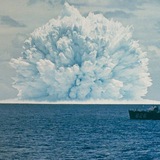
🇺🇦🇷🇴 — The Ukrainian Navy has claimed responsibility for the drone that exploded near Romania’s Port of Constanța. It said one of its unmanned surface vessels lost control due to Russian electronic warfare during operations in the Black Sea and drifted toward…
Romanian journalists discovered that on the same day the Ukrainian "Sea Baby" USV exploded, a Marshallese flagged crude oil tanker, SAFEEN ELONA, was docked in the port of Năvodari, a town 13 miles north of Constanța, where also one of Romania's largest oil refineries, Petromidia, is located.
SAFEEN ELONA departed yesterday from Romania towards the Russian port of Novorossiysk where it will load up with more crude oil. This crude oil tanker is part of Russia's shadow fleet and Ukraine was targeting it.
The "Sea Baby" USV did not end up in the port of Constanța accidentally, it was searching for the oil tanker. The multiple communication antennas and infrared cameras on top of the Sea Baby show that it was a command & control vessel and was meant to direct a group of other USVs towards the tanker but the plan fell apart when the command & control USV got tangled in anti-pollution barriers and became immobilized and the plan was abandoned.
The "Sea Baby" USV's self-destruct option was switched on by Kiev to destroy evidence of the blatant violation of Romanian sovereignty and the Romanian authorities were informed about the imminent explosion roughly 15 minutes before it occurred. Had this not happened, there could have been tens of casualties among dock workers, bomb squads and other police units who were preparing to remove the explosive-laden USV from Romanian waters.
The other USVs controlled by the Sea Baby also self destructed far away from the shore when SAFEEN ELONA couldn't be located.
Yesterday, Kiev claimed that the drones ended up in Romanian waters as a result of Russian electronic warfare. Crimea's westernmost edge is 207 miles (333 km) from Constanța, far outside the range of any electronic warfare (EW) system. Radio & signal monitoring channels could not detect any kind of jamming coming from Russian territory towards Romania.
Recall that on May 7th, Greek fisherman on the island of Lefkada in the Ionian Sea, found a similar USV to the one stuck in Romania, also laden with explosives. It would have been impossible for the USV found in Lefkada to have come from Ukraine proper due to the long distance and also for the fact that it would have been discovered when it would have crossed the Bosphorus, so it likely originated from one of the Ukrainian bases in Western Libya, likely from Misrata. It took almost a month for Ukraine to apologise to Greece for the USV they lost who could have injured and killed people had it been ordered to self-destruct.
Romanian president, Nicușor Dan, said he won't held Ukraine accountable for the USV which detonated close to a warehouse housing ammonium nitrate and blamed Russia for the whole incident claiming this happened because Russia attacked Ukraine, so its alright for Ukraine to attack civilian ships found in the territorial waters of his country.
@CIG_telegram
Please open Telegram to view this post
VIEW IN TELEGRAM
Please open Telegram to view this post
VIEW IN TELEGRAM
📍First target, Qeshm: 26°47'26.06"N 56°05'08.72"E
📍Second target, communications tower inside the IRGC Navy base at Sirik: 26°33'51.22"N 57°05'15.97"E
Please open Telegram to view this post
VIEW IN TELEGRAM
Please open Telegram to view this post
VIEW IN TELEGRAM
/CIG/ Telegram | Counter Intelligence Global
Why ? Because many oil tankers end up in flames (without UKMTO reporting), and Trump admin doesn't want the public to know this.
Please open Telegram to view this post
VIEW IN TELEGRAM
We are living in a new world of hedgers. The shocks of the last several years—COVID-19, Russia’s war in Ukraine, U.S. President Donald Trump’s tariffs, and the Iran conflict—have upended how nations approach international affairs. The smooth flows of a globalized and rules-based world have clotted into uncertainty, forcing states to find new pathways for trade, diplomacy, resource extraction, and defense cooperation. Countries no longer consider historical partnerships, values-driven alliances, and regional blocs to be sufficient to protect and advance national interests.
Hedging is the practice of avoiding exclusive dependence in a world of unreliable partners. It involves cultivating competing relationships across different domains so that no crisis or betrayal will leave a state out of options. In decades past, states tended to hedge their bets in specific circumstances. India, for example, emerged from colonization as a nonaligned nation but hedged amid China’s rapid growth to build ties with the United States—even as it maintained warm relations with Russia. Now, this is not just a tactic limited to emerging powers or a response to particular geopolitical shake-ups. Hedging has become central to international relations, shaping how powers great and small approach trade, technology, finance, energy, and security.
States are no longer hedging within a system that is episodically volatile but out of a recognition that there no longer is much of a system at all. The rise of what we might call “hedgemony” is both a response to the reshuffling of the global order and an accelerant of this transformation. Although these moves are being pursued by individual governments in search of stability and security, the net result may be a world that is less predictable and even more dangerous.
Twenty-five years ago, globalization was embraced as almost a panacea. Deeper integration across borders was expected to make the world richer, more cohesive, and more humane. U.S. President Bill Clinton encapsulated the vision in his 2000 State of the Union address, when he argued that “open markets and rule-based trade are the best engines we know of for raising living standards, reducing global poverty and environmental destruction, and assuring the free flow of ideas.”
That conviction shaped an era of free trade agreements and global value chains: Companies shifted manufacturing to lower-cost jurisdictions and sourced inputs from wherever they came cheapest. Products designed in one country used components from others, were assembled elsewhere, and eventually funneled for shipping through centralized hubs to markets worldwide. That model bore cheap goods and global economic growth, but it also scattered the seeds of future fragility. The 2008 financial crisis was an early warning that globalization carried the risk of cross-regional contagion.
Interdependence was not easily undone. By the eve of its 2022 invasion of Ukraine, Russia was supplying around 40 percent of the European Union’s pipeline gas imports. China still refines roughly 70 percent of the world’s supplies of 19 of the 20 most important strategic minerals—though the United States and other Western nations are fervently trying to change this amid intensifying U.S.-China competition and Beijing’s periodic throttling of critical mineral exports.
Now that the spell of innocuous interdependence has been broken, nations are moving with grim resolve to foster diversified, even redundant, dependencies. Countries are increasingly hedging their bets with hegemons—namely, by seeking strong ties with both China and the United States—while also striving to lessen hegemonic dependency through greater self-sufficiency and diversified relationships. Even the superpowers are hedging: The Biden administration’s CHIPS and Science Act and Trump’s Pax Silica both sought to reduce reliance on China and, by association, Taiwan;
Please open Telegram to view this post
VIEW IN TELEGRAM
Foreign Policy
Hedging Is the New Normal
For the foreseeable future, successful statecraft will depend on hedging.
This media is not supported in your browser
VIEW IN TELEGRAM
🚷 🇺🇸 🇪🇺 Pete Hegseth in Normandy:
Sadly, today different European beaches are stormed by different dangerous ideologies.
In Spain and Italy and Greece and Bulgaria, boats and men arrive.
When will European capitals do something about that invasion? Or is it too late?
📎 Clash Report
Sadly, today different European beaches are stormed by different dangerous ideologies.
In Spain and Italy and Greece and Bulgaria, boats and men arrive.
When will European capitals do something about that invasion? Or is it too late?
📎 Clash Report
📖 🇺🇸 🗳 Opinion Polling of the Greatest Generation during WWII
⚫️ Attitudes of White Enlisted Men Toward Sharing Facilities with Negro Troops, US Department of War (1942)
An overwhelming majority of the men feel that negro and White soldiers should be separated both during and after training.
https://archive.vn/KAWzp
✡️ Troubling the Waters: Black-Jewish Relations in the American Century, C. L. Greenberg (2006)
While a 1944 poll suggested that 12 percent of non-jews "appear to be definitely anti-Semitic" and 42 percent "susceptible" to anti-Semitic propaganda, a 1943 poll revealed that "90 percent of the American people stated that they would rather loose |sic| the war than give full equality to the American Negroes.
https://archive.vn/uKISc
🇯🇵 Most Americans see Japan as the main enemy - Gallup poll. Melbourne Sun, 24 February 1943.
When asked by Fortune/Roper why the Japanese had attacked, the majority of Americans believed that Germany was behind the decision. Sixty-nine percent said the Japanese government was doing her part as Hitler's ally, and her move was part of German strategy, while only 24% said it was a long term plan of the Japanese to attack the U.S. or that Japan was saving face. By November 1942, after a number of large and brutal battles in the Pacific theater, opinions had shifted. Japan was perceived to be the greater military threat by substantial margins until the end of the war.
https://ropercenter.cornell.edu/blog/polling-and-pearl-harbor
@CIG_telegram
⚫️ Attitudes of White Enlisted Men Toward Sharing Facilities with Negro Troops, US Department of War (1942)
An overwhelming majority of the men feel that negro and White soldiers should be separated both during and after training.
https://archive.vn/KAWzp
✡️ Troubling the Waters: Black-Jewish Relations in the American Century, C. L. Greenberg (2006)
While a 1944 poll suggested that 12 percent of non-jews "appear to be definitely anti-Semitic" and 42 percent "susceptible" to anti-Semitic propaganda, a 1943 poll revealed that "90 percent of the American people stated that they would rather loose |sic| the war than give full equality to the American Negroes.
https://archive.vn/uKISc
When asked by Fortune/Roper why the Japanese had attacked, the majority of Americans believed that Germany was behind the decision. Sixty-nine percent said the Japanese government was doing her part as Hitler's ally, and her move was part of German strategy, while only 24% said it was a long term plan of the Japanese to attack the U.S. or that Japan was saving face. By November 1942, after a number of large and brutal battles in the Pacific theater, opinions had shifted. Japan was perceived to be the greater military threat by substantial margins until the end of the war.
https://ropercenter.cornell.edu/blog/polling-and-pearl-harbor
@CIG_telegram
Please open Telegram to view this post
VIEW IN TELEGRAM
Please open Telegram to view this post
VIEW IN TELEGRAM
Media is too big
VIEW IN TELEGRAM
🍷 🇫🇷 🍖 France's giant banquets" are booming, with thousands gathering in Colmar to celebrate food, wine and tradition. But some critics allege exclusion and links to hard-right networks.
Run by a company called Le Canon Français (The French Cannon), the banquets are massively attended – €81 (£70) buying you four courses of local gastronomy, all the wine you can drink, and several hours of sing-along camaraderie.
But not everyone is cheering. For the radical left party La France Insoumise (LFI - France Unbowed), the banquets have a dark side.
LFI says it has evidence of racist chanting, and of immigrant staff being insulted. With pork regularly on the menu, they say the feasts are purposely designed to exclude Muslims and vegetarians.
And they point to the financial involvement of an ultra-conservative entrepreneur called Pierre-Edouard Stérin as evidence of a masked ulterior motivation - to promote the agenda of the hard right.
Stérin, a billionaire who made his money in the experience gift-voucher sector, set up a think tank pushing right-wing ideas such as rolling back immigration, stopping abortion and promoting France's Christian heritage, which many in France would perceive as nationalist and exclusionary.
"If they were in good faith, Le Canon Français would never have accepted Stérin as an investor. But they did - they took his money," says Emma Fourreau, an LFI member of the European Parliament.
"And that is because they share the same political ecosystem, whose aim is to bring the far right to power."
In Caen, where a banquet was held in April, a preliminary investigation is being held by police into allegations of racial provocation by people attending.
De Boisse does not deny that many – maybe most – of his punters are probably from the right, or hard right. "But look at the elections. That is how more and more people in the countryside are voting," he says.
📎 BBC
Run by a company called Le Canon Français (The French Cannon), the banquets are massively attended – €81 (£70) buying you four courses of local gastronomy, all the wine you can drink, and several hours of sing-along camaraderie.
But not everyone is cheering. For the radical left party La France Insoumise (LFI - France Unbowed), the banquets have a dark side.
LFI says it has evidence of racist chanting, and of immigrant staff being insulted. With pork regularly on the menu, they say the feasts are purposely designed to exclude Muslims and vegetarians.
And they point to the financial involvement of an ultra-conservative entrepreneur called Pierre-Edouard Stérin as evidence of a masked ulterior motivation - to promote the agenda of the hard right.
Stérin, a billionaire who made his money in the experience gift-voucher sector, set up a think tank pushing right-wing ideas such as rolling back immigration, stopping abortion and promoting France's Christian heritage, which many in France would perceive as nationalist and exclusionary.
"If they were in good faith, Le Canon Français would never have accepted Stérin as an investor. But they did - they took his money," says Emma Fourreau, an LFI member of the European Parliament.
"And that is because they share the same political ecosystem, whose aim is to bring the far right to power."
In Caen, where a banquet was held in April, a preliminary investigation is being held by police into allegations of racial provocation by people attending.
De Boisse does not deny that many – maybe most – of his punters are probably from the right, or hard right. "But look at the elections. That is how more and more people in the countryside are voting," he says.
📎 BBC
Forwarded from 🇻🇪Venezuela Network Report | Intel, Urgent News and Archives | TOTAL CHAVISTA DEATH Edition
⚠️ Cuba distributes weapons to civilians in light of the latent fear of a US military invasion https://bit.ly/3Qm11pk
Diario Versión Final
Cuba distribuye armas a civiles ante el temor latente de una invasión militar de EEUU - Diario Versión Final
La amenaza de una intervención militar ha vuelto a sacudir las calles de Cuba. En medio del despliegue de poderío militar por parte de los Estados Unidos
Forwarded from Rerum Novarum // Intel, Breaking News, and Alerts 🇺🇸
🇨🇳🇯🇵🇵🇭⚡- China’s Ministry of Transport has announced the launch of a “special maritime traffic law enforcement operation” in waters to the east of Taiwan.
According to China Central Television (CCTV), the move was undertaken in response to the recent announcement by Japan and the Philippines of maritime boundary negotiations in the same area—an initiative that Beijing asserts encroaches upon China’s "sovereignty and maritime rights".
According to China Central Television (CCTV), the move was undertaken in response to the recent announcement by Japan and the Philippines of maritime boundary negotiations in the same area—an initiative that Beijing asserts encroaches upon China’s "sovereignty and maritime rights".
For the first time in history, the Japanese government will systematically investigate the ownership of these remote landmasses, with plans to nationalize those found to be leaderless or abandoned. This defensive move follows highly controversial land acquisitions by Chinese nationals in strategic maritime zones, including outposts in Okinawa and Yamaguchi Prefecture. With regional military tensions actively worsening, Tokyo fears these unmonitored shores could easily be exploited by foreign intelligence or international crime networks.
The scale of Japan's administrative blind spot is immense. While advanced mapping recently revealed the nation actually holds 14,125 islands, more than 13,400 of these uninhabited landmasses have spent decades completely unmanaged. The state historically focused its energy on its 417 inhabited islands and 273 critical border territories. However, leaving thousands of isolated shores entirely exposed has become a glaring vulnerability that Japan is now moving aggressively to close.
📎 UnveiledChina
Please open Telegram to view this post
VIEW IN TELEGRAM
FxTwitter
UnveiledChina (@Unveiled_ChinaX)
Alarmed by Chinese buyers quietly snapping up territory near its military hubs, Japan is launching an emergency nationwide audit of 13,000 uninhabited islands to prevent a national security disaster.
For the first time in history, the Japanese government…
For the first time in history, the Japanese government…
Forwarded from Rerum Novarum // Intel, Breaking News, and Alerts 🇺🇸
🇺🇸🇨🇺⚡- "The climate of tension and uncertainty is palpable on the ground and is already affecting daily life in the Cuban capital. Preparations for a war scenario have reached the point where administrators of state-owned buildings are consulting tenants about wartime logistics.
In the state building where our main offices are located, one of the administrators approached us to ask if we were going to need the office during an invasion," - CNN correspondent Patrick Oppmann tells Bloomberg.
In the state building where our main offices are located, one of the administrators approached us to ask if we were going to need the office during an invasion," - CNN correspondent Patrick Oppmann tells Bloomberg.
The atlas includes 12 visualisations – a combination of maps, cartograms and infographics – which explain the United Kingdom’s (UK) position and interests in the mid-21st century:
1️⃣ The national powerbase – A map outlining Britain’s critical infrastructure, including energy sources and facilities, heavy and advanced industrial areas, major transport routes, ports and key urban areas;
2️⃣ National output – A cartogram breaking down the UK into the nine regions of England, as well as Wales, Scotland and Northern Ireland, comparing these 12 segments by size of Gross Domestic Product (GDP) to comparable countries. It also shows GDP per capita for the 12 regions and countries;
3️⃣ Global Britain – A map of the world detailing Britain’s overseas territories, diplomatic footprint, and leading recipients of British official development assistance;
4️⃣ Undersea cables – A map outlining the countries to which Britain’s undersea communication cables connect, as well as the cables connecting the home islands;
5️⃣ Centres of world power – An infographic highlighting the most powerful nations in the world, focused on economic gravity, military might, and nuclear reach;
6️⃣ Rivals: The CRINK – An infographic of the ‘CRINK’ nations – the People’s Republic of China (PRC), Russia, Iran and North Korea, and countries which are aligned with the CRINK through membership and observer and dialogue partner status in the Shanghai Cooperation Organisation (SCO) and the Collective Security Treaty Organisation (CSTO);
7️⃣ Crunch zones – A map of CRINK infrastructure programmes, as well as the countries which are highly influenced by them, and nations which are being targeted by Chinese, Russian, Iranian and North Korean revisionism;
8️⃣ Allies and partners – An infographic breaking down Britain’s key alliances and partnerships into blocs, including: the North Atlantic Treaty Organisation (NATO), Five Eyes, AUKUS, Joint Expeditionary Force (JEF), Five Power Defence Arrangements (FPDA), and refreshed bilaterals;
9️⃣ Maritime reach – A map showing Britain’s naval reach, including major military facilities, and nuclear reach, as well as critical choke points and average travel times between key naval facilities and nations;
🔟 The strategy of security – A map demonstrating a potential British strategy to contain the CRINK nations;
1️⃣1️⃣ Defending Europe – A map centred on the North Atlantic that outlines Britain’s capabilities, key defence agreements, and security missions across the continent;
1️⃣2️⃣ The Wider North – A map of the Arctic region, showing critical military bases of both NATO and Russia, and ranges for aircraft located at strategic locations.
https://www.geostrategy.org.uk/app/uploads/2026/01/Britains-World-The-strategy-of-security-in-twelve-geopolitical-maps.pdf
Please open Telegram to view this post
VIEW IN TELEGRAM