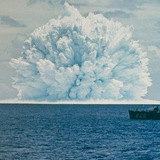
During the multiple Iranian attacks, Iran destroyed several fuel tanks, some empty, some full, an administrative building, and some transfer piping.
Please open Telegram to view this post
VIEW IN TELEGRAM
Please open Telegram to view this post
VIEW IN TELEGRAM
Please open Telegram to view this post
VIEW IN TELEGRAM
“They never took him that seriously,” Vali Nasr, a Professor at Johns Hopkins, said of the Trump Administration. “There’s a difference between having an organization on the ground versus just having people who like you. If you’re going to help change a regime, you have to have a ground game.” Trump and his aides began referring to Pahlavi as the “loser prince,” according to The New Yorker.
Please open Telegram to view this post
VIEW IN TELEGRAM
Forwarded from Tabz - Live News (Tabz)
Please open Telegram to view this post
VIEW IN TELEGRAM
Tabz - Live News
🇺🇸🇮🇱❌🇮🇷 - Netanyahu and Rupert Murdoch pushed Trump towards war, according to this Bloomberg report.
Vance, Rubio and Wiles were less enthusiastic, but no one says no to Trump in his second term.
🔗 Bloomberg
Vance, Rubio and Wiles were less enthusiastic, but no one says no to Trump in his second term.
🔗 Bloomberg
Tabz - Live News
🇮🇱🇺🇸❌🇮🇷 - The racial demographic most likely to support the Iran war is Jewish Americans at 68%.
🔗 Littoria
🔗 Littoria
/CIG/ Telegram | Counter Intelligence Global
🇺🇸🇮🇱❌🇮🇷📝 - If Trump begins to attack power plants, then remember this.
🔗 Mikkel Rosenvold
@CIG_telegram
🔗 Mikkel Rosenvold
@CIG_telegram
🇮🇱🇺🇸❌🇮🇷 - Israel Thought It Could Spur Rebellion Inside Iran. That Hasn’t Happened.
🔗 New York Times
@CIG_telegram
Three weeks into the war, an Iranian uprising has not yet materialized. American and Israeli intelligence assessments have concluded that the theocratic Iranian government is weakened but intact, and that widespread fear of Iran’s military and police forces has dampened prospects both for nascent rebellion in the country and for ethnic militias outside of Iran to launch cross-border incursions.
The belief that Israel and the United States could help instigate widespread revolt was a foundational flaw in the preparations for a war that has spread across the Middle East. Instead of imploding from within, Iran’s government has dug in and escalated the conflict, striking blows and counterblows against military bases, cities and ships around the Persian Gulf, and against vulnerable oil and gas installations.
🔗 New York Times
@CIG_telegram
/CIG/ Telegram | Counter Intelligence Global
🇮🇱🇺🇸❌🇮🇷 - Israel Thought It Could Spur Rebellion Inside Iran. That Hasn’t Happened. Three weeks into the war, an Iranian uprising has not yet materialized. American and Israeli intelligence assessments have concluded that the theocratic Iranian government…
🇮🇱🇺🇸❌🇮🇷📝 - Despite his public statements to the contrary, in private Netanyahu is increasingly frustrated by the lack of a revolt within Iran. Mossad greatly over-estimated its own effectiveness in this regard.
The increased desperation by Trump in recent days is thus explained by the lack of any coherent plan to end the war on favorable terms as Iran has proved both more resilient and formidable than expected.
@CIG_telegram
The increased desperation by Trump in recent days is thus explained by the lack of any coherent plan to end the war on favorable terms as Iran has proved both more resilient and formidable than expected.
@CIG_telegram
🌐🌾⛽️ - Fertilizer prices have moved up to their highest levels since September 2022, rising 44% YoY.
About a third of global fertilizer supply passes through the Strait of Hormuz.
This will drive food price inflation higher in the coming weeks/months.
🔗 Charlie Bilello
📝 TankerTrackers -
@CIG_telegram
About a third of global fertilizer supply passes through the Strait of Hormuz.
This will drive food price inflation higher in the coming weeks/months.
🔗 Charlie Bilello
📝 TankerTrackers -
THIS, combined with the price of diesel, is what will cause far more inflationary pain than the price of gas at the pump. Owning an EV will not lower your food expenses.
@CIG_telegram
Forwarded from ResistanceTrench (Dew)
🇮🇷⚡️🇺🇸🇮🇱 Washington Post:
A contingent of 4,500 U.S. sailors and Marines is heading to West Asia, including an infantry battalion landing team backed by helicopters, F-35 fighter jets and armored landing vehicles. The Pentagon also sped up the deployment of a similar unit, the 11th Marine Expeditionary Unit, from San Diego, defense officials said last week.
“Those Marines aren’t coming for decoration,” — an Israeli official, one of several who spoke on the condition of anonymity to discuss sensitive military and intelligence issues.
A contingent of 4,500 U.S. sailors and Marines is heading to West Asia, including an infantry battalion landing team backed by helicopters, F-35 fighter jets and armored landing vehicles. The Pentagon also sped up the deployment of a similar unit, the 11th Marine Expeditionary Unit, from San Diego, defense officials said last week.
“Those Marines aren’t coming for decoration,” — an Israeli official, one of several who spoke on the condition of anonymity to discuss sensitive military and intelligence issues.
🌐🌾⛽️ - There's No Strategic Fertilizer Reserve
Step back and look at the architecture of global fertilizer supply.
▪️ China is restricting exports through August 2026
▪️ Russia and Belarus remain constrained
▪️ The Middle East now faces direct disruption
All 3 pillars took a serious hit within the same cycle.
There is no swing supplier ready to absorb this
Unlike oil, nobody has been stockpiling ammonia in underground caverns.
G7 countries don’t maintain fertilizer reserves the way they maintain oil stockpiles.
There's no reserve valve when the system tightens.
🔗 Katusa Research
Step back and look at the architecture of global fertilizer supply.
▪️ China is restricting exports through August 2026
▪️ Russia and Belarus remain constrained
▪️ The Middle East now faces direct disruption
All 3 pillars took a serious hit within the same cycle.
There is no swing supplier ready to absorb this
Unlike oil, nobody has been stockpiling ammonia in underground caverns.
G7 countries don’t maintain fertilizer reserves the way they maintain oil stockpiles.
There's no reserve valve when the system tightens.
🔗 Katusa Research
🌐🌾⛽️ - Fertiliser analysts are now saying the world faces a monumental food crisis.
The US will be hit hard too. People elsewhere will starve. Trump’s war appears to be about to quite literally destroy the world. Insane.
🔗 Philip Pilkington
@CIG_telegram
The US will be hit hard too. People elsewhere will starve. Trump’s war appears to be about to quite literally destroy the world. Insane.
🔗 Philip Pilkington
@CIG_telegram
🇸🇦🛢️ - Saudi Aramco tells buyers to lift only Arab Light crude from Yanbu in April
🔗 Reuters
@CIG_telegram
Saudi Aramco, the world's top oil exporter, has cut crude supply to Asian buyers in April, two sources with knowledge of the matter said on Monday, after the U.S.-Israeli war with Iran disrupted trade via the Strait of Hormuz.
The producer is supplying only Arab Light crude exported from the Yanbu port to term customers in April, the sources said.
🔗 Reuters
@CIG_telegram
/CIG/ Telegram | Counter Intelligence Global
🇮🇷❌🇺🇸 - Are U.S. ground troops being prepared for operations against #Iran? – An Iranian assessment
🔹 Recent flight tracking data shows a number of U.S. passenger and cargo aircraft moving from bases such as Eglin Air Force Base, Fort Bliss, and Fort Liberty toward Camp Lemonnier in Djibouti. These bases are associated with special forces, airborne units, and combat aviation, which has drawn attention in Iranian analytical circles.
🔹 In parallel, earlier reports about the cancellation of a training exercise by the 82nd Airborne Division are interpreted as a possible indicator that certain rapid deployment units may have been placed on standby for operations in the region.
🔹 At the same time, the movement of amphibious forces – particularly the Boxer and Tripoli groups – has reinforced speculation that a sizable number of U.S. Marines could now be positioned in or near the battlefield, although the exact composition of these forces remains unclear.
🔹 Within this context, Iranian assessments do not dismiss the possibility of ground operations. However, some of them push back against the widely discussed scenario of a U.S. move on Kharg Island.
🔹 In this view, a ground operation targeting Kharg would be both highly complex and of limited strategic value, especially given the island’s proximity to the Iranian mainland and the fact that it can be targeted through airpower without the need for ground forces.
🔹 Instead, the assessment goes on to argue that, if a ground component is being prepared, it would most likely be directed at Iran’s southern mainland, specifically military bases along the Persian Gulf coast.
🔹 The logic here is that the current air campaign has already focused heavily on degrading Iran’s maritime and coastal capabilities, particularly those linked to operations in the Strait of Hormuz. However, from this perspective, airstrikes alone may not be sufficient to fully neutralize these capabilities.
🔹 As a result, any limited ground or special operations would likely be seen as a continuation of this same effort, i.e., targeting, degrading, or potentially seizing key coastal nodes that support Iran’s ability to disrupt maritime traffic.
🔹 In this reading, Kharg Island is therefore not the main objective, but rather a secondary or even distracting point in public discussions, while the real focus lies on the southern shores of Iran.
🔹 At the same time, the buildup in Djibouti is interpreted as pointing to a second operational axis, likely related to Yemen.
🔹 The objective there would be to preempt or contain the Houthis and prevent the opening of another front in the Bab al-Mandab and the Red Sea, which could otherwise amplify pressure on global maritime routes.
🔹 Overall, this analysis suggests that U.S. movements are not necessarily about a large-scale invasion, but about preparing for more limited, targeted operations across two key fronts: Iran’s southern coastline and the Yemen/Red Sea region.
🔗 Hamidreza Azizi
📝 Matthew Petti -
@CIG_telegram
🔹 Recent flight tracking data shows a number of U.S. passenger and cargo aircraft moving from bases such as Eglin Air Force Base, Fort Bliss, and Fort Liberty toward Camp Lemonnier in Djibouti. These bases are associated with special forces, airborne units, and combat aviation, which has drawn attention in Iranian analytical circles.
🔹 In parallel, earlier reports about the cancellation of a training exercise by the 82nd Airborne Division are interpreted as a possible indicator that certain rapid deployment units may have been placed on standby for operations in the region.
🔹 At the same time, the movement of amphibious forces – particularly the Boxer and Tripoli groups – has reinforced speculation that a sizable number of U.S. Marines could now be positioned in or near the battlefield, although the exact composition of these forces remains unclear.
🔹 Within this context, Iranian assessments do not dismiss the possibility of ground operations. However, some of them push back against the widely discussed scenario of a U.S. move on Kharg Island.
🔹 In this view, a ground operation targeting Kharg would be both highly complex and of limited strategic value, especially given the island’s proximity to the Iranian mainland and the fact that it can be targeted through airpower without the need for ground forces.
🔹 Instead, the assessment goes on to argue that, if a ground component is being prepared, it would most likely be directed at Iran’s southern mainland, specifically military bases along the Persian Gulf coast.
🔹 The logic here is that the current air campaign has already focused heavily on degrading Iran’s maritime and coastal capabilities, particularly those linked to operations in the Strait of Hormuz. However, from this perspective, airstrikes alone may not be sufficient to fully neutralize these capabilities.
🔹 As a result, any limited ground or special operations would likely be seen as a continuation of this same effort, i.e., targeting, degrading, or potentially seizing key coastal nodes that support Iran’s ability to disrupt maritime traffic.
🔹 In this reading, Kharg Island is therefore not the main objective, but rather a secondary or even distracting point in public discussions, while the real focus lies on the southern shores of Iran.
🔹 At the same time, the buildup in Djibouti is interpreted as pointing to a second operational axis, likely related to Yemen.
🔹 The objective there would be to preempt or contain the Houthis and prevent the opening of another front in the Bab al-Mandab and the Red Sea, which could otherwise amplify pressure on global maritime routes.
🔹 Overall, this analysis suggests that U.S. movements are not necessarily about a large-scale invasion, but about preparing for more limited, targeted operations across two key fronts: Iran’s southern coastline and the Yemen/Red Sea region.
🔗 Hamidreza Azizi
📝 Matthew Petti -
Iranians think all the talk about Kharg Island is a diversion and the U.S. buildup may really be for a ground operation on the coast of Hormuz and/or Yemen.
@CIG_telegram
X (formerly Twitter)
Hamidreza Azizi (@HamidRezaAz) on X
Are U.S. ground troops being prepared for operations against #Iran? – An Iranian assessment
🔹 Recent flight tracking data shows a number of U.S. passenger and cargo aircraft moving from bases such as Eglin Air Force Base, Fort Bliss, and Fort Liberty toward…
🔹 Recent flight tracking data shows a number of U.S. passenger and cargo aircraft moving from bases such as Eglin Air Force Base, Fort Bliss, and Fort Liberty toward…
/CIG/ Telegram | Counter Intelligence Global
🇶🇦🛜 - Iran War could derail AI boom as Qatari helium (1/3 of global supply), critical for cooling silicon wafers, is completely off the market
🔗 Financial Times
@CIG_telegram
Marko Papic, chief strategist at BCA Research, predicts a severe hit to chip production if the strait isn’t back in operation within a month.
“There is no way for the US to replace the oil and natural gas out of the strait on any timeline that avoids a global recession,” he said. “In my estimation, the US, Israel and Iran have about until mid-April to conclude hostilities and begin returning shipping through Hormuz, or else the world will see its first post-Covid break in supply chains.”
But even if the conflict ended tomorrow, the AI supply chain will take time to bounce back.
Still it will take “four to five weeks” for Qatar to resume gas and helium production from its plants, says Phil Kornbluth, “It would take an additional two to three months after that to restore the helium supply chain to what it was pre-crisis,” he added.
🔗 Financial Times
@CIG_telegram
/CIG/ Telegram | Counter Intelligence Global
🇺🇸🏦📉 - The FT now reporting that, even without the energy shocks, there's a pretty good chance that the closure of Hormuz will pop the AI bubble and lead to a stock market crash.
🔗 Nicholas Guyatt
📝 Carolina Lion -
@CIG_telegram
🔗 Nicholas Guyatt
📝 Carolina Lion -
Yeah, a lot of Gulf oil money is invested in those AI companies. Funding which is about to dry up in addition to all the supply chain disruptions.
@CIG_telegram